Economic Development

When geography hinders growth

On 6 August, we mark the International Day of Awareness of the Special Development Needs and Challenges of Landlocked Developing Countries. Home to over 600 million people, the 32 LLDCs often face high trade costs, limited diversification, and infrastructure shortfalls that impact growth. Through the Awaza Programme of Action (2024–2034), the UN seeks to ensure trade better facilitation, structural transformation, transport connectivity, technology, climate resilience, and support. Its goal is to align national-level actions, regional integration, and policy frameworks to put LLDCs on a resilient path to sustainable development.

Photo:© UNDP/Beyond Borders Media
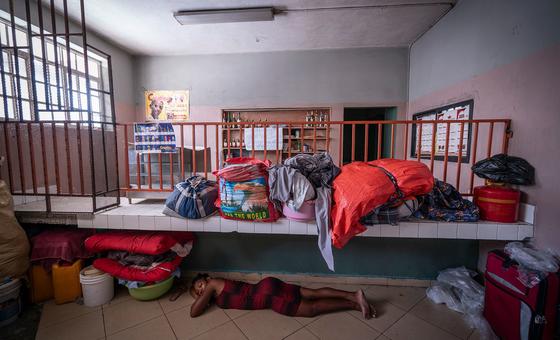
A woman sleeps on the floor of a shelter in Port-au-Prince, Haiti, surrounded by her belongings and other displaced individuals.

‘Wanton, intentional infliction of incredible pain’ by gangs in Haiti

6 August 2026 — Gangs in Haiti continue to terrorise communities with the “wanton, intentional infliction of incredible pain” on people who often are just in the wrong place at the wrong time....

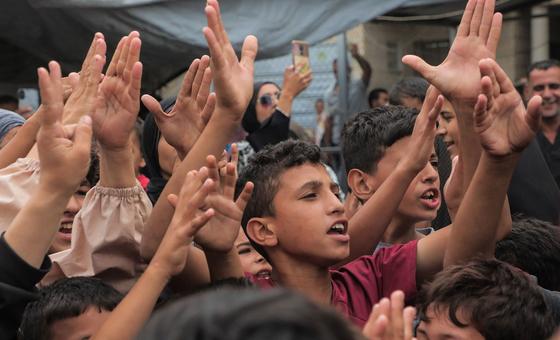
Gaza: 300 children killed in 300 days of Israeli-Hamas ‘ceasefire’

6 August 2026 — At least 300 children in Gaza have been reportedly killed in as many days since a ceasefire agreement supposedly came into effect last October to suspend military operations...

Hiroshima fosters hope, 81 years on from nuclear catastrophe

5 August 2026 — Eighty-one years ago on Thursday, the United States dropped an atomic bomb on Hiroshima, reducing the city to ruins, killing tens of thousands of people and bringing the world “...

UN Sustainable Development Goals

17 Goals to transform our world

The Sustainable Development Goals are a call for action by all countries — poor, rich and middle-income — to promote prosperity while protecting the planet.

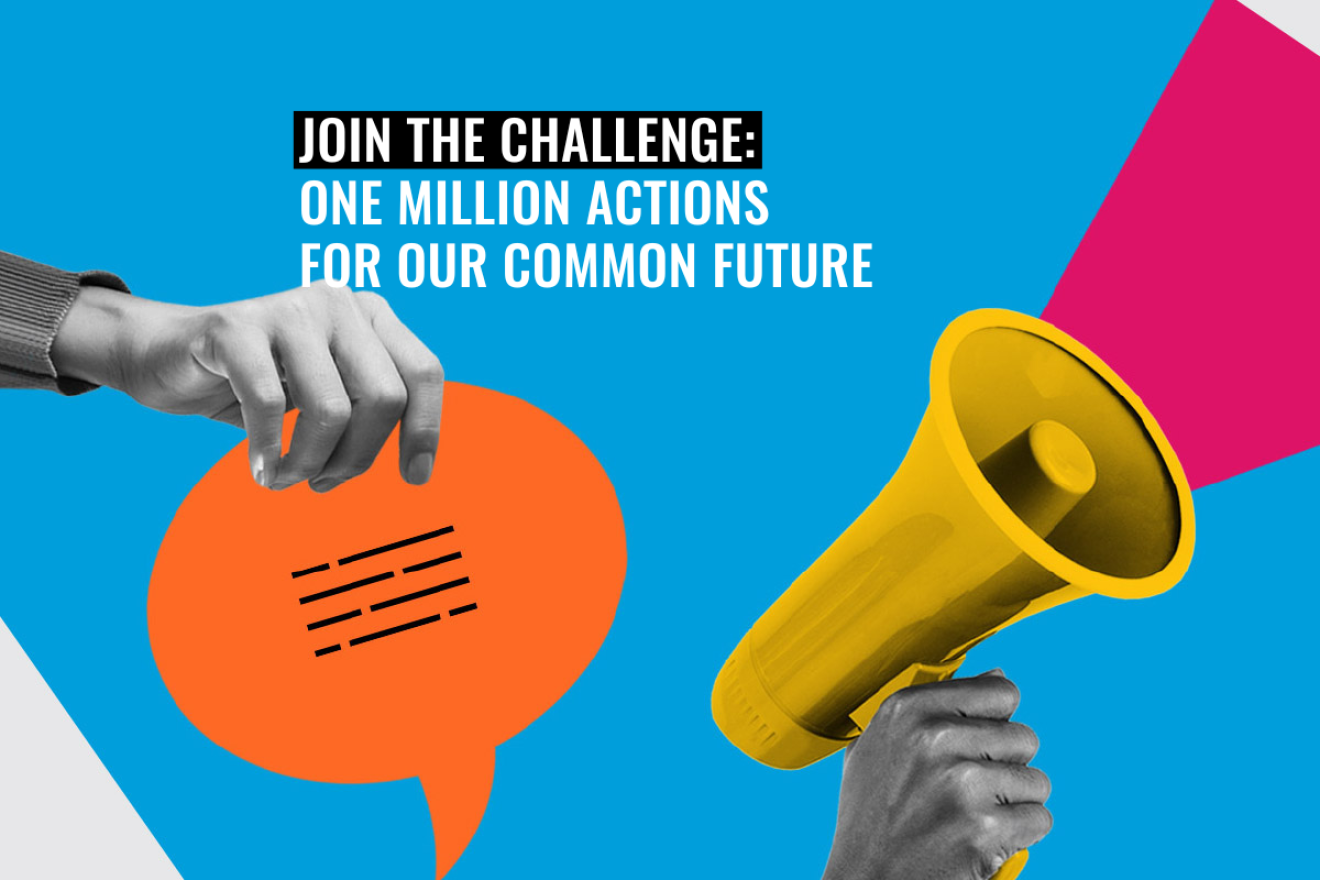
hands holding megaphone and speech bubble

The Goals can improve life for all of us. Cleaner air. Safer cities. Equality. Better jobs. These issues matter to everyone. But progress is too slow. We have to act, urgently, to accelerate changes that add up to better lives on a healthier planet. Find new inspiring actions on the app and at un.org/actnow.

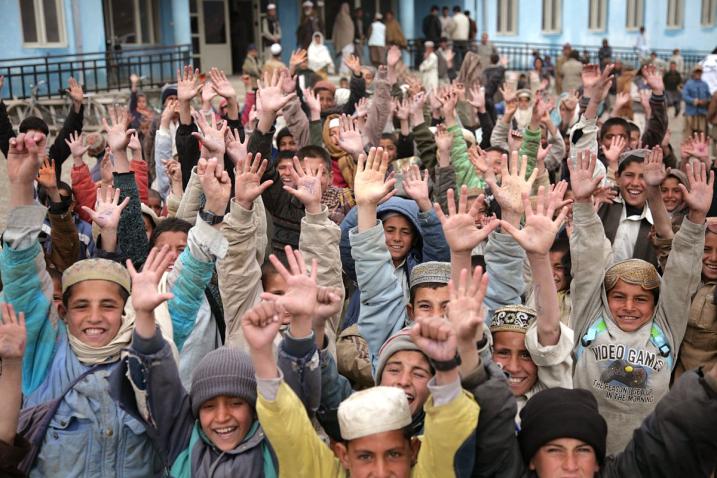
Today, half the world is under 30, and this generation is a powerful force for peace. The UN "Hear Us. Act Now for a Peaceful World" campaign, launched on the International Day of Peace, aims to include, invest in, and partner with young people to build lasting peace. 

Thomas the Tank engine

Learn more about the Sustainable Development Goals! On our student resources page you will find plenty of materials for young people and adults alike. Share with your family and friends to help achieve a better world for all.

SDG 10: Reduced Inequalities


Goal 10: Reduced Inequalities

Reduce inequality within and among countries


More from the
United Nations

Featured stories from across the United Nations and our world-wide family of agencies, funds, and programmes.

A view of mangrove forests UNEP, Natural Resources and the Environment

From decline to recovery: The global return of mangrove forests

Once considered one of the world’s fastest-disappearing ecosystems, mangrove forests are showing remarkable signs of recovery. A recent global study using satellite imagery from the 1980s to 2023 found that global mangrove losses have slowed sharply, while natural regeneration and expansion are increasingly offsetting past declines. These coastal forests protect shorelines, store carbon, support fisheries and provide habitat for more than 1,500 species. The United Nations Environment Programme (UNEP) and partners are helping drive this recovery through science-based, community-led restoration efforts in countries including Kenya, Costa Rica, Benin and across the South China Sea region, combining conservation, sustainable livelihoods and innovative financing.

A black-and-white photo taken from a low angle, showing Lebanese athlete Aziza Sbaity. OHCHR, Human Rights

Aziza Sbaity’s journey of identity, inclusion and speed

Born in Liberia to a Liberian mother and Lebanese father, Aziza Sbaity grew up embracing both cultures before civil unrest forced her family to relocate to Lebanon. Adapting to a less diverse environment, she drew strength from her family and found belonging through sport. Initially passionate about basketball, her speed led her to athletics, where she discovered confidence, purpose and acceptance. Now Lebanon’s fastest woman and a national record holder, Sbaity uses her platform to champion inclusion and equality. Recognized in the BBC 100 Women list in 2023, she inspires young people through advocacy and is launching an athletics academy to expand opportunities for all children, including those with disabilities.

FAO, Agriculture and Food

The return of Malawi’s forgotten crops

At a seed fair in southern Malawi, farmers showcased biscuits, flours and other products made from sorghum and cowpea, two nutritious, drought-resistant crops once widely grown but sidelined as maize came to dominate agriculture. The event formed part of an FAO-led initiative under the AWSAMe initiative to revive these "opportunity crops" and strengthen resilience to water scarcity. Working with Malawi's Ministry of Agriculture, the Food and Agriculture Organization of the United Nations (FAO) trained researchers, tested drought-tolerant varieties and involved farmers in selecting preferred crops. Cooking demonstrations and business training highlighted new income opportunities, helping communities improve nutrition, adapt to climate change and restore agricultural biodiversity.

Science and Technology, SDGs, UNESCO

Science for sustainable development

UNESCO is expanding scientific collaboration through global partnerships, remote laboratory access, STEM training, and crisis support to make research more inclusive and impactful worldwide.

Health, Science and Technology, World Bank

Healthcare for the future

Technology can extend specialist care to underserved communities while strengthening health systems and supporting economic opportunities through workforce and infrastructure investments.

Slavery and Human Trafficking, Migrants, IOM

Stolen freedom, restored hope

After surviving months of trafficking in a Myanmar scam compound, Jean returned to Rwanda determined to rebuild his life and warn others about trafficking risks.

Humanitarian Aid, SDG 3: Good Health and Well-Being, WFP

Afghanistan’s malnutrition crisis

Funding cuts and worsening humanitarian conditions are leaving millions of Afghan children and mothers without the nutrition and healthcare they urgently need.

What we do

Due to the powers vested in its Charter and its unique international character, the United Nations can take action on the issues confronting humanity in the 21st century, including:

Structure of the
United Nations

The main parts of the UN structure are the General Assembly, the
Security Council, the Economic and Social Council, the Trusteeship Council, the International Court of Justice, and the UN Secretariat. All were established in 1945 when the UN was founded.

The General Assembly is the main deliberative, policymaking and representative organ of the UN. All 193 Member States of the UN are represented in the General Assembly, making it the only UN body with universal representation.

The Security Council has primary responsibility, under the UN Charter, for the maintenance of international peace and security. It has 15 Members (5 permanent and 10 non-permanent members). Each Member has one vote. Under the Charter, all Member States are obligated to comply with Council decisions.

The Economic and Social Council is the principal body for coordination, policy review, policy dialogue and recommendations on economic, social and environmental issues, as well as implementation of internationally agreed development goals.

The Trusteeship Council was established in 1945 by the UN Charter, under Chapter XIII, to provide international supervision for 11 Trust Territories that had been placed under the administration of seven Member States, and ensure that adequate steps were taken to prepare the Territories for self-government and independence.

The International Court of Justice is the principal judicial organ of the United Nations. Its seat is at the Peace Palace in the Hague (Netherlands). It is the only one of the six principal organs of the United Nations not located in New York (United States of America).

The Secretariat comprises the Secretary-General and tens of thousands of international UN staff members who carry out the day-to-day work of the UN as mandated by the General Assembly and the Organization's other principal organs.

Learn more

Podium of the General Assembly Hall seen from below with the gold wall and the golden UN logo behind

The United Nations process to appoint the next Secretary‑General continues with interactive dialogues guided by the principles of transparency and inclusivity. Watch the dialogues with the candidates: Michelle Bachelet Jeria (21 April), Rafael Mariano Grossi (21 April), Rebeca Grynspan Mayufis (22 April), Macky Sall (22 April), María Fernanda Espinosa Garcés (15 June) and Carolyn Rodrigues Birkett (18 June).

.

A group of people carrying their few belongings, walking in front of buildings in ruins, at sunset.

This series shines a light on communities facing conflict, displacement, public health emergencies and other humanitarian challenges around the world. Drawing on reporting from across the UN system, it amplifies voices from countries including Haiti, Gaza, DR Congo, Yemen, Afghanistan and Myanmar, to foster understanding, encourage engagement, and help mobilize support, assistance, and protection for the most vulnerable people.

Climate Change is one of the defining issues of our time and we are at a pivotal moment. From shifting weather patterns that threaten food production, to rising sea levels that increase the risk of catastrophic flooding, the impacts of climate change are global in scope and unprecedented in scale. Taking decisive action today will make adapting to these impacts in the future more effective and less costly.

General Assembly hall with the Secretary-General at the podium

The United Nations is the only place on Earth where all the world's nations come together to discuss common problems and find shared solutions that benefit all of humanity. Learn about the main areas of the UN’s activities; how it makes a difference to the world’s people; and how every citizen can get involved and make a contribution. 

Did you know?

As the world’s only truly universal global organization, the United Nations has become the foremost forum to address issues that transcend national boundaries and cannot be resolved by any one country acting alone.

Watch and Listen

Video and audio from across the United Nations and our world-wide family of agencies, funds, and programmes.

Young adults around the world continue to value partnership and parenthood, but financial insecurity, housing challenges, and unstable employment often prevent them from achieving these aspirations.

Drawing on responses from more than 108,000 young adults across 73 countries, the report calls for investments in education, jobs, housing, reproductive health, and social protection to help people build the families and futures they want.

A nation's soundtrack

UNESCO is preserving Somalia’s Radio Mogadishu archive, safeguarding decades of the nation’s history, music, and voices for future generations through digital preservation.

What are agrifood systems?

Agrifood systems sustain life by connecting food production, distribution, and resources, while resilient systems help protect food supplies amid climate change and global challenges.

UN Podcasts

Arsenio utilizing a ship simulator whilst a woman and two men look on

Open the strait (AAN S13-E8)

Oil price surges have put international shipping in the spotlight in recent months. But what about the people behind the headlines? What happens to them when the news cycle moves on?

With up to 90 percent of all goods globally transported by sea, the United Nations International Maritime Organization (IMO) works to help commercial shipping and international trade ride the waves of war, piracy and geopolitics.

Growing up near the Panama Canal, Arsenio Dominguez was always fascinated by mighty cargo ships sailing through on their way to distant shores. Now Secretary-General of the IMO, his role is to defend seafarers and give shipping the recognition it deserves.

“Whenever you affect shipping, everybody else gets affected, even if you're not part of the conflict. This is not good for anyone. This is not good for the global population, for the global economy, for politics. We need to protect shipping more.”

In this episode, Arsenio Dominguez reflects on years of back-to-back challenges for international shipping, on efforts to decarbonize, and shares why the power of positive thinking and the encouragement of his mother have always been his guiding lights.

Photo: ©IMO

Latest Audio from UN News

The United Nations in Pictures

Images from across the United Nations and our world-wide family of agencies, funds, and programmes.

partially submerged village
Photo:UNHCR/Santi Palacios

The humanitarian risks of El Niño

El Niño is intensifying humanitarian needs across Southern and Eastern Africa, where millions of people are already struggling with conflict, displacement, poverty and the impacts of climate change. Severe drought, flooding and extreme weather are disrupting livelihoods, reducing crop yields, worsening food insecurity and increasing the risk of disease outbreaks. Women, children and other vulnerable groups face the greatest impacts as access to water, healthcare and essential services becomes more limited. Early, coordinated humanitarian action and sustained investment in resilience are essential to help communities prepare for, withstand and recover from increasingly frequent climate shocks.

a herder and his cattle
Photo:UNDP Kenya

A world sustained by rangelands

Rangelands cover more than half of the Earth's land surface and are essential to food security, biodiversity, climate resilience and the livelihoods of billions of people, including pastoralists and Indigenous communities. Yet these vast ecosystems remain undervalued and increasingly threatened by climate change, land degradation and unsustainable land use. Protecting and restoring rangelands is critical not only for conserving wildlife and storing carbon, but also for sustaining cultures, strengthening rural economies and building resilient landscapes that support both people and nature for generations to come.