Economic Development

UN World Economic Situation and Prospects

The World Economic Situation and Prospects 2026 presents global and regional economic outlooks, stressing the need for stronger international cooperation to advance the SDGs. The report warns of a prolonged period of slower global growth compared to the pre-pandemic era, with uneven development leaving many behind. Geopolitical tensions, policy uncertainty and fiscal pressures cloud prospects. While inflation has eased, rising living costs and risks of renewed supply disruptions—linked to conflict, climate shocks and trade fragmentation—remain key sources of global uncertainty.

High food inflation is worsening food insecurity in low-income countries already facing extreme weather, conflict, and economic instability.
Photo:Adobe Stock/Poco_ pw
People shop in a mall in Japan.

Global economy shows signs of steady but subdued growth

8 January 2026 — The global economy has shown resilience amid turbulence during the past year, including shifting trade policies – yet growth remains subdued and far below pre-pandemic levels, the...

UN’s ‘responsibility to deliver’ will not waver, after US announces withdrawal from dozens of international organizations

8 January 2026 — Secretary-General António Guterres has expressed regret over the decision by the United States to withdraw from a number of UN entities, while underscoring that the system will...

Iraq ‘unrecognisable and remarkable’ after years of conflict: UN coordinator

7 January 2026 — Some two decades after a shaky political transition, Iraq today is a country “at peace, with increased security and a clear determination to win the battle of development,” says...

UN Sustainable Development Goals

17 Goals to transform our world

The Sustainable Development Goals are a call for action by all countries — poor, rich and middle-income — to promote prosperity while protecting the planet.

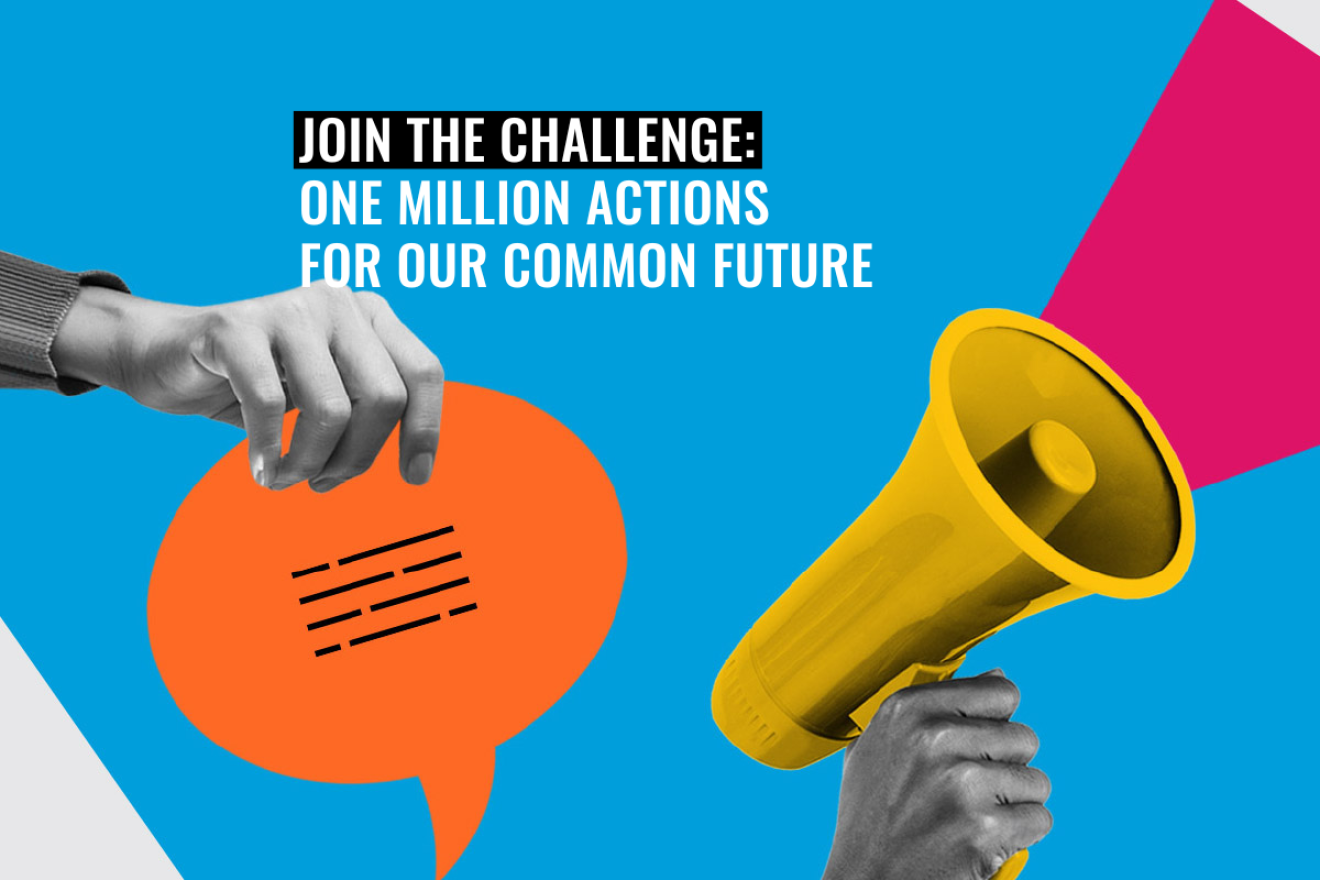
hands holding megaphone and speech bubble

The Goals can improve life for all of us. Cleaner air. Safer cities. Equality. Better jobs. These issues matter to everyone. But progress is too slow. We have to act, urgently, to accelerate changes that add up to better lives on a healthier planet. Find new inspiring actions on the app and at un.org/actnow.

Today, half the world is under 30, and this generation is a powerful force for peace. The UN "Hear Us. Act Now for a Peaceful World" campaign, launched on the International Day of Peace, aims to include, invest in, and partner with young people to build lasting peace. 

children holding up books

Reading and learning are essential to children’s growth and development; stories can fuel their imagination and raise awareness of new possibilities. The SDG Book Club aims to encourage them to learn about the Goals in a fun, engaging way, empowering them to make a difference.

More from the
United Nations

Featured stories from across the United Nations and our world-wide family of agencies, funds, and programmes.

A view of the Earth as seen from space. Natural Resources and the Environment, UNEP

The World in 2050, if We Don’t Act Now

Oppressive heat. Species extinctions. Pollution-choked skies. This is the future that awaits the world unless humanity takes dramatic steps to end a series of mushrooming environmental crises, finds a new report from the United Nations Environment Programme (UNEP). The seventh edition of the Global Environment Outlook (GEO-7) offers a stark vision of the decades to come. But its authors say the worst forecasts can still be avoided if countries quickly take meaningful steps to address climate change, nature, land and biodiversity loss, and pollution and waste.

A woman scientist working in a laboratory using a pipette to transfer liquid. Science and Technology, WIPO

The future of food: How agri biotech uses IP strategically

For decades, farmers have relied on chemical fertilizers, pesticides and antibiotics to enhance food production. But the rapid modernization of agriculture to meet rising demands has its perils. To solve such problems, biotechnology companies are turning to living organisms and natural materials for inspiration. And alongside their biology‑first innovations, their strategic use of intellectual property (IP) is equally important. The companies featured in this article were shortlisted in the WIPO Global Awards 2025.

A man in a forest where yerba mate is grown, staring into the distance. Agriculture and Food, FAO

Mate: the drink that keeps a forest alive

In southern Brazil, a drink symbolizes connection; the cuia, a traditional vessel for chimarrão (erva-mate), fosters conversation and community. This drink carries not just warmth but also cultural memory and environmental wisdom. In Parana State, erva-mate is sustainably cultivated within native forests, supporting local livelihoods over generations. This approach allows agriculture to coexist with the forest rather than clear it. Brazil, alongside Argentina and Paraguay, stands as a major global producer and exporter of erva-mate, linking cultural heritage with international markets.

SDGs, UNDP

A moment of global choice

The coming years will be decisive in determining whether global cooperation can overcome economic slowdown, conflict and division to advance peace, prosperity and sustainable development.

Migration, Art, IOM

Migrant, identity, and comedy intertwined

Through migration from Cameroon to Quebec, Steve Biko transformed childhood imagination, cultural displacement, and lived experience into a comedic voice that bridges identities, cultures, and shared humanity.

Social Development, ILO

Invisible community volunteering

A new UNV–ILO study reveals that informal, direct person-to-person help makes up nearly 70 per cent of global volunteering, yet remains largely invisible, shaped by age, gender, income, location, and gaps in formal services.

Culture, SDG 11: Sustainable Cities and Communities, UNESCO

Integrating living heritage into cities

UNESCO’s program in Oaxaca seeks to integrate living heritage into urban planning and responsible tourism to protect artisans’ livelihoods, community spaces, and the transmission of cultural knowledge.

What we do

Due to the powers vested in its Charter and its unique international character, the United Nations can take action on the issues confronting humanity in the 21st century, including:

Structure of the
United Nations

The main parts of the UN structure are the General Assembly, the
Security Council, the Economic and Social Council, the Trusteeship Council, the International Court of Justice, and the UN Secretariat. All were established in 1945 when the UN was founded.

The General Assembly is the main deliberative, policymaking and representative organ of the UN. All 193 Member States of the UN are represented in the General Assembly, making it the only UN body with universal representation.

The Security Council has primary responsibility, under the UN Charter, for the maintenance of international peace and security. It has 15 Members (5 permanent and 10 non-permanent members). Each Member has one vote. Under the Charter, all Member States are obligated to comply with Council decisions.

The Economic and Social Council is the principal body for coordination, policy review, policy dialogue and recommendations on economic, social and environmental issues, as well as implementation of internationally agreed development goals.

The Trusteeship Council was established in 1945 by the UN Charter, under Chapter XIII, to provide international supervision for 11 Trust Territories that had been placed under the administration of seven Member States, and ensure that adequate steps were taken to prepare the Territories for self-government and independence.

The International Court of Justice is the principal judicial organ of the United Nations. Its seat is at the Peace Palace in the Hague (Netherlands). It is the only one of the six principal organs of the United Nations not located in New York (United States of America).

The Secretariat comprises the Secretary-General and tens of thousands of international UN staff members who carry out the day-to-day work of the UN as mandated by the General Assembly and the Organization's other principal organs.

Learn more

Podium of the General Assembly Hall seen from below with the gold wall and the golden UN logo behind

On 25 November 2025, the President of the General Assembly and the President of the Security Council initiated the process of selecting and appointing the next Secretary-General. Candidates are nominated by a Member State or a group of Member States. Learn more about the multi-step selection and appointment process of the next United Nations Secretary-General.

Climate change is the defining issue of our time and now is the defining moment to do something about it. There is still time to tackle climate change, but it will require an unprecedented effort from all sectors of society.

Women at UN CSW63 Side Event - “Take the Hot Seat”. Photo: UN Women/Ryan Brown

Women and girls represent half of the world’s population and, therefore, also half of its potential. Gender equality, besides being a fundamental human right, is essential to achieve peaceful societies, with full human potential and sustainable development.

UN Secretary-General António Guterres is greeted on his visit to the Central African Republic

While global poverty rates have been cut by more than half since 2000, one in ten people in developing regions still lives on less than US$1.90 a day — the internationally agreed poverty line, and millions of others live on slightly more than this daily amount.

Watch and Listen

Video and audio from across the United Nations and our world-wide family of agencies, funds, and programmes.

Gaza is enduring an inhuman tragedy, with entire neighbourhoods destroyed, families shattered, and children growing up in fear—nothing can justify such suffering. 

In this devastation, Richard Gere joins UNRWA in affirming our shared humanity and calling for support to protect lives, dignity, and the rights of millions who depend on education, healthcare, and vital aid.

Solar kits transform rural Chad

The Chad Energy Access Expansion Project is distributing 145,000 solar kits across 23 provinces, providing clean electricity to six million people, improving health, education, and rural livelihoods.

PAHO virtual reality laboratory

In PAHO’s virtual reality laboratory, you can explore every room from sample reception to, and interact with the equipment posters and key bio safety elements that represent a resilient laboratory system.

UN Podcasts

Annalena, flanked by the SG and former PGA, holds up the gavel in the UN General Assembly hall.

Serving the UN is the honor of a lifetime, Annalena Baerbock (AAN S12-E4)

Former German foreign minister Annalena Baerbock is a new face at the United Nations. Sworn in as President of the 80th Session of the UN General Assembly in September 2025, she brings experience and energy at a time of challenges and new beginnings – including the selection of the next Secretary-General.

“We need this place where countries, big and small, rich and poor, are coming together and have an equal say and an equal vote.”

Shaped by her nation’s turbulent past and successful reunification Annalena Baerbock entered politics at a young age. In this episode of Awake at Night, she reflects on the importance of female pioneers, the impact of online harassment and shares why the UN Charter can still move her to tears.

“It meant really a lot to me, personally to be sworn in on the original document of the charter. And if people could see, I was too afraid to touch the charter. So my hand was kind of one centimeter above it.”

Photo: ©UN Photo/Manuel Elías

Latest Audio from UN News

The United Nations in Pictures

Images from across the United Nations and our world-wide family of agencies, funds, and programmes.

A teacher stands in front of a chalkboard with a girl in Haiti.
Photo:© UNICEF/UNI840311/Joseph

The win-win of investing in education

Education is crucial for children, providing safety during crises and reducing risks of child labor, early marriage, and recruitment by armed groups. It connects kids to essential services like clean water and nutritious meals, while also fostering hope and stability, ultimately leading to economic growth and reducing conflict. However, a recent UNICEF analysis indicates that international aid for education may drop by over US$3 billion by the end of 2026, potentially leaving 6 million more children out of school. This isn't just a financial adjustment; it's a significant threat to a whole generation’s future.

A group of people working on the rehabilitation of the Seychelles Islands.
Photo:UNDP/Terrestrial Restoration Action Society of Seychelles

Thirty hectares of rehabilitation

Seychelles recognizes its natural environment as both its greatest asset and vulnerability, facing issues like coastal erosion, droughts, and saltwater intrusion that threaten agriculture. The ‘Ridge to Reef Approach for Integrated Management of Marine, Coastal and Terrestrial Ecosystems’ project aims to conserve ecosystem services across islands. Praslin Island specifically serves as a testing ground for ecosystem rehabilitation, led by the Terrestrial Restoration Action Society of Seychelles. The initiative targets the restoration of up to 30 hectares, successfully combining forest rehabilitation, invasive species management, and replanting efforts.