UNCTAD

TradeCast logo

As the world moves toward a more sustainable future, nuclear energy is back in the spotlight. While wind and solar power are key to reducing carbon emissions, their intermittent nature presents challenges.

Could nuclear energy provide a stable, low-carbon alternative?

UN Trade and Development (UNCTAD) economist Claudia Contreras joins The Weekly Tradecast to explore nuclear energy’s role in the global energy transition. She discusses its benefits, including reliability and efficiency, as well as its risks – radioactive waste, safety concerns and geopolitical challenges.

Tune in to learn whether nuclear power has a place in the energy mix of the future.


A lady working at a factory.

A UNCTAD publication shows that while AI is becoming a powerful, affordable tool for entrepreneurs in developing countries, its impact depends on supportive ecosystems, skills development and clear, innovation-friendly governance.

A graphical representation of the globe with a decline arrow.

UNCTAD projects global economic growth will ease to 2.6% in 2025 and 2026, reflecting slowing momentum in major economies as temporary trade and digital boosts fade.

A picture of power generating farm.

COP30 advanced climate action through new finance work programmes, trade dialogues, and international cooperation mechanisms supporting just, equitable transitions for developing countries.

A man at a factory operating a machine.

Global trade is set to grow 7% in 2025, driven by East Asia, Africa and manufacturing, reaching a record $35 trillion despite persistent imbalances and rising geopolitical fragmentation.

A ship yard of containers.

Geopolitical shifts and financial instability are reshaping globalization, straining trade and development, heightening risks for developing economies, and underscoring the need for coordinated trade, finance, debt, and climate reforms.

Gaza economic, infrastructure destruction.

An UNCTAD report shows prolonged military operations and restrictions have devastated the Palestinian economy, erasing two decades of progress, with Gaza’s GDP per capita at $161 and the entire population facing multidimensional poverty.

Industrial emitters releasing gas into the air.

The world is edging past critical climate thresholds as emissions hit new highs, proving that the weakening link between GDP and CO₂ is still far too slow to keep global heating in check.

A young man ferrying a passenger on a bicycle taxi.

As trade in clean technologies like solar and wind surges, aligning global markets with climate goals can cut costs, expand renewable access, and accelerate the low-carbon transition worldwide.

women walking on sand with jugs on their heads

In a new report, UN Trade and Development says improving the international financial architecture is a prerequisite for unlocking the finance needed to support climate-resilient development.

An image of a shipping yard.

Set for November 2026, the UN Global Supply Chain Forum will unite world leaders in Saudi Arabia to boost trade resilience and build sustainable, inclusive logistics systems. Stay tuned for updates.

logistics and transportation centre with a container cargo ship, shipping containers and a crane bridge in shipyard at sunrise

The 16th UN Conference on Trade and Development is being held from 20 - 23 October 2025 at the Palais des Nations in Geneva under the theme “Shaping the future: Driving economic transformation for equitable, inclusive and sustainable development”. Hosted by Switzerland and UNCTAD, the conference brings together governments, Nobel Laureates, international organizations, civil society and renowned experts to discuss global trends and policy perspectives on trade, investment, development and digital economy. Check the programme and follow the conference on UN Web TV

A ship at sea.

Global seaborne trade is projected to grow by just 0.5% in 2025, as rising costs, geopolitical tensions, and long-distance rerouting contribute to mounting uncertainty in the maritime transport sector.

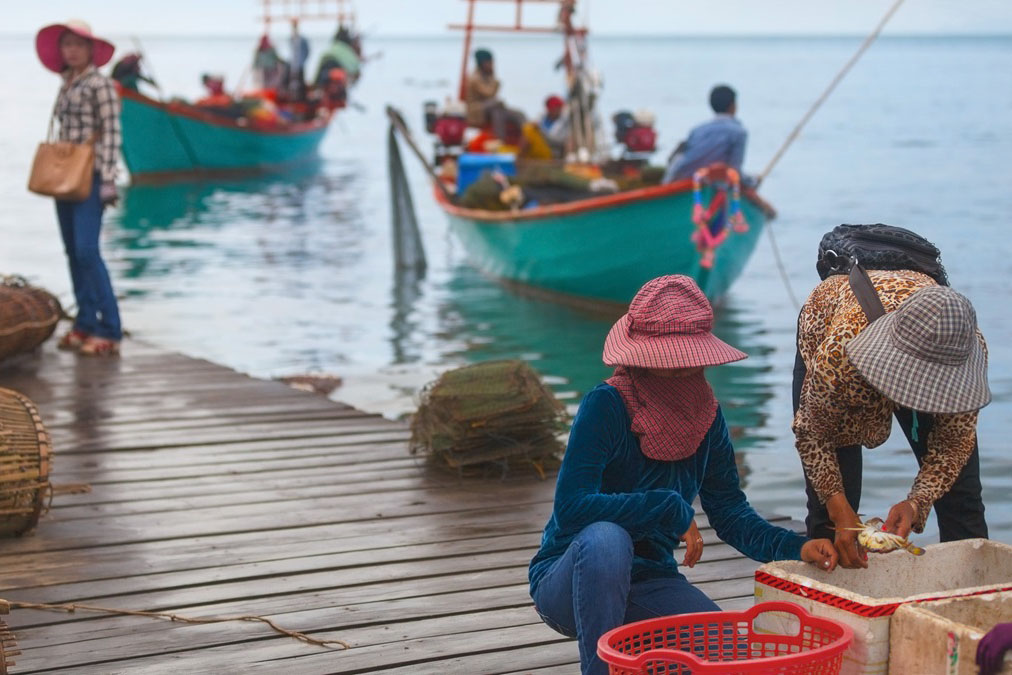
A couple of fish traders at a dock.

The World Trade Organization Fisheries Subsidies Agreement marks a pivotal step toward ocean sustainability, curbing harmful subsidies while supporting developing nations and global food security.

A worker in the Linhai, Zhejiang Province, China

UNCTAD’s latest Global Trade Update reveals that systemic uncertainty, driven by shifting policies and geopolitical instability, is reshaping global trade, raising costs, and disproportionately harming developing economies.