

In Kyrgyzstan’s rugged Batken Province, 70-year-old farmer Urinisa Tillabaeva is proving that tough land can still grow bright futures. With a new greenhouse, drip irrigation, and hands-on training, she no longer waits out the long winter months—she harvests beyond the traditional season, boosting yields and turning tomatoes into steady income for her family. As a leader in a local women’s farming group, Urinisa Tillabaevais helping her community trade uncertainty for resilience—growing more and wasting less. She is among 4,500 farmers participating in a new World Food Programme (WFP) project aimed at boosting incomes and diets and adapting to deepening weather extremes in one of Central Asia’s most climate-vulnerable countries.
Climate

In 2025, the UN climate conference closed with an agreement to strengthen support for developing countries. The outcome includes stronger commitments on adaptation support and climate finance, alongside equity-based and just transition mechanisms. Grounded in science and solidarity, it advances practical solutions while amplifying the voices of affected communities. Learn how collective action can deliver real climate change and watch our video Voices from the Amazon Forest.

For the Seychelles, a small island developing state in the middle of the ocean, land is limited, and 200 years of human settlement has already seen significant impacts on both terrestrial and marine ecosystems. On the main island of Mahé, where 86% of the population live, land is being actively developed for tourism, agriculture, housing, and other human needs. The impacts of these demands can be seen and felt where today less than 5% of the original native forest remains intact. To reverse this damage and restore degraded land, the project ‘Ridge to Reef’, is working to improve tree cover and restore soil. Funded by the Global Environment Facility (GEF) and implemented by the Seychelles Government in partnership with UNDP, the 'Ridge to Reef' approach focuses on the connection between land and sea to address environmental degradation. Nelson Renaud, chairman of the Local Food Producers Association, says "By taking care of the land, we can grow food that will take care of our community."
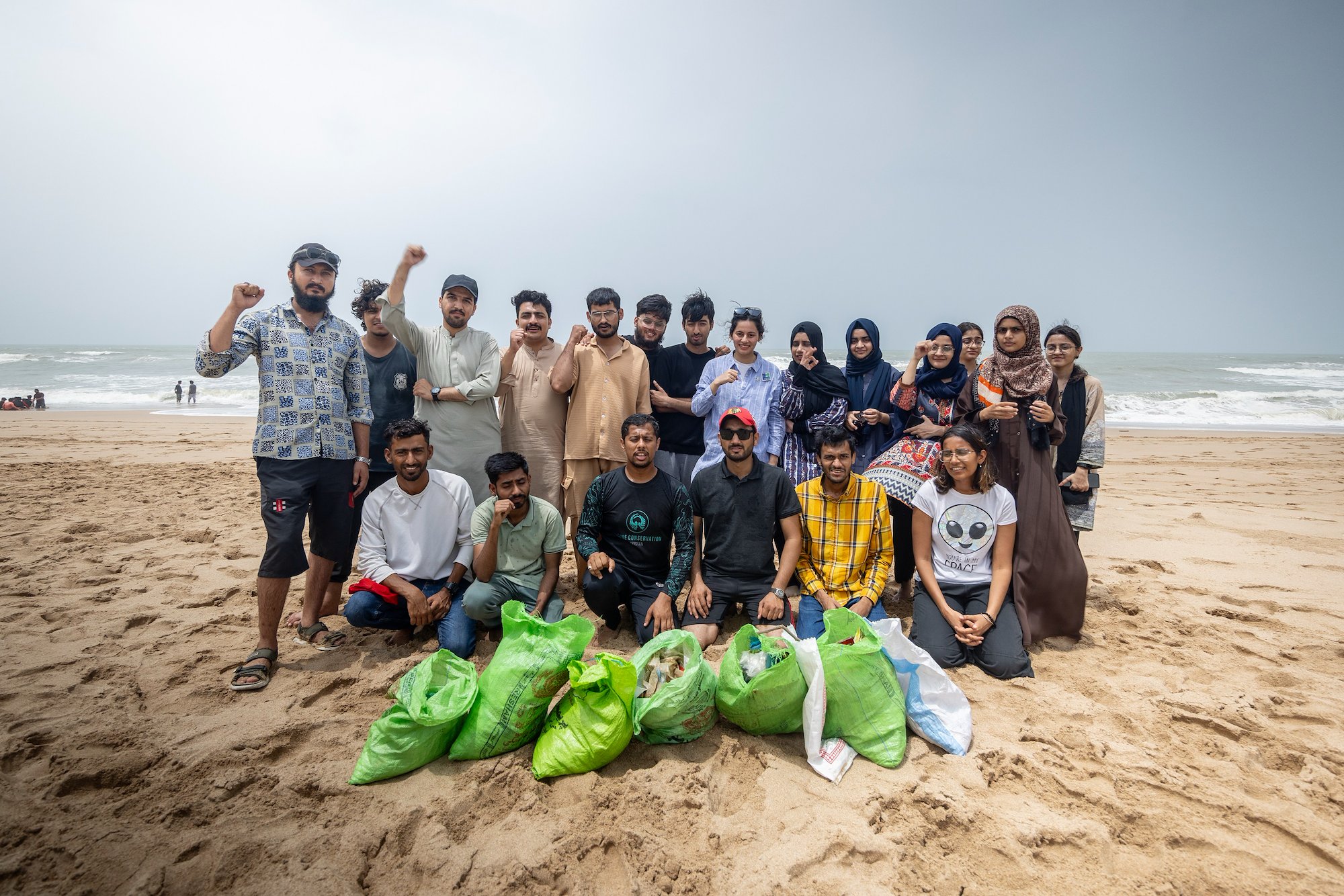
The world is heating. Inequalities are deepening. And yet, across continents, young people are stepping into the cracks of broken systems and reimagining what’s possible. While the world works to respond to the climate crisis, youth from around the world are showing what happens when youth are not just invited to the table but trusted to lead. This article introduces five of these young leaders: Sundus from Pakistan (seen here with her team that brings damaged reefs back to life), Elvis from Liberia, Luís from Bolivia, Pablo from Colombia, Specioza from Uganda. All of them, with support of Youth4Climate, are building new systems of food, energy, mobility and education, from the ground up. Their projects are different, but their experiences and drive are shared. What they show us is clear: when young people are trusted and supported with the right resources, they can drive meaningful and lasting change.

UNEP’s Emissions Gap Report 2025 finds that within the next decade, global temperatures will likely exceed 1.5°C above pre-industrial levels.

Forty years ago, nations adopted the Vienna Convention to safeguard the ozone layer, which shields life on Earth from harmful ultraviolet radiation. This landmark agreement laid the foundation for global efforts to protect both people and the planet. Building on it, the Montreal Protocol successfully phased out ozone-depleting substances, and the Kigali Amendment now targets greenhouse gases. On the International Day for the Preservation of the Ozone Layer (16 September), these treaties together demonstrate how science can drive global cooperation for a safer, healthier future.
The World Meteorological Organization (WMO) has established a new world record for the longest lightning flash – an incredible 829 km (515 miles) in a notorious storm hotspot in the United States of America.

Many disasters, whether man-made or weather-related, are unpredictable. Nevertheless, a growing number of disasters can now be predicted thanks to continuously improving early warning systems. Action before disasters strike can help limit the devastating impact that these have on people and communities everywhere. As extreme weather events are becoming more frequent and humanitarian needs are soaring, it is more crucial than ever to ensure that each dollar goes further. The UN's Food and Agriculture Organization (FAO) promotes anticipatory action to help people in vulnerable situations stay steps ahead and weather the storm.

Performance-based climate finance ties the flow of financial resources directly to the achievement of specific, measurable and independently verified climate results. This clear connection between funding and outcomes increases transparency, which in turn builds trust among all stakeholders involved – from governments and donors to frontline communities working on climate action. Performance-based climate finance also sparks innovation. Since finance depends on the achievement of results, implementers are keen to find the most effective and efficient ways to deliver impact. UNDP is a key enabler of performance-based climate finance worldwide, with extensive experience on climate mitigation.
In the vibrant community of Medina Gounass, Senegal, Modou Fall, also known as the Plastic Man, is dedicated to advocating for a cleaner planet. He raises awareness about the dangers of plastic pollution and educates children on the urgent need for sustainable action to protect the environment.

In Yemen, climate-resilient roads, built "one road at a time" through World Bank-funded projects, help communities withstand extreme weather and climate change impacts.

The UN climate conference in Baku, Azerbaijan, concluded with an agreement calling on developed countries to deliver $300 billion per year to developing countries by 2035 to drastically reduce greenhouse gas emissions and protect lives and livelihoods from the worsening impacts of climate change. “I appeal to governments to see this agreement as a foundation – and build on it,” UN Secretary-General António Guterres said in his statement on COP29.
As climate change impacts intensify, the need for climate services to support mitigation, adaptation and increase resilience has never been higher. In the past five years, there has been progress in provision of this climate information for decision-making, but big gaps remain and investment lags far behind needs, according to a new multi-agency flagship report produced by the World Meteorological Organization (WMO)
Tsunami experts, Rick and Laura, discuss advancements in tsunami warning systems and global preparedness.

The 12th Annual High-Level Meeting of Caring for Climate, hosted by the UN Global Compact, UN Environment and UN Climate Change, will gather leaders from business, government, finance, civil society, and the UN to discuss improving finance flows to support the national climate transition plans. These plans outline how each country would reduce greenhouse gas emissions and adapt to climate change’s impacts. known as the "Finance COP," this year’s COP29 will focus on aligning climate finance with global needs and turning transition plans into actionable investment roadmaps.