Human Rights, Philosophy and Religion

United in dialogue, standing against hate

Hate speech fuels division, intolerance and violence, with digital platforms allowing harmful messages to spread faster and further. The Global Conference on Promoting Interreligious and Intercultural Dialogue and Tolerance in Countering Hate Speech (17 September) brings together the UN Secretary-General, senior officials, religious leaders and other participants to explore how dialogue and mutual respect can counter hatred. The Conference builds on UN efforts to protect human rights, prevent violence and promote peaceful, inclusive societies. Follow the morning and afternoon sessions of the Conference on UN Web TV.

A conference desk displaying the hashtag #FaithInPeace during a UN intercultural and interreligious event on “Building Bridges between East and West”.
Photo:UN/ Paulo Filgueiras
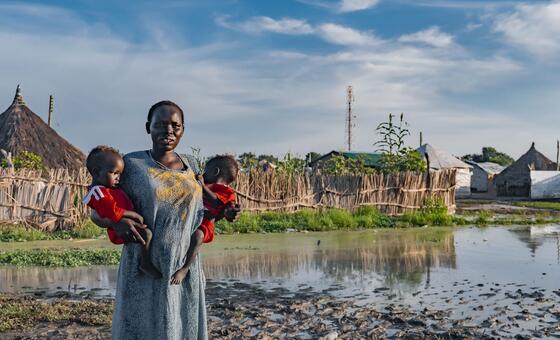
Nyekuola Riek stands in a flooded area in South Sudan holding her twin babies.

As freshwater reserves shrink, countries must prepare for a new water reality

17 September 2026 — The world is entering a period in which abnormal water supplies are becoming the norm, with river flows, groundwater and glaciers all showing signs of sustained disruption, the...

Who should set the rules for AI? The UN is pushing for a safer digital future

16 September 2026 — Artificial intelligence (AI) is advancing rapidly, raising questions about how societies and governments can capture its benefits while managing risks that often extend beyond...

Security Council LIVE: ‘Being a woman is a crime in Afghanistan,’ civil society briefer declares

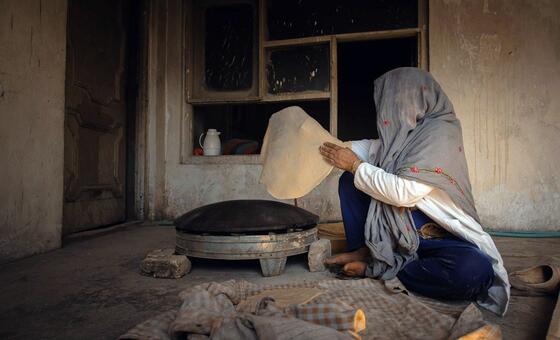
16 September 2026 — Since the Taliban returned to power in Afghanistan in 2021, the continuing presence of terrorist groups as well as rights violations against women and girls are a growing...

UN Sustainable Development Goals

17 Goals to transform our world

The Sustainable Development Goals are a call for action by all countries — poor, rich and middle-income — to promote prosperity while protecting the planet.

hands holding megaphone and speech bubble

The Goals can improve life for all of us. Cleaner air. Safer cities. Equality. Better jobs. These issues matter to everyone. But progress is too slow. We have to act, urgently, to accelerate changes that add up to better lives on a healthier planet. Find new inspiring actions on the app and at un.org/actnow.

Today, half the world is under 30, and this generation is a powerful force for peace. The UN "Hear Us. Act Now for a Peaceful World" campaign, launched on the International Day of Peace, aims to include, invest in, and partner with young people to build lasting peace. 

the UN Secretariat building with country flags, surrounded by colors of the SDGs

Watch our live broadcast of the SDG Media Zone during this year's high-level week from 21-25 September. Discover the transformations, innovations, and global solutions required to accelerate progress on the SDGs. Check out our daily Pulse blog for highlights of the conversations.

SDG logo in General Assembly hall

As world leaders gather for the 81st session of the United Nations General Assembly, the task is clear: to put the Sustainable Development Goals at the centre of global decision-making. Read more in the Goal of the Month editorial

More from the
United Nations

Featured stories from across the United Nations and our world-wide family of agencies, funds, and programmes.

A woman looking at a drying field of wheat. WFP, Humanitarian Aid

Before hunger hits: Preparing for El Niño

In South Sudan, Lokitoe Lokale watches crops wither as drought leaves her struggling to feed her four children. WFP cash assistance arrived when her family needed it most, helping her buy maize flour and beans. Across Africa, Asia and Latin America, similar early support is helping families brace for a powerful El Niño that could push nearly 50 million people into acute hunger. From cash and drought warnings to livestock support, grain silos and farming supplies, the World Food Programme is acting before disaster strikes. In Chad, Oumar is protecting his animals; in Guatemala, Teresa can preserve her harvest. Their stories show how timely assistance can protect food, livelihoods and dignity before weather shocks hit hardest.

:A woman weaving on a wooden loom. UNDP, Economic Development

Making work a path forward

A loan helped Yahia open a kiosk in Egypt. Training and solar-powered equipment enabled Jayalakshmi to start a tailoring business in India. In Cuba, Caridad turns goat’s milk into cheese alongside her daughters, while in Malawi, Emmanuel is developing technology to make rural electricity more affordable. Around the world, the United Nations Development Programme supports people with the tools they need to build livelihoods, from grants and microloans to training and equipment. These stories show that decent work is about more than earning an income: it can bring dignity, independence and opportunity, strengthen families and communities, and help people build their own path out of poverty.

A woman looking at her crops growing. FAO, Agriculture and Food

Savings, loans and resilience: it takes a village

In Côte d’Ivoire, Victorine Akoua farms the same land as her parents, but the rains and seasons they once relied on have changed. Facing costly loans and an unpredictable climate, she found another way forward: saving and borrowing with other women in her village. With affordable credit and training supported by the Food and Agriculture Organization of the United Nations, Victorine now grows vegetables using compost and other sustainable practices, earning more while feeding her family. Women like Sonia France Boa are also pooling savings, farming together and reinvesting their earnings. Their experience shows how shared finance, practical skills and solidarity can help women build livelihoods and face climate change together.

Finance, IFAD

Remittances build global resilience

Remittances reached US$728.6 billion in 2025, supporting households worldwide, strengthening rural economies, and helping families build resilience through savings and investment.

Pollution and Waste, UNEP

Understanding air pollution

Air pollution involves complex pollutants, sources, chemical reactions, measurement standards, and health impacts, making clean air far more technical than it appears.

Economic Development, UNCTAD

Beyond GDP: Measuring progress

A new United Nations Trade and Development dashboard expands economic measurement beyond GDP, tracking well-being, equity, inclusion, sustainability, resilience, and data gaps worldwide.

Sports, WIPO

IP-driven sports innovation

Intellectual property analytics reveals how sports technology evolves, highlighting innovation trends, commercial activity, leading sectors, and the organizations driving technological progress.

What we do

Due to the powers vested in its Charter and its unique international character, the United Nations can take action on the issues confronting humanity in the 21st century, including:

Structure of the
United Nations

The main parts of the UN structure are the General Assembly, the
Security Council, the Economic and Social Council, the Trusteeship Council, the International Court of Justice, and the UN Secretariat. All were established in 1945 when the UN was founded.

The General Assembly is the main deliberative, policymaking and representative organ of the UN. All 193 Member States of the UN are represented in the General Assembly, making it the only UN body with universal representation.

The Security Council has primary responsibility, under the UN Charter, for the maintenance of international peace and security. It has 15 Members (5 permanent and 10 non-permanent members). Each Member has one vote. Under the Charter, all Member States are obligated to comply with Council decisions.

The Economic and Social Council is the principal body for coordination, policy review, policy dialogue and recommendations on economic, social and environmental issues, as well as implementation of internationally agreed development goals.

The Trusteeship Council was established in 1945 by the UN Charter, under Chapter XIII, to provide international supervision for 11 Trust Territories that had been placed under the administration of seven Member States, and ensure that adequate steps were taken to prepare the Territories for self-government and independence.

The International Court of Justice is the principal judicial organ of the United Nations. Its seat is at the Peace Palace in the Hague (Netherlands). It is the only one of the six principal organs of the United Nations not located in New York (United States of America).

The Secretariat comprises the Secretary-General and tens of thousands of international UN staff members who carry out the day-to-day work of the UN as mandated by the General Assembly and the Organization's other principal organs.

Learn more

Podium of the General Assembly Hall seen from below with the gold wall and the golden UN logo behind

The United Nations process to appoint the next Secretary‑General continues with interactive dialogues guided by the principles of transparency and inclusivity. Watch the dialogues with the candidates: Ivonne A-Baki (20 August), Michelle Bachelet Jeria (21 April), María Fernanda Espinosa Garcés (15 June), Rafael Mariano Grossi (21 April), Rebeca Grynspan Mayufis (22 April), Olara Otunnu (19 August), Carolyn Rodrigues Birkett (18 June) and Macky Sall (22 April).


A group of people carrying their few belongings, walking in front of buildings in ruins, at sunset.

This series shines a light on communities facing conflict, displacement, public health emergencies and other humanitarian challenges around the world. Drawing on reporting from across the UN system, it amplifies voices from countries including Haiti, Gaza, DR Congo, Yemen, Afghanistan and Myanmar, to foster understanding, encourage engagement, and help mobilize support, assistance, and protection for the most vulnerable people.

Climate Change is one of the defining issues of our time and we are at a pivotal moment. From shifting weather patterns that threaten food production, to rising sea levels that increase the risk of catastrophic flooding, the impacts of climate change are global in scope and unprecedented in scale. Taking decisive action today will make adapting to these impacts in the future more effective and less costly.

General Assembly hall with the Secretary-General at the podium

The United Nations is the only place on Earth where all the world's nations come together to discuss common problems and find shared solutions that benefit all of humanity. Learn about the main areas of the UN’s activities; how it makes a difference to the world’s people; and how every citizen can get involved and make a contribution. 

Watch and Listen

Video and audio from across the United Nations and our world-wide family of agencies, funds, and programmes.

"The Charter of the United Nations begins with three simple words: “We the peoples.” Not we the powerful. Not we the victorious. We the peoples – all of us – bound by a single conviction: that we are safer, stronger and more human when we stand together."
- António Guterres, 26 June 2026

Next week, world leaders will gather at UNHQ in New York for the 81st United Nations General Assembly session. Together, they will seek solutions to some of the most pressing issues facing humanity.

World Food Day 2026

On 16 October, World Food Day unites people across 150 countries to build a sustainable food future and ensure nutritious food for everyone.

A story of science and trust

Adopted on 16 September 1987, the Montreal Protocol protects the ozone layer, while 2026 marks 10 years of the Kigali Amendment, potentially avoiding 1°C warming.

UN Podcasts

Guterres holds hand of woman in a group of crowd greeting him

António Guterres: It is a gift to serve humanity (AAN S13-E14)

“The things the UN does are noble... I'm privileged again to be able to fight for things that are noble, that correspond to justice, to what is good, but at the same time [the role of Secretary General] is much more bureaucratic in the management and much less emotional in the activities on the ground.”

António Guterres’ drive to serve those less fortunate saw him rise from a volunteer in the slums of Lisbon to the highest spheres of politics, eventually taking on the world’s most important diplomatic role. Now in his final months in office, the ninth Secretary-General of the United Nations shares what keeps him awake at night.

“First of all, [it’s] the enormous suffering because of all the conflicts and injustices that we have. Second, thinking about the future, the two existential threats that we are facing. One is climate change, and the other is artificial intelligence running away without control.”

Preventing wars, easing suffering, acting as the world’s moral compass, all these and more count among the formidable expectations placed on the UN Secretary-General. In this episode, António Guterres looks back on the milestones and setbacks of a long career, reflects on the personal tragedy of the loss of his first wife, and shares why his lasting hope is rooted in the promise of “We, the Peoples.”

Photo: © UN Photo/Eskinder Debebe

Latest Audio from UN News

The United Nations in Pictures

Images from across the United Nations and our world-wide family of agencies, funds, and programmes.

A person filling a bucket with water from the river.
Photo:Jodi Hilton / UNDP

Protecting the water that keeps communities going

For farmers in Armenia’s Ararat Valley, families in Uzbekistan’s drought-strained Aral Sea region and communities relying on glacier-fed rivers in the Kyrgyz Republic, climate change is reshaping the water they depend on every day. Retreating glaciers, erratic rainfall and drought threaten crops, electricity, health and livelihoods. With the United Nations Development Programme support, the three landlocked countries are putting water at the heart of climate adaptation—improving irrigation, protecting river basins, strengthening water management and planning for future shortages. The goal is practical: safeguard the water that keeps communities, farms and economies going.

A group of people talking at the top of a mountain in Morocco.
Photo:© UNOPS

Small grants, big change in local hands

In Saint Lucia, solar power helped a fishers’ cooperative survive financial strain after Hurricane Beryl. In Georgia, Shorena Chapurishvili says electricity has brought life and hope back to her remote village. And in Belize, women solar engineers are bringing clean power to homes and businesses. These are among thousands of locally led projects supported by the GEF Small Grants Programme. More than 30,000 grants over three decades have put resources into communities’ hands, helping them protect forests, embrace clean energy and strengthen livelihoods. The lesson: small investments can give local knowledge the power to create lasting change.