Health, WHO

Stop epidemics in their tracks

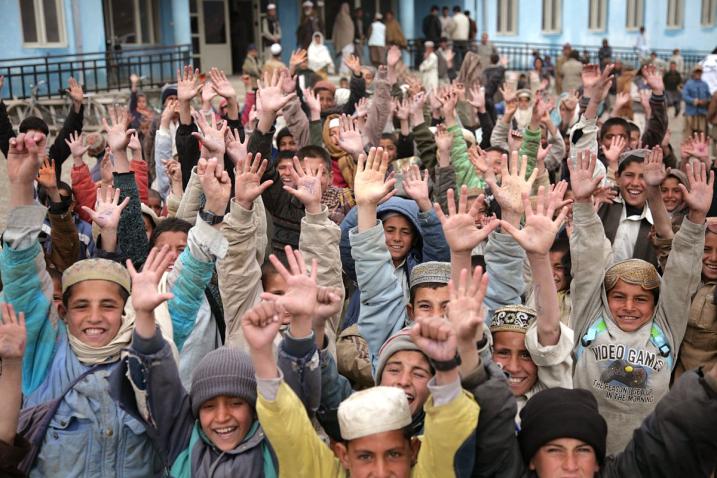
Resilient communities are fundamental to preventing, and responding to, epidemics and pandemics. Our best defense lies not only in science, but also in strong local health systems, well-supported frontline health workers, and local leaders who are prepared to guide their communities through crisis. This International Day of Epidemic Preparedness (27 December) let’s help all communities build a strong foundation for both prevention and recovery. Let’s stop epidemics in their tracks.

There is an urgent need to have resilient and robust health systems, reaching those who are vulnerable or in vulnerable situations.
Photo:Adobe Stock/RomanR
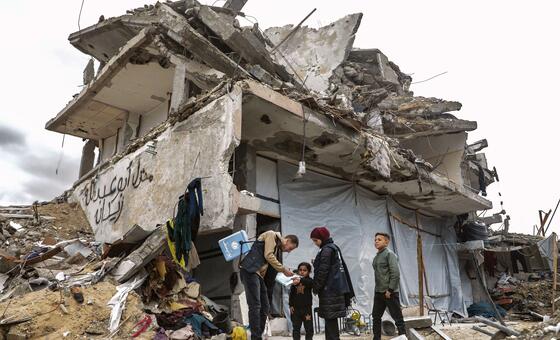
Children sit outside a tent in Gaza.

Gaza: Humanitarian response ongoing despite restrictions

24 December 2025 —  Although “significant restrictions and impediments” continue to hamper humanitarian operations in Gaza, teams are still responding to the population’s needs, the UN aid...

UN Security Council hears warnings over escalating US-Venezuela standoff

23 December 2025 — Tensions between the United States and Venezuela have sharply escalated amid increased US military operations in the Southern Caribbean, prompting accusations of sovereignty...

Historic vote looms in Central African Republic as UN urges peaceful participation

24 December 2025 — With Central Africans set to vote in presidential, legislative, regional and long-delayed municipal elections this weekend, the United Nations has appealed for calm and...

UN Sustainable Development Goals

17 Goals to transform our world

The Sustainable Development Goals are a call for action by all countries — poor, rich and middle-income — to promote prosperity while protecting the planet.

hands holding megaphone and speech bubble

The Goals can improve life for all of us. Cleaner air. Safer cities. Equality. Better jobs. These issues matter to everyone. But progress is too slow. We have to act, urgently, to accelerate changes that add up to better lives on a healthier planet. Find new inspiring actions on the app and at un.org/actnow.

Today, half the world is under 30, and this generation is a powerful force for peace. The UN "Hear Us. Act Now for a Peaceful World" campaign, launched on the International Day of Peace, aims to include, invest in, and partner with young people to build lasting peace. 

children holding up books

Reading and learning are essential to children’s growth and development; stories can fuel their imagination and raise awareness of new possibilities. The SDG Book Club aims to encourage them to learn about the Goals in a fun, engaging way, empowering them to make a difference.

More from the
United Nations

Featured stories from across the United Nations and our world-wide family of agencies, funds, and programmes.

A picture of land and shoreline. Natural Resources and the Environment, UNEP

2025 Champions of the Earth

UNEP has announced five 2025 Champions of the Earth, honoring leaders advancing bold solutions to the climate crisis. Marking the award’s 20th year, the laureates address climate justice, methane reduction, sustainable cooling, resilient architecture, and forest protection. Honorees include Pacific Islands Students Fighting Climate Change for reshaping global climate law; Supriya Sahu for pioneering sustainable cooling and green jobs in India; architect Mariam Issoufou for climate-resilient design in the Sahel; Brazil’s Imazon for AI-driven forest protection; and the late Manfredi Caltagirone for global methane action. Together, they demonstrate that innovative leadership can protect people, ecosystems, and the planet.

Science and Technology, Communication and Mass Media, UNESCO

AI is fueling violence against women journalists

As generative AI advances, women journalists face growing threats including deepfakes, harassment, surveillance, and gendered disinformation. UNESCO is leading a global campaign with major media to expose Technology-Facilitated Gender-Based Violence (TFGBV), which aims to silence and discredit women online and offline. Research shows 73% of women journalists have faced online threats, with many experiencing real-world violence as a result. AI has intensified these attacks, making abuse faster and harder to control. Marking the 2025 International Day to End Impunity for Crimes against Journalists, UNESCO calls for stronger protection, accountability, and action to defend women journalists and freedom of expression worldwide.

Employment, World Bank

2025: Resilience, recovery, and the global push for jobs

Despite conflicts, debt pressures, and climate shocks, 2025 proved more resilient than expected for the global economy. Growth held at around 2.7 percent as countries adapted through digitalization, AI adoption, and diversified supply chains. Against this backdrop, the World Bank Group made job creation its central mission, recognizing jobs as the strongest path out of poverty and instability. With 1.2 billion young people entering the workforce over the next decade, the Bank focused on five high-impact sectors: energy and infrastructure, agribusiness, health care, tourism, and manufacturing. By mobilizing private capital and partnerships, 2025 laid the groundwork for inclusive, job-driven growth heading into 2026.

Intellectual and Cultural Property, WIPO

Fashion meets Intellectual Property

From Emily in Paris to Sex and the City, television fashion has become a powerful asset shaped, monetized, and safeguarded through intellectual property rights that protect costume design, brand collaborations, and merchandising worldwide.

Food, Pollution and Waste, FAO

The Food Loss and Waste Challenge

How much do you know about food loss and waste? Let’s find out! These brainteasers, quizzes, and crosswords will put your knowledge to the test.

Economic Development, UNCTAD

Global growth slows

UNCTAD projects global economic growth will ease to 2.6% in 2025 and 2026, reflecting slowing momentum in major economies as temporary trade and digital boosts fade.

Science and Technology, UN Women

Digital violence escalates

Technology-facilitated violence against women and girls is rapidly increasing worldwide, with online abuse such as deepfakes, doxing, and harassment causing real-world harm and demanding urgent action from governments and the tech industry.

What we do

Due to the powers vested in its Charter and its unique international character, the United Nations can take action on the issues confronting humanity in the 21st century, including:

Structure of the
United Nations

The main parts of the UN structure are the General Assembly, the
Security Council, the Economic and Social Council, the Trusteeship Council, the International Court of Justice, and the UN Secretariat. All were established in 1945 when the UN was founded.

The General Assembly is the main deliberative, policymaking and representative organ of the UN. All 193 Member States of the UN are represented in the General Assembly, making it the only UN body with universal representation.

The Security Council has primary responsibility, under the UN Charter, for the maintenance of international peace and security. It has 15 Members (5 permanent and 10 non-permanent members). Each Member has one vote. Under the Charter, all Member States are obligated to comply with Council decisions.

The Economic and Social Council is the principal body for coordination, policy review, policy dialogue and recommendations on economic, social and environmental issues, as well as implementation of internationally agreed development goals.

The Trusteeship Council was established in 1945 by the UN Charter, under Chapter XIII, to provide international supervision for 11 Trust Territories that had been placed under the administration of seven Member States, and ensure that adequate steps were taken to prepare the Territories for self-government and independence.

The International Court of Justice is the principal judicial organ of the United Nations. Its seat is at the Peace Palace in the Hague (Netherlands). It is the only one of the six principal organs of the United Nations not located in New York (United States of America).

The Secretariat comprises the Secretary-General and tens of thousands of international UN staff members who carry out the day-to-day work of the UN as mandated by the General Assembly and the Organization's other principal organs.

Learn more

Podium of the General Assembly Hall seen from below with the gold wall and the golden UN logo behind

On 25 November 2025, the President of the General Assembly and the President of the Security Council initiated the process of selecting and appointing the next Secretary-General. Candidates are nominated by a Member State or a group of Member States. Learn more about the multi-step selection and appointment process of the next United Nations Secretary-General.

Climate change is the defining issue of our time and now is the defining moment to do something about it. There is still time to tackle climate change, but it will require an unprecedented effort from all sectors of society.

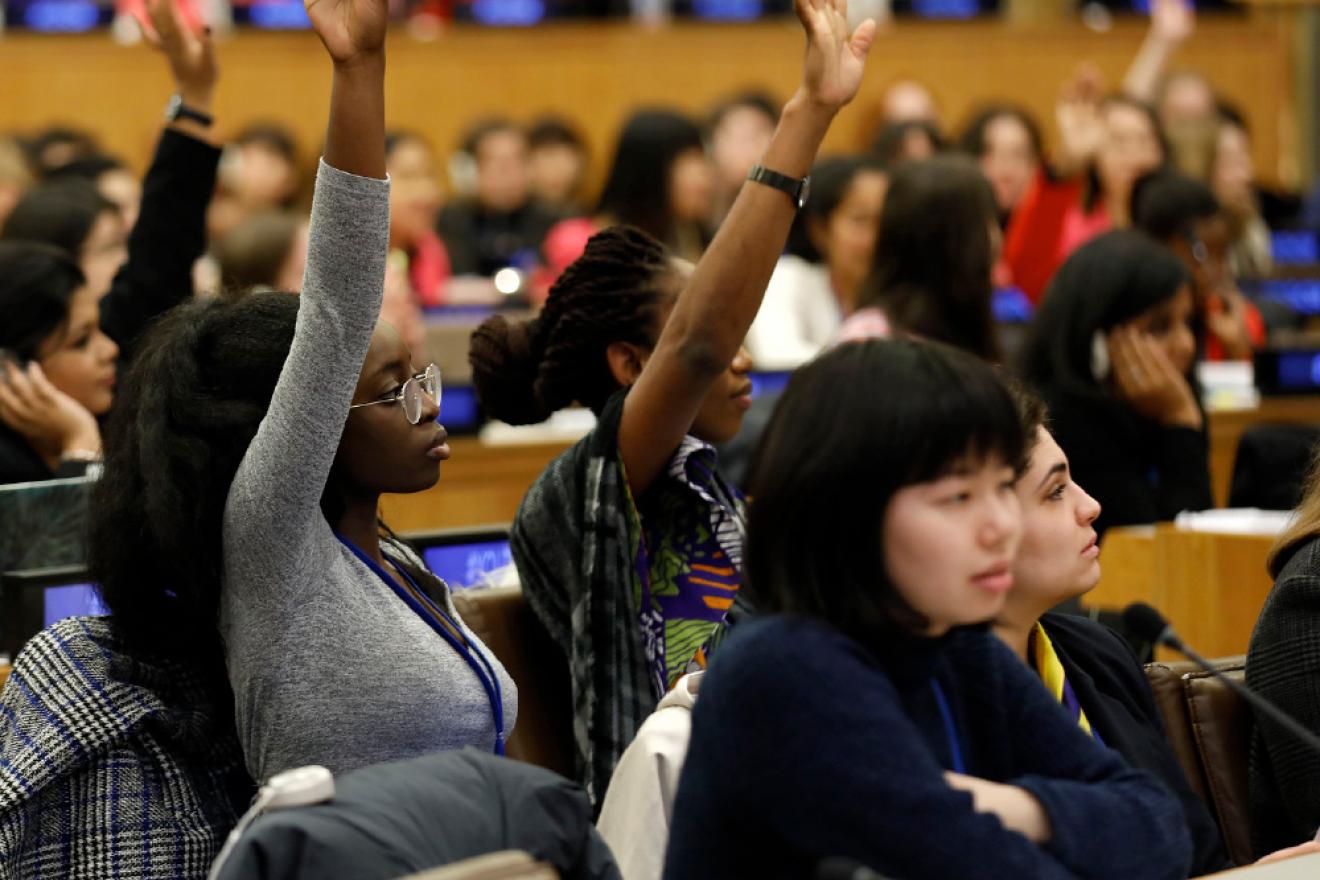
Women at UN CSW63 Side Event - “Take the Hot Seat”. Photo: UN Women/Ryan Brown

Women and girls represent half of the world’s population and, therefore, also half of its potential. Gender equality, besides being a fundamental human right, is essential to achieve peaceful societies, with full human potential and sustainable development.

UN Secretary-General António Guterres is greeted on his visit to the Central African Republic

While global poverty rates have been cut by more than half since 2000, one in ten people in developing regions still lives on less than US$1.90 a day — the internationally agreed poverty line, and millions of others live on slightly more than this daily amount.

Watch and Listen

Video and audio from across the United Nations and our world-wide family of agencies, funds, and programmes.

Lata Korde is a disability inclusion facilitator from Maharashtra, India. With support from the ILO’s SPARK project, funded by IFAD, she gained new skills and confidence and now advocates for the rights and employment of persons with disabilities.

Safer mountains for communities

Everyday life in Uzbekistan’s Pskem Valley is shaped by constant exposure to natural hazards, including landslides and mudflows. Local communities have long relied on local knowledge to live alongside natural hazards. Their stories show how this experience, combined with the scientific and technical support of a UNESCO project, is strengthening preparedness and resilience to landslides and mudflows.

Voices from the Amazon Forest

Indigenous Peoples and traditional communities in Acre, Brazil, are pioneering forest conservation — and shaping how climate finance is used to keep their forests standing. Told through their own voices, UNDP's documentary reveals how they navigate daily realities while protecting Acre’s Amazon Forest for future generations.

UN Podcasts

Various drawings of the cerebral cortex along with the program title, Science in 5.

The Gift of Blood -- Why It Matters

Did you know that you can save three lives in just ten minutes with the gift of your blood? What do countries need to do to have safe blood donation systems ? WHO’s Dr. Yuyun Maryuningsih explains all you need to know to donate blood in Science in 5

Latest Audio from UN News

The United Nations in Pictures

Images from across the United Nations and our world-wide family of agencies, funds, and programmes.

mountain lake
Photo:Unsplash/Mike Dudin

Resilience Reimagined 

Nestled between majestic mountains and shimmering waters, Kyrgyzstan’s Issyk-Kul Basin is more than a scenic wonder, it is a living landscape rich in biodiversity, cultural heritage, and community spirit. Today, this region is at the heart of a powerful movement to restore and protect nature through a global initiative that supports community-led conservation and empowerment by the Global Environment Facility (GEF) Small Grants Programme (SGP), implemented by the United Nations Development Programme (UNDP). The initiative promotes sustainable agriculture and organic farming, restoration of wetlands and wild plant habitats, ecotourism and youth education and community training. It combines innovation with traditional knowledge. 

laughing teenagers perform for their peers
Photo:© UNFPA Zambia / Carly Learson

Wrapping up 2025: Good news stories from a bad year

Throughout 2025, the world read about the record number of conflicts and climate crises tearing apart countries and communities. We heard how steep cuts to humanitarian funding are spelling disaster for millions of people. We watched as AI expanded and digital violence against women and girls took a dangerous new turn. But we also saw ordinary people stepping up and doing extraordinary things: From the midwives delivering babies safely as war ravages Gaza to the teenagers helping each other navigate a path away from adolescent pregnancy in the Philippines, so many individuals showed courage, resilience and a refusal to give up in the face of immense odds. Girls at a safe space in eastern Zambia perform a role-play scenario about peer pressure.