Population

The Age of Longevity: Rethinking Systems for Longer Lives

People worldwide are living longer than ever before, but are those extra years healthy, dignified and fair? Under the theme "The Age of Longevity: Rethinking Systems for Longer Lives," the 2026 International Day of Older Persons calls on governments, civil society, the private sector, researchers and older persons to rethink how societies support longer lives.  The observance highlights the need to ensure that longer lives are also healthy, dignified and fair for all. Watch this year's celebration on UN Webtv.

The number of people aged 60 years or over has more than doubled, from around 541 million in 1995 to 1.22 billion in 2025 and is projected to reach 2.1 billion by 2050.
Photo:Adobe Stock/Ron Dale
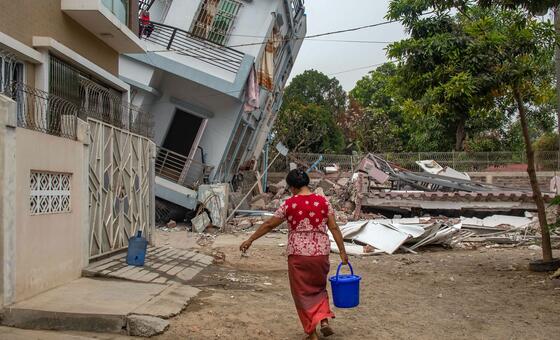
A woman carries a blue bucket of water past a collapsed building in Mandalay, Myanmar, following an earthquake.

Myanmar: Poverty deepens as families face multiple shocks with limited resources

8 October 2026 — Years of conflict, displacement, economic disruption and climate shocks in Myanmar have led to the “simultaneous collapse” of shelter, healthcare, schooling and livelihoods...

Kenya races to trace all contacts after first Ebola death, WHO official says

7 October 2026 — Kenya’s first Ebola death has triggered a race to trace everyone the victim came into contact with, as the United Nations and partners provide full support, the World Health...

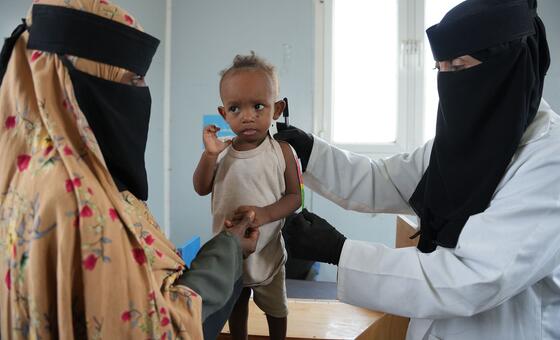
Critical funding gap threatens health response in Yemen

7 October 2026 — The World Health Organization (WHO) warned that significantly more resources are required to scale up its response in Yemen amid escalating conflict and rising needs.

...

UN Sustainable Development Goals

17 Goals to transform our world

The Sustainable Development Goals are a call for action by all countries — poor, rich and middle-income — to promote prosperity while protecting the planet.

hands holding megaphone and speech bubble

The Goals can improve life for all of us. Cleaner air. Safer cities. Equality. Better jobs. These issues matter to everyone. But progress is too slow. We have to act, urgently, to accelerate changes that add up to better lives on a healthier planet. Find new inspiring actions on the app and at un.org/actnow.

Today, half the world is under 30, and this generation is a powerful force for peace. The UN "Hear Us. Act Now for a Peaceful World" campaign, launched on the International Day of Peace, aims to include, invest in, and partner with young people to build lasting peace. 

outline of a drop over a blue background

Coming up in December! The 2026 UN Water Conference, co-hosted by the UAE and the Republic of Senegal, takes place 8 to 10 December in Abu Dhabi, United Arab Emirates. The Conference is an opportunity to strengthen investment, foster innovation, and galvanize political will to accelerate the achievement of Sustainable Development Goal 6: Clean Water and Sanitation.

SDG 15: Life on Land


Goal 15: Life on Land

Sustainably manage forests, combat desertification, halt and reverse land degradation, halt biodiversity loss

More from the
United Nations

Featured stories from across the United Nations and our world-wide family of agencies, funds, and programmes.

A group of women holding hands and forming a circle among themselves. OHCHR, Women and Gender Equality

When seeking help means risking everything

For women who use drugs, asking for help can mean risking arrest or losing their children. A UN Human Rights report reveals how punitive drug policies expose women and girls to abuse, overlook coercion and poverty, and keep them from vital care. Pregnant women can face forced treatment or imprisonment, while mothers may be separated from their children. Globally, only one in 18 women with drug use disorders receives treatment. The report calls for health care that meets women’s needs, alternatives to imprisonment and an end to barriers that deter them from seeking help, with women’s lived experience helping shape policy.

Two women talking to each other in a room with bullet holes in the walls. UNDP

From invisible to recognized

For families on Guinea-Bissau’s remote islands, registering a child can mean days of travel and costs they cannot afford. Mobile legal clinics helped register over 1,300 births in 2025, giving children a legal identity. Across Gaza, the West Bank and East Jerusalem, legal aid, mediation and psychosocial support reached almost 90,000 people, mostly women and children. Working in more than 100 countries and territories, the United Nations Development Programme helps communities access justice, protect their rights and build peace, with trusted local voices shaping solutions.

A close-up image of two hands passing soil from one to the other. FAO, Natural Resources and the Environment

When El Niño brings drought, every minute counts

Cambodian farmer Sokhom Kha once faced drought without knowing what was coming. Now, forecasts give her time to protect her crops. With ten days’ warning that rain would not come, she stored water in her fields. She is among more than 4,000 farmers receiving advice through a project run by the Food and Agriculture Organization of the United Nations and Cambodia’s government, financed by the Green Climate Fund. As El Niño threatens harvests, early warnings and practical guidance help families manage scarce water, reduce losses and protect their livelihoods.

Slavery and Human Trafficking, IOM

From trafficking to recovery

After escaping a scam compound, Fah rebuilds her life through manicure training, legal support and a renewed dream of starting her own business.

SDG 16: Peace, Justice and Strong Institutions, OHCHR

Reparatory justice for enslavement

The UN calls for reparatory justice to address the enduring harms of enslavement and colonialism, urging States and institutions to confront history and repair inequalities.

Economic Development, UNCTAD

Rising debt costs squeeze development

Higher borrowing costs are draining developing countries’ resources, limiting spending on health, education and other essential development priorities.

Health Interventions, UNFPA

Yemen’s maternal health crisis

Escalating conflict in Yemen has displaced over 145,000 people, leaving thousands of pregnant women without safe childbirth, reproductive healthcare, shelter, or protection.

What we do

Due to the powers vested in its Charter and its unique international character, the United Nations can take action on the issues confronting humanity in the 21st century, including:

Structure of the
United Nations

The main parts of the UN structure are the General Assembly, the
Security Council, the Economic and Social Council, the Trusteeship Council, the International Court of Justice, and the UN Secretariat. All were established in 1945 when the UN was founded.

The General Assembly is the main deliberative, policymaking and representative organ of the UN. All 193 Member States of the UN are represented in the General Assembly, making it the only UN body with universal representation.

The Security Council has primary responsibility, under the UN Charter, for the maintenance of international peace and security. It has 15 Members (5 permanent and 10 non-permanent members). Each Member has one vote. Under the Charter, all Member States are obligated to comply with Council decisions.

The Economic and Social Council is the principal body for coordination, policy review, policy dialogue and recommendations on economic, social and environmental issues, as well as implementation of internationally agreed development goals.

The Trusteeship Council was established in 1945 by the UN Charter, under Chapter XIII, to provide international supervision for 11 Trust Territories that had been placed under the administration of seven Member States, and ensure that adequate steps were taken to prepare the Territories for self-government and independence.

The International Court of Justice is the principal judicial organ of the United Nations. Its seat is at the Peace Palace in the Hague (Netherlands). It is the only one of the six principal organs of the United Nations not located in New York (United States of America).

The Secretariat comprises the Secretary-General and tens of thousands of international UN staff members who carry out the day-to-day work of the UN as mandated by the General Assembly and the Organization's other principal organs.

Learn more

Podium of the General Assembly Hall seen from below with the gold wall and the golden UN logo behind

The United Nations process to appoint the next Secretary‑General continues with interactive dialogues guided by the principles of transparency and inclusivity. Watch the dialogues with the candidates: Ivonne A-Baki (20 August), Michelle Bachelet Jeria (21 April), María Fernanda Espinosa Garcés (15 June), Rafael Mariano Grossi (21 April), Rebeca Grynspan Mayufis (22 April), Olara Otunnu (19 August), Carolyn Rodrigues Birkett (18 June) and Macky Sall (22 April).


A group of people carrying their few belongings, walking in front of buildings in ruins, at sunset.

This series shines a light on communities facing conflict, displacement, public health emergencies and other humanitarian challenges around the world. Drawing on reporting from across the UN system, it amplifies voices from countries including Haiti, Gaza, DR Congo, Yemen, Afghanistan and Myanmar, to foster understanding, encourage engagement, and help mobilize support, assistance, and protection for the most vulnerable people.

Climate Change is one of the defining issues of our time and we are at a pivotal moment. From shifting weather patterns that threaten food production, to rising sea levels that increase the risk of catastrophic flooding, the impacts of climate change are global in scope and unprecedented in scale. Taking decisive action today will make adapting to these impacts in the future more effective and less costly.

General Assembly hall with the Secretary-General at the podium

The United Nations is the only place on Earth where all the world's nations come together to discuss common problems and find shared solutions that benefit all of humanity. Learn about the main areas of the UN’s activities; how it makes a difference to the world’s people; and how every citizen can get involved and make a contribution. 

Watch and Listen

Video and audio from across the United Nations and our world-wide family of agencies, funds, and programmes.

8.4 million people are admitted to psychiatric institutions every year. Around the world, outdated laws and systems continue to rely on coercion and institutionalisation instead of recovery, dignity and community support. Hear from people who have lived this experience, sharing what dignity, care and community mean to them, and their vision for rights-based, community-centred mental health care. Please note: AI Generated footage was used in this video to illustrate these real stories.

Things that make Damián smile again after the Venezuela Earthquakes

After losing their mother in the earthquakes in Venezuela, Damián and his sister found a new home and a supportive family with their aunt. Today, soccer, music and trips to the beach are helping them smile again. 

Innovate today. Nourish tomorrow.

Innovation in food and agriculture goes beyond technology. It brings new and traditional ideas, practical solutions and shared knowledge to communities that need them most. Affordable, locally adapted approaches can help grow food, protect nature and build a better future. This World Food Day, let’s innovate today and nourish tomorrow.

UN Podcasts

A golden copyright symbol near silver notes.

Intellectual property and the music industry

Who owns the music we love—and how can musicians protect their work? In WIPOD – Page Points, a podcast from the World Intellectual Property Organization’s Knowledge Center, author Hayleigh Bosher explores her book Copyright in the Music Industry: A Practical Guide to Exploiting and Enforcing Rights, explaining why copyright matters for musicians and how digital technologies and policy changes are reshaping the industry.

Latest Audio from UN News

The United Nations in Pictures

Images from across the United Nations and our world-wide family of agencies, funds, and programmes.

Fishermen cast their nets in unison, their silhouettes caught in the evening light.
Photo:WMO 2027 Calendar Photo Competition - Saurabh Sirohiya

Our world, through the lens of weather

Dust storms sweep across deserts, lightning illuminates city skylines and ancient baobabs glow at sunset. The winners of the World Meteorological Organization’s 2027 Calendar Photo Competition capture the beauty and power of weather, climate and water—and their impact on people’s lives. Under the theme “Your Weather, Your World”, the photographs reveal how these forces shape landscapes and livelihoods, from Madagascar to Antarctica. Explore the winning photographs.

A scene of extreme dry land in the Dry Corridor of Central America.
Photo:WFP/Darlan Bautista

When harvests fail, hunger follows

For families who depend on farm work to buy food, drought can wipe out both crops and wages. The World Food Programme warns that the 2026–27 El Niño could push 49 million people into acute hunger, with communities already facing food crises most exposed. Rising food and fuel prices compound the threat, while funding shortages limit assistance. To protect livelihoods before disaster strikes, the agency is preparing early action in about 51 countries, helping families safeguard food and water supplies and recover sooner.