
Earth’s ecosystems are vital for sustaining human life. They contribute to more than half of global GDP and embody diverse cultural, spiritual, and economic values. However, we are currently facing a triple crisis of climate change, pollution and biodiversity loss.
Forests cover 31.8% of Earth’s land today, but from 2000 to 2020, we lost about 100 million hectares of forest cover. In addition, between 2015 and 2019, the global proportion of degraded land rose from 11.3% to 15.5%, undermining the well-being of 3.2 billion people.
Agricultural expansion is the direct driver of nearly 90% of deforestation, which links back directly to our food systems. For example, harvesting oil palm alone accounted for 7% of global deforestation between 2000 and 2018. Although deforestation is slowing—with the annual rate falling from 12 million hectares between 2010 and 2015 to 10 million between 2015 and 2020—at this current pace, completely halting forest loss as Goal 15 demands will take another 25 years.
Global and regional efforts to sustain forest ecosystems and their social, economic, and environmental functions are essential, particularly for developing nations and tropical regions. To achieve Goal 15, we must fundamentally shift humanity’s relationship with nature and realize that the natural world is the root of our very existence. The Kunming-Montreal Global Biodiversity Framework provides renewed energy for Goal 15, outlining four outcome-oriented goals for 2050 and 23 clear targets to hit by 2030.
Why should we care?
Forests are home to more than 80% of all land-based species of animals, plants, and insects. However, biodiversity is declining faster than at any other point in human history.
Globally, one-fifth of the Earth’s land area is degraded—an area nearly the size of India and Russia combined. While land degradation drives species to extinction and intensifies climate change, healthy biodiversity and ecosystems can actually serve as powerful tools for climate adaptation and disaster risk reduction, helping communities become far more resilient.
What does loss of forests mean?
Losing our forests means the disappearance of livelihoods in rural communities, increased carbon emissions, diminished biodiversity, and worsening land degradation. While forest loss remains high, data shows that the proportion of forests in protected areas or under long-term management plans has stabilized or increased globally and in most regions.
One of the most irreversible impacts of human activity is species extinction, which upsets the balance of nature and leaves ecosystems fragile and vulnerable to disruptions. Catalyzed by the Kunming-Montreal Global Biodiversity Framework, countries are strengthening their environmental laws, with 155 countries establishing national biodiversity targets by 2025. Still, more than 48,600 species face extinction today, and the global extinction risk continues to worsen.
How does it affect our health?
A rising demand for animal protein, unsustainable farming practices, the exploitation of wildlife, and the climate crisis are all driving the emergence of zoonotic diseases—illnesses that jump from wildlife to humans, like COVID-19.
Every year, nearly two million people, primarily in low- and middle-income countries, die from neglected zoonotic diseases. These outbreaks also cause severe illness and productivity losses among livestock in developing regions, creating a devastating cycle that keeps hundreds of millions of small-scale farmers trapped in poverty. In the last two decades alone, zoonotic diseases have caused over $100 billion in economic losses, even before counting the monumental costs of the COVID-19 pandemic.
What can we do?
You can make a difference by recycling, eating a sustainably sourced, locally based diet, and consuming only what you need. It is also important to respect wildlife by only participating in responsible, ethical ecotourism opportunities that avoid disrupting animals in their natural habitats.
Because well-managed, protected areas support healthy ecosystems that ultimately keep people healthy, we must ensure local communities are actively involved in developing and managing these conservation zones.
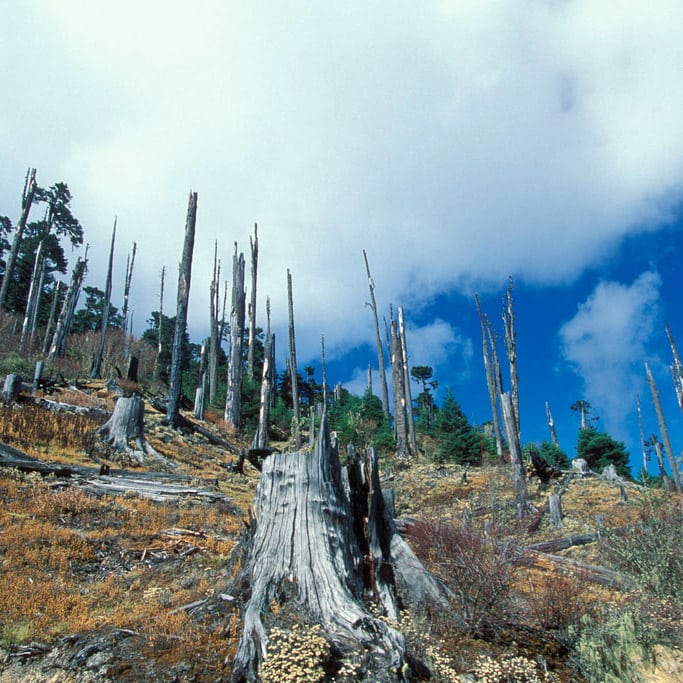
- Forests continue to shrink overall, with 41 million hectares lost since 2015.
- One third of warm-water reef-building corals were at high risk of extinction in 2008, rising to 44 per cent by 2025.
- Despite some progress in sustainable forest management, protected areas, and the uptake of national biodiversity values and natural capital accounting, most improvements have been modest.
- Today 20 per cent of the world’s forests are in legally established protected areas.
15.1 By 2020, ensure the conservation, restoration and sustainable use of terrestrial and inland freshwater ecosystems and their services, in particular forests, wetlands, mountains and drylands, in line with obligations under international agreements
15.2 By 2020, promote the implementation of sustainable management of all types of forests, halt deforestation, restore degraded forests and substantially increase afforestation and reforestation globally
15.3 By 2030, combat desertification, restore degraded land and soil, including land affected by desertification, drought and floods, and strive to achieve a land degradation-neutral world
15.4 By 2030, ensure the conservation of mountain ecosystems, including their biodiversity, in order to enhance their capacity to provide benefits that are essential for sustainable development
15.5 Take urgent and significant action to reduce the degradation of natural habitats, halt the loss of biodiversity and, by 2020, protect and prevent the extinction of threatened species
15.6 Promote fair and equitable sharing of the benefits arising from the utilization of genetic resources and promote appropriate access to such resources, as internationally agreed
15.7 Take urgent action to end poaching and trafficking of protected species of flora and fauna and address both demand and supply of illegal wildlife products
15.8 By 2020, introduce measures to prevent the introduction and significantly reduce the impact of invasive alien species on land and water ecosystems and control or eradicate the priority species
15.9 By 2020, integrate ecosystem and biodiversity values into national and local planning, development processes, poverty reduction strategies and accounts
15.A Mobilize and significantly increase financial resources from all sources to conserve and sustainably use biodiversity and ecosystems
15.B Mobilize significant resources from all sources and at all levels to finance sustainable forest management and provide adequate incentives to developing countries to advance such management, including for conservation and reforestation
15.C Enhance global support for efforts to combat poaching and trafficking of protected species, including by increasing the capacity of local communities to pursue sustainable livelihood opportunities

Related news

Clean your plate – to reduce food loss and waste
Food waste is helping to fuel global warming, one half-eaten sandwich at a time.

DRC: Early access to care and oxygen decisive for Ebola patients’ survival – WHO
In the Democratic Republic of the Congo (DRC), health workers fighting the country’s largest-ever Ebola outbreak are struggling to overcome critical challenges to patient care, the UN World Health Organization (WHO) warned on Tuesday. Read [...]

From energy crisis to energy transition: How renewables are reshaping energy security
The continuing conflict in the Middle East is disrupting global energy markets and pushing up fuel prices, with knock-on effects far beyond the region. Read Full Story on UN News
Related videos
Clean your plate – to reduce food loss and waste
Food waste is helping to fuel global warming, one half-eaten sandwich at a time.
DRC: Early access to care and oxygen decisive for Ebola patients’ survival – WHO
In the Democratic Republic of the Congo (DRC), health workers fighting the country’s largest-ever Ebola outbreak are struggling to overcome critical challenges to patient care, the UN World Health Organization (WHO) warned on Tuesday. Read [...]
From energy crisis to energy transition: How renewables are reshaping energy security
The continuing conflict in the Middle East is disrupting global energy markets and pushing up fuel prices, with knock-on effects far beyond the region. Read Full Story on UN News