
Every person, in every country in every continent is impacted in some shape or form by climate change. Climate change is caused by human activities – primarily the burning of fossil fuels like oil, coal and gas – and threatens life on Earth as we know it. With rising greenhouse gas emissions, the impacts of climate change are intensifying and accelerating,including more frequent extreme weather events like droughts, floods and storms, and rising sea levels.
If left unchecked, climate change will undo a lot of the development progress made over the past years. It can also intensify conflicts over resources and force people to move.
Currently, our planet is already about 1.44°C warmer than it was in the late 1800s, and emissions continue to rise. To keep the 1.5°C limit within reach, – as called for in the Paris Agreement – greenhouse gas emissions must be cut by almost half by 2030 compared to 2019.
The World Meteorological Organization (WMO) has confirmed that the years 2015-2025 have been the 11 warmest on record.. Every year from 2026 to 2030 is projected by WMO to be 1.3°C to 1.9°C above pre-industrial levels.
The solutions exist
Much is happening around the world – investments in renewable energy like wind and solar have soared. But more needs to be done. The world must transform its energy, industry, transport, food, agriculture and forestry systems to ensure that we can preserve a livable planet. Many climate change solutions can deliver economic benefits while improving our lives and protecting the environment.
We also have global frameworks and agreements to guide progress, such as the Sustainable Development Goals, the UN Framework Convention on Climate Change and the Paris Agreement. Three broad categories of action are: reducing greenhouse gas emissions, adapting to climate impacts and financing required adjustments.
Switching energy systems from fossil fuels to renewables like solar or wind will reduce the emissions driving climate change. But we have to act now.
Financing climate action
Climate action requires significant financial investments by governments and businesses. But climate inaction is vastly more expensive. One critical step is for developed countries to support developing countries so they can adapt and move towards greener economies.
At COP29 in November 2024, governments agreed to set a New Collective Quantified Goal on climate finance of at least $300 billion per year by 2035, tripling the previously agreed target.
In a pivotal outcome at COP30 in November 2025, countries agreed on a sweeping package to scale up climate finance that included mobilizing at least $1.3 trillion per year by 2035 for climate action, alongside tripling adaptation finance and operationalizing the loss and damage fund.
While every country needs to work towards net-zero emissions, each country and community also must adapt to climate change. Adaptation is the foremost priority in countries with lower emissions and acute vulnerability to climate fallout, as is the case for many small island developing States and least developed countries. Building storm-resistant housing, planting drought-tolerant crops, installing reliable water supplies and investing in social safety nets are among many adaptation essentials.
Adapting to the consequences of climate change protects people, homes, businesses, livelihoods, infrastructure and natural ecosystems. It covers current impacts and those likely in the future. Adaptation will be required everywhere, but must be prioritized now for the most vulnerable people with the fewest resources to cope with climate hazards. The rate of return can be high. Early warning systems for disasters, for instance, save lives and property, and can deliver benefits up to 10 times the initial cost.
What can I do to help?
While the primary responsibility lies with governments and businesses, there are many things that each of us can do as individuals. To find out what you can do, go to: www.un.org/actnow
To read more about the UN’s efforts on climate change: un.org/climatechange

- According to the United Nations Environment Programme’s Emissions Gap Report 2025, global greenhouse gas emissions hit a record high of 57.7 gigatons of CO2 equivalent in 2024, up 2.3 per cent from 2023 and well above the 0.8 per cent annual average rise from 2010 to 2019.
- Disaster-related mortality has fallen by nearly 65 per cent over the past decade, while national strategies have been adopted by almost three quarters of the world. Yet the number of people affected by disasters has more than doubled, and the world’s most vulnerable countries continue to bear a disproportionate burden.
- The pace and scale of current climate action plans are wholly insufficient to effectively tackle climate change. Increasingly frequent and intense extreme weather events are already impacting every region on Earth. Rising temperatures will escalate these hazards further, posing grave risks.
- The Intergovernmental Panel on Climate Change (IPCC) emphasizes that deep, rapid and sustained reductions in greenhouse gas (GHG) emissions are essential in all sectors, beginning now and continuing throughout this decade. To limit global warming to 1.5°C above pre- industrial levels, emissions must already be decreasing and need to be cut by almost half by 2030.
- Urgent and transformative action is crucial, going beyond mere plans and promises. It requires raising ambition, covering entire economies and moving towards climate-resilient development, while outlining a clear path to achieve net-zero emissions. Time is running out, and immediate measures are necessary to avoid catastrophic consequences and secure a sustainable future for generations to come.
13.1 Strengthen resilience and adaptive capacity to climate-related hazards and natural disasters in all countries
13.2 Integrate climate change measures into national policies, strategies and planning
13.3 Improve education, awareness-raising and human and institutional capacity on climate change mitigation, adaptation, impact reduction and early warning
13.A Implement the commitment undertaken by developed-country parties to the United Nations Framework Convention on Climate Change to a goal of mobilizing jointly $100 billion annually by 2020 from all sources to address the needs of developing countries in the context of meaningful mitigation actions and transparency on implementation and fully operationalize the Green Climate Fund through its capitalization as soon as possible
13.B Promote mechanisms for raising capacity for effective climate change-related planning and management in least developed countries and small island developing States, including focusing on women, youth and local and marginalized communities
*Acknowledging that the United Nations Framework Convention on Climate Change is the primary international, intergovernmental forum for negotiating the global response to climate change.

The Paris Agreement on climate change
The Paris Agreement, which entered into force on 4 November 2016, is a legally binding international treaty among 194 Parties (193 countries and the European Union). It includes commitments from all signatories to reduce their emissions, work together to adapt to the impacts of climate change, and calls on countries to strengthen their commitments over time.
Every five years, each country is expected to submit an updated national climate action plan – known as Nationally Determined Contribution, or NDC.
Implementation of the Agreement is essential for the achievement of the Sustainable Development Goals.
Related News
Media unite behind ‘Promise of 1.5°C’ climate campaign in disaster-prone Japan (2026)
In 2026, the world has been grappling with severe climate [...]
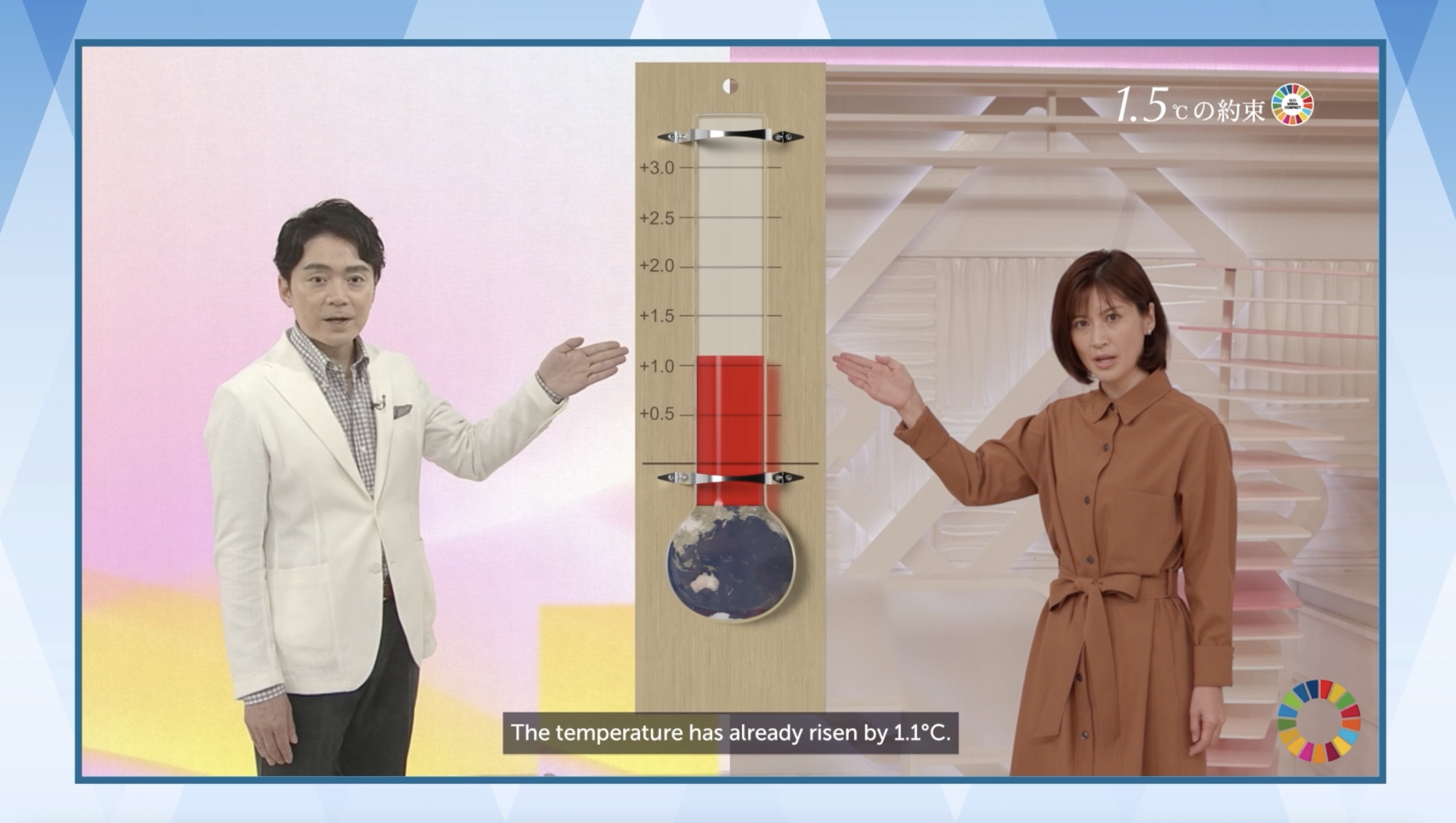
Media unite behind ‘Promise of 1.5°C’ climate campaign in disaster-prone Japan
26 September, NEW YORK – Typhoon No. 14 slammed [...]

Amid heartache of Nepal flooding disaster, fear remains
Six weeks after Nepal’s deadly flooding disaster, communities are still [...]
Related Videos
Launch of Secretary-General’s Youth Advisory Group on Climate Change – 27 July
Building on the climate action momentum, the Secretary-General will launch his Youth Advisory Group on Climate Change on 27 July to amplify youth voices and to engage young people in an open and transparent dialogue as the UN gears up to raise ambition and accelerate action to address the climate crisis.
ActNow Climate Campaign – Chef Grace Ramirez
Chef Grace Ramirez talks about sustainability and green hacks in support of the UN's ActNow climate campaign.
Angry Birds 2 PSA in support of the ActNow Climate Campaign
The Department of Global Communications is partnering with Sony Pictures Entertainment and the UN Foundation for a second time on an initiative to promote the Sustainable Development Goal 13 – take urgent action against climate change and its impacts.