
Achieving gender equality and empowering all women and girls is not just the right thing to do, it’s essential for sustainable development. Goal 5 focuses on closing the gender gap and ensuring equal opportunities for all.
Gender equality is not only a fundamental human right, but a necessary foundation for a peaceful, prosperous and sustainable world. There has been progress over the last decades, but the world is not on track to achieve gender equality by 2030.
Women and girls represent half of the world’s population and therefore also half of its potential. But gender inequality persists everywhere and stagnates social progress. Sexual violence and exploitation, the unequal division of unpaid care and domestic work, and discrimination in public office, all remain huge barriers.
On average, women in the labor market still occupy only 30 per cent of managerial positions globally and women spend about two and a half times as many hours in unpaid domestic and care work as men.
At the rate of progress as of 2023, it would take an estimated 300 years to end child marriage, 286 years to close gaps in legal protection and remove discriminatory laws, 140 years for women to be represented equally in positions of power and leadership in the workplace, and 47 years to achieve equal representation in national parliaments.
Political leadership, investments and comprehensive policy reforms are needed to dismantle systemic barriers to achieving Goal 5 Gender equality is a cross-cutting objective and must be a key focus of national policies, budgets and institutions.
How much progress have we made?
Significant progress in advancing women’s rights has been recorded globally, with 99 positive legal reforms implemented between 2019 and 2024 to remove discriminatory laws and establish gender equality frameworks. International commitments to advance gender equality have brought about improvements in some areas: child marriage and female genital mutilation (FGM) have declined in recent years, and women’s representation in the political arena is higher than ever before. But the promise of a world in which every woman and girl enjoys full gender equality, and where all legal, social and economic barriers to their empowerment have been removed, remains unfulfilled.
Are there any other gender-related challenges?
Yes. Worldwide, 43.7 per cent of married women lack decision-making power over their sexual and reproductive health and rights. 35 per cent of women between 15-49 years of age have experienced physical and/or sexual intimate partner violence or non-partner sexual violence. Globally, over 230 million girls and women have experienced some form of female genital mutilation/cutting which has a high risk of prolonged bleeding, infection (including HIV), childbirth complications, infertility and death.
This type of violence doesn’t just harm individual women and girls; it also undermines their overall quality of life and hinders their active involvement in society.
Why should gender equality matter to me?
Regardless of where you live in, gender equality is a fundamental human right. Advancing gender equality is critical to all areas of a healthy society, from reducing poverty to promoting the health, education, protection and the well-being of girls and boys.
What can we do?
If you are a girl, you can stay in school, help empower your female classmates to do the same and fight for your right to access sexual and reproductive health services. If you are a woman, you can address unconscious biases and implicit associations that form an unintended and often an invisible barrier to equal opportunity.
If you are a man or a boy, you can work alongside women and girls to achieve gender equality and embrace healthy, respectful relationships.
You can fund education campaigns to curb cultural practices like female genital mutilation and change harmful laws that limit the rights of women and girls and prevent them from achieving their full potential.
The Spotlight Initiative is an EU/UN partnership, and a global, multi-year initiative focused on eliminating all forms of violence against women and girls – the world’s largest targeted effort to end all forms of violence against women and girls.
- In 2024, legal barriers to gender equality persist: 61 countries out of 131 surveyed (47%) still restrict women from doing the same jobs as men, 38 countries (29%) set 18 as the minimum marriage age with no exceptions, and 63 countries (48%) define rape based on lack of consent.
- Nearly one in five young women aged 20–24 (19%) were married or in a union before turning 18. Although child marriage has declined globally, mainly due to progress in Southern Asia, it remains highest in sub-Saharan Africa (31%), where the number of child brides is projected to rise by 2030.
- Globally, over 230 million girls and women have undergone female genital mutilation, with 4 million girls undergoing the harmful practice each year. Eliminating female genital mutilation by 2030 will require accelerating progress to 27 times the pace of the past decade.
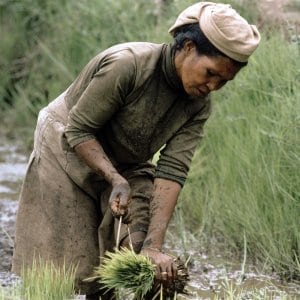
- In nearly 80 per cent of countries with data, fewer than half of women have ownership or secure rights to agricultural land, which are vital for empowering rural women and strengthening agrifood systems.
- As of 1 January 2025, women held 27.2 per cent of the seats in national parliaments; this is up 4.9 percentage points from 2015 but only 0.3 points from 2024.
- Political leadership, investments and comprehensive policy reforms are needed to dismantle systemic barriers to achieving Goal 5. Gender equality is a cross-cutting objective and must be a key focus of national policies, budgets and institutions.
5.1 End all forms of discrimination against all women and girls everywhere
5.2 Eliminate all forms of violence against all women and girls in the public and private spheres, including trafficking and sexual and other types of exploitation
5.3 Eliminate all harmful practices, such as child, early and forced marriage and female genital mutilation
5.4 Recognize and value unpaid care and domestic work through the provision of public services, infrastructure and social protection policies and the promotion of shared responsibility within the household and the family as nationally appropriate
5.5 Ensure women’s full and effective participation and equal opportunities for leadership at all levels of decisionmaking in political, economic and public life
5.6 Ensure universal access to sexual and reproductive health and reproductive rights as agreed in accordance with the Programme of Action of the International Conference on Population and Development and the Beijing Platform for Action and the outcome documents of their review conferences
5.A Undertake reforms to give women equal rights to economic resources, as well as access to ownership and control over land and other forms of property, financial services, inheritance and natural resources, in accordance with national laws
5.B Enhance the use of enabling technology, in particular information and communications technology, to promote the empowerment of women
5.C Adopt and strengthen sound policies and enforceable legislation for the promotion of gender equality and the empowerment of all women and girls at all levels


 The European Union (EU) and the United Nations (UN) are embarking on a new, global, multi-year initiative focused on eliminating all forms of violence against women and girls (VAWG) – the Spotlight Initiative.
The Initiative is so named as it brings focused attention to this issue, moving it into the spotlight and placing it at the centre of efforts to achieve gender equality and women’s empowerment, in line with the 2030 Agenda for Sustainable Development.
An initial investment in the order of EUR 500 million will be made, with the EU as the main contributor. Other donors and partners will be invited to join the Initiative to broaden its reach and scope. The modality for the delivery will be a UN multi- stakeholder trust fund, administered by the Multi-Partner Trust Fund Office, with the support of core agencies UNDP, UNFPA and UN Women, and overseen by the Executive Office of the UN Secretary-General.
Related news
Press Release| The world is failing girls and women, according to new UN report
The world is failing girls and women, according to new UN report New figure points to the need of an additional $360 billion in investment per year to achieve genderequality and women’s empowerment by 2030. [...]
Liberia, Mexico, Niger, Senegal and Sierra Leone to tackle barriers to the deployment of women in peace operations with the support of the UN Elsie Initiative Fund
PRESS RELEASE 28 APRIL 2021 MEDIA ENQUIRIES media.team@unwomen.org Liberia, Mexico, Niger, Senegal and Sierra Leone to tackle barriers to the deployment of women in peace operations with the support of the UN Elsie Initiative [...]
Women’s job market participation stagnating at less than 50% for the past 25 years, finds UN report
New York, 20 October – Less than 50% of working-age women are in the labour market, a figure that has barely changed over the last quarter of a century, according to a new UN report launched today. Unpaid domestic and care work falls disproportionately on women, restraining their economic potential as the COVID-19 pandemic additionally affects women’s jobs and livelihoods, the report warns.
Related videos
Could a new global panel defuse inequality’s ‘ticking time bomb’?
What if the world tackled inequality with the same kind of scientific firepower it has brought to the climate crisis?
Clean your plate – to reduce food loss and waste
Food waste is helping to fuel global warming, one half-eaten sandwich at a time.
DRC: Early access to care and oxygen decisive for Ebola patients’ survival – WHO
In the Democratic Republic of the Congo (DRC), health workers fighting the country’s largest-ever Ebola outbreak are struggling to overcome critical challenges to patient care, the UN World Health Organization (WHO) warned on Tuesday. Read [...]