Health

Raise your voice against unaffordable health costs

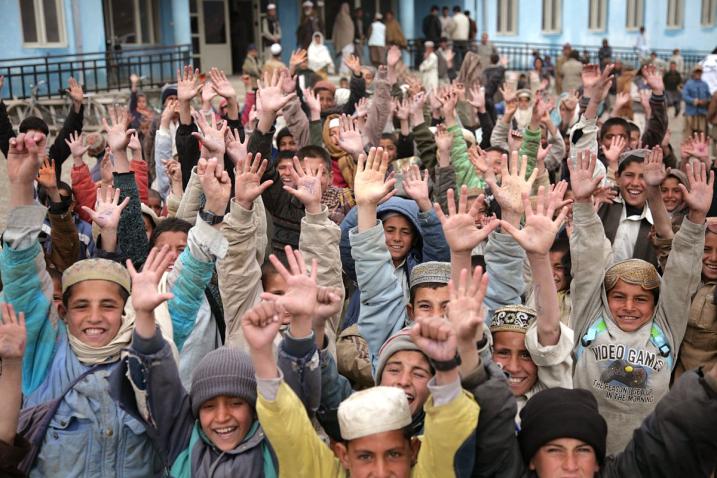
More than half of the world’s population still lacks access to essential health services. And a quarter of them face financial hardship when paying for health care out of their own pockets, often at the expense of food, education or housing. International Universal Health Coverage Day (12 December) is the annual rallying point for the global movement for health for all. Building on momentum from 2024, this year's campaign highlights the devastating human impact of unaffordable health costs and calls on decision-makers to prioritize universal health coverage.

The observance aims to raise awareness of the need for strong, resilient health systems and for universal health coverage with multi-stakeholder partners.
Photo:Adobe Stock/NINENII
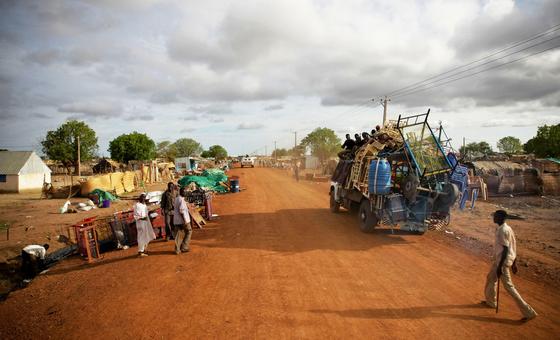
Abyei is a disputed area on the border of Sudan and South Sudan.

Sudan: UN strongly condemns deadly drone attack on peacekeeping base in Kordofan

13 December 2025 — Six peacekeepers were killed, and eight others injured, in drone attacks targeting the UN logistics base in Kadugli, Sudan, on Saturday.

...

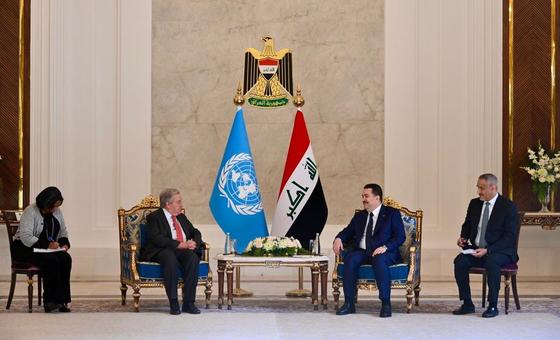
In Baghdad, Guterres hails ‘new chapter’ in Iraq as UN mission closes

13 December 2025 — The United Nations Assistance Mission for Iraq (UNAMI) is ending operations this month but support for the country will continue, Secretary-General António Guterres affirmed at...

UN mission’s exit marks milestone in Iraq’s post-conflict transition

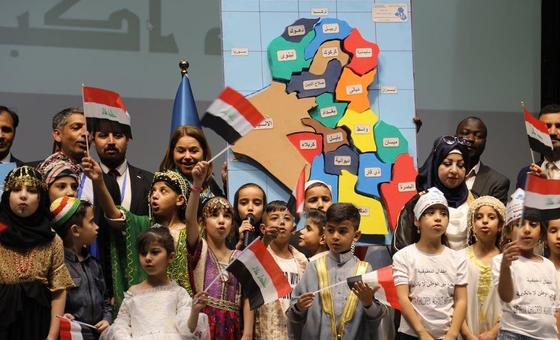
12 December 2025 — After more than two decades working alongside Iraq through war, political upheaval and the fight against ISIL terrorists, the UN Assistance Mission there (UNAMI) ends its...

UN Sustainable Development Goals

17 Goals to transform our world

The Sustainable Development Goals are a call for action by all countries — poor, rich and middle-income — to promote prosperity while protecting the planet.

hands holding megaphone and speech bubble

The Goals can improve life for all of us. Cleaner air. Safer cities. Equality. Better jobs. These issues matter to everyone. But progress is too slow. We have to act, urgently, to accelerate changes that add up to better lives on a healthier planet. Find new inspiring actions on the app and at un.org/actnow.

Today, half the world is under 30, and this generation is a powerful force for peace. The UN "Hear Us. Act Now for a Peaceful World" campaign, launched on the International Day of Peace, aims to include, invest in, and partner with young people to build lasting peace. 

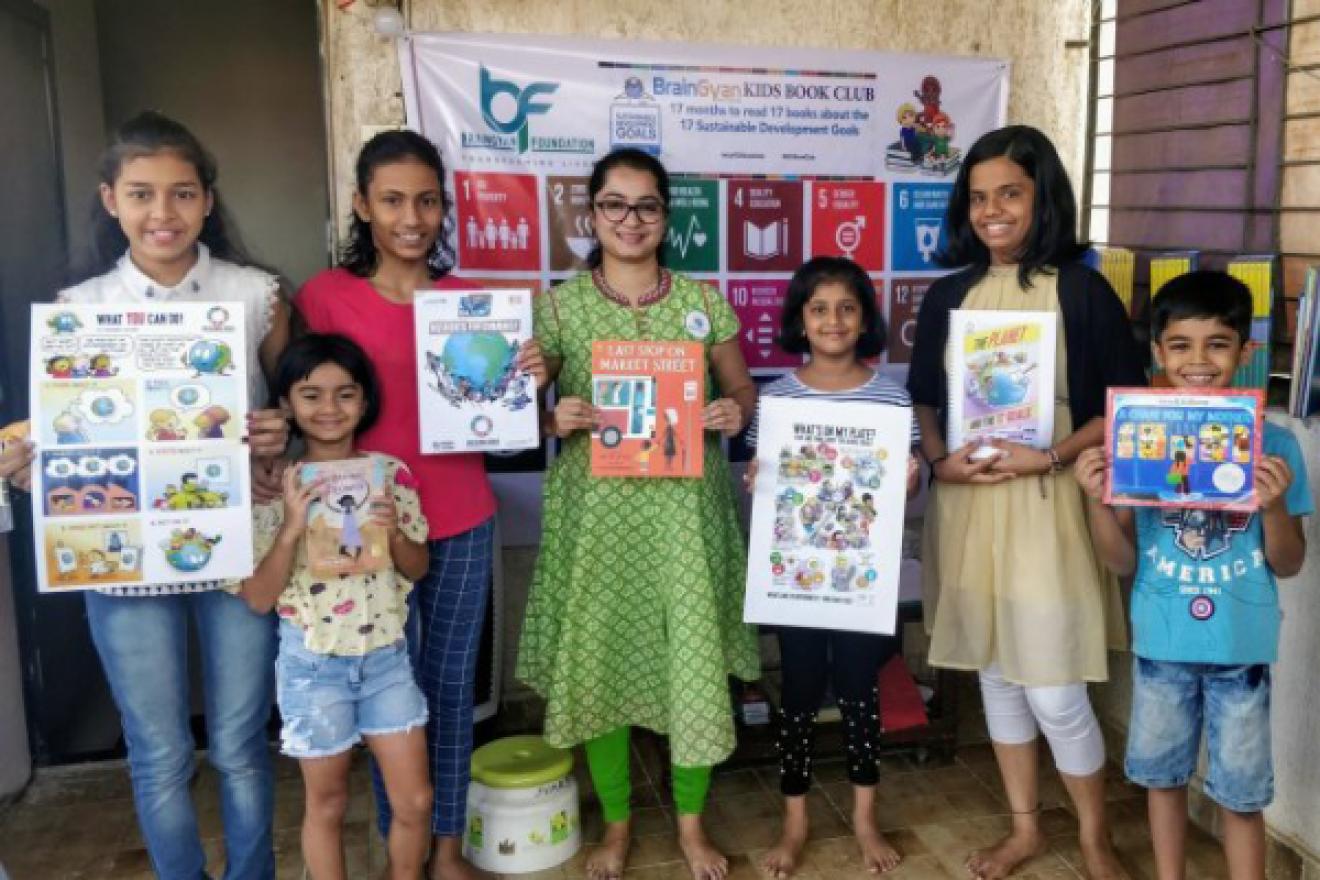
children holding up books

Reading and learning are essential to children’s growth and development; stories can fuel their imagination and raise awareness of new possibilities. The SDG Book Club aims to encourage them to learn about the Goals in a fun, engaging way, empowering them to make a difference.

More from the
United Nations

Featured stories from across the United Nations and our world-wide family of agencies, funds, and programmes.

A view of a National Park in Utah, United States of America. Natural Resources and the Environment, UNEP

A healthier planet isn’t just a dream, it’s a trillion-dollar opportunity

Climate change, biodiversity loss, and pollution already cost trillions annually, warns a new United Nations Environment Programme report. But systemic transformation, circular economies, clean energy, sustainable agriculture, could unlock $20 trillion yearly by 2070, save nine million premature deaths, and lift millions from poverty and hunger. Investing $8 trillion a year until 2050 secures a thriving planet and economy. However, the cost of inaction is far higher.

A newborn baby lying on a bed, wrapped in a blanket, with parents close by in a hospital. Health, WHO

Progress toward universal health coverage, but billions still left behind

Since 2000, nations have advanced toward universal health coverage, more care, and less financial strain. Yet billions still lack essential services, and millions are pushed deeper into poverty by out-of-pocket costs, largely for medicines. A new study from the World Health Organization-World Bank warns: without bold investment, by 2030 many will still face hardship. Health is a right, but for too many, it remains a distant promise.

A woman seated outdoors on a grassy area near a mountainous landscape, operating a traditional wooden loom. Economic Development, FAO

From Himalayan mountain tops to Milan catwalks

In the Himalayan mountains of Bhutan, women in the village of Goenpa Kabab weave intricate silk Kishuthara dresses on backstrap looms, a skill passed down through generations in a Buddhist, matriarchal community. Sherab Tshomo, a 41-year-old artisan, has been perfecting this craft since age eight, which involves dyeing raw silk with local plants and using traditional methods to create detailed patterns. Despite the high value of these garments within Bhutan and abroad, many women artisans struggle to access international markets, including the global fashion industry, to showcase their artistry and heritage.

Displaced Persons and Refugees, IOM

Gaza’s families struggle to rebuild

One month into the ceasefire, Gaza’s displaced families are experiencing brief relief but remain exposed to the cold and devastation as urgent humanitarian access and shelter support are desperately needed.

Health Interventions, UNFPA

Premature births and underground deliveries

Amid relentless attacks and rising stress, maternity hospitals across Ukraine are forced to deliver babies in underground shelters as premature births and maternal risks sharply increase.

Culture, UNESCO

Saving Paraguay’s legendary 60-stripe poncho

Once a symbol of resilience in precolonial and wartime Paraguay, the Poncho Para’í de 60 Listas now relies on UNESCO-backed support to overcome dwindling materials and aging craftsmanship as communities work to keep its ancestral weaving traditions alive.

Economic Development, UNCTAD

Global trade growth rebounds

Global trade is set to grow 7% in 2025, driven by East Asia, Africa and manufacturing, reaching a record $35 trillion despite persistent imbalances and rising geopolitical fragmentation.

What we do

Due to the powers vested in its Charter and its unique international character, the United Nations can take action on the issues confronting humanity in the 21st century, including:

Structure of the
United Nations

The main parts of the UN structure are the General Assembly, the
Security Council, the Economic and Social Council, the Trusteeship Council, the International Court of Justice, and the UN Secretariat. All were established in 1945 when the UN was founded.

The General Assembly is the main deliberative, policymaking and representative organ of the UN. All 193 Member States of the UN are represented in the General Assembly, making it the only UN body with universal representation.

The Security Council has primary responsibility, under the UN Charter, for the maintenance of international peace and security. It has 15 Members (5 permanent and 10 non-permanent members). Each Member has one vote. Under the Charter, all Member States are obligated to comply with Council decisions.

The Economic and Social Council is the principal body for coordination, policy review, policy dialogue and recommendations on economic, social and environmental issues, as well as implementation of internationally agreed development goals.

The Trusteeship Council was established in 1945 by the UN Charter, under Chapter XIII, to provide international supervision for 11 Trust Territories that had been placed under the administration of seven Member States, and ensure that adequate steps were taken to prepare the Territories for self-government and independence.

The International Court of Justice is the principal judicial organ of the United Nations. Its seat is at the Peace Palace in the Hague (Netherlands). It is the only one of the six principal organs of the United Nations not located in New York (United States of America).

The Secretariat comprises the Secretary-General and tens of thousands of international UN staff members who carry out the day-to-day work of the UN as mandated by the General Assembly and the Organization's other principal organs.

Learn more

Podium of the General Assembly Hall seen from below with the gold wall and the golden UN logo behind

On 25 November 2025, the President of the General Assembly and the President of the Security Council initiated the process of selecting and appointing the next Secretary-General. Candidates are nominated by a Member State or a group of Member States. Learn more about the multi-step selection and appointment process of the next United Nations Secretary-General.

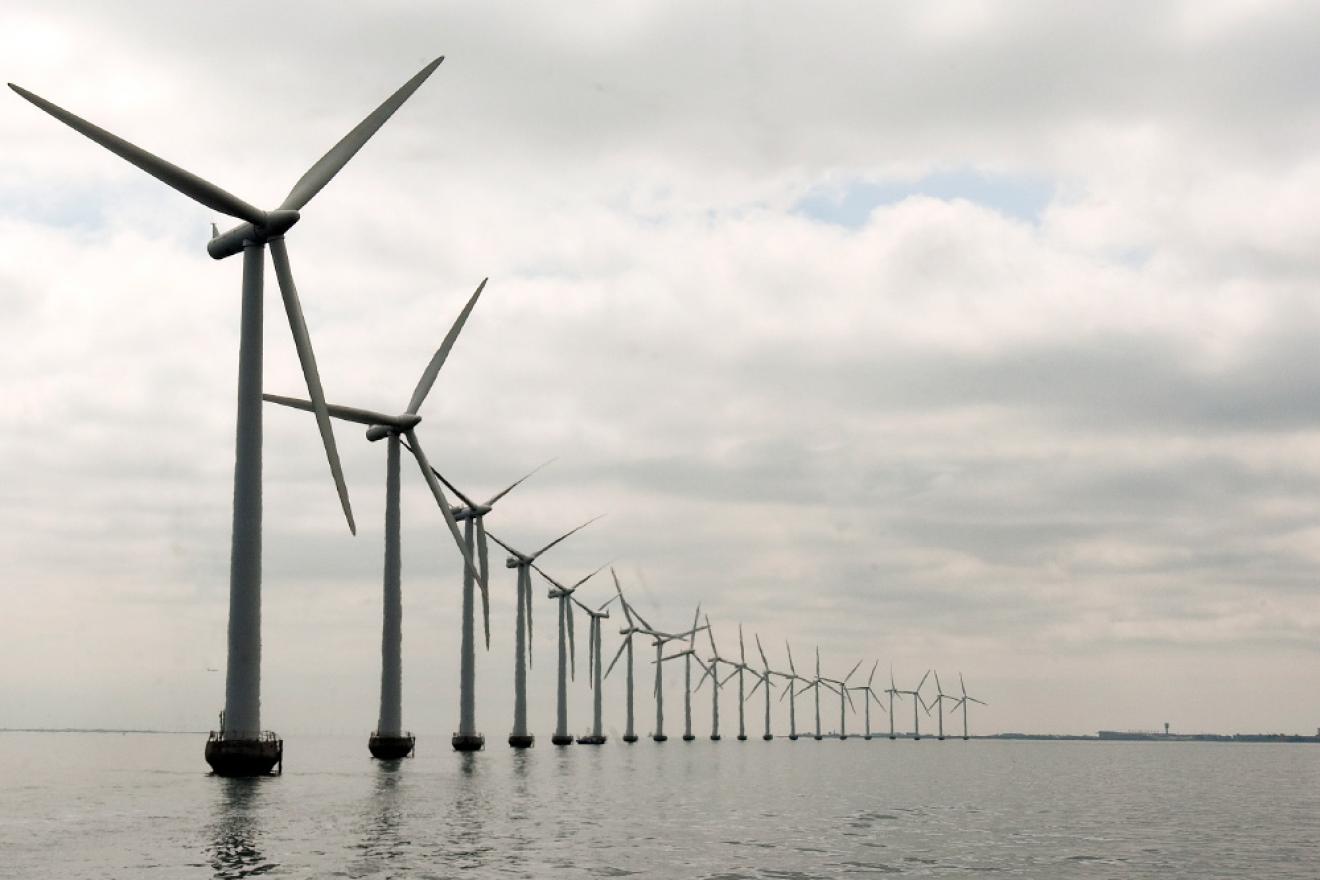
Climate change is the defining issue of our time and now is the defining moment to do something about it. There is still time to tackle climate change, but it will require an unprecedented effort from all sectors of society.

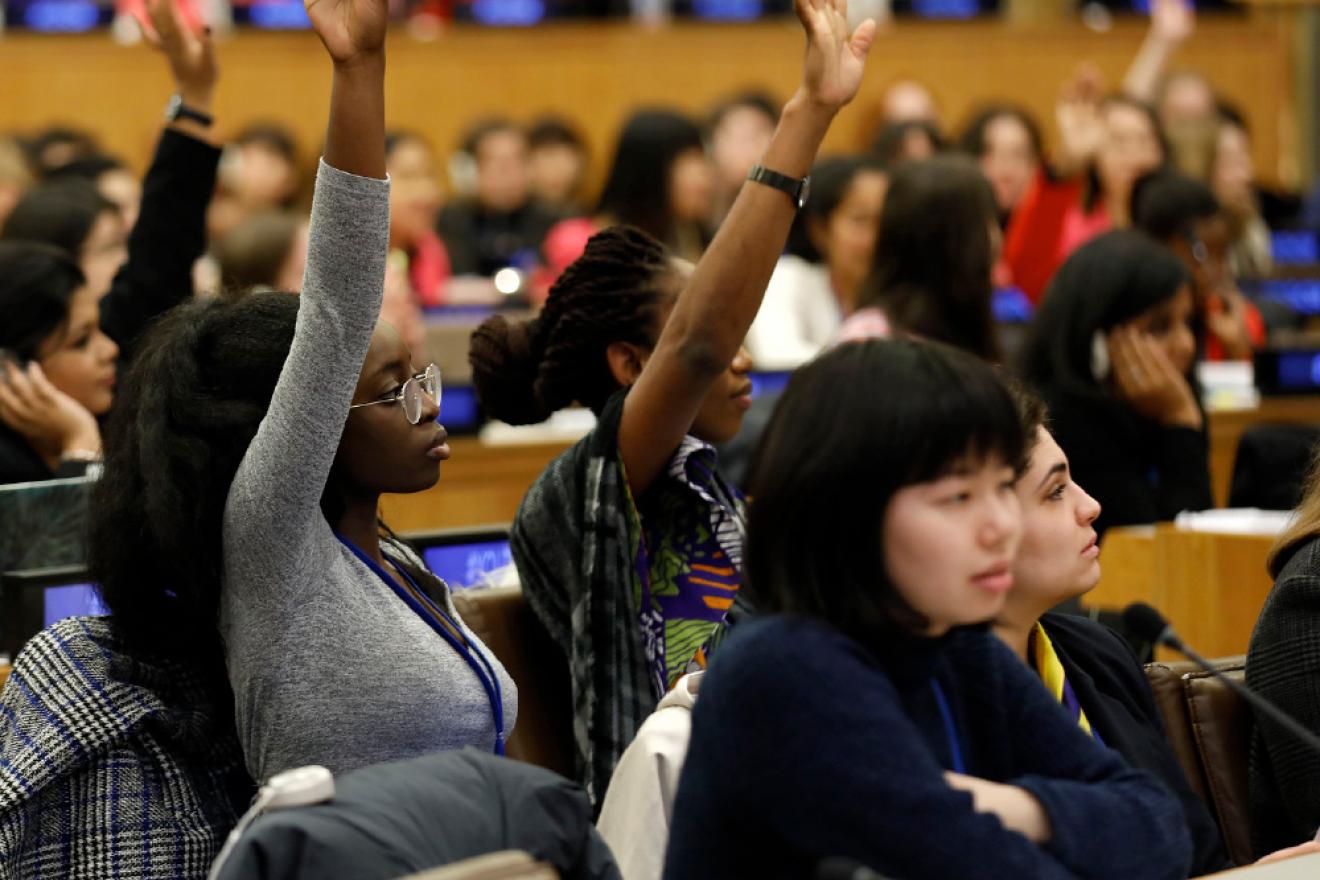
Women at UN CSW63 Side Event - “Take the Hot Seat”. Photo: UN Women/Ryan Brown

Women and girls represent half of the world’s population and, therefore, also half of its potential. Gender equality, besides being a fundamental human right, is essential to achieve peaceful societies, with full human potential and sustainable development.

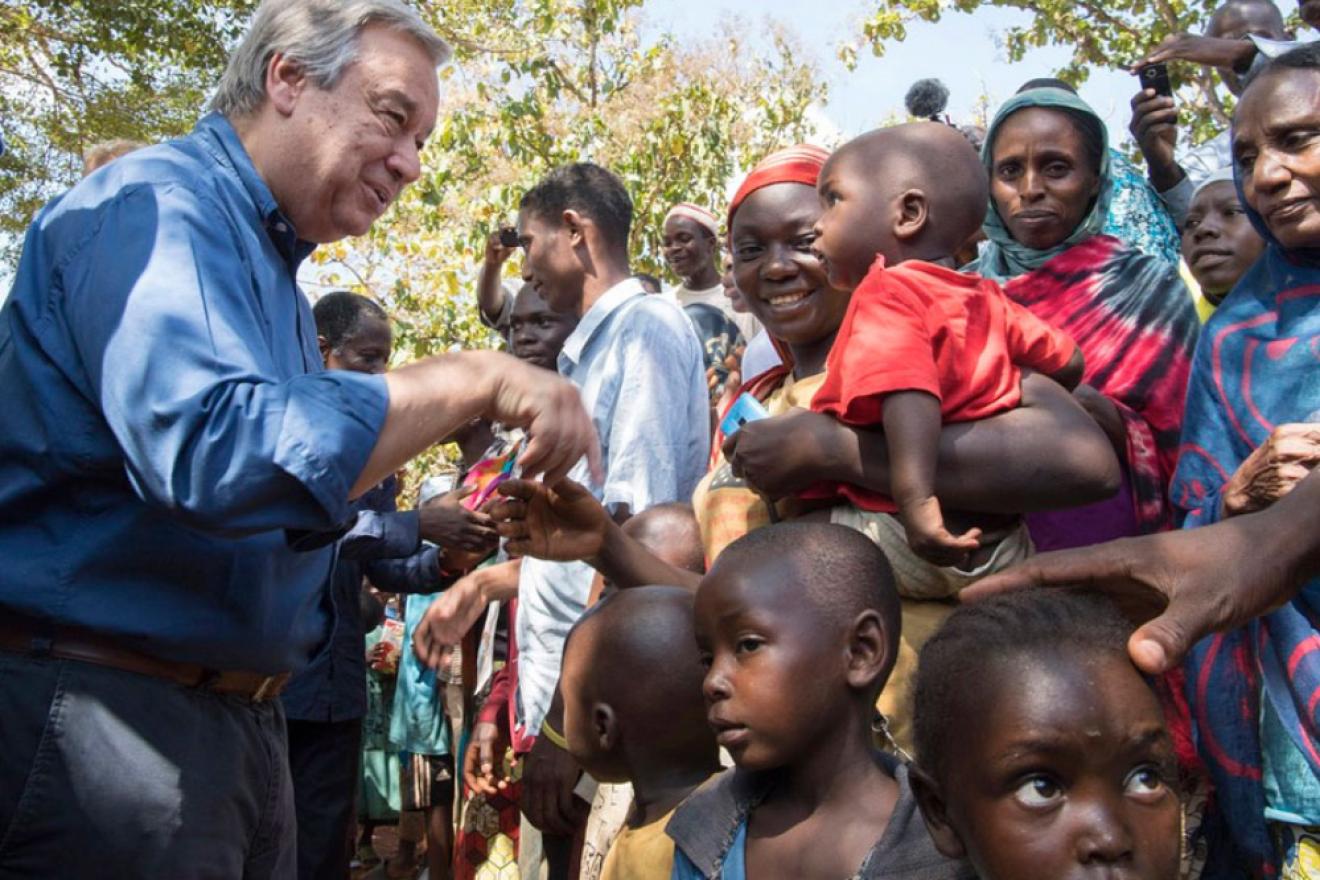
UN Secretary-General António Guterres is greeted on his visit to the Central African Republic

While global poverty rates have been cut by more than half since 2000, one in ten people in developing regions still lives on less than US$1.90 a day — the internationally agreed poverty line, and millions of others live on slightly more than this daily amount.

Watch and Listen

Video and audio from across the United Nations and our world-wide family of agencies, funds, and programmes.

Musician George Harrison of The Beatles visited the United Nations in New York on 20 December 1974. He met UN Secretary General Kurt Waldheim and briefed the press on his donation of proceeds from concerts to UNICEF. 

Impact of funding cuts on children

More than one million people live in Cox’s Bazar refugee camps, over half children, and funding cuts are forcing UNICEF to make impossible choices about life-saving services, says Orlando Bloom.

International Year of Rangelands and Pastoralists 2026

Rangelands cover half the world, supporting biodiversity and pastoralist livelihoods, requiring policies and investments for land access, mobility, governance, ecosystem restoration, animal health, and equitable value chains.

UN Podcasts

Stéphane Dujarric and António Guterres at table

A trapeze without a net: the life of the UN Spokesperson

“It's [a] trapeze without a net, in a sense, because you're representing ... the Secretary General, you're representing the UN as a whole. And you have to be prepared, and sometimes you don't have the answer.”

Every day at noon, Stéphane Dujarric steps on stage to field questions about the United Nations from international journalists. As spokesman for the Secretary-General, he must be ready to talk on all aspects of the organization’s work at a time of unprecedented financial and political strain.

“There is no way we can move forward in this world without multilateralism, without an organization like this one. It's like a plant, right? It needs to be watered. We can't let it wither away.”

An alumnus of the United Nations International School, Stéphane Dujarric was immersed in the world of international diplomacy from an early age. In this episode of Awake at Night, he shares why his own family owes everything to the actions of two courageous diplomats, and reflects on how being a procrastinator can be a superpower when faced with the challenge of the 24-hour news cycle.

Latest Audio from UN News

The United Nations in Pictures

Images from across the United Nations and our world-wide family of agencies, funds, and programmes.

A war-torn urban area viewed through a dark, shadowed opening, from inside a damaged building.
Photo:UNOCHA/Ali Haj Suleiman

365 Days of transition in Syria

On 8 December 2024, the people of Syria woke to the news that marked the end of 14 long years of deadly conflict. Syrians began returning to the places they once called home. Despite the challenges, hope prevails. For several days a United Nations Office for the Coordination of Humanitarian Affairs (OCHA) team travelled across the country, meeting families who had recently returned after long years of displacement within Syria and beyond its borders. Here are their stories.

A stunning mountainous landscape with a winding river cutting through a lush green valley.
Photo:Tergar Charity Nepal

Melting mountains

In Nepal’s remote Nubri Valley, Tergar Charity Nepal, founded in 2018 by Yongey Mingyur Rinpoche, merges Indigenous knowledge with nature-based solutions to fight climate change. In 2021, the initiative tackled COVID-19-driven food shortages in Samagaun by building 62 bioclimatic solar greenhouses for year-round organic farming. Combining modern and traditional techniques, these earthquake-resistant structures improve food security and strengthen resilience against climate shocks.