Génocide

Remembering the victims of Srebrenica

In July 1995, in one of the darkest chapters of the war following the breakup of the former Yugoslavia, the Bosnian Serb army overran Srebrenica and brutally murdered some 8,000 thousand men and boys. The remainder of the Bosnian Muslims there – approximately 25,000 women, young children and elderly - were forcibly transferred out of the enclave. This was the largest massacre in Europe since the Holocaust. The UN General Assembly has designated 11 July as the International Day of Reflection and Commemoration of the 1995 Genocide in Srebrenica. Watch the observance today on UN WebTV

In 2025, Bosnia and Herzegovina gifted the Flower of Srebrenica Memorial to the Secretariat of the United Nations.
Photo:UN
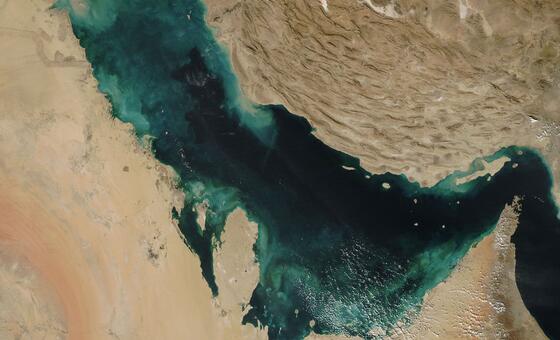
A satellite image from NASA's Aqua satellite showing the Persian Gulf with swirls of tan, blue, and green algae blooms along the shores of Iran and the Arabian Peninsula.

US-Iran war leaves shipping at near-standstill in Hormuz again

9 July 2026 — Renewed hostilities between the United States and Iran reportedly brought shipping to a near-standstill in the Strait of Hormuz on Thursday, leaving around 6,000 seafarers stranded...

Security Council LIVE: ‘Urgent de-escalation’ needed now in Ukraine amid spike in civilian deaths

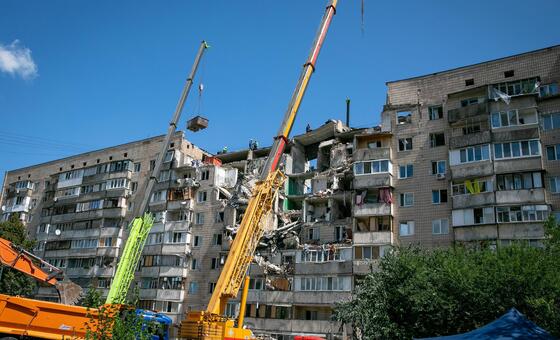
9 July 2026 — The Security Council must use every tool and diplomatic channel to reach an urgent de-escalation, Rosemary DiCarlo, chief of UN political and peacebuilding affairs, told an emergency...

US-Iran war: Renewed attacks in Strait of Hormuz prompt another global energy alert

8 July 2026 — Renewed attacks on shipping in the Strait of Hormuz unsettled energy markets on Wednesday and prompted calls from the UN maritime agency, IMO, for “maximum restraint and de-...

UN Sustainable Development Goals

17 Goals to transform our world

The Sustainable Development Goals are a call for action by all countries — poor, rich and middle-income — to promote prosperity while protecting the planet.

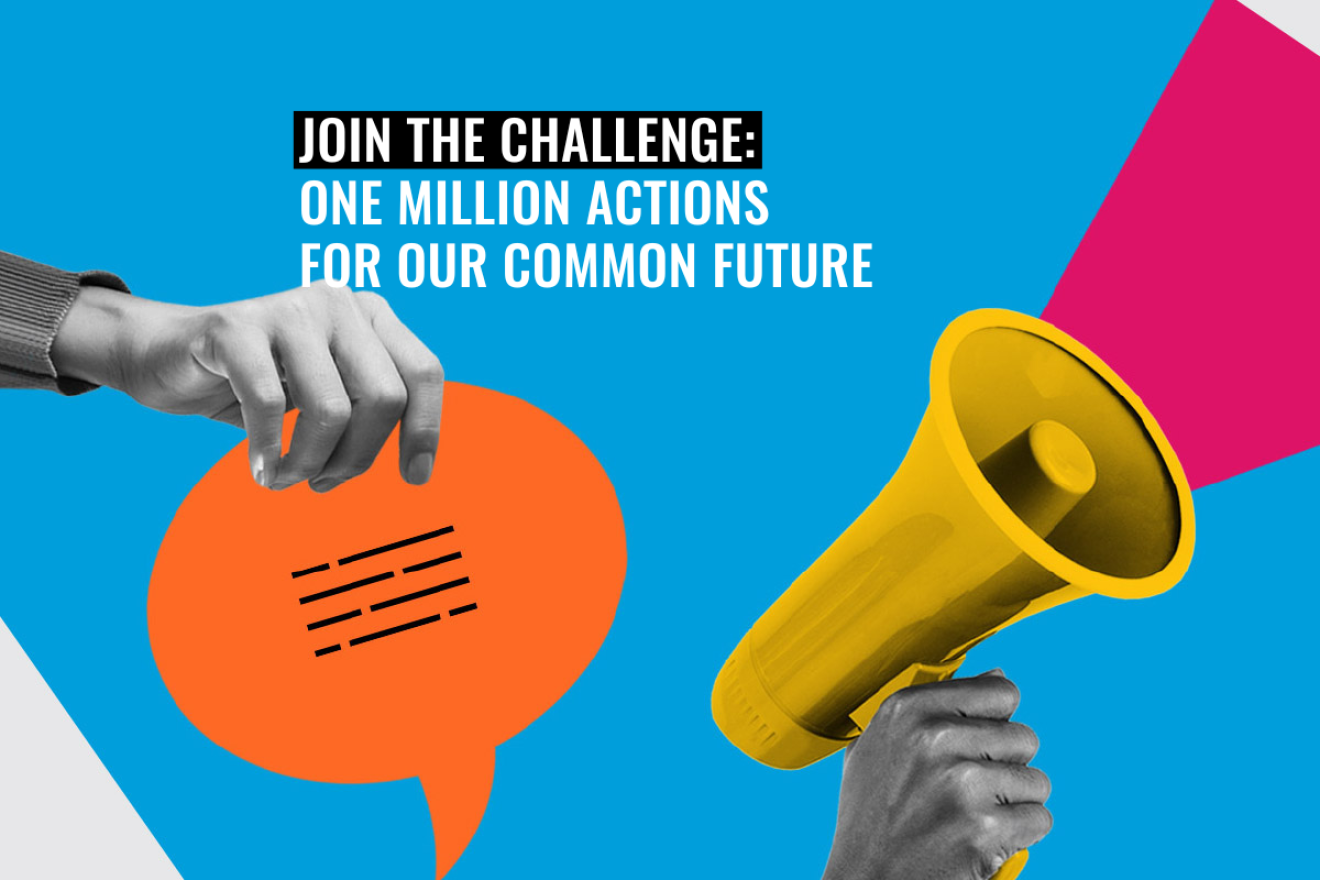
hands holding megaphone and speech bubble

The Goals can improve life for all of us. Cleaner air. Safer cities. Equality. Better jobs. These issues matter to everyone. But progress is too slow. We have to act, urgently, to accelerate changes that add up to better lives on a healthier planet. Find new inspiring actions on the app and at un.org/actnow.

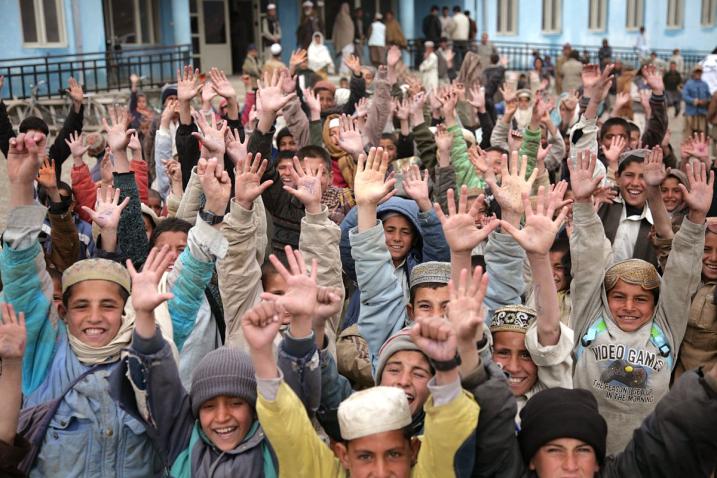
Today, half the world is under 30, and this generation is a powerful force for peace. The UN "Hear Us. Act Now for a Peaceful World" campaign, launched on the International Day of Peace, aims to include, invest in, and partner with young people to build lasting peace. 

Thomas the Tank engine

Learn more about the Sustainable Development Goals! On our student resources page you will find plenty of materials for young people and adults alike. Share with your family and friends to help achieve a better world for all.

17 SDG goals

Ten years after their adoption, the Sustainable Development Goals remain a universal call to action for all countries – developed and developing. Progress is being made, yet major challenges remain. At the High-level Political Forum, countries focus on accelerating action on five critical goals.

More from the
United Nations

Featured stories from across the United Nations and our world-wide family of agencies, funds, and programmes.

girls playing soccer Women and Gender Equality, Sports

Women and girls: Celebrated on the field, sidelined off it

As women’s sport gains unprecedented recognition, many athletes still face unequal pay, limited opportunities, underrepresentation in leadership, and unsafe environments. Women and girls—especially those with disabilities, migrant backgrounds, or facing intersecting discrimination—continue to overcome systemic barriers both on and off the field. From fair wages and maternity protections to stronger safeguards against violence and greater inclusion in decision-making, achieving true equality requires more than celebrating success. It means ensuring every woman and girl can participate, compete, and thrive with dignity, safety, and equal rights.

woman holding cocoa fruit Agriculture and Food, FAO

More shade for more cocoa in Côte d’Ivoire

As climate change and deforestation threaten the future of cocoa farming, growers in Côte d’Ivoire are embracing agroforestry to restore productivity and protect their livelihoods. By planting shade, fruit and timber trees alongside cocoa, farmers are improving yields, enriching soils, boosting biodiversity and making their crops more resilient to extreme weather. Supported by training, cooperatives and sustainable farming practices, this shift is helping communities increase incomes while safeguarding the land for future generations—proving that growing more can go hand in hand with restoring nature.

drawing of football field sized rectangles with different land types of land, some of them empty Land, Plants, and Soil, UNEP

Every 4 seconds, we lose another playing field

The world has more than 20 billion football-pitch-sized parcels of land, but nearly 40% are already degraded by deforestation, unsustainable farming, urban expansion and climate change. Every second, the equivalent of four football fields is lost, threatening food security, biodiversity, livelihoods and the climate. Forests continue to shrink, and most farmland is already degraded or at risk of desertification. Yet there is hope: countries and communities are restoring ecosystems on a massive scale, with pledges to revive 1.4 billion football pitches of land—showing that collective action can restore nature, strengthen economies and secure a healthier future for people and the planet.

Artificial Intelligence, ILO

GenAI reshapes ASEAN labour market

ILO reports generative AI could affect nearly 80 million ASEAN workers, though widespread job losses remain unlikely as adoption stays limited and uneven across sectors.

Women and Gender Equality, IMO

Women in maritime unite

Women in Maritime Association (WIMA) Europe launched in Batumi, strengthening women’s leadership, networking and professional development across Europe’s maritime sector, backed by IMO, Denmark and UNDP Georgia.

Economic Development, IMF

Global economic growth steady

Global growth is forecast at 3.0% in 2026 and 3.4% in 2027, while stalled disinflation and geopolitical risks continue to challenge policymakers. 

Finance, UNCTAD

Global FDI rebounds

Global foreign direct investment (FDI) rose 6% to $1.6 trillion in 2025, but growth remained concentrated, with developing economies seeing limited gains amid uncertainty.

What we do

Due to the powers vested in its Charter and its unique international character, the United Nations can take action on the issues confronting humanity in the 21st century, including:

Structure of the
United Nations

The main parts of the UN structure are the General Assembly, the
Security Council, the Economic and Social Council, the Trusteeship Council, the International Court of Justice, and the UN Secretariat. All were established in 1945 when the UN was founded.

The General Assembly is the main deliberative, policymaking and representative organ of the UN. All 193 Member States of the UN are represented in the General Assembly, making it the only UN body with universal representation.

The Security Council has primary responsibility, under the UN Charter, for the maintenance of international peace and security. It has 15 Members (5 permanent and 10 non-permanent members). Each Member has one vote. Under the Charter, all Member States are obligated to comply with Council decisions.

The Economic and Social Council is the principal body for coordination, policy review, policy dialogue and recommendations on economic, social and environmental issues, as well as implementation of internationally agreed development goals.

The Trusteeship Council was established in 1945 by the UN Charter, under Chapter XIII, to provide international supervision for 11 Trust Territories that had been placed under the administration of seven Member States, and ensure that adequate steps were taken to prepare the Territories for self-government and independence.

The International Court of Justice is the principal judicial organ of the United Nations. Its seat is at the Peace Palace in the Hague (Netherlands). It is the only one of the six principal organs of the United Nations not located in New York (United States of America).

The Secretariat comprises the Secretary-General and tens of thousands of international UN staff members who carry out the day-to-day work of the UN as mandated by the General Assembly and the Organization's other principal organs.

Learn more

Podium of the General Assembly Hall seen from below with the gold wall and the golden UN logo behind

The United Nations process to appoint the next Secretary‑General continues with interactive dialogues guided by the principles of transparency and inclusivity. Watch the dialogues with the candidates: Michelle Bachelet Jeria (21 April), Rafael Mariano Grossi (21 April), Rebeca Grynspan Mayufis (22 April), Macky Sall (22 April), María Fernanda Espinosa Garcés (15 June) and Carolyn Rodrigues Birkett (18 June).

.

A group of people carrying their few belongings, walking in front of buildings in ruins, at sunset.

This series shines a light on communities facing conflict, displacement, public health emergencies and other humanitarian challenges around the world. Drawing on reporting from across the UN system, it amplifies voices from countries including Haiti, Gaza, DR Congo, Yemen, Afghanistan and Myanmar, to foster understanding, encourage engagement, and help mobilize support, assistance, and protection for the most vulnerable people.

Climate Change is one of the defining issues of our time and we are at a pivotal moment. From shifting weather patterns that threaten food production, to rising sea levels that increase the risk of catastrophic flooding, the impacts of climate change are global in scope and unprecedented in scale. Taking decisive action today will make adapting to these impacts in the future more effective and less costly.

General Assembly hall with the Secretary-General at the podium

The United Nations is the only place on Earth where all the world's nations come together to discuss common problems and find shared solutions that benefit all of humanity. Learn about the main areas of the UN’s activities; how it makes a difference to the world’s people; and how every citizen can get involved and make a contribution. 

Watch and Listen

Video and audio from across the United Nations and our world-wide family of agencies, funds, and programmes.

The world faces overlapping crises, including climate shocks, geopolitical tensions, poverty, and economic uncertainty, making progress toward the 2030 Sustainable Development Goals increasingly urgent. The 2026 High-level Political Forum on Sustainable Development (HLPF) will bring the international community together from 7–15 July to assess progress and develop solutions to accelerate action.

Celebrating ancient tea farming traditions

Six remarkable tea-producing regions have been recognized as Globally Important Agricultural Heritage Systems for unique landscapes, traditions, and generations-old farming practices.

Breaking football barriers

From Cuba to the World Cup, women are increasingly making their mark as referees.

UN Podcasts

Jorge, along with a group of people, inspecting an area with destroyed buildings

Building the foundations for human dignity

Fighting for and believing in change is in Jorge Moreira da Silva’s blood. Now Executive Director of the United Nations Office for Project Services (UNOPS), the former Portuguese minister is helping to improve lives. From restoring roads and repairing power plants to running health centres and constructing renewable energy mini-grids, UNOPS implements projects in more than 130 countries – often in fragile and conflict-affected settings.

“It's about providing social basic human needs. We have found a way to provide livelihoods to 15 million people in Afghanistan...rehabilitating roads, streets, water canals, paying men and women to do the job.”

In this episode of Awake at Night, Jorge Moreira da Silva reflects on the practical and political challenges of delivering projects in complex environments – from funding gaps to lack of political will. He also shares how releasing an Iberian lynx and earning his pilot’s license have to do with keeping hope alive through dark times.

Since this interview was recorded, the UN Secretary-General has appointed Jorge Moreira da Silva to lead the UN task force for the Strait of Hormuz. 

Latest Audio from UN News

The United Nations in Pictures

Images from across the United Nations and our world-wide family of agencies, funds, and programmes.

David Beckham high-fiving a child football player
Photo:UNICEF/UNI907721/UNICEF India

More than a team: bringing athletes and fans together for children

From football clubs to global sports stars, the world of sport is helping create brighter futures for children. UNICEF partnerships are expanding access to education, digital skills, health, nutrition and safe spaces to play, while promoting children's rights on and off the field. Longtime UNICEF Goodwill Ambassador David Beckham, who has worked with the organization for over 20 years, highlights the transformative power of education and sport to strengthen families and communities. By bringing together athletes, fans and organizations, these initiatives show that the greatest victories happen when sport creates opportunities, protection and hope for every child.

silhouettes of men walking through fields in a hazy light
Photo:IOM 2022/Alexander Bee

One of the world's most dangerous migration routes

Djibouti occupies a strategic position along the Eastern Route, serving as a key transit point for migrants seeking opportunities in the Gulf. Migration flows through Djibouti are rising sharply, driven by regional conflict, economic pressures, and increasingly organized smuggling networks along the Eastern Route linking the Horn of Africa to the Arabian Peninsula. Migration along the Eastern Route remains extremely dangerous. In 2025 alone, at least 140 migrants have died and 33 others have been reported missing along migration routes in Djibouti. Migrants often travel long distances through remote and harsh terrain, facing hunger, dehydration, illness, and violence. Limited monitoring and insecurity along parts of the route further heighten the risks faced by migrants.