Health, Children

School meals: A proven path to learning and development

On International School Meals Day (12 March), it is important to recognize the essential role school feeding programmes play in advancing education, nutrition, and long‑term development. The World Food Programme supports governments in delivering school meals to 466 million children worldwide, ensuring they receive the nourishment required to learn and succeed. These programmes strengthen attendance, improve concentration, and represent one of the most cost‑effective investments in human capital, particularly in contexts where children are most at risk.

WFP directly supported 20 million children with take-home rations and cash-based transfers in 61 countries in 2024.
Photo:Adobe Stock/Fitry
Siblings use a mobile phone light to read during a power blackout in Shostka in northeastern Ukraine close to the border with Russia.

Russia deportation of Ukraine children is crime against humanity: independent probe

12 March 2026 — Scores of Ukrainian children are still missing after being deported far and wide across Russia and occupied territories while their families continue to search for them, human...

MIDDLE EAST LIVE 12 March: Shipping attacks, rising oil prices and widening humanitarian crisis

12 March 2026 — War continues across the Middle East, with impacts growing far beyond the region. Oil prices are hovering around $100 a barrel as attacks on shipping and energy infrastructure...

MIDDLE EAST LIVE 11 March: Civilian toll rises, regional disruption spreads as Security Council meets

11 March 2026 — As the conflict in the Middle East continues to ripple across the region, the UN Security Council met today to discuss the escalating situation, with a morning briefing focused on...

UN Sustainable Development Goals

17 Goals to transform our world

The Sustainable Development Goals are a call for action by all countries — poor, rich and middle-income — to promote prosperity while protecting the planet.

hands holding megaphone and speech bubble

The Goals can improve life for all of us. Cleaner air. Safer cities. Equality. Better jobs. These issues matter to everyone. But progress is too slow. We have to act, urgently, to accelerate changes that add up to better lives on a healthier planet. Find new inspiring actions on the app and at un.org/actnow.

Today, half the world is under 30, and this generation is a powerful force for peace. The UN "Hear Us. Act Now for a Peaceful World" campaign, launched on the International Day of Peace, aims to include, invest in, and partner with young people to build lasting peace. 

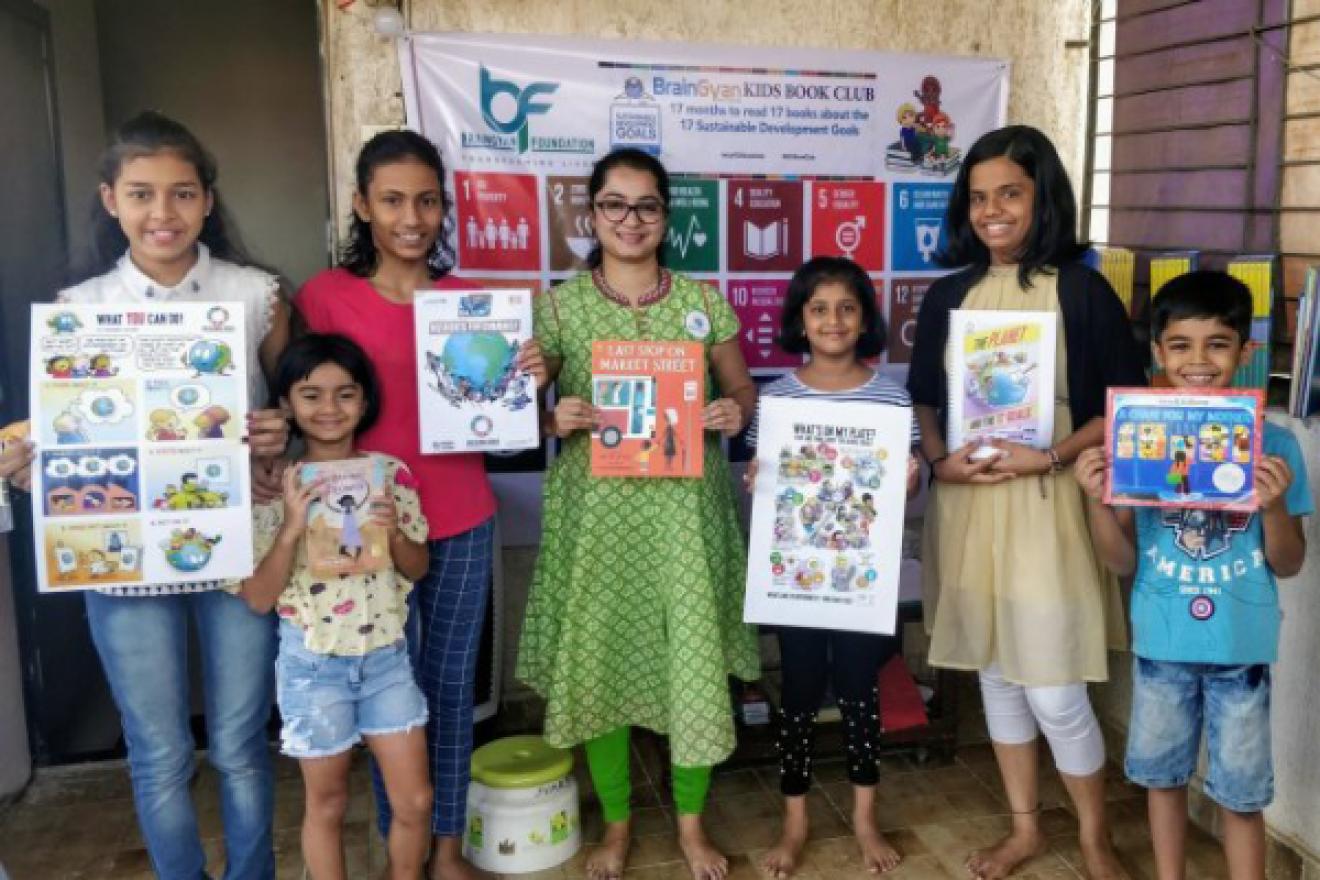
children holding up books

Reading and learning are essential to children’s growth and development; stories can fuel their imagination and raise awareness of new possibilities. The SDG Book Club aims to encourage them to learn about the Goals in a fun, engaging way, empowering them to make a difference.

 
Gender Equality

Achieve gender equality and empower all women and girls.

More from the
United Nations

Featured stories from across the United Nations and our world-wide family of agencies, funds, and programmes.

4 African women pose for a happy picture Women and Gender Equality, UNESCO

African women powering a tech revolution

Across Africa, women innovators are reshaping the future of technology, not only by building businesses, but by designing solutions to some of the continent’s most pressing challenges - from water management to digital rights. With support from UNESCO’s African Women in Tech and AI initiative, they are turning ideas into impact, breaking barriers and shaping a more inclusive digital future. As International Women’s Day highlights the importance of rights, justice and action, stories like these remind us that equality in innovation must be sustained year-round.

deep sea photograph showing luscious seagrass meadows and fish Climate Change, UNEP

Five ways seagrasses boost biodiversity

Seagrasses are one of the most widespread marine ecosystems on Earth, covering around 300,000 square kilometres of seabed in 159 countries. When compared to colourful coral reefs, or mysterious mangroves, seagrass meadows may appear simple, but they are vital ecosystems supporting marine life, sustaining fisheries and storing large amounts of carbon while protecting coastlines. As these habitats rapidly disappear, the United Nations is raising awareness through World Seagrass Day and global restoration efforts to help protect biodiversity and combat climate change.

Two people in white hazmat style suits are flying a drone in banana fields Agriculture and Food, FAO

Fighting the fungus foe of the beloved banana

In Venezuela, the banana has been for generations a symbol of sustenance and tradition, but in 2023, the Fusarium Tropical Race 4 fungus arrived in producing areas causing a phytosanitary emergency. The fungus, a devastating disease of banana and plantain trees, can remain in the soil for more than two decades threatening production and the lives of those who depend on it. With support from the Food and Agriculture Organization and national authorities, farmers are learning to manage the disease, helping rebuild production and strengthen resilience against future outbreaks.

Women and Gender Equality, UNDP

Women changing justice

For institutions to be effective, accessible and truly responsive to people’s needs, they must reflect the societies they serve. When more women sit on the bench, entire societies benefit. 

Women and Gender Equality, ILO

A voice for women cotton workers

Former child labourer Hafeeza Mai leads a trade union in Pakistan, empowering women in the cotton sector to claim their rights, demand equal pay and protect their children from child labour.

Migrants, IOM

Restoring ID cards for displaced family

When a fire in an IDP camp in Iraq destroyed a family's legal identity documents, the International Organization for Migration helped the mother, Lozina, in restoring their civil documentation, so her children could access education and services.

Trade and Commerce, UNCTAD

Hormuz shipping disruptions raise risks

UN Trade and Development (UNCTAD) has released a rapid analysis examining the implications of recent disruptions to maritime traffic in the Strait, one of the world’s most critical trade corridors.

What we do

Due to the powers vested in its Charter and its unique international character, the United Nations can take action on the issues confronting humanity in the 21st century, including:

Structure of the
United Nations

The main parts of the UN structure are the General Assembly, the
Security Council, the Economic and Social Council, the Trusteeship Council, the International Court of Justice, and the UN Secretariat. All were established in 1945 when the UN was founded.

The General Assembly is the main deliberative, policymaking and representative organ of the UN. All 193 Member States of the UN are represented in the General Assembly, making it the only UN body with universal representation.

The Security Council has primary responsibility, under the UN Charter, for the maintenance of international peace and security. It has 15 Members (5 permanent and 10 non-permanent members). Each Member has one vote. Under the Charter, all Member States are obligated to comply with Council decisions.

The Economic and Social Council is the principal body for coordination, policy review, policy dialogue and recommendations on economic, social and environmental issues, as well as implementation of internationally agreed development goals.

The Trusteeship Council was established in 1945 by the UN Charter, under Chapter XIII, to provide international supervision for 11 Trust Territories that had been placed under the administration of seven Member States, and ensure that adequate steps were taken to prepare the Territories for self-government and independence.

The International Court of Justice is the principal judicial organ of the United Nations. Its seat is at the Peace Palace in the Hague (Netherlands). It is the only one of the six principal organs of the United Nations not located in New York (United States of America).

The Secretariat comprises the Secretary-General and tens of thousands of international UN staff members who carry out the day-to-day work of the UN as mandated by the General Assembly and the Organization's other principal organs.

Learn more

Podium of the General Assembly Hall seen from below with the gold wall and the golden UN logo behind

On 25 November 2025, the President of the General Assembly and the President of the Security Council initiated the process of selecting and appointing the next Secretary-General. Candidates are nominated by a Member State or a group of Member States. Learn more about the multi-step selection and appointment process of the next United Nations Secretary-General.

Climate change is the defining issue of our time and now is the defining moment to do something about it. There is still time to tackle climate change, but it will require an unprecedented effort from all sectors of society.

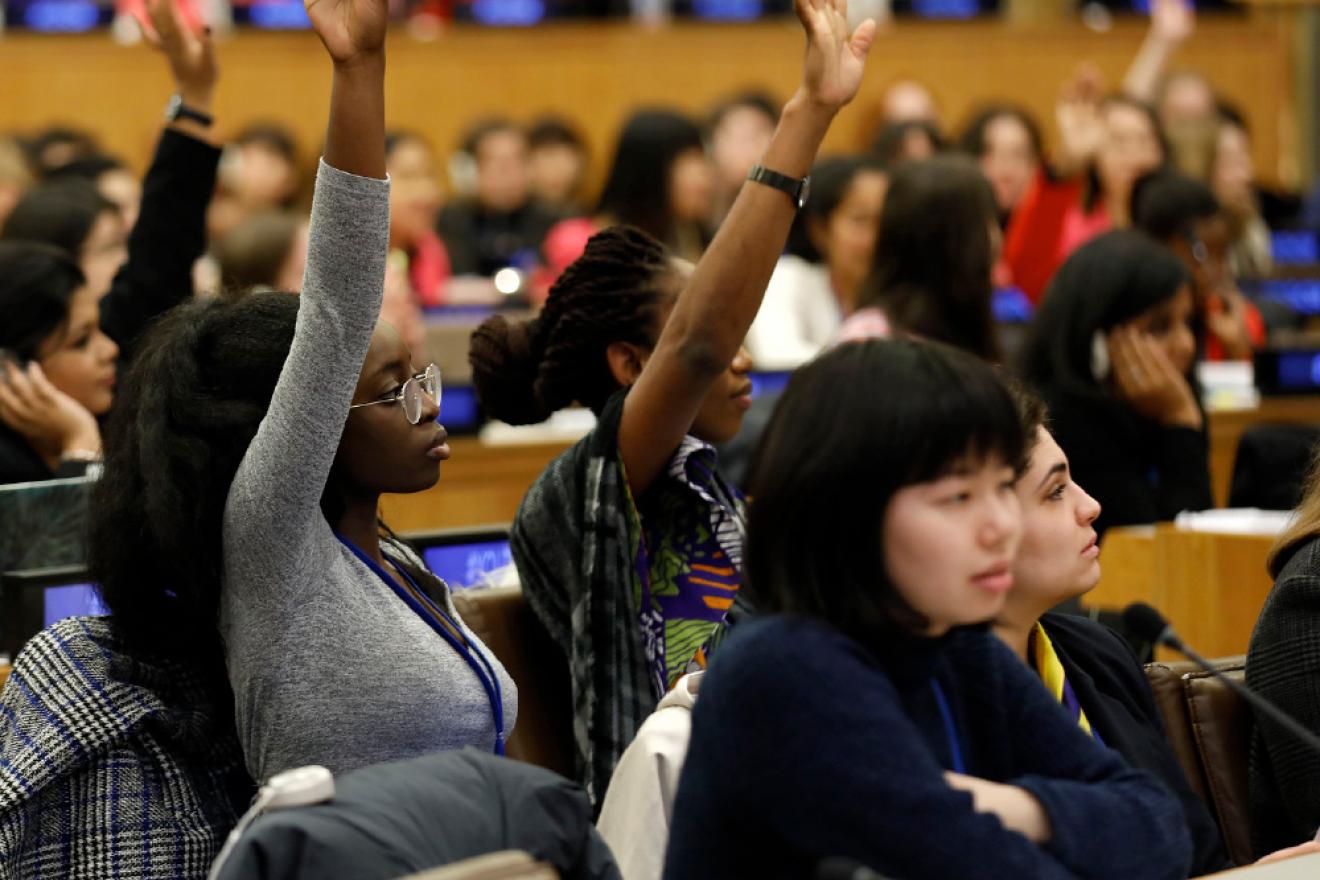
Women at UN CSW63 Side Event - “Take the Hot Seat”. Photo: UN Women/Ryan Brown

Women and girls represent half of the world’s population and, therefore, also half of its potential. Gender equality, besides being a fundamental human right, is essential to achieve peaceful societies, with full human potential and sustainable development.

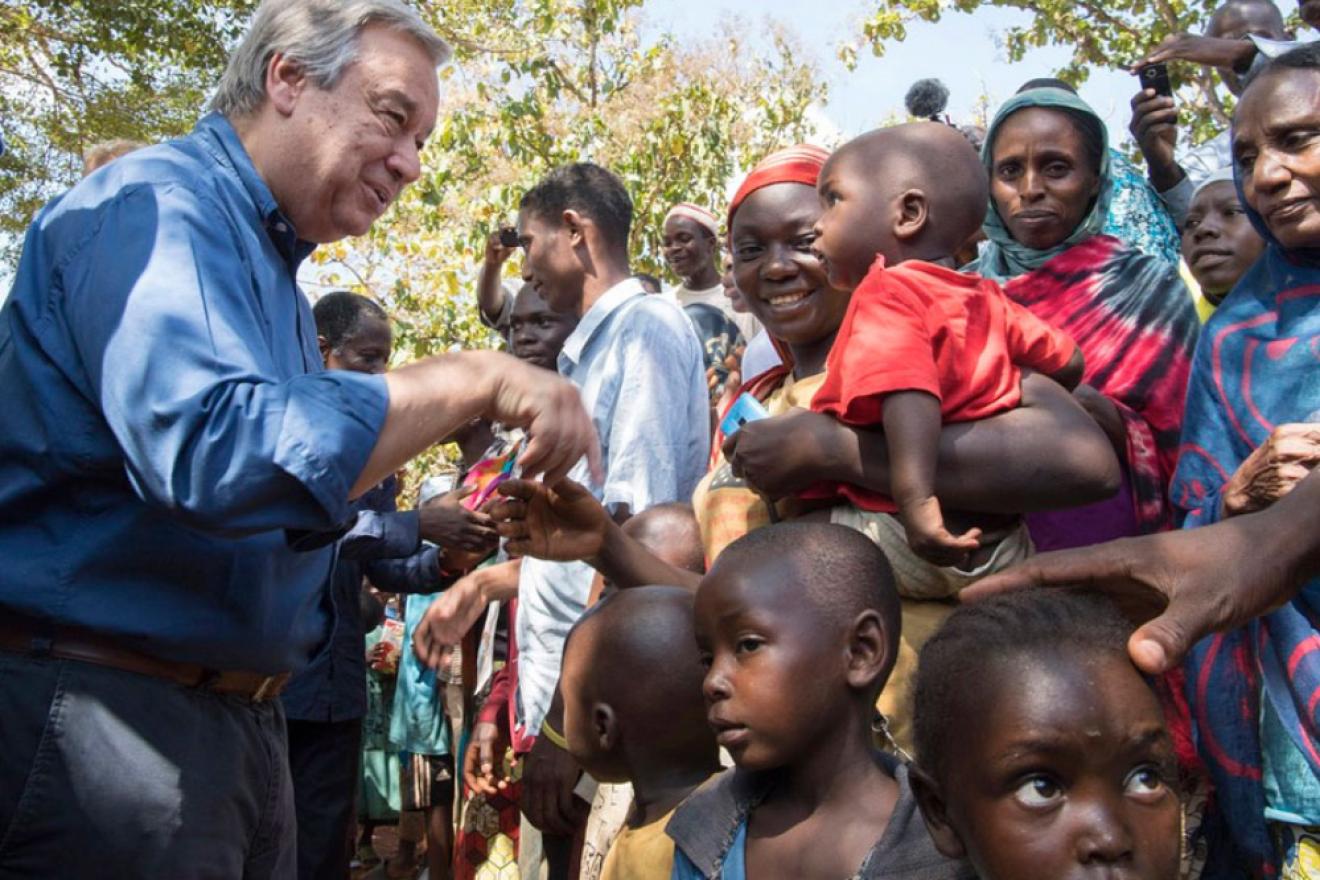
UN Secretary-General António Guterres is greeted on his visit to the Central African Republic

While global poverty rates have been cut by more than half since 2000, one in ten people in developing regions still lives on less than US$1.90 a day — the internationally agreed poverty line, and millions of others live on slightly more than this daily amount.

Watch and Listen

Video and audio from across the United Nations and our world-wide family of agencies, funds, and programmes.

What if giving something wasn’t about fixing everything? A newborn safe. A family united. A community rebuilt. You can’t end every crisis. But you can end someone’s. This is why we keep showing up. One day at a time. One step at a time. One life at a time.

Nikolaj Coster-Waldau on why humans are his favorite species

Danish actor and Goodwill Ambassador for the United Nations Development Programme (UNDP) Nikolaj Coster-Waldau shares stories about the people he met and the human innovation, resourcefulness and creativity he saw while visiting UNDP’s programmes around the world and filming his documentary An Optimist's Guide to the Planet.

Cooperation to transform agrifood systems

In an increasingly interconnected world, no challenge is individual. Climate change and structural inequalities cross borders and make the development of the most vulnerable populations more complex. In this context, coordinated action and the commitment of everyone become urgent.

UN Podcasts

A computer-generated image showing three men at the top of a scale and three women at the bottom.

How is generative AI reshaping gender inequalities at work?

Generative artificial intelligence is rapidly transforming workplaces across the globe, enhancing productivity and reshaping tasks in many occupations. But its effects are not gender neutral. A new report by the International Labour Organization finds that women are more exposed than men to the risks linked to this technology.

In this episode of the ILO Future of Work podcast, Anam Butt, technical specialist on gender equality and
non-discrimination at the ILO and co-author of the report, explores why women are overrepresented in jobs where tasks can be automated, why they remain underrepresented in AI and STEM occupations, and how AI systems can reproduce existing biases and stereotypes.

She also discusses how policymakers can ensure that digital transformation advances, rather than undermines, gender equality at work.

Latest Audio from UN News

The United Nations in Pictures

Images from across the United Nations and our world-wide family of agencies, funds, and programmes.

A 10-year-old Gazan child in a wheelchair is in a class with other children.
Photo:OCHA/Educaid

'For the first time, my wheelchair supports me’ 

In Gaza, three siblings born without legs and with limited hand function are gaining newfound independence thanks to customized assistive devices. Ten‑year‑old Anas, once forced to crawl or rely on his mother, now moves, writes, and studies more easily after the international non‑governmental organization EducAid upgraded his wheelchair and provided hand‑walking supports. Seventeen‑year‑old Sujood received a fitted wheelchair and writing aids that allow her to study safely and with dignity. Their brother Mohammad, 15, now uses a customized chair, protective table, hand grips, and a mobility skateboard that help him navigate school and home life with greater ease.

A woman standing in front of a wall covered with dense, leafless climbing vines.
Photo:© UNFPA/Dina Oganova

Six women in Georgia standing up for equality

The space for women, young people, and marginalized groups to speak openly about their rights is shrinking worldwide, with issues like gender‑based violence, reproductive choice, sexual abuse, and discrimination increasingly treated as taboo. International Women’s Day urges action to dismantle structural barriers to justice, from discriminatory laws to harmful social norms. In Georgia, six women working with UNFPA‑supported organizations share their vision for equality and the steps they are taking to advance justice for women and girls.