Countering Terrorism

Healing through Memory

To mark the ninth International Day of Remembrance of and Tribute to the Victims of Terrorism (21 August), the United Nations hosted a high-level virtual event under the theme "Healing through Memory." This year’s theme recognizes that acts of remembrance are not merely about looking back, but are essential for the dignity, recognition and long-term healing of survivors. By preserving stories and fostering empathy, collective memory can strengthen social cohesion and contribute to the prevention of future violence. To achieve this, commemorations must be respectful, victim-centred, and trauma-informed.

Commemorations must ensure that they honour survivors without causing further harm.
Photo:Adobe Stock/RafieeArtist
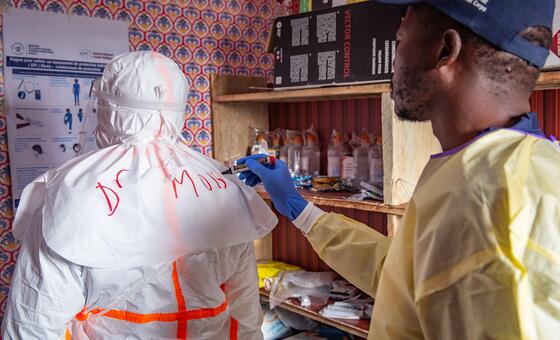
A health worker writes 'Dr. Moise' on the back of another person wearing white PPE in a clinic.

DR Congo receives 70,000 Ebola vaccine doses as Bundibugyo outbreak spreads

20 August 2026 — The Democratic Republic of the Congo (DRC) will receive 70,000 doses of the Ervebo vaccine from the UN’s international vaccine coordination group (ICG) to protect frontline...

As elections near, South Sudan risks new atrocity crimes, warns rights probe

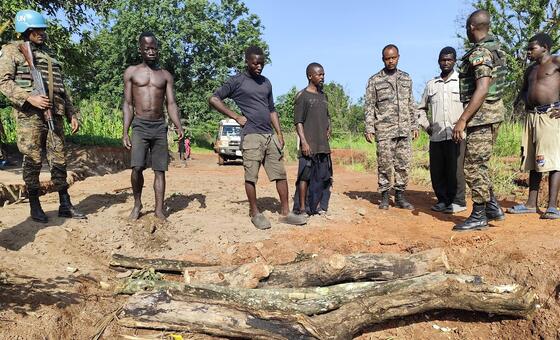
20 August 2026 — The under-reported humanitarian crisis in South Sudan risks deepening with the real possibility of further atrocity crimes unless renewed fighting stops, a UN-backed probe said on...

Aid workers under fire as drones reshape warfare

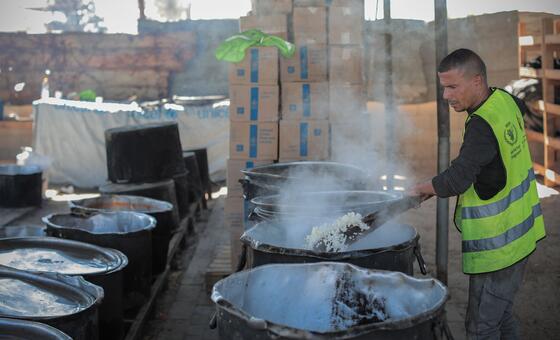
19 August 2026 — The UN is warning that aid workers face a deadly and evolving threat, with armed drones reshaping battlefields worldwide – putting humanitarian teams increasingly in the line of...

UN Sustainable Development Goals

17 Goals to transform our world

The Sustainable Development Goals are a call for action by all countries — poor, rich and middle-income — to promote prosperity while protecting the planet.

hands holding megaphone and speech bubble

The Goals can improve life for all of us. Cleaner air. Safer cities. Equality. Better jobs. These issues matter to everyone. But progress is too slow. We have to act, urgently, to accelerate changes that add up to better lives on a healthier planet. Find new inspiring actions on the app and at un.org/actnow.

Today, half the world is under 30, and this generation is a powerful force for peace. The UN "Hear Us. Act Now for a Peaceful World" campaign, launched on the International Day of Peace, aims to include, invest in, and partner with young people to build lasting peace. 

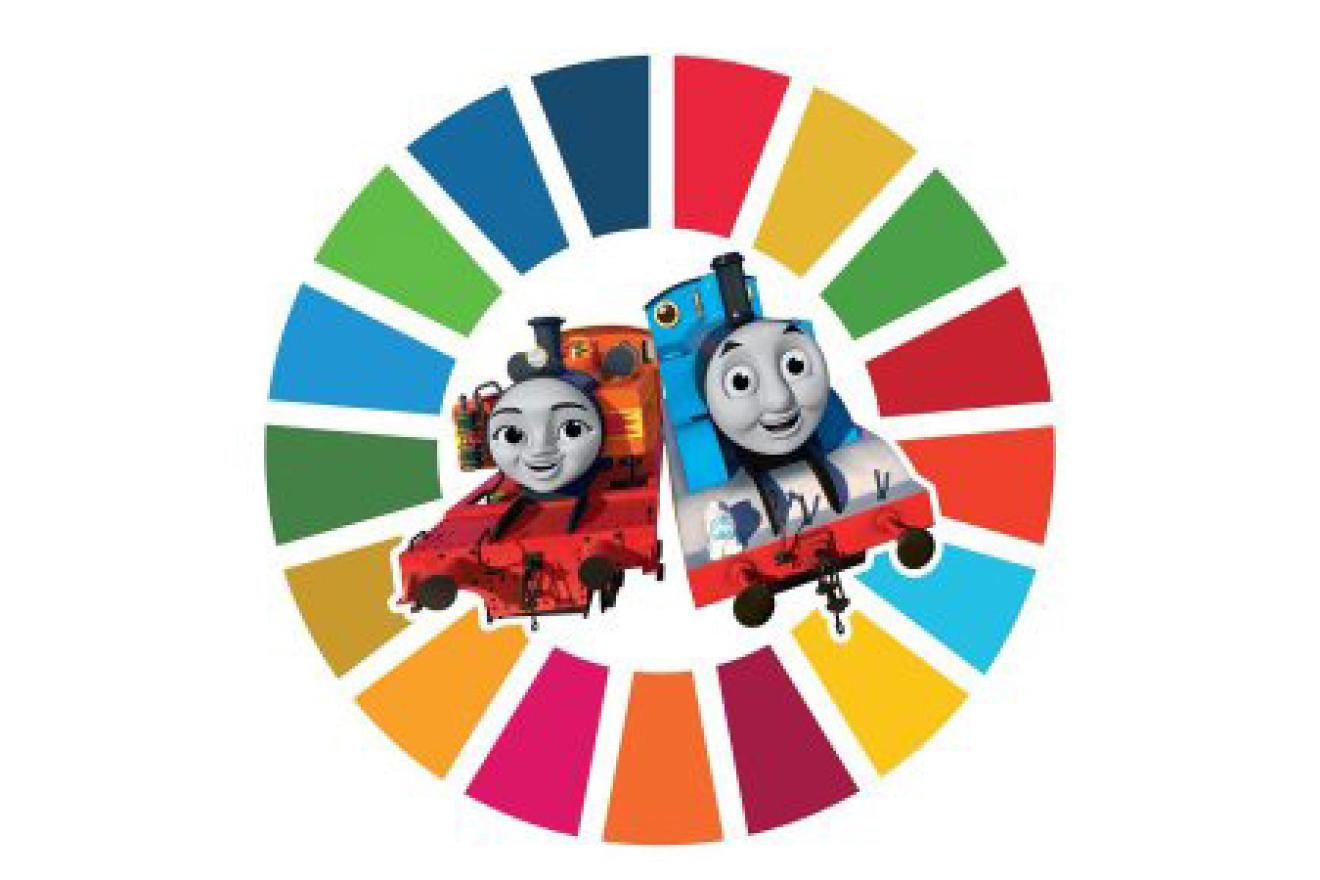
Thomas the Tank engine

Learn more about the Sustainable Development Goals! On our student resources page you will find plenty of materials for young people and adults alike. Share with your family and friends to help achieve a better world for all.

SDG 10: Reduced Inequalities


Goal 10: Reduced Inequalities

Reduce inequality within and among countries


More from the
United Nations

Featured stories from across the United Nations and our world-wide family of agencies, funds, and programmes.

A woman looks out of a window without glass in a makeshift building. OHCHR, Human Rights

Liberia advances justice and workers’ rights

More than two decades after Liberia’s civil wars, efforts to address wartime atrocities and corruption are advancing. The government is moving to establish War and Economic Crimes and National Anti-Corruption Courts, with draft statutes submitted to the Legislature in May 2026. UN Human Rights is supporting the process through legal advice, capacity-building and victim-centred approaches to accountability. It is also advancing the rights of informal workers, who make up 68% of Liberia’s workforce. Recent progress includes the registration of the Federation of Informal Sector Workers of Liberia as a trade union and reforms aimed at stronger labour protections.

A group of Afghan girls attending a class. UNESCO, Women and Gender Equality

Keeping learning alive for Afghan girls and women

Five years after girls in Afghanistan were barred from secondary education, UNESCO continues to keep learning opportunities open for girls and women excluded from formal education. Through community-based programmes, UNESCO provides literacy and vocational training, psychosocial support and practical skills that can strengthen livelihoods and resilience. Working with local communities, it helps create safe and accessible learning spaces, build confidence and support women’s future economic participation. UNESCO also continues to advocate for the restoration of girls’ and women’s right to education while expanding alternative pathways for learning.

A woman supervising a construction site in Gaza. IOM, Humanitarian Aid

Behind the Aid: Women on Gaza’s Frontlines

Behind every act of aid in Gaza is someone carrying a story of their own. Nour, Samah and Rafa are among the women working with the International Organization for Migration (IOM) partners to support displaced families while enduring displacement, insecurity and personal loss themselves. As photographers and site and shelter coordinators, they listen to women’s concerns, connect families with services, document their experiences and advocate for their needs. Their work helps IOM and local partners deliver shelter, essential supplies and site support across Gaza, while highlighting the courage—and need for protection—of humanitarian workers on the frontlines.

UNDP, Land, Plants, and Soil

Restoring land, building peace

UNDP and partners are restoring degraded lands, strengthening climate-resilient livelihoods and improving resource management to help communities prevent conflict and build lasting peace.

WFP, Humanitarian Aid

Rebuilding amid personal loss

After devastating earthquakes in Venezuela, WFP staff are supporting affected communities with food and solidarity, even as they cope with profound personal losses themselves.

World Bank, Women and Gender Equality

Lone mothers, unequal burdens

Lone mothers across Latin America and the Caribbean face rising poverty and insecure work, highlighting the need for stronger childcare, social protection and child support.

IFAD, Economic Development

Blue economy builds resilience

In rural Haiti, IFAD’s blue economy investments strengthen coastal livelihoods, restore mangroves, support sustainable fishing and help local entrepreneurs build resilience amid climate and economic crises.

What we do

Due to the powers vested in its Charter and its unique international character, the United Nations can take action on the issues confronting humanity in the 21st century, including:

Structure of the
United Nations

The main parts of the UN structure are the General Assembly, the
Security Council, the Economic and Social Council, the Trusteeship Council, the International Court of Justice, and the UN Secretariat. All were established in 1945 when the UN was founded.

The General Assembly is the main deliberative, policymaking and representative organ of the UN. All 193 Member States of the UN are represented in the General Assembly, making it the only UN body with universal representation.

The Security Council has primary responsibility, under the UN Charter, for the maintenance of international peace and security. It has 15 Members (5 permanent and 10 non-permanent members). Each Member has one vote. Under the Charter, all Member States are obligated to comply with Council decisions.

The Economic and Social Council is the principal body for coordination, policy review, policy dialogue and recommendations on economic, social and environmental issues, as well as implementation of internationally agreed development goals.

The Trusteeship Council was established in 1945 by the UN Charter, under Chapter XIII, to provide international supervision for 11 Trust Territories that had been placed under the administration of seven Member States, and ensure that adequate steps were taken to prepare the Territories for self-government and independence.

The International Court of Justice is the principal judicial organ of the United Nations. Its seat is at the Peace Palace in the Hague (Netherlands). It is the only one of the six principal organs of the United Nations not located in New York (United States of America).

The Secretariat comprises the Secretary-General and tens of thousands of international UN staff members who carry out the day-to-day work of the UN as mandated by the General Assembly and the Organization's other principal organs.

Learn more

Podium of the General Assembly Hall seen from below with the gold wall and the golden UN logo behind

The United Nations process to appoint the next Secretary‑General continues with interactive dialogues guided by the principles of transparency and inclusivity. Watch the dialogues with the candidates: Ivonne A-Baki (20 August), Michelle Bachelet Jeria (21 April), María Fernanda Espinosa Garcés (15 June), Rafael Mariano Grossi (21 April), Rebeca Grynspan Mayufis (22 April), Olara Otunnu (19 August), Carolyn Rodrigues Birkett (18 June) and Macky Sall (22 April).


A group of people carrying their few belongings, walking in front of buildings in ruins, at sunset.

This series shines a light on communities facing conflict, displacement, public health emergencies and other humanitarian challenges around the world. Drawing on reporting from across the UN system, it amplifies voices from countries including Haiti, Gaza, DR Congo, Yemen, Afghanistan and Myanmar, to foster understanding, encourage engagement, and help mobilize support, assistance, and protection for the most vulnerable people.

Climate Change is one of the defining issues of our time and we are at a pivotal moment. From shifting weather patterns that threaten food production, to rising sea levels that increase the risk of catastrophic flooding, the impacts of climate change are global in scope and unprecedented in scale. Taking decisive action today will make adapting to these impacts in the future more effective and less costly.

General Assembly hall with the Secretary-General at the podium

The United Nations is the only place on Earth where all the world's nations come together to discuss common problems and find shared solutions that benefit all of humanity. Learn about the main areas of the UN’s activities; how it makes a difference to the world’s people; and how every citizen can get involved and make a contribution. 

Watch and Listen

Video and audio from across the United Nations and our world-wide family of agencies, funds, and programmes.

Extreme heat is a serious threat to human health, and climate change is making it more frequent and intense. Heat-related deaths have surged by 23% since the 1990s, with more than half a million lives lost every year. Beat the Heat is a World Health Organization initiative to protect event-goers, workers and communities from the rising risks of extreme heat, air pollution and ultraviolet exposure. This video explains how Heat-Health Action Plans can help governments, communities, workplaces and event organizers prepare for and respond to extreme heat. It also highlights practical steps individuals can take: stay hydrated, rest in shaded or cool areas, use sun protection, recognize the signs of heat illness and look out for others. Together, we can Beat the Heat.

Shaping the next generation of ocean stewards

In the flooded glacial valleys of South Fyn Archipelago UNESCO Global Geopark in Denmark, students are learning about the ocean by sailing it. Aboard Fylla, a three-masted schooner built a century ago in these same waters, they collect water samples with professional oceanographic equipment, analyze marine life, and encounter the effects of climate change first-hand — from falling oxygen levels to the sulphuric smell of oxygen-depleted seabed.

Benefits of family farming registries

Family farming registries are administrative systems that collect information on family farmers and their households. By providing reliable and up-to-date data, they help governments better understand who family farmers are, how they produce, and the challenges they face. This information supports the design of more inclusive and effective policies, more efficient resource allocation, and better coordination across sectors, from agriculture and social protection to education, health, and the environment. Registries also contribute to monitoring and evaluating public policies, strengthening support for family farming and promoting more sustainable, resilient, and inclusive agrifood systems.

UN Podcasts

Máximo at podium speaking with a bright pink-red background behind him

Devising an end to hunger (AAN S13-E10)

“Food takes time, but we will feel [price rises] and then people will start to react. But we need to do as much as we can to assure that we inform the world what amount of food we have to avoid export restrictions, to avoid less food, and to avoid uncertainties. Because uncertainties by itself can increase prices. So that's a little bit of the job that we have.”

Máximo Torero Cullen is one of the world’s leading voices on global hunger and food security. Currently serving as Chief Economist at the UN Food and Agriculture Organization (FAO), he uses his economic expertise to work towards the goal of a world where nobody goes to bed hungry.

“I have been through many problems in life, which I have learned a lot as an economist. I was in the hyperinflation in Peru. I was in wars in Peru and terrorism... I have been in massive earthquake situations. So I have seen a lot, but I never expected how complex this sector would become.”

FAO partners with governments around the world to invest in areas with untapped agricultural potential, transforming lives in rural farming communities. It also works to secure the global food supply during crises such as the pandemic, the war in Ukraine, or the crisis in Strait of Hormuz. In this episode, Máximo Torero Cullen reflects on the process of dampening food price shocks, on investing in sustainable nutrition, and shares why he always trusts the knowledge of farmers.

Photo: ©FAO/Alessandra Benedetti

Latest Audio from UN News

The United Nations in Pictures

Images from across the United Nations and our world-wide family of agencies, funds, and programmes.

a young woman adjusts traditional costume on a model
Photo:© UNFPA Mexico/Aldo Arriaga

Threads of Empowerment

In Querétaro, Mexico, 18 women are turning generations-old crafts into new opportunities through a partnership between UNFPA and Prada Group. Artisans including Lupita, Leticia and Manuela combined traditional weaving, embroidery and doll-making with training in fashion, business, women’s rights and sexual and reproductive health. Their work culminated in a 21-garment collection showcased in Mexico City. Along the way, the women gained confidence, strengthened networks of mutual support and developed ambitions to build their own brands and workshops while keeping their cultural heritage alive.

horses grazing in an open field
Photo:SGP Mongolia/Ganbayar Urtnasan

From Dust to Water

In Mongolia’s Burd district, a herder and her community are bringing water back to a landscape threatened by drought, overgrazing and desertification. With UNDP-supported funding, local women and herder groups protected vital springs and restored a lake that had been dry for more than 70 years. Their efforts revived 90 hectares of wetlands, secured drinking water for 15,000 animals and brought swans, geese and cranes back to the area. The project is also creating new livelihood opportunities, showing how community-led conservation can restore ecosystems while sustaining pastoralist families.