In 2026, let’s rise together. For justice. For humanity. For peace.

Reflecting on the past year, which brought “chaos”, “uncertainty” and “systemic violations of international law,” the Secretary-General of the United Nations expresses his concern at the rise of global military spending, now “13 times more than all development aid, equivalent to the entire Gross Domestic Product of Africa”. In his message for the New Year, Secretary-General António Guterres encourages us to play our part, because “our future depends on our collective courage to act”. Together, let’s make 2026 a year in which peace prevails!

A view of the entrance to the UN Headquarters. In the background is the Secretariat building.

General Assembly approves $3.45 billion UN regular budget for 2026

30 December 2025 — The General Assembly has approved a $3.45 billion regular budget for the United Nations for 2026, following weeks of intensive negotiations and one of the Organization’s most...
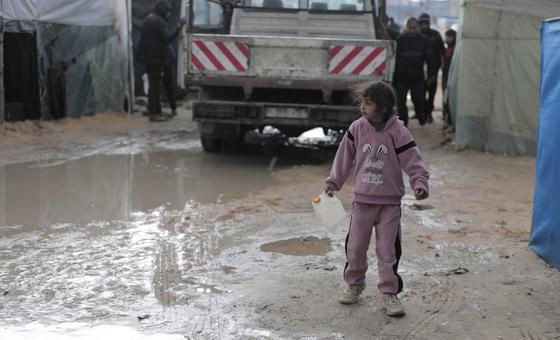
Another child dies in extreme conditions in Gaza: UNICEF

31 December 2025 — A sixth child has died in Gaza this month as the enclave’s people continue to endure dire living conditions linked to freezing rains and the Israel-Hamas war, the UN Children’s...
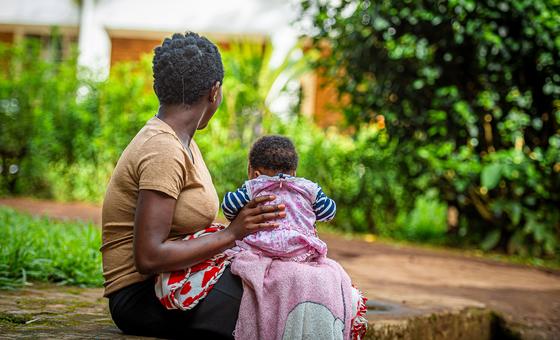
Sexual violence against children ‘entrenched, systemic and widespread’ across DR Congo, UNICEF warns

30 December 2025 — Sexual violence against children has become entrenched, systemic and increasingly widespread across the Democratic Republic of the Congo (DRC), with new data showing a sharp...

UN Sustainable Development Goals

17 Goals to transform our world

The Sustainable Development Goals are a call for action by all countries — poor, rich and middle-income — to promote prosperity while protecting the planet.

hands holding megaphone and speech bubble

The Goals can improve life for all of us. Cleaner air. Safer cities. Equality. Better jobs. These issues matter to everyone. But progress is too slow. We have to act, urgently, to accelerate changes that add up to better lives on a healthier planet. Find new inspiring actions on the app and at un.org/actnow.

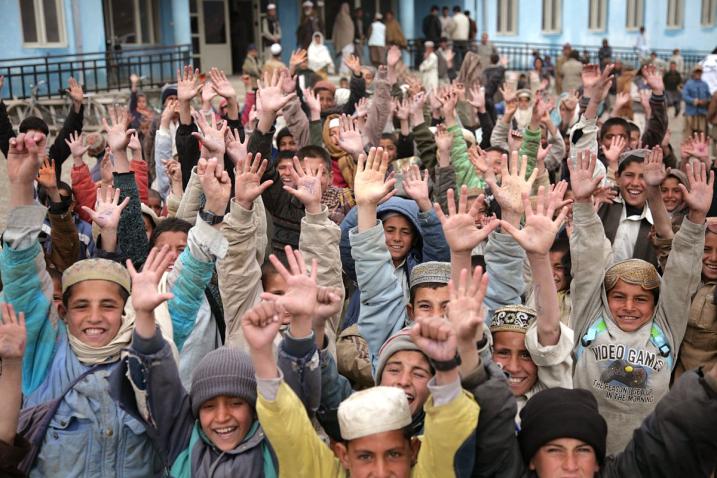
Today, half the world is under 30, and this generation is a powerful force for peace. The UN "Hear Us. Act Now for a Peaceful World" campaign, launched on the International Day of Peace, aims to include, invest in, and partner with young people to build lasting peace. 

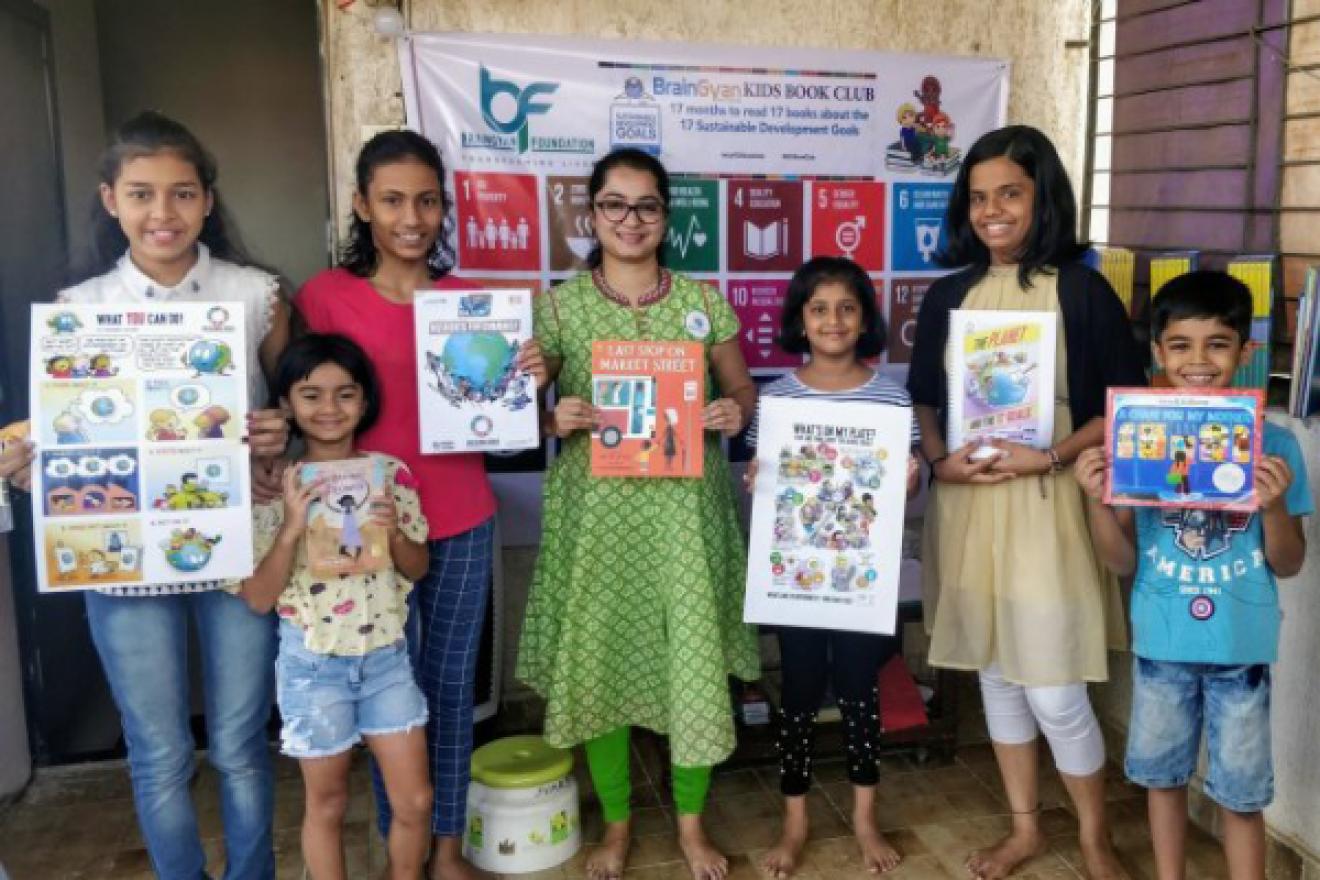
children holding up books

Reading and learning are essential to children’s growth and development; stories can fuel their imagination and raise awareness of new possibilities. The SDG Book Club aims to encourage them to learn about the Goals in a fun, engaging way, empowering them to make a difference.

More from the
United Nations

Featured stories from across the United Nations and our world-wide family of agencies, funds, and programmes.

A worker wearing a yellow hard hat and a high-visibility safety vest is standing and pointing upward, guiding the placement of a container. World Bank, Economic Development

Turning standards into a springboard for prosperity

Standards are the invisible threads that keep global trade and technology running smoothly—ensuring consistency, safety, and trust. The World Bank’s World Development Report 2025 reveals how these silent agreements can unlock growth, but warns that overregulation can choke progress. While vital for exports and innovation, developing countries often lack influence in setting them. A balanced mix of mandatory and voluntary, tiered standards plus strong quality infrastructure can boost participation and trust. Ambition must match capacity to avoid inefficiency and inequality.

A scene of severe destruction after an earthquake in Myanmar. Humanitarian Aid, UNOPS

UNOPS: Responding to crisis and conflict

Across the globe, the United Nations Office for Project Services (UNOPS)  joined forces with the UN family and partners to tackle urgent challenges and uplift vulnerable communities in 2025. From rebuilding hope in Afghanistan to strengthening resilience in the Democratic Republic of Congo, Gaza, and Haiti, these stories showcase how collaboration can transform lives—even in the most difficult circumstances.

Close-up of hands gently pouring raw quinoa grains into a bowl, the tiny seeds cascading like a delicate stream. FAO, Economic Development

An Andean crop spreads across Bhutan

Norbu Gyeltshen and his wife, Pema Sedon, have transformed their farm in Bartsham, eastern Bhutan, by introducing quinoa, which they initially planted as an experiment. Now, quinoa is central to their work, leading to a harvest of about 1,200 kilograms last season, boosting their income and community resilience. Recognized as Bhutan’s special agricultural product, quinoa has become a national priority, thriving across all 20 districts. Supported by the FAO's One Country One Priority Product initiative, farmers are receiving training and building seed banks, fostering confidence in sustainable farming practices.

Economic Development, ILO

Safer workplaces, stronger SMEs

Through the ILO’s SCORE programme more than 1,700 small and medium-sized enterprises have improved safety, productivity and competitiveness, helping them grow and create better jobs.

Art, Peace and Security, IOM

Clay memories in wartime Kyiv

Through minimalist ceramics shaped by memory and displacement, Crimean Tatar artist Elvira Demerdzhi creates moments of calm and cultural continuity amid Kyiv’s ongoing war.

Migration, IFAD

Opportunity starts at home

By investing in rural development, jobs and value chains, IFAD helps turn migration from a necessity into a choice by creating stable, home-grown opportunities where people live.

Science and Technology, UNCTAD

AI for entrepreneurs

A UNCTAD publication shows that while AI is becoming a powerful, affordable tool for entrepreneurs in developing countries, its impact depends on supportive ecosystems, skills development and clear, innovation-friendly governance.

What we do

Due to the powers vested in its Charter and its unique international character, the United Nations can take action on the issues confronting humanity in the 21st century, including:

Structure of the
United Nations

The main parts of the UN structure are the General Assembly, the
Security Council, the Economic and Social Council, the Trusteeship Council, the International Court of Justice, and the UN Secretariat. All were established in 1945 when the UN was founded.

The General Assembly is the main deliberative, policymaking and representative organ of the UN. All 193 Member States of the UN are represented in the General Assembly, making it the only UN body with universal representation.

The Security Council has primary responsibility, under the UN Charter, for the maintenance of international peace and security. It has 15 Members (5 permanent and 10 non-permanent members). Each Member has one vote. Under the Charter, all Member States are obligated to comply with Council decisions.

The Economic and Social Council is the principal body for coordination, policy review, policy dialogue and recommendations on economic, social and environmental issues, as well as implementation of internationally agreed development goals.

The Trusteeship Council was established in 1945 by the UN Charter, under Chapter XIII, to provide international supervision for 11 Trust Territories that had been placed under the administration of seven Member States, and ensure that adequate steps were taken to prepare the Territories for self-government and independence.

The International Court of Justice is the principal judicial organ of the United Nations. Its seat is at the Peace Palace in the Hague (Netherlands). It is the only one of the six principal organs of the United Nations not located in New York (United States of America).

The Secretariat comprises the Secretary-General and tens of thousands of international UN staff members who carry out the day-to-day work of the UN as mandated by the General Assembly and the Organization's other principal organs.

Learn more

Podium of the General Assembly Hall seen from below with the gold wall and the golden UN logo behind

On 25 November 2025, the President of the General Assembly and the President of the Security Council initiated the process of selecting and appointing the next Secretary-General. Candidates are nominated by a Member State or a group of Member States. Learn more about the multi-step selection and appointment process of the next United Nations Secretary-General.

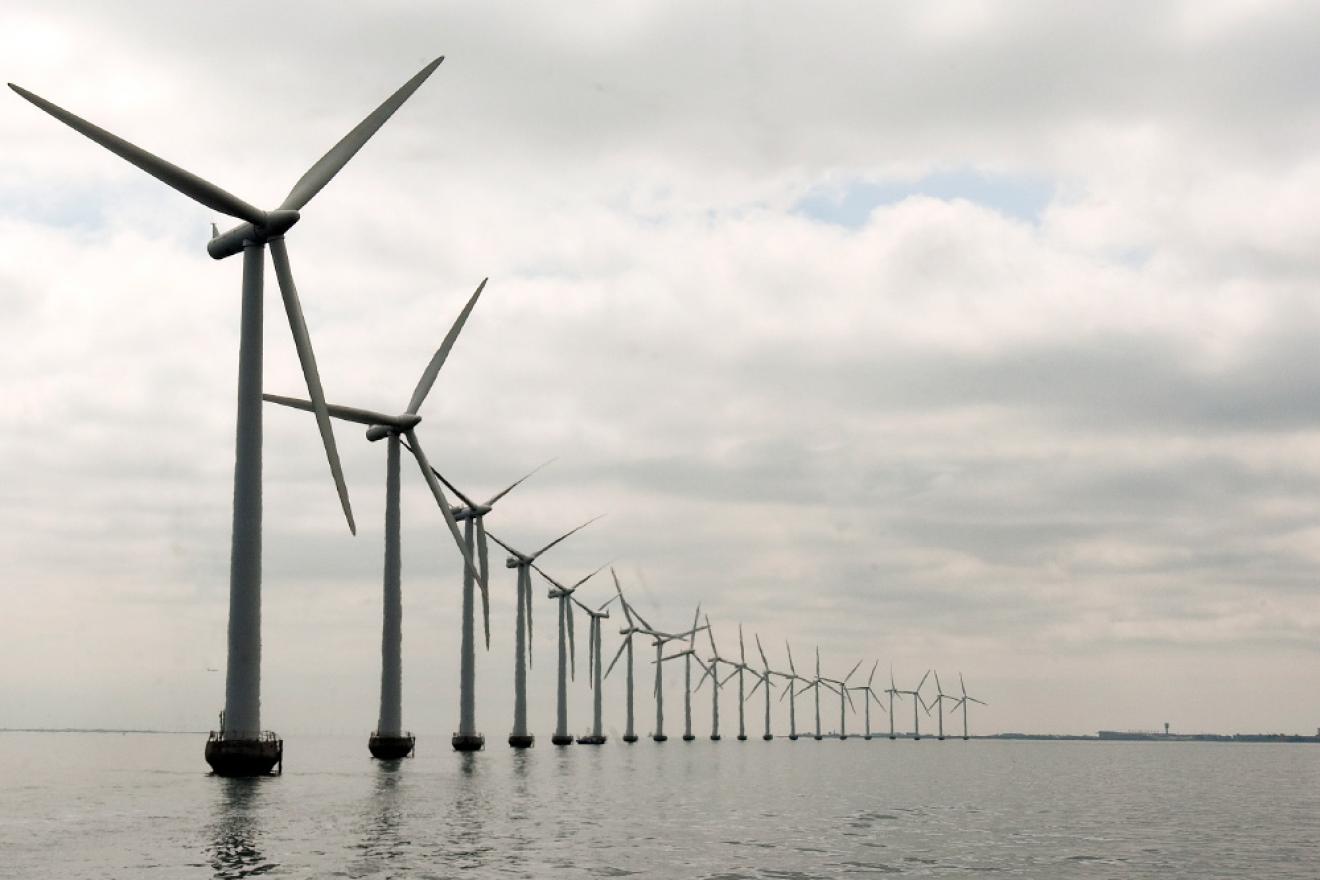
Climate change is the defining issue of our time and now is the defining moment to do something about it. There is still time to tackle climate change, but it will require an unprecedented effort from all sectors of society.

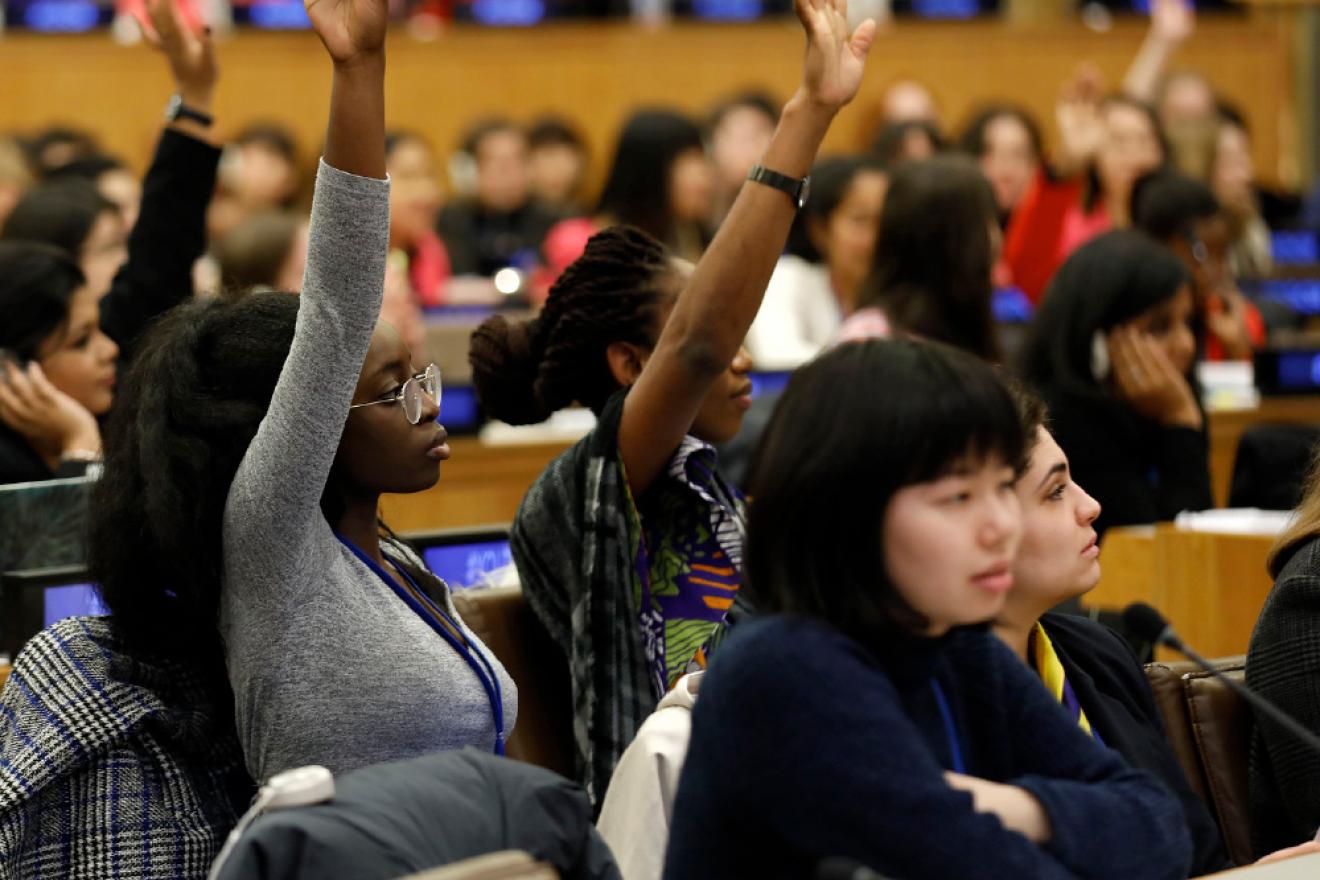
Women at UN CSW63 Side Event - “Take the Hot Seat”. Photo: UN Women/Ryan Brown

Women and girls represent half of the world’s population and, therefore, also half of its potential. Gender equality, besides being a fundamental human right, is essential to achieve peaceful societies, with full human potential and sustainable development.

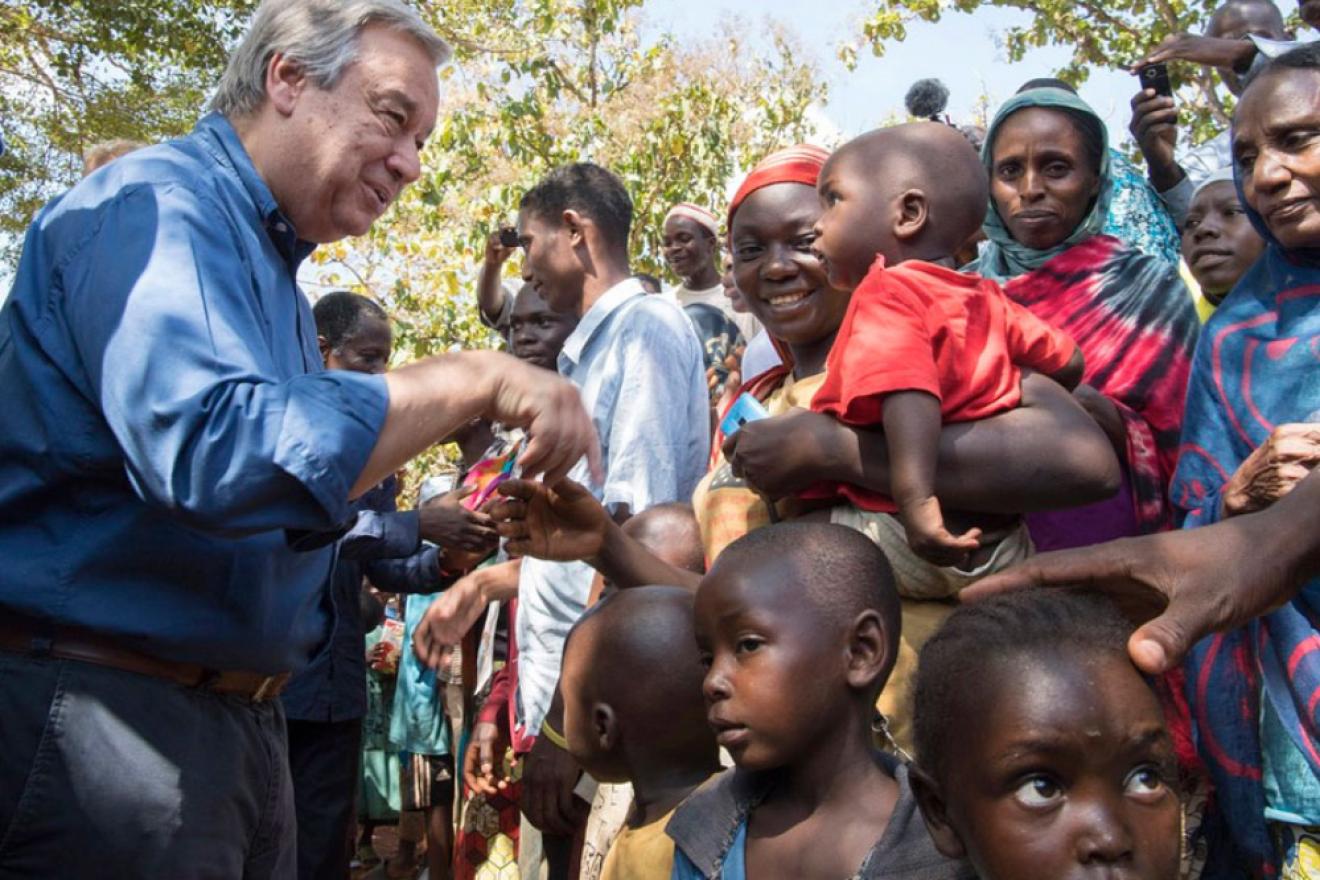
UN Secretary-General António Guterres is greeted on his visit to the Central African Republic

While global poverty rates have been cut by more than half since 2000, one in ten people in developing regions still lives on less than US$1.90 a day — the internationally agreed poverty line, and millions of others live on slightly more than this daily amount.

Watch and Listen

Video and audio from across the United Nations and our world-wide family of agencies, funds, and programmes.

Actor and filmmaker Joseph Gordon-Levitt says the future of digital technology must put people, creativity and purpose first, as powerful tools become more embedded in daily life. Speaking at a UN meeting on 20 years of global digital cooperation, he highlighted the responsibility to use technology for inclusion and positive change, not just profit.

Heartbeat of oceans

Photographer Alexis Rosenfeld and the 1 OCEAN team have documented the planet’s largest animal migration at the southern tip of Africa, a vital natural phenomenon now threatened by climate change and industrial drilling.

Blue growth rising

Seaweed farming is rapidly growing in Latin America and the Caribbean, offering sustainable food, coastal livelihoods, economic growth, and environmental benefits like ecosystem restoration and carbon capture.

UN Podcasts

TradeCast logo

The role of nuclear energy in a sustainable future

As the world moves toward a more sustainable future, nuclear energy is back in the spotlight. While wind and solar power are key to reducing carbon emissions, their intermittent nature presents challenges.

Could nuclear energy provide a stable, low-carbon alternative?

UN Trade and Development (UNCTAD) economist Claudia Contreras joins The Weekly Tradecast to explore nuclear energy’s role in the global energy transition. She discusses its benefits, including reliability and efficiency, as well as its risks – radioactive waste, safety concerns and geopolitical challenges.

Tune in to learn whether nuclear power has a place in the energy mix of the future.

Latest Audio from UN News

The United Nations in Pictures

Images from across the United Nations and our world-wide family of agencies, funds, and programmes.

Humanitarian workers among patients in hospital
Photo:UNOCHA/Francis Mweze

UN Humanitarian Year in Review

2025 hit millions of people hard – in Haiti, the Democratic Republic of the Congo, the Occupied Palestinian Territory, Sudan, Ukraine and elsewhere. Escalating conflict and brutal funding cuts pushed already struggling communities even deeper into crisis. Attacks on civilians, including humanitarians, continued. And the climate crisis delivered its deadliest year yet, unleashing record-breaking storms, floods and wildfires that overwhelmed already fragile communities. There were staggering needs, but also faint glimmers of hope. Here are nine ways the UN Office for the Coordination of Humanitarian Affairs (OCHA) stood by people in crisis in 2025. Here, OCHA staff talk with patients in South Kivu, who receive free healthcare at Kalehe General Referral Hospital, with the support of the Democratic Republic of the Congo Humanitarian Fund. 

young woman practicing karate
Photo:© UNFPA Paraguay/Mario Achucarro

How sports, science and sisterhood can help stop violence

In Paraguay, where nearly 8 out of 10 women have experienced some form of gender-based violence in their lives, young female scientists, athletes, musicians and others are working to fight that fate, joining an anti-violence campaign spearheaded by UNFPA, the UN’s sexual and reproductive health agency. The initiative – ¡Quiero vivir así! Sin Violencia – uses social networks, music concerts and community activities like mural painting to raise awareness of the right to live in a world free of violence. It has garnered support from public and private sector partners, civil society organizations and sports institutions, building momentum ever since its launch in 2022. Here, young women involved with the initiative, including Jennifer - a karate champion and teacher - share their experiences and wisdom on how dreams can be achieved when girls lift each other up – and can live their lives without violence.