Health

Act now to eliminate neglected tropical diseases

Neglected tropical diseases (NTDs) are a diverse group of conditions that still affect one billion people worldwide, primarily in vulnerable and underserved communities. Yet they are preventable, treatable, and can be eliminated. On World NTD Day (30 January), we must answer the call to unite, act, and eliminate NTDs, building a safer world for everyone. Let us celebrate country-led successes, champion innovation in diagnostics and treatment, and secure the leadership and resources needed to ensure NTD elimination remains one of the most achievable and equitable goals in global health.

In 2024, around 1.4 billion people required interventions against neglected tropical diseases, a 36% decrease from 2010.
Photo:Adobe Stock/Maximusdn
Secretary-General António Guterres (seated at right) speaks to reporters at a press conference at the UN Headquarters, in New York.

Choose peace over chaos, Guterres urges as he sets out final-year priorities

29 January 2026 — With global tensions rising and “reckless actions” triggering dangerous consequences, UN Secretary-General António Guterres on Thursday called for renewed efforts on peace,...

Security Council LIVE: Ambassadors debate as Middle East crises mount

28 January 2026 — The UN Security Council held a high-level open debate on the Middle East on Wednesday focusing on the Gaza peace plan – including the role of President Donald Trump’s Board of...

Gaza ceasefire improves aid access, but children still face deadly conditions

26 January 2026 — The fragile ceasefire in the Gaza Strip is making a difference to the lives of over a million children, and improving overall access to food - but more aid still needs to enter...

UN Sustainable Development Goals

17 Goals to transform our world

The Sustainable Development Goals are a call for action by all countries — poor, rich and middle-income — to promote prosperity while protecting the planet.

hands holding megaphone and speech bubble

The Goals can improve life for all of us. Cleaner air. Safer cities. Equality. Better jobs. These issues matter to everyone. But progress is too slow. We have to act, urgently, to accelerate changes that add up to better lives on a healthier planet. Find new inspiring actions on the app and at un.org/actnow.

Today, half the world is under 30, and this generation is a powerful force for peace. The UN "Hear Us. Act Now for a Peaceful World" campaign, launched on the International Day of Peace, aims to include, invest in, and partner with young people to build lasting peace. 

children holding up books

Reading and learning are essential to children’s growth and development; stories can fuel their imagination and raise awareness of new possibilities. The SDG Book Club aims to encourage them to learn about the Goals in a fun, engaging way, empowering them to make a difference.

More from the
United Nations

Featured stories from across the United Nations and our world-wide family of agencies, funds, and programmes.

Two children standing in front of a large wall covered with densely printed text. UNESCO

A decade of action against antisemitism

Decades after the Holocaust, antisemitism is rising in Europe and beyond, making education crucial for understanding violent pasts and preventing future atrocities. As Holocaust survivors dwindle, UNESCO is dedicated to advancing Holocaust education through its International Programme on Holocaust Education. Since 2015, it has reached 31 countries, developing teacher training resources and new curricula. Recently, UNESCO organized policy training at Auschwitz-Birkenau for senior policymakers. UNESCO also fights Holocaust denial through its partnership with the World Jewish Congress, providing factual resources, including the AboutHolocaust.org website, and has published guides to help educators counter denial while teaching about the genocide.

Three children are lying on a blanket, looking at each other, in front of a selection of healthy foods such as oranges and blueberries. WHO, Food

A recipe for change: Schools urged to promote healthy eating

Healthy food in schools is crucial for children’s lifelong dietary habits. According to the World Health Organization (WHO) new guidelines, and with childhood obesity rising and undernutrition persisting, schools play a key role in addressing this double burden. In 2025, 188 million school-aged children were living with obesity. WHO recommends setting standards to promote healthy foods while limiting unhealthy options and implementing nudging interventions to encourage better choices. Effective policies and enforcement are essential, yet only 48 countries have restrictions on marketing unhealthy foods. Prioritizing nutrition in schools is vital for future health and well-being.

A woman standing in a garden within a refugee camp. Refugees, Food

A refugee camp and a green thumb

Inside the Hagadera Refugee Camp in Dadaab, Kenya, Mariam has cultivated a thriving kitchen garden over the past 19 years, following her arrival from Somalia due to political unrest. Supported by the EU-funded Refugee Settlement Project and the Food and Agriculture Organization of the United Nations (FAO), her garden produces nutritious crops like spinach, kale, and jute mallow, surpassing others in quantity and quality. Fellow community members frequently visit to admire her garden and learn from her. The project aims to expand support to another 2,000 households, promoting vegetable gardening and backyard chicken rearing to improve nutrition and dietary diversity for families in the camp.

Children, Crisis and emergency response, UNICEF

Winter deepens Gaza children’s crisis

As winter storms batter Gaza, displaced children and families sheltering in fragile tents face life-threatening risks from flooding, cold, and disease, even as parents struggle desperately to protect them with almost nothing left.

Displaced Persons and Refugees, UNHCR

A fragile return to Syria

Theo James visited Syria to meet returning refugees and displaced families, highlighting both hope for rebuilding after years of conflict and the urgent need for continued humanitarian support, in his role as a UNHCR Goodwill Ambassador.

Science and Technology, UNCTAD

Data centres drive investment surge

Global foreign direct investment rose 14% in 2025, led overwhelmingly by capital-intensive data-centre projects tied to AI growth, though gains were concentrated in developed economies and masked weaker underlying investment activity.

SDG 4: Quality Education, UNOPS

Bangladesh girls amplify leadership voices

Through the Accelerate SDG Localization initiative, adolescent girls in Bangladesh are learning leadership, rights, and digital safety, gaining the confidence and support to challenge restrictive norms and participate actively in their schools and communities.

What we do

Due to the powers vested in its Charter and its unique international character, the United Nations can take action on the issues confronting humanity in the 21st century, including:

Structure of the
United Nations

The main parts of the UN structure are the General Assembly, the
Security Council, the Economic and Social Council, the Trusteeship Council, the International Court of Justice, and the UN Secretariat. All were established in 1945 when the UN was founded.

The General Assembly is the main deliberative, policymaking and representative organ of the UN. All 193 Member States of the UN are represented in the General Assembly, making it the only UN body with universal representation.

The Security Council has primary responsibility, under the UN Charter, for the maintenance of international peace and security. It has 15 Members (5 permanent and 10 non-permanent members). Each Member has one vote. Under the Charter, all Member States are obligated to comply with Council decisions.

The Economic and Social Council is the principal body for coordination, policy review, policy dialogue and recommendations on economic, social and environmental issues, as well as implementation of internationally agreed development goals.

The Trusteeship Council was established in 1945 by the UN Charter, under Chapter XIII, to provide international supervision for 11 Trust Territories that had been placed under the administration of seven Member States, and ensure that adequate steps were taken to prepare the Territories for self-government and independence.

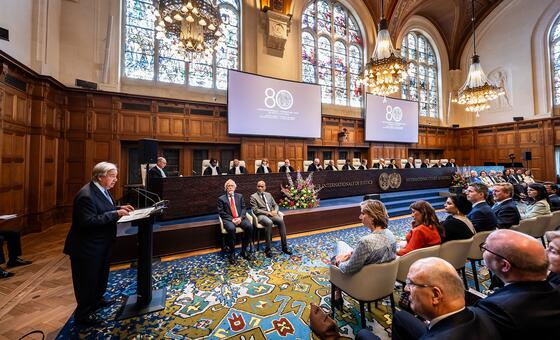
The International Court of Justice is the principal judicial organ of the United Nations. Its seat is at the Peace Palace in the Hague (Netherlands). It is the only one of the six principal organs of the United Nations not located in New York (United States of America).

The Secretariat comprises the Secretary-General and tens of thousands of international UN staff members who carry out the day-to-day work of the UN as mandated by the General Assembly and the Organization's other principal organs.

Learn more

Podium of the General Assembly Hall seen from below with the gold wall and the golden UN logo behind

On 25 November 2025, the President of the General Assembly and the President of the Security Council initiated the process of selecting and appointing the next Secretary-General. Candidates are nominated by a Member State or a group of Member States. Learn more about the multi-step selection and appointment process of the next United Nations Secretary-General.

Climate change is the defining issue of our time and now is the defining moment to do something about it. There is still time to tackle climate change, but it will require an unprecedented effort from all sectors of society.

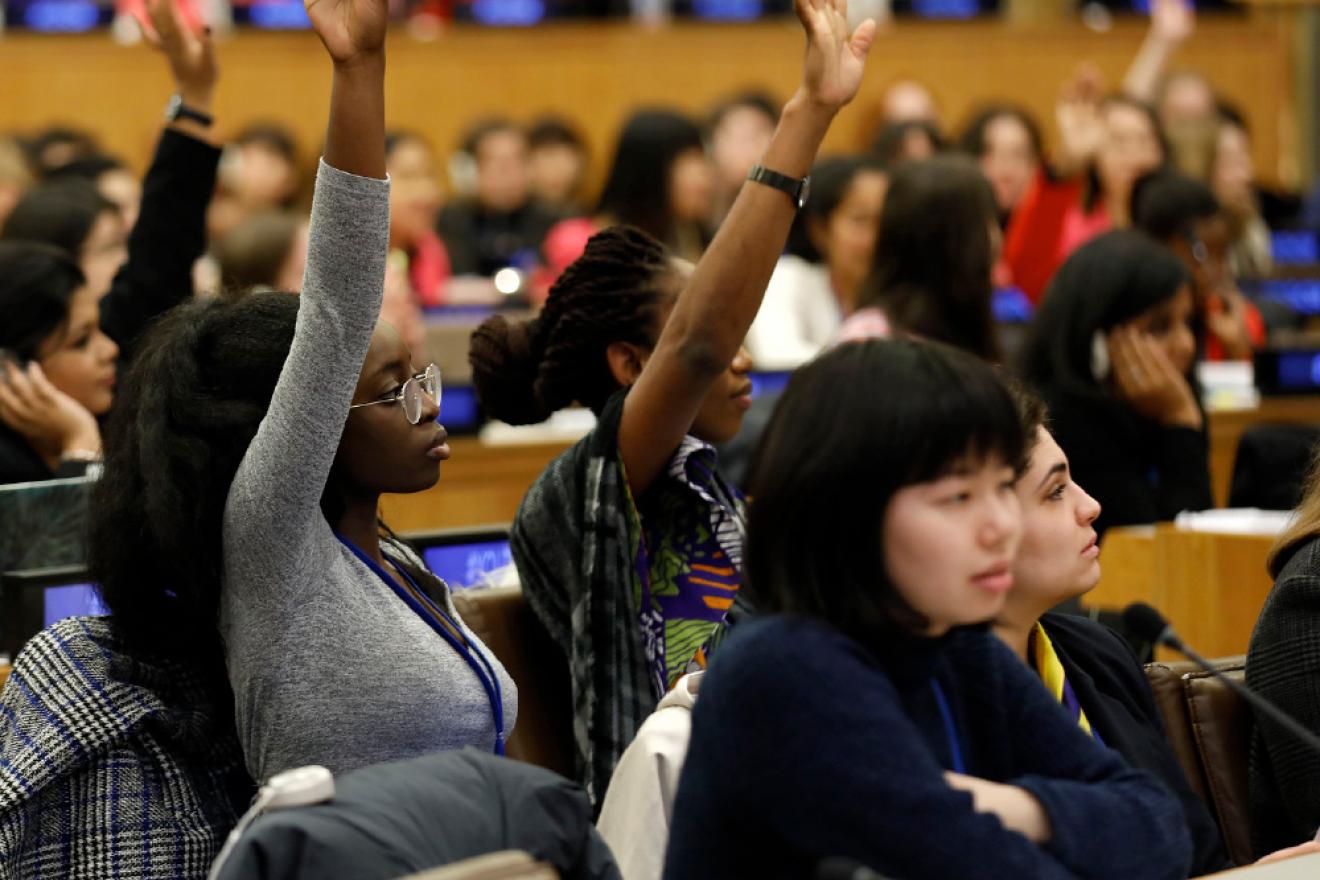
Women at UN CSW63 Side Event - “Take the Hot Seat”. Photo: UN Women/Ryan Brown

Women and girls represent half of the world’s population and, therefore, also half of its potential. Gender equality, besides being a fundamental human right, is essential to achieve peaceful societies, with full human potential and sustainable development.

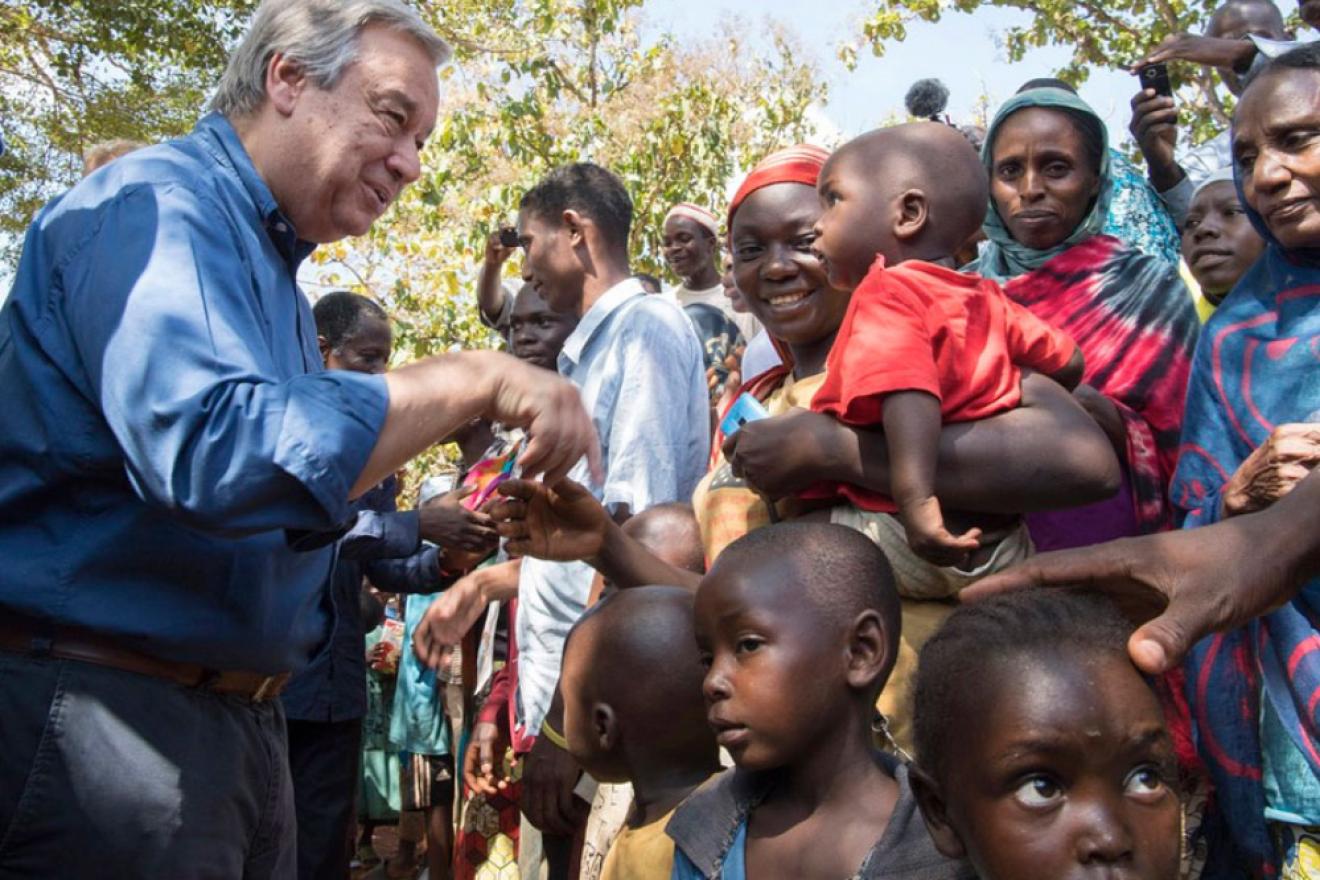
UN Secretary-General António Guterres is greeted on his visit to the Central African Republic

While global poverty rates have been cut by more than half since 2000, one in ten people in developing regions still lives on less than US$1.90 a day — the internationally agreed poverty line, and millions of others live on slightly more than this daily amount.

Watch and Listen

Video and audio from across the United Nations and our world-wide family of agencies, funds, and programmes.

UNRWA has been providing education across four generations. For more than 75 years, the Agency has supported more than 2.5 million Palestine Refugees to finish school. Over 66,000 children are being taught in UNRWA’s temporary learning spaces, and nearly 300,000 through digital learning.

Every child has the right to education. 

30 years, zero nuclear tests

Marking 30 years of the Comprehensive Nuclear-Test-Ban Treaty Organization (CTBT), the world celebrates a near-universal commitment to end nuclear testing, upheld by a unique global verification network and proving that multilateral progress is possible.

Swiss startup takes hyperloop a step closer

Swiss engineers at Swisspod are developing hyperloop capsules that travel up to 1,200 km/h in low-pressure tubes, aiming to make ultra-fast, affordable transport a reality within the next decade.

UN Podcasts

Felipe in a photo-op with 3 young women. They are holding signs with hashtag key messages.

Interview with the youngest senior appointment in the history of the UN: Felipe Paullier (AAN S12-E7)

“Leaving young people at the sidelines of how we find solutions is not the way. It's really bringing them [in], because on many of the things, the solutions will come from them.”

A medical doctor by training, Dr. Felipe Paullier is a passionate advocate for young people. Two years ago, aged just 32, his life took a new turn when he became the first-ever Assistant Secretary-General for Youth Affairs, the youngest senior appointment in the history of the United Nations.

“I've heard this from the Secretary General. You know, power, in essence, is not to be given, it's to be taken. ”

The UN Youth Office believes that positive change is rooted in empowering young people to meaningfully participate in decisions that impact their lives and futures. In this episode of Awake at Night, Felipe reflects on youth demands for peace and opportunity, on the stubborn barriers to change, and shares why he always prescribes reconnecting with nature as a cure for digital overwhelm.

Photo: ©YuWaah (GenU India)

Latest Audio from UN News

The United Nations in Pictures

Images from across the United Nations and our world-wide family of agencies, funds, and programmes.

in the darkness we see hands next to a boy plus his own hands as they reach towards a multitude of yellow candles aflame
Photo:© Ximena Borrazás

A photographer's account of the Ukraine war 

Loss and compassion in Ukraine: from the front lines to evacuation routes, Ximena Borrazás, a UN staff member with the Ukraine Humanitarian Coordinator’s Office (OCHA), has been documenting the human cost of Russia’s war against Ukraine — and the quiet dignity of those who endure it.

group photo of people standing in water submerged to their waist
Photo:© SGP Mexico

United by wetlands 

Although they cover only about six percent of the Earth’s land surface, 40 percent of all plant and animal species live or breed in wetlands. In the Bahamas, Mexico, and Zambia, local communities are working to protect this life-sustaining ecosystem. United in action with UNDP.