Children

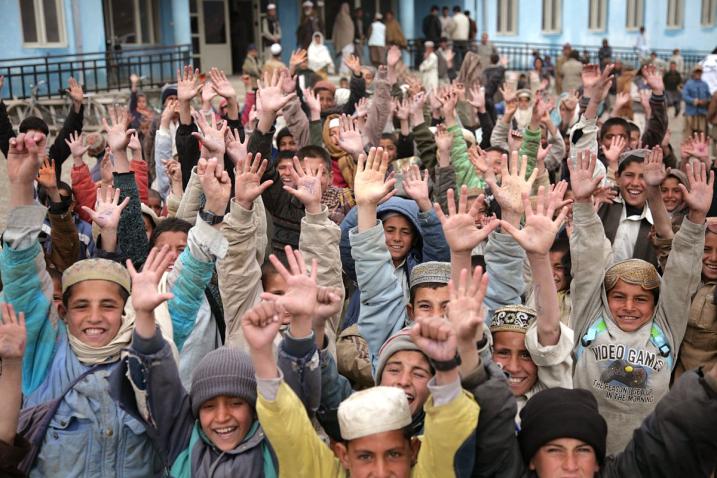
Innocent children, lasting scars

On the International Day of Innocent Children Victims of Aggression (4 June) we recognize children living in conflict zones who face violence, fear and loss on an alarming scale. In 2024, the United Nations verified record levels of grave violations against children, including killing and maiming, recruitment and abduction, sexual violence, attacks on schools and hospitals, and denial of humanitarian aid. Thousands remain caught in conflict, deprived of safety, education, healthcare and protection. Ending these violations requires urgent action, accountability, recovery and reintegration for peace.

Students attended the opening of a school situated within the compound of the United Nations Mission in South Sudan (UNMISS) in Juba.
Photo:UN/Amanda Voisard
Delegation of Kyrgyzstan celebrates being elected as a non-permanent member of the Security Council at the United Nations in New York.

Kyrgyzstan wins seat on UN Security Council for first time ever

3 June 2026 — A closely watched Security Council election delivered a mix of continuity and change on Wednesday, as Austria, Portugal, Trinidad and Tobago, Zimbabwe – and first-time member...

Gaza’s public servants systematically targeted in Israeli strikes

3 June 2026 — Months since Gaza’s nominal ceasefire began, Palestinians continue to be killed and maimed in drone and airstrikes, including the enclave’s police force which is crucial to peace and...

‘We are catching up’ – WHO chief on DR Congo’s Ebola fight

3 June 2026 — The head of the World Health Organization (WHO) said on Wednesday that the Ebola outbreak in the Democratic Republic of the Congo (DRC) is showing signs of progress – but significant...

UN Sustainable Development Goals

17 Goals to transform our world

The Sustainable Development Goals are a call for action by all countries — poor, rich and middle-income — to promote prosperity while protecting the planet.

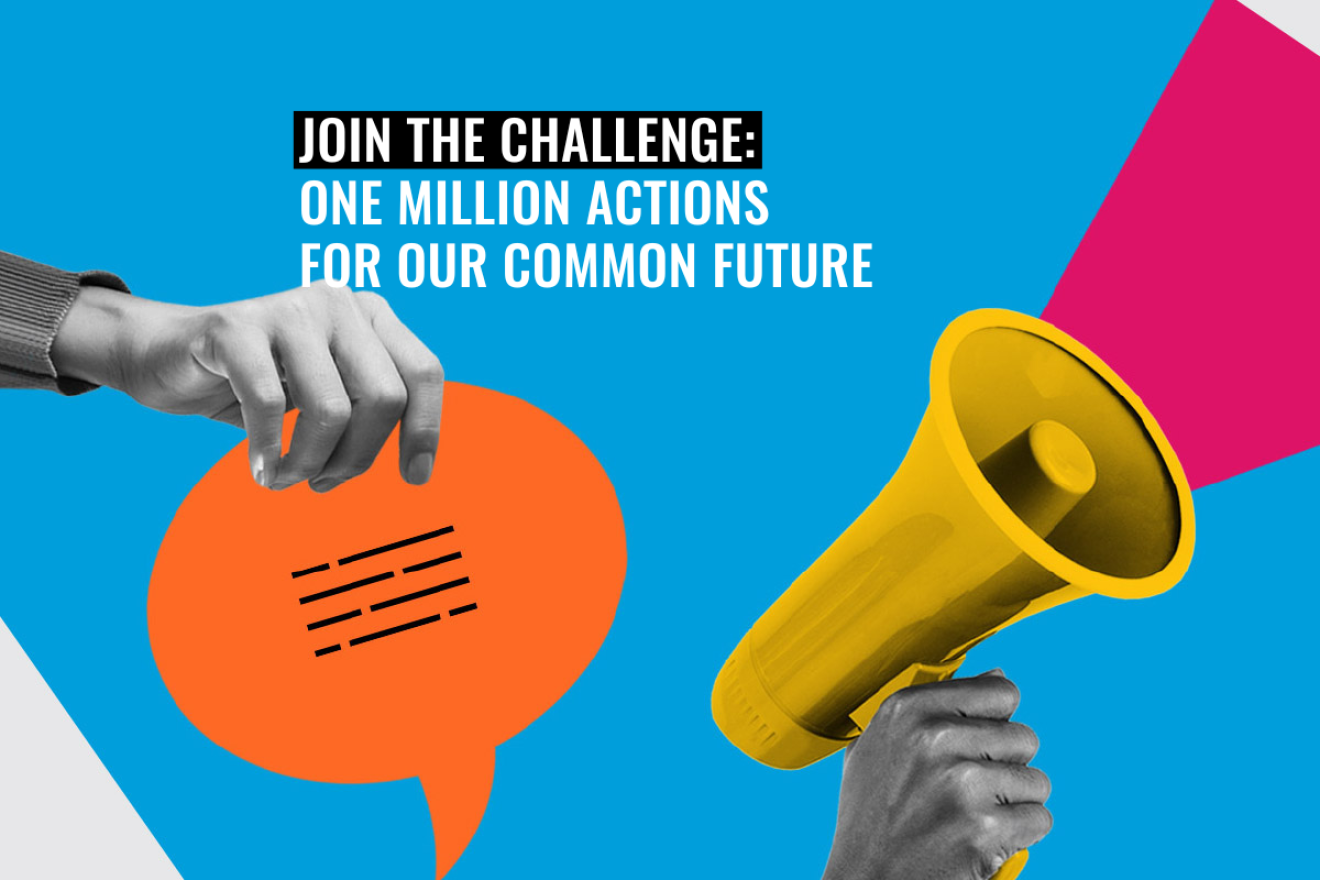
hands holding megaphone and speech bubble

The Goals can improve life for all of us. Cleaner air. Safer cities. Equality. Better jobs. These issues matter to everyone. But progress is too slow. We have to act, urgently, to accelerate changes that add up to better lives on a healthier planet. Find new inspiring actions on the app and at un.org/actnow.

Today, half the world is under 30, and this generation is a powerful force for peace. The UN "Hear Us. Act Now for a Peaceful World" campaign, launched on the International Day of Peace, aims to include, invest in, and partner with young people to build lasting peace. 

children holding up books

Reading and learning are essential to children’s growth and development; stories can fuel their imagination and raise awareness of new possibilities. The SDG Book Club aims to encourage them to learn about the Goals in a fun, engaging way, empowering them to make a difference.

icon with fish swimming below waves


Goal 14: Conserve and sustainably use the oceans, seas and marine resources

Healthy oceans and seas are essential to human existence and life on Earth.

More from the
United Nations

Featured stories from across the United Nations and our world-wide family of agencies, funds, and programmes.

A woman selling her food at a market place. Finance, Economic Development, IFAD

Strengthening food systems through nutrition

Nutrition is a cornerstone of rural transformation, linking healthy populations, resilient food systems and stronger local economies. Malnutrition costs the global economy up to US$3.5 trillion each year, while every dollar invested in nutrition can generate about US$23 in returns. The International Fund for Agriculture and Development (IFAD) promotes nutrition-sensitive investments that address the causes of malnutrition and strengthen sustainable food systems. Home-grown school feeding programmes illustrate this approach by improving children’s diets while creating reliable markets for small-scale farmers. In Kenya, IFAD-supported cooperatives supply nutritious grains to schools, boosting food security and livelihoods. Through partnerships with governments, donors and international agencies, including Norway-funded initiatives in seven African countries, IFAD has improved nutrition and livelihoods for over 263,000 rural people. These efforts demonstrate how coordinated investments can enhance human capital, increase resilience to climate shocks, support rural employment and drive inclusive economic growth.

Picture of the earth with temperatures rising. Climate, WMO

Prepare for El Niño

The World Meteorological Organization (WMO) forecasts an 80% chance of El Niño developing between June and August 2026, with a more than 90% likelihood of persisting until at least November. Most climate models indicate a moderate to potentially strong event. Rising sea-surface temperatures in the equatorial Pacific, supported by unusually warm subsurface waters and atmospheric indicators, confirm the developing conditions. UN Secretary-General António Guterres warned that El Niño could intensify the impacts of climate change and called for urgent climate action and support for vulnerable communities. WMO Secretary-General Celeste Saulo emphasized preparedness, noting increased risks of droughts, heavy rainfall and heatwaves. WMO will continue monitoring conditions and issuing early warnings globally.

A land with budding crops. Agriculture and Food, SDG 12: Sustainable Consumption and Production, FAO

Rethinking and rebuilding our agrifood systems

The Food and Agriculture Organization of the United Nations (FAO) and the Global Environment Facility (GEF) are working across 140 countries to transform agrifood systems so they deliver food security, climate resilience, biodiversity protection and land restoration together. Their partnership supports solutions that align the Rio Conventions by improving incentives, policies and investments for farmers and rural communities. Examples include Indigenous-led forest restoration in Peru that strengthens biodiversity and livelihoods, conservation agriculture in Iraq that boosts yields and reduces water use, and regional cooperation in Central Asia to restore degraded river ecosystems. In Pakistan, banana waste is being converted into textile fibres, reducing pollution and creating new incomes. Since 2006, the partnership has combined science, funding and local knowledge to scale sustainable practices, helping farmers adapt to climate change while restoring ecosystems and strengthening rural economies for a more resilient and sustainable future globally.

Economic Development, IFAD

Partnerships growing rural economies

IFAD’s public-private-producer partnerships connect companies with small farmers, increasing incomes, strengthening supply chains, and supporting sustainable rural development globally.

Peace and Security

Rebuilding lives slowly

After years of displacement, families returning to Yathrib, a small town in Salah al Din, Iraq,  struggle to rebuild destroyed homes and restore stability with limited support.

Children, SDG 3: Good Health and Well-Being, WFP

Pakistan's nutrition success

WFP-backed Nashonuma programme reduces child stunting in Pakistan through nutrition support, counselling, and maternal health services.

SDG 7: Affordable and Clean Energy, UNCTAD

Green investment inequality

UNCTAD warns renewable energy investment alone is insufficient; countries need technology, skills, and flexible policies to build local industries.

What we do

Due to the powers vested in its Charter and its unique international character, the United Nations can take action on the issues confronting humanity in the 21st century, including:

Structure of the
United Nations

The main parts of the UN structure are the General Assembly, the
Security Council, the Economic and Social Council, the Trusteeship Council, the International Court of Justice, and the UN Secretariat. All were established in 1945 when the UN was founded.

The General Assembly is the main deliberative, policymaking and representative organ of the UN. All 193 Member States of the UN are represented in the General Assembly, making it the only UN body with universal representation.

The Security Council has primary responsibility, under the UN Charter, for the maintenance of international peace and security. It has 15 Members (5 permanent and 10 non-permanent members). Each Member has one vote. Under the Charter, all Member States are obligated to comply with Council decisions.

The Economic and Social Council is the principal body for coordination, policy review, policy dialogue and recommendations on economic, social and environmental issues, as well as implementation of internationally agreed development goals.

The Trusteeship Council was established in 1945 by the UN Charter, under Chapter XIII, to provide international supervision for 11 Trust Territories that had been placed under the administration of seven Member States, and ensure that adequate steps were taken to prepare the Territories for self-government and independence.

The International Court of Justice is the principal judicial organ of the United Nations. Its seat is at the Peace Palace in the Hague (Netherlands). It is the only one of the six principal organs of the United Nations not located in New York (United States of America).

The Secretariat comprises the Secretary-General and tens of thousands of international UN staff members who carry out the day-to-day work of the UN as mandated by the General Assembly and the Organization's other principal organs.

Learn more

Podium of the General Assembly Hall seen from below with the gold wall and the golden UN logo behind

The United Nations process to appoint the next Secretary‑General continues on 21 and 22 April with interactive dialogues guided by the principles of transparency and inclusivity. Join the conversation and follow the live interactive dialogues with the candidates on UN WebTV: Michelle Bachelet Jeria (21 April, 10 a.m. EDT), Rafael Mariano Grossi (21 April, 3 p.m. EDT), Rebeca Grynspan Mayufis (22 April, 10 a.m. EDT), and Macky Sall (22 April, 3 p.m. EDT).

Climate change is the defining issue of our time and now is the defining moment to do something about it. There is still time to tackle climate change, but it will require an unprecedented effort from all sectors of society.

Women at UN CSW63 Side Event - “Take the Hot Seat”. Photo: UN Women/Ryan Brown

Women and girls represent half of the world’s population and, therefore, also half of its potential. Gender equality, besides being a fundamental human right, is essential to achieve peaceful societies, with full human potential and sustainable development.

UN Secretary-General António Guterres is greeted on his visit to the Central African Republic

While global poverty rates have been cut by more than half since 2000, one in ten people in developing regions still lives on less than US$1.90 a day — the internationally agreed poverty line, and millions of others live on slightly more than this daily amount.

Watch and Listen

Video and audio from across the United Nations and our world-wide family of agencies, funds, and programmes.

UNICEF highlights that ready-to-use therapeutic food (RUTF) has transformed treatment for severe child malnutrition worldwide. Since 2000, global under-five mortality has dropped significantly, and RUTF has helped reach over 9 million children annually, contributing to millions of lives saved in both crisis and stable settings.

Child wasting is a life-threatening form of malnutrition that weakens immunity and increases the risk of death and disease. RUTF is an energy-dense, shelf-stable paste that can be used at home, enabling high recovery rates of over 90% while reducing the need for hospitalization and improving access to treatment in remote areas.

Inclusive action for planet earth

Inclusion means fostering respect, dignity, and safe spaces where diverse identities, backgrounds, and lived experiences are valued so that everyone can fully participate in shaping a more sustainable future.

Chemical threat – Clandestine laboratories

A UN-supported virtual reality training tool helps governments, law enforcement, and experts identify and safely respond to clandestine chemical, biological, radiological, and nuclear weapon labs.

UN Podcasts

WIPO podcast

Intellectual Property and Cannabis

In this episode of WIPO’s podcast Page Points, Natalie Corthésy explores the evolving relationship between intellectual property and the global cannabis industry.

Drawing from the groundbreaking book Intellectual Property and Cannabis, the discussion examines how trademarks, branding, packaging, patents, and traditional knowledge intersect within a rapidly expanding and increasingly legitimized market.

Corthésy highlights the importance of consumer trust, national identity, and fair competition, while also addressing the cultural and socio-economic dimensions of cannabis regulation.

The episode offers timely insights into how IP frameworks are adapting to one of the world’s most complex emerging industries.

Latest Audio from UN News

The United Nations in Pictures

Images from across the United Nations and our world-wide family of agencies, funds, and programmes.

mother with two infants
Photo:© UNFPA/Gaia Squarci

New life, fragile ground

In the Central African Republic conflict, poverty and shrinking humanitarian funding are pushing health systems to the brink. At the Bangui Paediatric Complex, Central African Republic's only specialist neonatal and paediatric hospital, families face rising costs for care after free health services sustained by international partners, including UNFPA, were scaled back. Belicia, who had triplets is receiving quality care in the maternity ward. However, only around 40 per cent of births in the country are attended by skilled personnel and many women struggle to access essential reproductive and neonatal healthcare.

dried fruit at a farmer's market
Photo:UNDP/SGP Uzbekistan

Resilience revolution

Double-landlocked in the heart of Central Asia, Uzbekistan is dominated by an arid climate. Almost half of the country is covered by rangelands that sustain the livelihoods of pastoralists, small-scale herders, ranchers and farmers. But with the escalating impacts of climate change and land degradation this territory and the local communities who depend on it are under unprecedented pressure. Yet, it is within these local communities that the most powerful solutions are being forged, with support from the Global Environment Facility Small Grants Programme, including a shift away from water-intensive, traditional farming towards a more resilient model.