Mental health and wellbeing

Invest in youth mental health

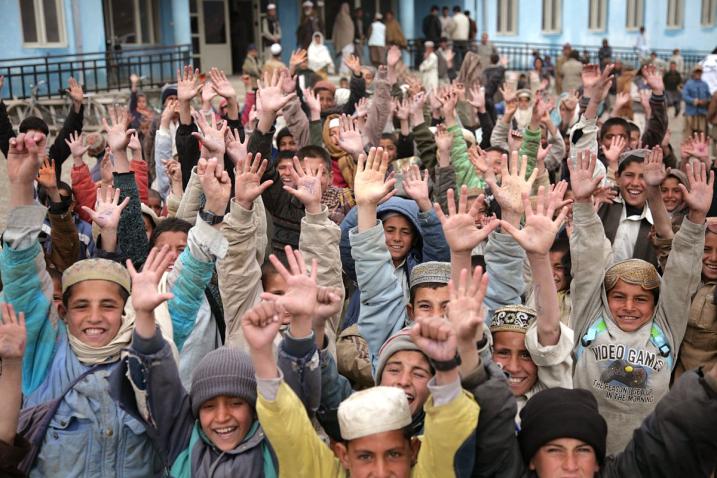
A devastating youth mental health crisis is sweeping the globe, with an estimated 15% of adolescents living with a diagnosed mental disorder. Depression, anxiety, and behavioral disorders stand as the primary drivers of illness and disability among young people today. This vulnerability is heavily compounded by negative early environments. To combat this trend, international experts urge countries to invest heavily in school- and community-based programmes that actively build resilience, dismantle stigma, and guarantee early access to rights-based care. Learn more about mental health and wellbeing.

Good mental health helps young people handle stress, build meaningful relationships and make informed choices.
Photo:UNICEF/UNI582108/Reklajtis
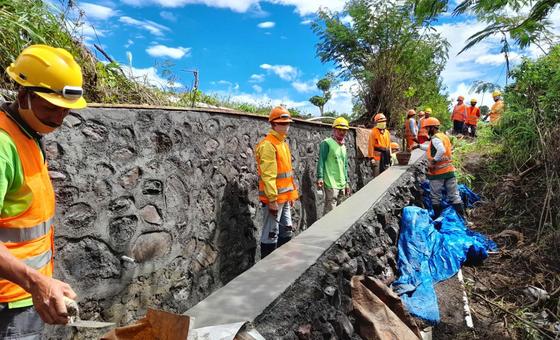
Workers in Indonesia build a wall as a flood prevention measure.

As aid dries up, countries pledge to close the $4 trillion development gap

16 July 2026 — UN Member States reaffirmed their commitment to the Sustainable Development Goals (SDGs) by adopting a declaration on Wednesday that they will implement reforms to help close the $4...

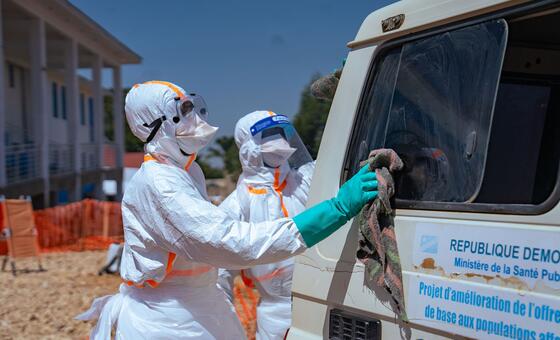
WHO warns DR Congo Ebola outbreak is outpacing response as Uganda reaches milestone

16 July 2026 — The Ebola outbreak in the Democratic Republic of the Congo (DRC) has become the third largest on record and is spreading faster than any previous one during the first month of...

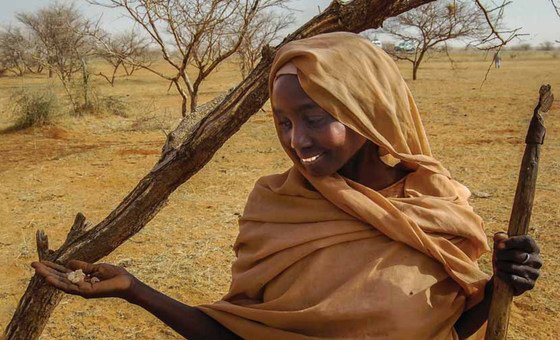
Looted gold and gum arabic are bankrolling Sudan's war, UN warns

15 July 2026 — Alongside gold, the little-known Sudanese commodity gum arabic – used in soft drinks, food, cosmetics and pharmaceuticals – continues to fuel the war. 

...

UN Sustainable Development Goals

17 Goals to transform our world

The Sustainable Development Goals are a call for action by all countries — poor, rich and middle-income — to promote prosperity while protecting the planet.

hands holding megaphone and speech bubble

The Goals can improve life for all of us. Cleaner air. Safer cities. Equality. Better jobs. These issues matter to everyone. But progress is too slow. We have to act, urgently, to accelerate changes that add up to better lives on a healthier planet. Find new inspiring actions on the app and at un.org/actnow.

Today, half the world is under 30, and this generation is a powerful force for peace. The UN "Hear Us. Act Now for a Peaceful World" campaign, launched on the International Day of Peace, aims to include, invest in, and partner with young people to build lasting peace. 

Thomas the Tank engine

Learn more about the Sustainable Development Goals! On our student resources page you will find plenty of materials for young people and adults alike. Share with your family and friends to help achieve a better world for all.

17 SDG goals

Ten years after their adoption, the Sustainable Development Goals remain a universal call to action for all countries – developed and developing. Progress is being made, yet major challenges remain. At the High-level Political Forum, countries focus on accelerating action on five critical goals.

More from the
United Nations

Featured stories from across the United Nations and our world-wide family of agencies, funds, and programmes.

woman taking water sample from stream Science and Technology, UNESCO

Science’s great divide

The world’s scientists are mobilizing against climate disruption, inequality and emerging technologies—but the benefits are far from evenly shared. UNESCO data spanning 397 initiatives in 79 countries reveals that Africa hosts fewer than 10% of projects despite representing 17.5% of the global population. Funding has surged, yet weak coordination, limited infrastructure and gaps between researchers and policymakers still block progress. With open-science commitments often lacking action plans or oversight, the next breakthrough may depend less on discovering new knowledge than on ensuring every nation can access, shape and use it.

people working on laptops and tablets Science and Technology, UNDP

Seeing around the bend: Who gets to shape AI’s future?

Artificial intelligence is spreading at breathtaking speed, but access alone won’t determine who benefits. The real divide lies in who has the power to shape how AI is built, governed and used. As many countries race to adopt the technology, gaps in infrastructure, data, skills and local languages threaten to leave billions on the sidelines. Yet the future is far from fixed. Around the world, governments are laying the foundations for AI that serves people—not just markets. The choices made today will decide whether AI deepens inequality or becomes a force for more inclusive, human-centered development.

people on a hill picking tea leaves Agriculture and Food, FAO

Steep hills, strong harvests: Rwanda’s tea crop

As the morning mist lifts over Rwanda’s rolling hills, thousands of tea pickers begin work on one of the country’s most valuable crops. Behind every carefully plucked leaf is a story of resilience, smallholder farmers and a national effort to produce premium-quality tea while protecting livelihoods. With support for sustainable farming, stronger value chains and a renewed focus on quality, Rwanda is turning its dramatic landscape into an economic advantage. From hillside plantations to teacups around the world, the country is brewing a future where agriculture creates opportunity, empowers rural communities and helps lift families out of poverty.

Science and Technology, ITU

Trusted AI for everyone

Geneva Digital Week concluded with concrete commitments to make AI more inclusive and trustworthy, including a new global AI governance process, over US$100 billion mobilized to expand digital connectivity and new standards for trusted AI.

Trade and Commerce, UNCTAD

New Commodity Dependence Dashboard

Commodities can drive growth, but over-reliance leaves economies vulnerable to shocks. UNCTAD's new dashboard helps countries turn data into informed policy decisions.

Humanitarian Aid, UN Women

Aid cuts put lives at risk

A new UN Women report warns that record aid cuts have left at least one million women and girls without critical support, as women’s organizations on the frontlines of humanitarian crises struggle to meet soaring demand and face the risk of shutting down.

Health, WHO

Dementia risk can be reduced: WHO

The World Health Organization (WHO) has released updated guidelines, providing countries with evidence-based recommendations to help prevent or delay the onset of dementia across the life course.

What we do

Due to the powers vested in its Charter and its unique international character, the United Nations can take action on the issues confronting humanity in the 21st century, including:

Structure of the
United Nations

The main parts of the UN structure are the General Assembly, the
Security Council, the Economic and Social Council, the Trusteeship Council, the International Court of Justice, and the UN Secretariat. All were established in 1945 when the UN was founded.

The General Assembly is the main deliberative, policymaking and representative organ of the UN. All 193 Member States of the UN are represented in the General Assembly, making it the only UN body with universal representation.

The Security Council has primary responsibility, under the UN Charter, for the maintenance of international peace and security. It has 15 Members (5 permanent and 10 non-permanent members). Each Member has one vote. Under the Charter, all Member States are obligated to comply with Council decisions.

The Economic and Social Council is the principal body for coordination, policy review, policy dialogue and recommendations on economic, social and environmental issues, as well as implementation of internationally agreed development goals.

The Trusteeship Council was established in 1945 by the UN Charter, under Chapter XIII, to provide international supervision for 11 Trust Territories that had been placed under the administration of seven Member States, and ensure that adequate steps were taken to prepare the Territories for self-government and independence.

The International Court of Justice is the principal judicial organ of the United Nations. Its seat is at the Peace Palace in the Hague (Netherlands). It is the only one of the six principal organs of the United Nations not located in New York (United States of America).

The Secretariat comprises the Secretary-General and tens of thousands of international UN staff members who carry out the day-to-day work of the UN as mandated by the General Assembly and the Organization's other principal organs.

Learn more

Podium of the General Assembly Hall seen from below with the gold wall and the golden UN logo behind

The United Nations process to appoint the next Secretary‑General continues with interactive dialogues guided by the principles of transparency and inclusivity. Watch the dialogues with the candidates: Michelle Bachelet Jeria (21 April), Rafael Mariano Grossi (21 April), Rebeca Grynspan Mayufis (22 April), Macky Sall (22 April), María Fernanda Espinosa Garcés (15 June) and Carolyn Rodrigues Birkett (18 June).

.

A group of people carrying their few belongings, walking in front of buildings in ruins, at sunset.

This series shines a light on communities facing conflict, displacement, public health emergencies and other humanitarian challenges around the world. Drawing on reporting from across the UN system, it amplifies voices from countries including Haiti, Gaza, DR Congo, Yemen, Afghanistan and Myanmar, to foster understanding, encourage engagement, and help mobilize support, assistance, and protection for the most vulnerable people.

Climate Change is one of the defining issues of our time and we are at a pivotal moment. From shifting weather patterns that threaten food production, to rising sea levels that increase the risk of catastrophic flooding, the impacts of climate change are global in scope and unprecedented in scale. Taking decisive action today will make adapting to these impacts in the future more effective and less costly.

General Assembly hall with the Secretary-General at the podium

The United Nations is the only place on Earth where all the world's nations come together to discuss common problems and find shared solutions that benefit all of humanity. Learn about the main areas of the UN’s activities; how it makes a difference to the world’s people; and how every citizen can get involved and make a contribution. 

Watch and Listen

Video and audio from across the United Nations and our world-wide family of agencies, funds, and programmes.

When powerful earthquakes struck parts of Venezuela in June 2026, thousands of families were forced from their homes in seconds. For Gusmaira, the disaster came just after giving birth. With her newborn still in hospital and communications disrupted, she spent hours not knowing whether her baby was safe. Like many families affected by the earthquakes, Yuleima and Gusmaira are now rebuilding their lives one day at a time. Despite the uncertainty, they are finding strength in their families and communities as they move forward. UNHCR, the UN Refugee Agency, and partners are supporting the government-led response, helping families access protection services, psychosocial support, documentation, medical care and other emergency assistance as they recover from the disaster. Across Venezuela, communities are beginning the long process of rebuilding. UNHCR continues to work alongside affected families, helping them move beyond survival and take the first steps towards restoring stability, dignity and hope. Learn more, and support families affected by the earthquakes in Venezuela.

What is it like to work as a psychosocial counsellor in Gaza?

This is the testimony of our colleague Iman, who keeps working despite the hardship. In partnership with the European Union @‌EUcrisisresponse, UNRWA continues to provide essential services to people in #Gaza, including psychosocial support.

Nelson Mandela Day - It's in our hands

Nelson Mandela International Day on 18th July commemorates Mandela’s birthday and his lifetime of service to humanity. This year’s theme reminds us that it is still in our hands to combat poverty and inequality.

UN Podcasts

Mary poses for a photo with many young schoolkids in uniform standing behind her

Launching a new life from a refugee camp (AAN: S13-E5)

"Refugees do bring so much to the community, they bring a whole different culture, a whole different lens on life, and that is powerful and important."

War is Mary Maker’s earliest memory. Born in South Sudan and named Nyiriak — meaning "war" — she spent her youth living and working in one of the world’s largest refugee camps. Now a Goodwill Ambassador for UNHCR, the UN Refugee Agency, she is raising her voice on behalf of those she left behind, helping refugee students land scholarships to top universities.

“I want to be seen. I want to be heard. I want to be acknowledged. I want to be at the table, making decisions and feeling like a part of something. Are you able to see us? Are you? Are you able to go beyond the news and really understand that this is someone like you?”

After her family fled to safety, Mary built a new life of opportunity through education and hard work – finding her feet, and her voice, on stage. In this episode, she shares how she overcame a childhood marred by death and conflict, and how theater became both her refuge and her path forward.

Photo: ©UNHCR

Latest Audio from UN News

The United Nations in Pictures

Images from across the United Nations and our world-wide family of agencies, funds, and programmes.

child wades through rain water waist high and holds umbrella and slippers in one hand
Photo:UNICEF/UNI870430/Do Khuong Duy

The climate crisis is becoming a childhood crisis

UNICEF’s Children’s Climate Risk Report 2026 reveals a stark reality: 1.1 billion children now face at least three overlapping climate hazards, putting their health, education and futures at risk. While the climate crisis is a global phenomenon, its effects aren’t felt equally. Without identifying who the most vulnerable children are, where they live and how they are affected by climate-related impacts, it’s nearly impossible to develop practical and effective solutions. UNICEF’s report reveals how children’s exposure to the climate hazards, inherent physical vulnerabilities, and the gaps in the social services they rely on, undermines their rights and increases their risk of harm. The report calls for urgent action to put children at the heart of climate solutions.

hazmat-clad person hangs laundry to dry in the outdoors
Photo:WFP/Arete Seros Muisa

Food on the frontlines of the Ebola Response

WFP has been providing food and other humanitarian assistance to Ebola-affected areas: hot meals to patients, family members and health workers; along with take-home food rations and nutrition support to other vulnerable people that together reach more than 1.2 million Congolese. Why? Because Food assistance helps patients and family members remain under observation, reduces the need for people to travel in search of food, and supports wider efforts to contain the spread of Ebola. In addition, WFP is providing logistics, telecommunications and air transport to move humanitarian workers and essential cargo to the frontlines of the Ebola crisis in eastern DRC.  WFP warns that conflict, displacement and rising food prices are worsening the crisis and is seeking US$72 million to sustain the Ebola response.