
Eradicating extreme poverty for all people, everywhere, by 2030 is a pivotal aim of the Sustainable Development Goals. Extreme poverty—defined as surviving on less than $3.00 per person per day at 2021 purchasing power parity—has declined remarkably over recent decades.
However, in 2026, 826 million people (or 1 in 10 people worldwide) were living in extreme poverty. This represents an upward revision from earlier estimates due to an updated poverty line. If current trends continue, 9% of the world’s population will still live in extreme poverty by 2030.
At the same time, we are seeing a shocking resurgence of hunger back to levels last observed in 2005. Equally concerning is the persistent rise in food prices across more countries today than between 2015 and 2019. This dual crisis of poverty and food insecurity remains a critical global concern.
Why is there so much poverty
Poverty has many dimensions. Its primary causes include unemployment, social exclusion, and the high vulnerability of certain populations to disasters, disease, and other crises that prevent them from earning a productive living.
Why should I care about other people’s economic situation?
There are many reasons, but the simplest is that as human beings, our well-being is deeply interconnected. Growing inequality hurts economic growth and undermines social cohesion. This raises political and social tensions and, in some circumstances, drives instability and conflict.
Why is social protection so important?
Strong social protection systems are essential to cushion the blow of economic shocks and prevent vulnerable families from falling into poverty.
While social protection measures did expand during the COVID-19 crisis, approximately 46% of the world’s population—about 3.8 billion people, including 1.4 billion children—remained entirely unprotected in 2023.
In response to the subsequent cost-of-living crisis, 105 countries and territories announced nearly 350 social protection measures between February 2022 and February 2023. However, 80% of these programs were only short-term. To truly achieve the SDGs, nations must build permanent, universal, and sustainable social protection systems for all.
The contribution of science to end poverty has been significant. For example, it has enabled access to safe drinking water, reduced deaths caused by water-borne diseases, and improved hygiene to reduce health risks related to unsafe drinking water and lack of sanitation.
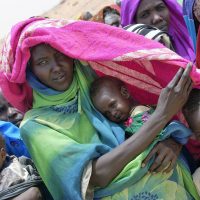
- If current trends continue, 9% of the world’s population may still live in extreme poverty by 2030, and only one in five countries will succeed in halving their national poverty levels.
- In 2025, 7.9% of the global workforce (284 million workers) lived in extreme poverty, down from 11% in 2015.
- For the first time on record, over half of the world’s population receives at least one social protection benefit. Despite this milestone, 3.8 billion people remain completely uncovered.
- Development aid focused on poverty reduction has fallen sharply, erasing a decade of progress and returning to 2015 levels.
- Advanced economies spend a significantly higher share of government budgets on essential services (like education, health, and social protection) compared to emerging and developing nations.
- Guaranteeing basic social security floors in low- and middle-income countries requires an additional $1.4 trillion annually, equal to 3.3% of their combined GDP in 2024.
1.1 By 2030, eradicate extreme poverty for all people everywhere, currently measured as people living on less than $2.15 a day
1.2 By 2030, reduce at least by half the proportion of men, women and children of all ages living in poverty in all its dimensions according to national definitions
1.3 Implement nationally appropriate social protection systems and measures for all, including floors, and by 2030 achieve substantial coverage of the poor and the vulnerable
1.4 By 2030, ensure that all men and women, in particular the poor and the vulnerable, have equal rights to economic resources, as well as access to basic services, ownership and control over land and other forms of property, inheritance, natural resources, appropriate new technology and financial services, including microfinance
1.5 By 2030, build the resilience of the poor and those in vulnerable situations and reduce their exposure and vulnerability to climate-related extreme events and other economic, social and environmental shocks and disasters
1.A Ensure significant mobilization of resources from a variety of sources, including through enhanced development cooperation, in order to provide adequate and predictable means for developing countries, in particular least developed countries, to implement programmes and policies to end poverty in all its dimensions
1.B Create sound policy frameworks at the national, regional and international levels, based on pro-poor and gender-sensitive development strategies, to support accelerated investment in poverty eradication actions

Related News

Uganda’s UN-supported wildlife forensics lab turns ivory seizures into convictions
The package originated in Entebbe, Uganda, bound for Cairo, containing 10 kilograms of thumb-sized pieces that could have been either bone or elephant ivory. Read Full Story on UN News

Global life expectancy bounces back to near pre-pandemic levels, WHO says
People around the world are living longer again, with global life expectancy almost fully recovered from the disruption of the COVID-19 pandemic, the World Health Organization (WHO) said on Friday. Read Full Story on UN [...]

Gaza: WHO appeals for massive aid influx ahead of winter
Repeated delays in bringing lifesaving medicines, prosthetics and more from Israel into Gaza risk having devastating consequences on Palestinians who urgently need them in the war-torn enclave, the UN World Health Organization (WHO) said on [...]
Related Videos

Uganda’s UN-supported wildlife forensics lab turns ivory seizures into convictions
The package originated in Entebbe, Uganda, bound for Cairo, containing 10 kilograms of thumb-sized pieces that could have been either bone or elephant ivory. Read Full Story on UN News

Global life expectancy bounces back to near pre-pandemic levels, WHO says
People around the world are living longer again, with global life expectancy almost fully recovered from the disruption of the COVID-19 pandemic, the World Health Organization (WHO) said on Friday. Read Full Story on UN [...]

Gaza: WHO appeals for massive aid influx ahead of winter
Repeated delays in bringing lifesaving medicines, prosthetics and more from Israel into Gaza risk having devastating consequences on Palestinians who urgently need them in the war-torn enclave, the UN World Health Organization (WHO) said on [...]

Ebola response faces setback as transit centre burns down in DR Congo camp
The enormous challenge of halting the spread of Ebola in the Democratic Republic of the Congo (DRC) just became even harder after a key transit centre for patients requiring treatment burned down in Ituri province. [...]