
Climate change affects everyone
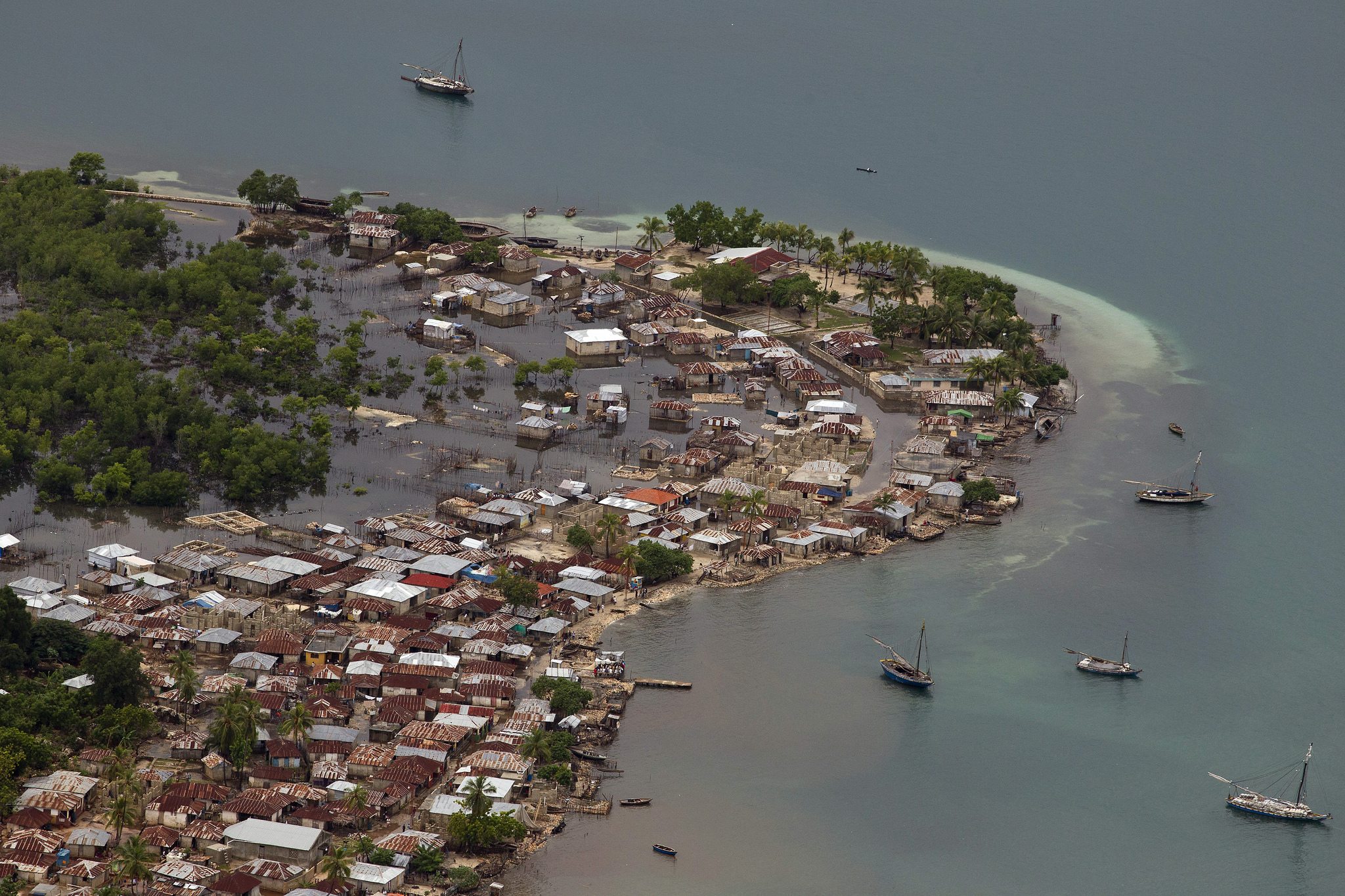
Climate change is now affecting every country on every continent. It is disrupting national economies and affecting lives, costing people, communities and countries dearly today and even more tomorrow.
People are experiencing the significant impacts of climate change, which include changing weather patterns, rising sea level, and more extreme weather events. The greenhouse gas emissions from human activities are driving climate change and continue to rise. They are now at their highest levels in history. Without action, the world’s average surface temperature is projected to rise over the 21st century and is likely to surpass 3 degrees Celsius this century—with some areas of the world expected to warm even more. The poorest and most vulnerable people are being affected the most.
Affordable, scalable solutions are now available to enable countries to leapfrog to cleaner, more resilient economies. The pace of change is quickening as more people are turning to renewable energy and a range of other measures that will reduce emissions and increase adaptation efforts.
But climate change is a global challenge that does not respect national borders. Emissions anywhere affect people everywhere. It is an issue that requires solutions that need to be coordinated at the international level and it requires international cooperation to help developing countries move toward a low-carbon economy.
To address climate change, countries adopted the Paris Agreement at the COP21 in Paris on 12 December 2015. The Agreement entered into force less than a year later. In the agreement, all countries agreed to work to limit global temperature rise to well below 2 degrees Celsius, and given the grave risks, to strive for 1.5 degrees Celsius.
Implementation of the Paris Agreement is essential for the achievement of the Sustainable Development Goals, and provides a roadmap for climate actions that will reduce emissions and build climate resilience.
The Paris Agreement on climate change
The UN continues to encourage all stakeholders to take action toward reducing the impacts of climate change.
What you can do
The first thing is: Demand that world leaders join the Paris Agreement! This is crucial to set the world on a path to lower its carbon emissions. You can write a letter to your representative or simply make your voice heard on social media.
Taking climate action is up to everybody. To make it easier, we have put together a list of things you can do. You can also visit the UN Framework Convention on Climate Change to learn more about the Paris Agreement, and spread what you’ve learned and what you’re doing on your social networks with the hashtag #ParisAgreement.
Need some inspiration? Check out our Lazy Person’s Guide to Saving the World and our Year of Living Sustainably initiative.


Launch of Secretary-General’s Youth Advisory Group on Climate Change – 27 July
Building on the climate action momentum, the Secretary-General will launch his Youth Advisory Group on Climate Change on 27 July to amplify youth voices and to engage young people in an open and transparent dialogue as the UN gears up to raise ambition and accelerate action to address the climate crisis.
ActNow Climate Campaign – Chef Grace Ramirez
Chef Grace Ramirez talks about sustainability and green hacks in support of the UN's ActNow climate campaign.
Angry Birds 2 PSA in support of the ActNow Climate Campaign
The Department of Global Communications is partnering with Sony Pictures Entertainment and the UN Foundation for a second time on an initiative to promote the Sustainable Development Goal 13 – take urgent action against climate change and its impacts.
Swiping for Trees – Mobile app tackles air pollution
A mobile payment app in China planted enough trees to cover an area equivalent to 130,000 soccer pitches. This video shows how they did that.
Clean Capital – Beijing’s bold moves to #BeatAirPollution
In only 5 years annual fine particle levels in Beijing's air fell by 35%. What were the key steps for this success?
Earth Hour 2019
To signal the United Nations’ continued support for climate action, the Organization will participate in Earth Hour, a global lights-off event coordinated by the World Wildlife Fund (WWF) and other volunteer organizations, on Saturday, 30 March from 8:30 p.m. to 9:30 p.m. local time.
Paris Agreement – Frequently Asked Questions
Paris Agreement – History
COP22 UN Climate Change Conference in Marrakesh, Morocco
 The 22nd session of the Conference of the Parties (COP 22) to the UNFCCC took place in Marrakesh, Morocco. During COP 22, parties began preparations for the entry into force of the Paris Agreement, and encouraged actions to implement the Agreement as soon as possible.
21 September 2016 High-Level Event Towards Entry into Force

United Nations Secretary-General Ban Ki-moon convened a special “High-Level Event on Entry into Force of the Paris Agreement on Climate Change” on 21 September at the UN Headquarters in New York for the deposit of instruments of ratification, acceptance, approval or accession to the Paris Agreement on climate change.
The high-level event provided an opportunity to other countries to publicly commit to joining the Paris Agreement before the end of 2016.
The Paris Agreement will enter into force 30 days after the date on which at least 55 countries, accounting for 55 per cent of the total global greenhouse gas emissions, have deposited their instruments of ratification or acceptance with the Secretary-General.
Recap of the High-Level Event Towards Entry into Force
List of countries that ratified the Paris Agreement on 21 September 2016
22 April 2016 Paris Agreement Signing Ceremony
 To keep the global spotlight focused on climate change and build on the strong political momentum from Paris, United Nations Secretary-General Ban Ki-moon invited representatives of all countries to sign the Paris Agreement on climate change at a special Ceremony at the United Nations Headquarters on 22 April. The Signing Ceremony took place on the first day that the Agreement opened for signatures, and marked the first step toward ensuring that the Agreement enters into legal force as quickly as possible.
List of countries that signed the Pars Agreement on 22 April
COP21 December 2015- UN Climate Change Conference in Paris, France
 The Paris Agreement was adopted by all 196 Parties to the United Nations Framework Convention on Climate Change at COP21 in Paris on 12 December 2015. In the agreement, all countries agreed to work to limit global temperature rise to well below 2 degrees Celsius, and given the grave risks, to strive for 1.5 degrees Celsius. Implementation of the Paris Agreement is essential for the achievement of the Sustainable Development Goals, and provides a roadmap for climate actions that will reduce emissions and build climate resilience.