

Tackling Climate Change
Goal 13 calls for urgent action to combat climate change and its impacts. It is intrinsically linked to all 16 of the other Goals of the 2030 Agenda for Sustainable Development. To address climate change, countries adopted the Paris Agreement to limit global temperature rise to well below 2 degrees Celsius. Learn more about Goal 13, and for the latest United Nations climate news, visit un.org/climatechange.
Why we need action
Climate change is now affecting every country on every continent. It is disrupting national economies and affecting lives, costing people, communities and countries dearly today and even more tomorrow.
People are experiencing the significant impacts of climate change, which include changing weather patterns, rising sea level, and more extreme weather events. The greenhouse gas emissions from human activities are driving climate change and continue to rise. They are now at their highest levels in history. Without action, the world’s average surface temperature is projected to rise over the 21st century and is likely to surpass 3 degrees Celsius this century—with some areas of the world expected to warm even more. The poorest and most vulnerable people are being affected the most.
A race we can win
Affordable, scalable solutions are now available to enable countries to leapfrog to cleaner, more resilient economies. The pace of change is quickening as more people are turning to renewable energy and a range of other measures that will reduce emissions and increase adaptation efforts.
But climate change is a global challenge that does not respect national borders. Emissions anywhere affect people everywhere. It is an issue that requires solutions that need to be coordinated at the international level and it requires international cooperation to help developing countries move toward a low-carbon economy.
To address climate change, countries adopted the Paris Agreement at the COP21 in Paris on 12 December 2015. The Agreement entered into force less than a year later. In the agreement, all countries agreed to work to limit global temperature rise to well below 2 degrees Celsius, and given the grave risks, to strive for 1.5 degrees Celsius.
Implementation of the Paris Agreement is essential for the achievement of the Sustainable Development Goals, and provides a roadmap for climate actions that will reduce emissions and build climate resilience.
IPCC Climate Report 2022
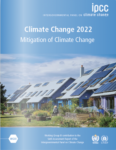
The Working Group III report provides an updated global assessment of climate change mitigation progress and pledges, and examines the sources of global emissions. It explains developments in emission reduction and mitigation efforts, assessing the impact of national climate pledges in relation to long-term emissions goals. Read more here.
The Paris Agreement on climate change
The UN continues to encourage all stakeholders to take action toward reducing the impacts of climate change.
COP25: Madrid, 2019
 The 2019 UN Climate Conference took place in Madrid, Spain from 2-13 December.
The conference was designed to take the next crucial steps in the UN climate change process. The conference served to build ambition ahead of 2020, the year in which countries have committed to submit new and updated national climate action plans. Crucial climate action work was taken forward in areas including finance, the transparency of climate action, forests and agriculture, technology, capacity building, loss and damage, indigenous peoples, cities, oceans and gender.
COP24: Katowice, 2018

The 2018 UN Climate Conference took place in Katowice, Poland from 2-14 December.
The conference finalized the rules for implementation of the Paris Agreement on climate change under the Paris Agreement work programme (PAWP). It also included a number of high-level events, mandated events, action events and roundtables.
COP23: Bonn, 2017

The 2017 UN Climate Conference took place in Bonn, Germany, from 6-18 November. Leaders of national governments, cities, states, business, investors, NGOs and civil society gathered to speed up climate action to meet the goals of the Paris Climate Change Agreement.
COP22: Marrakesh, 2016
 The 22nd session of the Conference of the Parties (COP 22) to the UNFCCC took place in Marrakesh, Morocco. During COP 22, parties began preparations for the entry into force of the Paris Agreement, and to encourage actions to implement the agreement that will address climate change.
High-Level Event Towards Entry into Force: 21 September, 2016
 United Nations Secretary-General Ban Ki-moon convened a special “High-Level Event on Entry into Force of the Paris Agreement on Climate Change” on 21 September at the UN Headquarters in New York, to provide an opportunity to other countries to publicly commit to joining the Paris Agreement before the end of 2016.
Paris Agreement Signing Ceremony, 22 April 2016
To keep the global spotlight focused on climate change and build on the strong political momentum from Paris, United Nations Secretary-General Ban Ki-moon invited representatives of all countries to sign the Paris Agreement on climate change at a special Ceremony at the United Nations Headquarters on 22 April.
Cop21, 12 December 2015
 The Paris Agreement was adopted by all 196 Parties to the United Nations Framework Convention on Climate Change at COP21 in Paris on 12 December 2015. In the agreement, all countries agreed to work to limit global temperature rise to well below 2 degrees Celsius, and given the grave risks, to strive for 1.5 degrees Celsius. Implementation of the Paris Agreement is essential for the achievement of the Sustainable Development Goals, and provides a roadmap for climate actions that will reduce emissions and build climate resilience.
Related News

Game-changing international ocean treaty comes into force
Almost two decades in the making, an international agreement to [...]

11-year streak of record global warming continues, UN weather agency warns
The past 11 years have been the warmest in the [...]

Gaza: Storms worsen already dire humanitarian situation, UN warns
The humanitarian crisis across the Gaza Strip remains extremely serious, [...]
Related Videos
UN launches drive to highlight environmental cost of staying fashionable
It takes around 7,500 litres of water to make a single pair of jeans, equivalent to the amount of water the average person drinks over a period of seven years. That’s just one of the many startling facts to emerge from recent environmental research, which show that the cost of staying fashionable is a lot more than just the price tag.
Air Pollution – Deadly Effects on Life
Air Pollution hurts the planet with increasingly deadly effects on life, the United Nations Environment warns, calling on countries to take measures to usher in a greener, cleaner and more sustainable future.
International Day of Forests 2019: Forests and Education
Learning to understand our forests and providing children with a foundation to better understand their importance is a critical step to safeguarding natural resources for future generations.