
Goal 14 is about conserving and sustainably using the oceans, seas, and marine resources. Covering three-quarters of the Earth’s surface, the ocean contains 97% of our water and represents 99% of the planet’s living space by volume. It is essential to human life, providing food, medicine, and coastal protection from storms, while acting as our planet’s greatest carbon sink.
However, marine pollution is reaching critical levels. Over 17 million metric tons of waste clogged the ocean in 2021—a figure projected to double or triple by 2040—with plastic being the most harmful pollutant. Despite rising conservation efforts, only 10% of the ocean is currently designated as a marine protected area, which is well below the 30% target set for 2030. Just 47% of key marine biodiversity areas are formally protected, while ocean warming, acidification, and overfishing continue to threaten these fragile ecosystems.
In a major breakthrough, the landmark BBNJ Agreement to protect marine biodiversity in areas beyond national jurisdiction came into force on January 17, 2026. This treaty covers two-thirds of the ocean outside national limits, offering a massive step forward in tackling climate change, biodiversity loss, and pollution. Still, the ocean’s average pH has dropped to 8.1—making it 30% more acidic than in pre-industrial times. This acidification threatens marine life, disrupts food webs, and compromises our own food security. Careful global management and increased funding for ocean science are urgently needed to protect this vast, fragile resource.
Why?
The ocean is our planet’s life support system, regulating the global climate and hosting nearly a million known species. While oceans and fisheries support our essential economic, social, and environmental needs, decades of irresponsible exploitation have led to alarming degradation.
So what’s the problem?
The ocean absorbs about 29% of all human-generated CO2 emissions and over 90% of the excess heat in our climate system. This record-breaking heat is killing coral reefs. We are currently experiencing the most widespread and intense global coral bleaching event on record, which affected 84% of reefs globally between 2023 and 2025. The Intergovernmental Panel on Climate Change warns that we could lose up to 90% of corals by 2050 with just 1.5°C of warming.
At the same time, between 5 and 12 million metric tonnes of plastic enter the ocean annually, costing industries and clean-up efforts roughly $13 billion per year. Shockingly, about 89% of plastic litter found on the ocean floor consists of single-use items like plastic bags.
Furthermore, coastal areas host about 80% of global tourism. While this industry supports over a third of the workforce in some nations, unmanaged tourism threatens the very natural resources, local cultures, and industries that rely on it.
How is the ocean connected to our health?
Our health is intimately tied to the ocean. Marine biodiversity holds immense potential for developing new pharmaceuticals, while global fisheries provide 57 million jobs and serve as the primary source of protein for over half of the population in the world’s least developed countries.
So, what can we do?
The UN Ocean Conference in June 2025 generated fresh momentum, with countries making over 800 commitments toward marine protection, pollution control, and high-seas governance. Protecting the open ocean requires strong international cooperation to build effective, well-managed systems of government-protected areas.
On a local level, you can make a difference by making ocean-friendly choices when buying products or seafood, consuming only what you need, and actively reducing your use of single-use plastics.
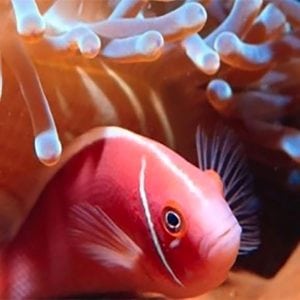
- Marine protected area coverage has increased more than tenfold since 2000: as of April 2026, 10.01% of the ocean is protected through 18,200 marine protected areas and 199 other area-based conservation measures.
- The Kunming-Montreal Global Biodiversity Framework commits to establishing protected areas to safeguard areas of particular importance for biodiversity, adding up to cover 30 per cent of oceans by 2030.
- In 2021, 77.2 per cent of the world’s ocean catch came from biologically sustainable stocks
- The ocean is in a state of emergency as increasing eutrophication, acidification, ocean warming and plastic pollution worsen its health. Additionally, the alarming trend of overfishing persists, leading to the depletion of over one third of global fish stocks.
- Some progress has been made in expanding marine protected areas, combating illegal, unreported and unregulated fishing, banning fishing subsidies and supporting small-scale fishers. However, action is not advancing at the speed or scale required to meet Goal 14.
- To counter these trends, swift and coordinated global action is imperative. This entails increasing funding for ocean science, intensifying conservation efforts, advancing nature- and ecosystem-based solutions, addressing the interconnections and impacts of human-induced pressures, and urgently turning the tide on climate change to safeguard the planet’s largest ecosystem.
14.1 By 2025, prevent and significantly reduce marine pollution of all kinds, in particular from land-based activities, including marine debris and nutrient pollution
14.2 By 2020, sustainably manage and protect marine and coastal ecosystems to avoid significant adverse impacts, including by strengthening their resilience, and take action for their restoration in order to achieve healthy and productive oceans
14.3 Minimize and address the impacts of ocean acidification, including through enhanced scientific cooperation at all levels
14.4 By 2020, effectively regulate harvesting and end overfishing, illegal, unreported and unregulated fishing and destructive fishing practices and implement science-based management plans, in order to restore fish stocks in the shortest time feasible, at least to levels that can produce maximum sustainable yield as determined by their biological characteristics
14.5 By 2020, conserve at least 10 per cent of coastal and marine areas, consistent with national and international law and based on the best available scientific information
14.6 By 2020, prohibit certain forms of fisheries subsidies which contribute to overcapacity and overfishing, eliminate subsidies that contribute to illegal, unreported and unregulated fishing and refrain from introducing new such subsidies, recognizing that appropriate and effective special and differential treatment for developing and least developed countries should be an integral part of the World Trade Organization fisheries subsidies negotiation
14.7 By 2030, increase the economic benefits to Small Island developing States and least developed countries from the sustainable use of marine resources, including through sustainable management of fisheries, aquaculture and tourism
14.A Increase scientific knowledge, develop research capacity and transfer marine technology, taking into account the Intergovernmental Oceanographic Commission Criteria and Guidelines on the Transfer of Marine Technology, in order to improve ocean health and to enhance the contribution of marine biodiversity to the development of developing countries, in particular small island developing States and least developed countries
14.B Provide access for small-scale artisanal fishers to marine resources and markets
14.C Enhance the conservation and sustainable use of oceans and their resources by implementing international law as reflected in UNCLOS, which provides the legal framework for the conservation and sustainable use of oceans and their resources, as recalled in paragraph 158 of The Future We Want

 The high-level 2025 UN Ocean Conference will be co-hosted by France and Costa Rica and held in Nice, France, from 9 – 13 June under the theme: “Accelerating action and mobilizing all actors to conserve and sustainably use the ocean”. The Conference will bring together all relevant stakeholders to assess challenges and opportunities relating to, as well as actions taken towards, the implementation of Goal 14. Read more: https://sdgs.un.org/conferences/ocean2025
Related news

Could a new global panel defuse inequality’s ‘ticking time bomb’?
What if the world tackled inequality with the same kind of scientific firepower it has brought to the climate crisis?

Clean your plate – to reduce food loss and waste
Food waste is helping to fuel global warming, one half-eaten sandwich at a time.

DRC: Early access to care and oxygen decisive for Ebola patients’ survival – WHO
In the Democratic Republic of the Congo (DRC), health workers fighting the country’s largest-ever Ebola outbreak are struggling to overcome critical challenges to patient care, the UN World Health Organization (WHO) warned on Tuesday. Read [...]
Related videos
Could a new global panel defuse inequality’s ‘ticking time bomb’?
What if the world tackled inequality with the same kind of scientific firepower it has brought to the climate crisis?
Clean your plate – to reduce food loss and waste
Food waste is helping to fuel global warming, one half-eaten sandwich at a time.
DRC: Early access to care and oxygen decisive for Ebola patients’ survival – WHO
In the Democratic Republic of the Congo (DRC), health workers fighting the country’s largest-ever Ebola outbreak are struggling to overcome critical challenges to patient care, the UN World Health Organization (WHO) warned on Tuesday. Read [...]