
Goal 2 is about creating a world free of hunger by 2030. The global issue of hunger and food insecurity has shown an alarming increase since 2015—a trend exacerbated by a combination of factors including the COVID-19 pandemic, conflict, climate change, and deepening inequalities.
In 2024, an estimated 8.2 per cent of the global population faced hunger, and about 28 per cent—nearly 2.3 billion people—were moderately or severely food insecure. Global hunger levels, measured by the prevalence of undernourishment, remained unchanged for three consecutive years following a sharp rise during the pandemic. This data underscores the severity of the situation, revealing a growing crisis.
Specifically, the 2.3 billion people facing moderate to severe food insecurity lacked regular access to adequate food at some point during the year. Although this is a slight improvement compared to 2023, there are still 683 million more people than in 2015, highlighting how far the world remains from ending hunger.
The persistent surge in hunger and food insecurity, fueled by a complex interplay of global factors and conflicts, demands immediate attention and coordinated global efforts to alleviate this critical humanitarian challenge.
Extreme hunger and malnutrition remain major barriers to sustainable development, creating a trap from which people cannot easily escape. Hunger and malnutrition lead to less productive individuals who are more prone to disease, making them unable to earn more and improve their livelihoods.
How many people are hungry?
It is projected that more than 600 million people worldwide will still face hunger in 2030, highlighting the immense challenge of achieving the zero hunger target. Additionally, those experiencing moderate food insecurity are typically unable to eat a healthy, balanced diet on a regular basis because of income or resource constraints.
Why are there so many hungry people?
While the share of countries affected by high food prices fell sharply to 15.3 per cent in 2024—dropping slightly below the 2015–2019 average—this recovery bypassed the world’s most vulnerable nations. In Least Developed Countries (LDCs), food prices remained stubbornly high, falling only marginally to 31.6 per cent, which is well above their historical 18 per cent average.
Along with regional conflicts and severe climate shocks (such as droughts in Southern Africa), a heavy reliance on food imports continues to drive food scarcity and high prices across sub-Saharan Africa. Investment in the agricultural sector is critical to reduce hunger and poverty, improve food security, create employment, and build resilience to disasters and shocks.
Why should I care?
We all want our families to have enough safe and nutritious food to eat. A world with zero hunger will positively impact our economies, health, education, equality, and social development. It is a key piece of building a better future for everyone. Furthermore, because hunger limits human development, we will not be able to achieve other sustainable development goals—such as education, health, and gender equality—if it persists.
How can we achieve Zero Hunger?
Food security requires a multi-dimensional approach—from social protection to safeguard safe and nutritious food (especially for children) to transforming food systems to achieve a more inclusive and sustainable world. There must be targeted investments in both rural and urban areas, as well as in social protection, so that vulnerable people have reliable access to food and can improve their livelihoods.
What can we do to help?
You can make changes in your own life—at home, at work, and in your community—by supporting local farmers or markets, making sustainable food choices, supporting good nutrition for all, and fighting food waste.
You can also use your power as a consumer and a voter by demanding that businesses and governments make the choices and changes that will make Zero Hunger a reality.
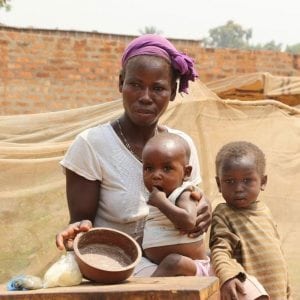
- In 2024, an estimated 8.2 per cent of the global population – or 1 in 12 people – faced hunger, while about 28 per cent, or nearly 2.3 billion people, were moderately or severely food insecure.
- Despite global efforts, in 2024, 6.6 per cent of children under the age of 5 suffered from wasting, while 23.2 per cent experienced stunted growth. A fundamental shift in trajectory is needed to achieve the 2030 nutrition targets.
- The share of countries facing high food prices fell sharply, from 51.2 per cent in 2023 to 15.3 per cent in 2024, though prices in least developed countries stayed persistently high.
- To achieve zero hunger by 2030, urgent, coordinated action and policy solutions are imperative to address entrenched inequalities, transform food systems, invest in sustainable agricultural practices, and reduce and mitigate the impact of conflict and the COVID-19 pandemic on global nutrition and food security.
2.1 By 2030, end hunger and ensure access by all people, in particular the poor and people in vulnerable situations, including infants, to safe, nutritious and sufficient food all year round.
2.2 By 2030, end all forms of malnutrition, including achieving, by 2025, the internationally agreed targets on stunting and wasting in children under 5 years of age, and address the nutritional needs of adolescent girls, pregnant and lactating women and older persons.
2.3 By 2030, double the agricultural productivity and incomes of small-scale food producers, in particular women, indigenous peoples, family farmers, pastoralists and fishers, including through secure and equal access to land, other productive resources and inputs, knowledge, financial services, markets and opportunities for value addition and non-farm employment.
2.4 By 2030, ensure sustainable food production systems and implement resilient agricultural practices that increase productivity and production, that help maintain ecosystems, that strengthen capacity for adaptation to climate change, extreme weather, drought, flooding and other disasters and that progressively improve land and soil quality.
2.5 By 2020, maintain the genetic diversity of seeds, cultivated plants and farmed and domesticated animals and their related wild species, including through soundly managed and diversified seed and plant banks at the national, regional and international levels, and promote access to and fair and equitable sharing of benefits arising from the utilization of genetic resources and associated traditional knowledge, as internationally agreed.
2.A Increase investment, including through enhanced international cooperation, in rural infrastructure, agricultural research and extension services, technology development and plant and livestock gene banks in order to enhance agricultural productive capacity in developing countries, in particular least developed countries.
2.B Correct and prevent trade restrictions and distortions in world agricultural markets, including through the parallel elimination of all forms of agricultural export subsidies and all export measures with equivalent effect, in accordance with the mandate of the Doha Development Round.
2.C Adopt measures to ensure the proper functioning of food commodity markets and their derivatives and facilitate timely access to market information, including on food reserves, in order to help limit extreme food price volatility.

Related news

Powering resilience: How Indonesia is building a more secure energy future
As countries grapple with energy price shocks, supply disruptions and the growing impacts of climate change, energy security has become a pressing concern.

World at ‘perilous moment’ as leaders warn HIV gains are at risk
Four decades after AIDS first emerged as a global crisis, world leaders, advocates and community representatives gathered at UN Headquarters on Monday issued a stark warning: progress against HIV is slowing just as financial pressures and shrinking support threaten to reverse decades of gains.

Global Ebola cases top 1,000 as UN races to reach DR Congo’s most vulnerable
As global confirmed Ebola cases reach 1,000, nearly three million children and adolescents are at risk in the eastern part of the Democratic Republic of the Congo (DRC), while efforts increase to treat prisoners near the epicentre of the current outbreak, UN agencies warned on Monday.
Related videos
Powering resilience: How Indonesia is building a more secure energy future
As countries grapple with energy price shocks, supply disruptions and the growing impacts of climate change, energy security has become a pressing concern. Read Full Story on UN News
World at ‘perilous moment’ as leaders warn HIV gains are at risk
Four decades after AIDS first emerged as a global crisis, world leaders, advocates and community representatives gathered at UN Headquarters on Monday issued a stark warning: progress against HIV is slowing just as financial pressures [...]
Global Ebola cases top 1,000 as UN races to reach DR Congo’s most vulnerable
As global confirmed Ebola cases reach 1,000, nearly three million children and adolescents are at risk in the eastern part of the Democratic Republic of the Congo (DRC), while efforts increase to treat prisoners near [...]