Why the ocean matters
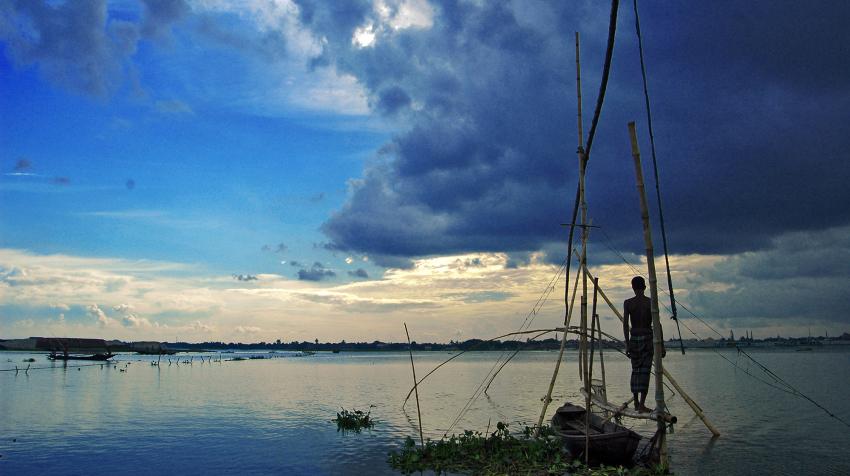
Life on Earth began in the ocean, and it remains essential today. The ocean covers more than 70% of the planet's surface.
Throughout history, it has been a source of food, a route for trade, a space for exploration, and a force that both connects and separates people.
Even today, most of the world’s population lives within 200 miles (322 km) of the coast, showing how closely human life is tied to the ocean.
How the law of the sea developed
Historically, countries exercised jurisdiction over only a narrow band of water along their coasts. Beyond that, the ocean belonged to no one and was open to all, pursuant to the principle of the “freedom of the seas”.
By the mid-20th century, this principle was no longer enough. New challenges emerged:
- competition for living and non-living resources;
- tensions between coastal States concerning overlapping maritime claims;
- increased maritime traffic;
- new opportunities to exploit seabed mineral resources; and
- rising pollution.
These pressures made it clear that shared rules were needed for all ocean areas and all uses of the ocean and its resources, through a comprehensive convention.
United Nations Convention on the Law of the Sea (UNCLOS)
After nine years of negotiation, the United Nations Convention on the Law of the Sea (UNCLOS) was adopted in 1982 and entered into force in 1994.
It is often referred to as the “constitution for the ocean” because it sets out the legal framework within which all activities in the oceans and seas must be carried out.
In particular, the Convention addresses:
- rights and obligations of States in different maritime zones;
- delimitation of maritime boundaries;
- protection and preservation of the marine environment;
- marine scientific research;
- development and transfer of marine technology; and
- dispute settlement.
It also established three bodies:
- The International Seabed Authority (ISA);
- The Commission on the Limits of the Continental Shelf (CLCS); and
- The International Tribunal for the Law of the Sea (ITLOS).

Protection of the marine environment and its biodiversity
UNCLOS places strong emphasis on the protection and preservation of the marine environment. It defines “pollution of the marine environment” as the introduction by human, directly or indirectly, of substances or energy into the marine environment, including estuaries, which results or is likely to result in such deleterious effects as harm to living resources and marine life, hazards to human health, hindrance to marine activities, including fishing and other legitimate uses of the sea, impairment of quality for use of sea water and reduction of amenities.
ITLOS has also concluded that anthropogenic greenhouse gas emissions into the atmosphere fall within this definition.
The Convention requires States to protect and preserve the marine environment. In this regard, States are required to take all measures necessary to prevent, reduce and control pollution of the marine environment from all sources.
The Convention also addresses biodiversity as it requires that necessary measures be taken to protect and preserve rare or fragile ecosystems as well as the habitat of depleted, threatened or endangered species and other forms of marine life.
States are also required to cooperate on a global and, as appropriate, on a regional basis in formulating and elaborating rules, standards and recommended practices and procedures for the protection and preservation of the marine environment.
UNCLOS is supplemented by three implementing agreements, namely the 1994 Part XI Agreement, the 1995 United Nations Fish Stocks Agreement (UNFSA) and the BBNJ Agreement (see below), which all include provisions on the protection and preservation of the marine environment.
In addition, the provisions of UNCLOS on the protection and preservation of the marine environment are supplemented and further elaborated upon by a vast number of sectoral instruments, either binding or non-binding, adopted both at the global and regional level, that address specific issues and priorities.
Broader UN efforts on ocean protection
Many UN system organizations have competence in activities related to ocean and coastal areas. These included, for example:
- International Maritime Organization (IMO): UN specialized agency responsible for developing and adopting global regulations to improve the safety and security of international shipping and to prevent pollution from ships, has adopted, among others, the International Convention for the Prevention of Pollution from Ships, 1973, as modified by the Protocol of 1978 relating thereto (MARPOL 73/78), the International Convention for the Safety of Life at Sea (SOLAS) and the Convention on the Prevention of Marine Pollution by Dumping of Wastes and Other Matter, also known as the London Convention, as well as it 1996 Protocol.
- UN Environment Programme (UNEP): promotes the protection, conservation, restoration and sustainable management of marine and coastal areas, including through the Regional Seas Programme, serves as the secretariat of the Global Programme of Action (GPA) for the Protection of the Marine Environment from Land-based Activities, and support negotiations underway to develop a legally binding instrument on plastic pollution, including in the marine environment.
- Food and Agriculture Organization of the United nations(FAO): UN specialized agency with competence over food and agriculture, has developed a range of binding and non-binding instruments on fisheries, including the Agreement on Port State Measures to Prevent, Deter and Eliminate Illegal, Unreported and Unregulated Fishing, the Agreement to Promote Compliance with International Conservation and Management Measures by Fishing Vessels on the High Seas and the Code of Conduct for Responsible Fisheries.
- UNESCO’s Intergovernmental Oceanographic Commission (IOC): promotes international cooperation and coordinates programmes with a view to enhancing knowledge about the nature and resources of the ocean and coastal areas and applying that knowledge for the improvement of management, sustainable development, the protection of the marine environment, and the decision-making processes of its member States.
The international legal framework for the protection and preservation of the marine environment also includes a number of international instruments in the context of which the protection and sustainable use of marine biodiversity and ecosystems have also been addressed, such as the United Nations Convention on Biological Diversity, the Convention on International Trade in Endangered Species of Wild Fauna and Flora, and the Convention on the Conservation of Migratory Species of Wild Animals.
Other key frameworks and initiatives include:
- 2030 Agenda for Sustainable Development, especially Goal 14 (Life Below Water).
- UN Decade of Ocean Science for Sustainable Development (2021–2030), aims to promote ocean science and improve knowledge to support sustainable development of the ocean.
- Kunming-Montreal Global Biodiversity Framework, that includes measures to halt and reverse nature loss in all ecosystems, including the ocean.
- UN-Oceans, as an inter-agency mechanism that seeks to enhance the coordination, coherence and effectiveness of competent organizations of the United Nations system and the International Seabed Authority in relation to activities relating to oceans and coastal areas.
- Regular Process for Global Reporting and Assessment of the State of the Marine Environment, including Socioeconomic Aspects (the Regular Process), which, through its World Ocean Assessments, aims to contribute to the strengthening of the regular scientific assessment of the state of the marine environment in order to enhance the scientific basis for policymaking.
The ocean and climate change
The ocean plays a critical role in regulating the Earth’s climate. Enhanced international cooperation and coordination is key to addressing the effects of climate change on the ocean. Several international instruments contain provisions to that effect. These include:
The BBNJ Agreement: a historic new commitment to marine biodiversity
About two-thirds of the ocean lies beyond national limits. These areas are rich in life, but have long been underexplored and suffered from little attention.
After two decades of negotiations, a new agreement entered into force in January 2026. Known as the BBNJ Agreement, it marks a major step toward ensuring the conservation and sustainable use of marine biodiversity of the high seas and the international seabed area (together these are “areas beyond national jurisdiction”).
What it does:
- Creates a legal framework for activities with respect to marine genetic resources of areas beyond national jurisdiction and digital sequence information on such resources, including for the fair and equitable sharing of benefits arising from such activities;
- Sets out procedures for the establishment and implementation of area-based management tools, including marine protected areas, in areas beyond national jurisdiction;
- Establishes detailed processes, thresholds and other requirements for conducting and reporting environmental impact assessments; and
- Supports capacity-building and the transfer of marine technology.
The Agreement is already legally binding for those States and regional economic integration organizations which are parties (click here to see the current status of the Agreement). More are joining, and the more that do, the stronger it becomes.
Effective implementation will require enforcing the rules and holding actors accountable.
The implementation of the Agreement can help tackle the triple planetary crisis: climate change, biodiversity loss, and pollution.
Sustainable fisheries
Marine resources are vital for food, livelihoods, and economies. However over one-third of fish stocks are overexploited, illegal fishing remains widespread, and climate change and pollution are damaging marine ecosystems.
UNCLOS, together with the 1995 UN Fish Stocks Agreement, provides the central international legal framework for the conservation and sustainable use of living marine resources. This framework promotes:
- responsible fishing,
- international cooperation,
- and measures to combat illegal, unreported, and unregulated fishing.
As detailed above, the FAO, as a UN specialized agency with competence over fishing, has developed a range of binding and non-binding instruments on fisheries.
Regional intergovernmental organizations called “regional fisheries management organizations” play an important role in the management of high seas fisheries pursuant to UNCLOS and the United Nations Fish Stocks Agreement.
Shipping and marine pollution
Shipping is essential to global trade but can contribute to pollution.
The IMO has adopted regulations to:
- address pollution from ships, as detailed above,
- and improve energy efficiency to reduce emissions, including moving toward net-zero greenhouse gas emissions by 2050.
It has also developed many requirements, provisions and recommendations relating to the safety of ships operating in the harsh, remote and vulnerable polar areas and the protection of the pristine environments around the two poles from shipping.
In force since January 2017, IMO's International Code for Ships Operating in Polar Waters (Polar Code) covers the full range of design, construction, equipment, operational, training, search and rescue and environmental protection matters relevant to ships operating in the inhospitable waters surrounding the two poles. The Polar Code was an important regulatory development in international shipping, alongside a range of regulatory developments relating to maritime and supply chain security and environmental issues.
Piracy and maritime security
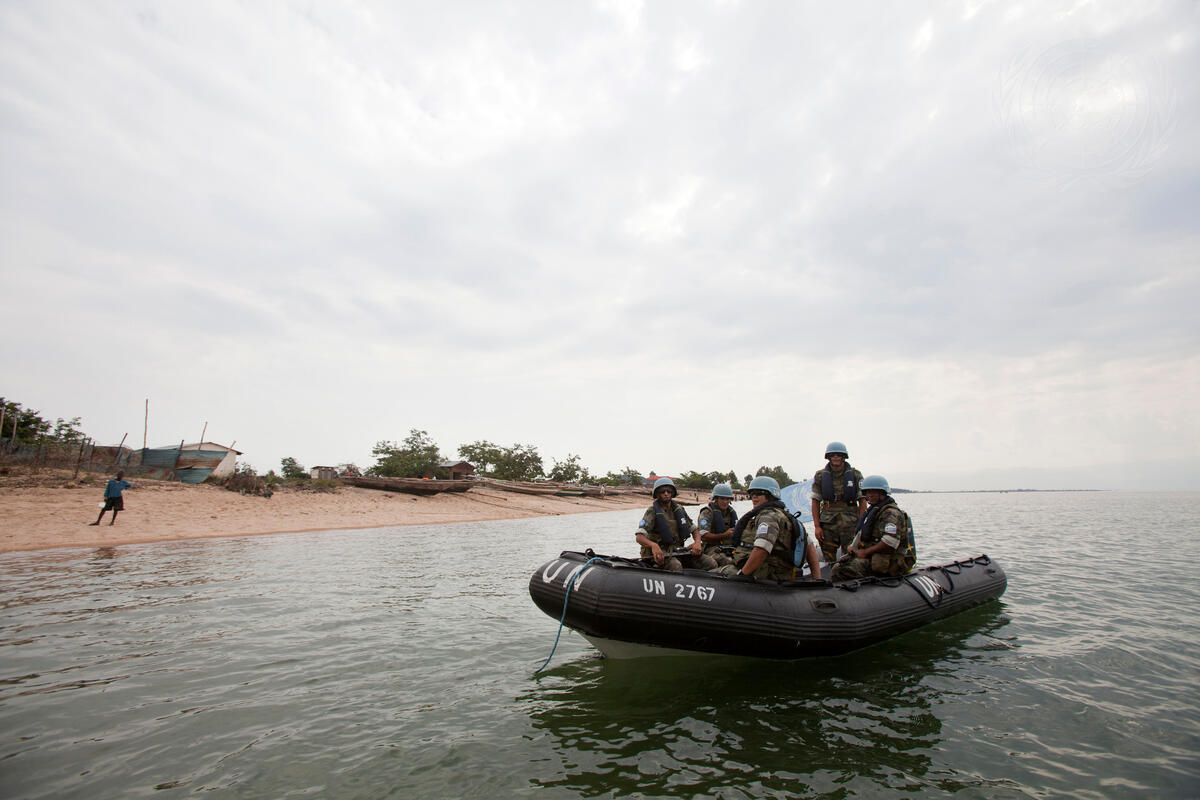
Piracy and armed robbery against ships remains a serious issue in regions such as off the coast of Somalia, the Gulf of Guinea and the Straits of Malacca and Singapore.
Its impacts include:
- risks to human life,
- disruption of global trade,
- increased costs of transportation,
- and environmental damage.
The United Nations Office on Drugs and Crime (UNODC), through a programme called the Global Maritime Crime Programme, helps countries deal with transnational organized crimes at sea, especially piracy. They do this by helping countries prosecute and imprison piracy suspects; training police, coast guards, and legal workers; teaching countries how to better enforce laws at sea; and supporting States like Somalia, Kenya, and Ghana with hands-on help. Overall, it has strengthened maritime security and the rule of law in challenging environments.
The IMO also helps countries develop national and regional responses to piracy, armed robbery against ships and other illicit maritime activities upon request. It runs projects that supports cooperation between countries and provides training and help in strengthening laws. The IMO has also supported regional cooperation in the Western Indian Ocean and the Gulf of Aden and in the Gulf of Guinea region of West Africa, allowing countries to coordinate their efforts and respond more effectively to piracy and armed robbery against ships.
Resources
- United Nations Convention on the Law of the Sea (UNCLOS)
- International Seabed Authority (ISA)
- International Tribunal for the Law of the Sea (ITLOS)
- Commission on the Limits of the Continental Shelf (CLCS)
- Division for Ocean Affairs and the Law of the Sea (DOALOS)
- Division for Ocean Affairs and the Law of the Sea Capacity-Building and Trust Funds
- BBNJ Agreement
- United Nations Fish Stocks Agreement
- Regular Process
- UN-Oceans
- Review of Maritime Transport (UNCTAD)
- Oceans and Seas (UNEP)
- Global Maritime Crime Programme (UNODC)
- Food and Agricultural Organization of the United Nations (FAO)
- International Maritime Organization (IMO)