
Document_GEM: Global Economic Monitoring Unit (GEM)
Global Economic Monitoring Unit (GEM)

8 January 2021
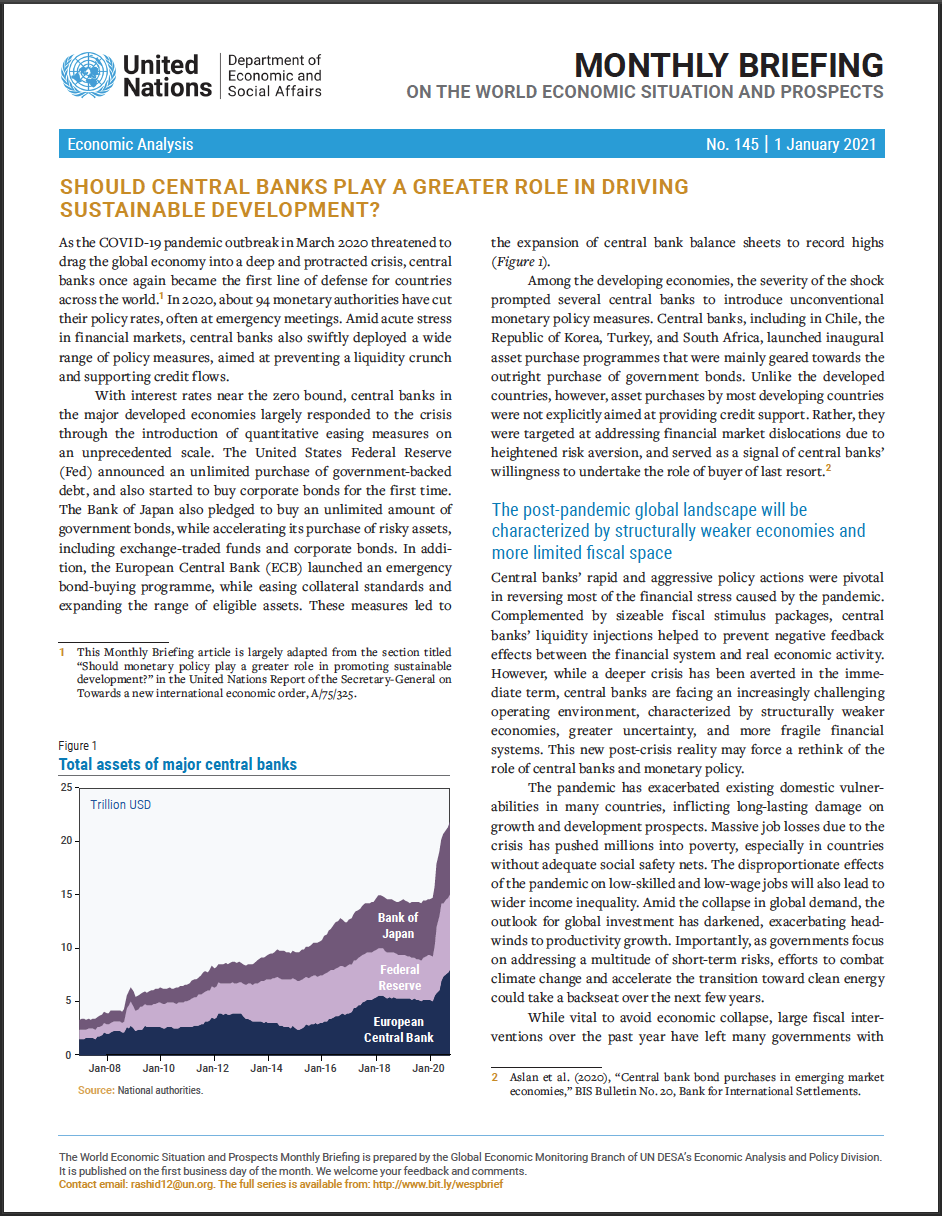
while a deeper crisis has been averted in the immediate term, central banks are facing an increasingly challenging operating environment, characterized by structurally weaker economies, greater uncertainty, and more fragile financial systems. This new post-crisis reality may force a rethink of the role of central banks and monetary policy.


1 December 2020
The world registered a record reduction of energy-related CO2 emissions in the first half of 2020. However, this year’s reduction is projected to be a one-time dip, and only has an infinitesimal impact on the buildup of atmospheric CO2

2 November 2020
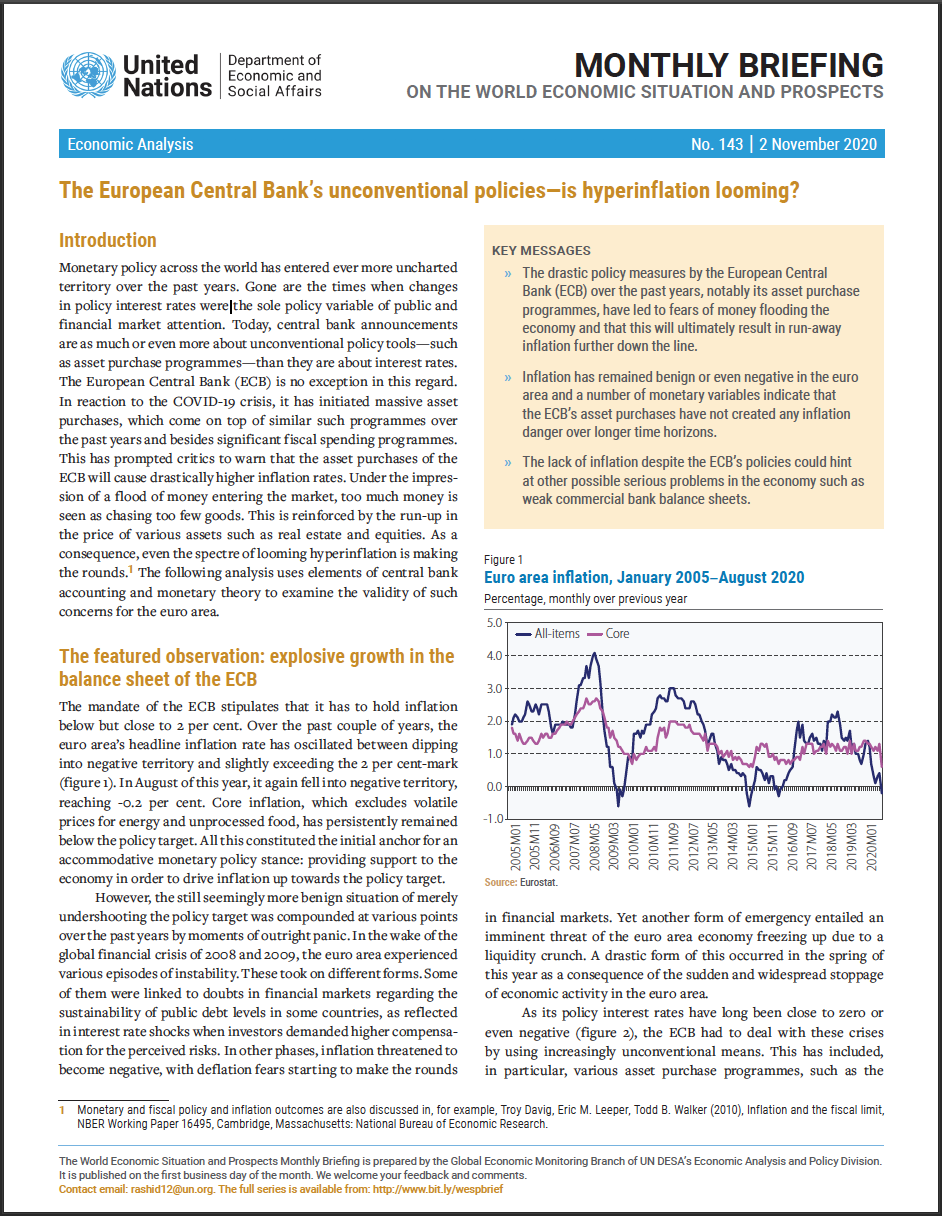
The drastic policy measures by the European Central Bank (ECB) over the past years, notably its asset purchase programmes, have led to fears of money flooding the economy and that this will ultimately result in run-away inflation further down the line.

1 October 2020
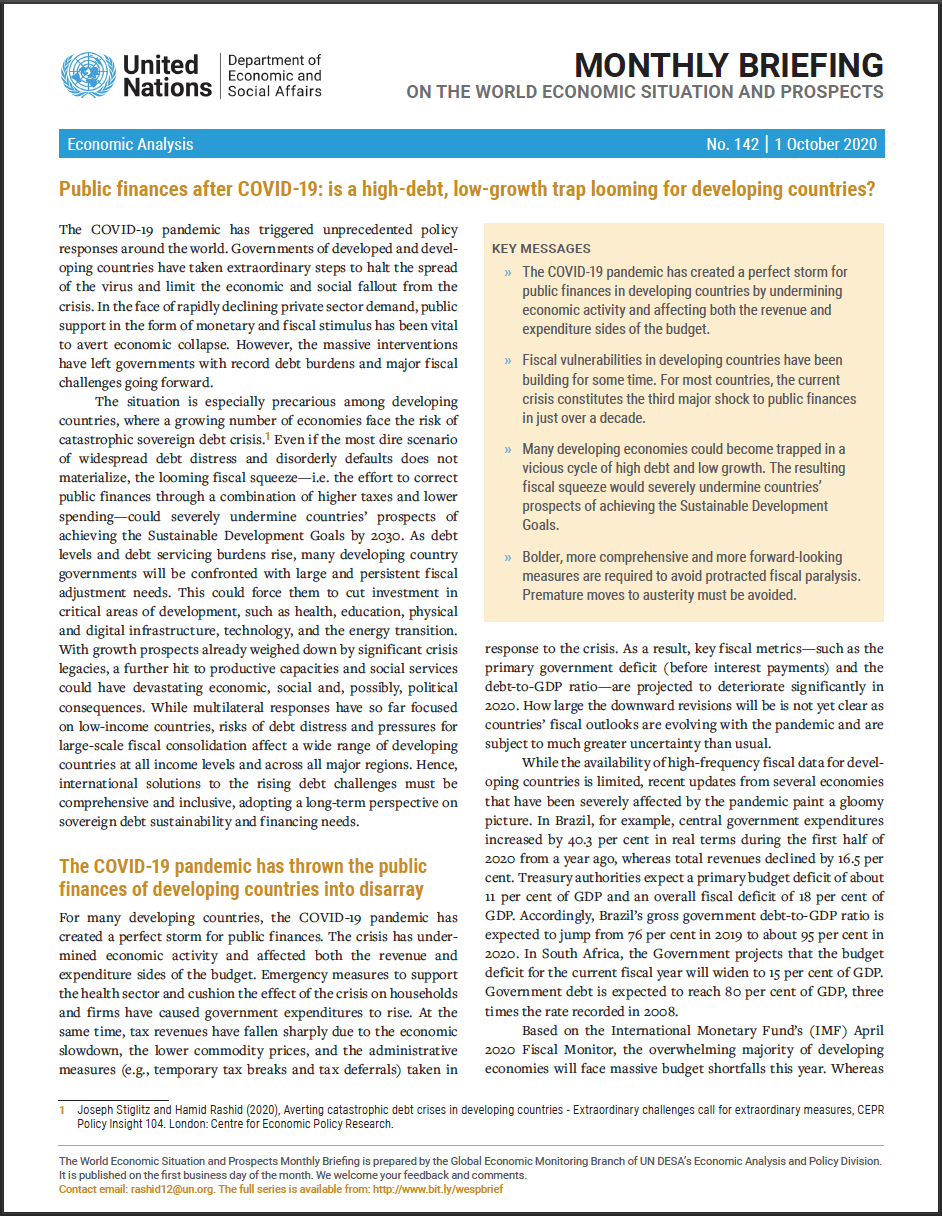
The COVID-19 pandemic has created a perfect storm for public finances in developing countries by undermining economic activity and affecting both the revenue and expenditure sides of the budget.

1 September 2020
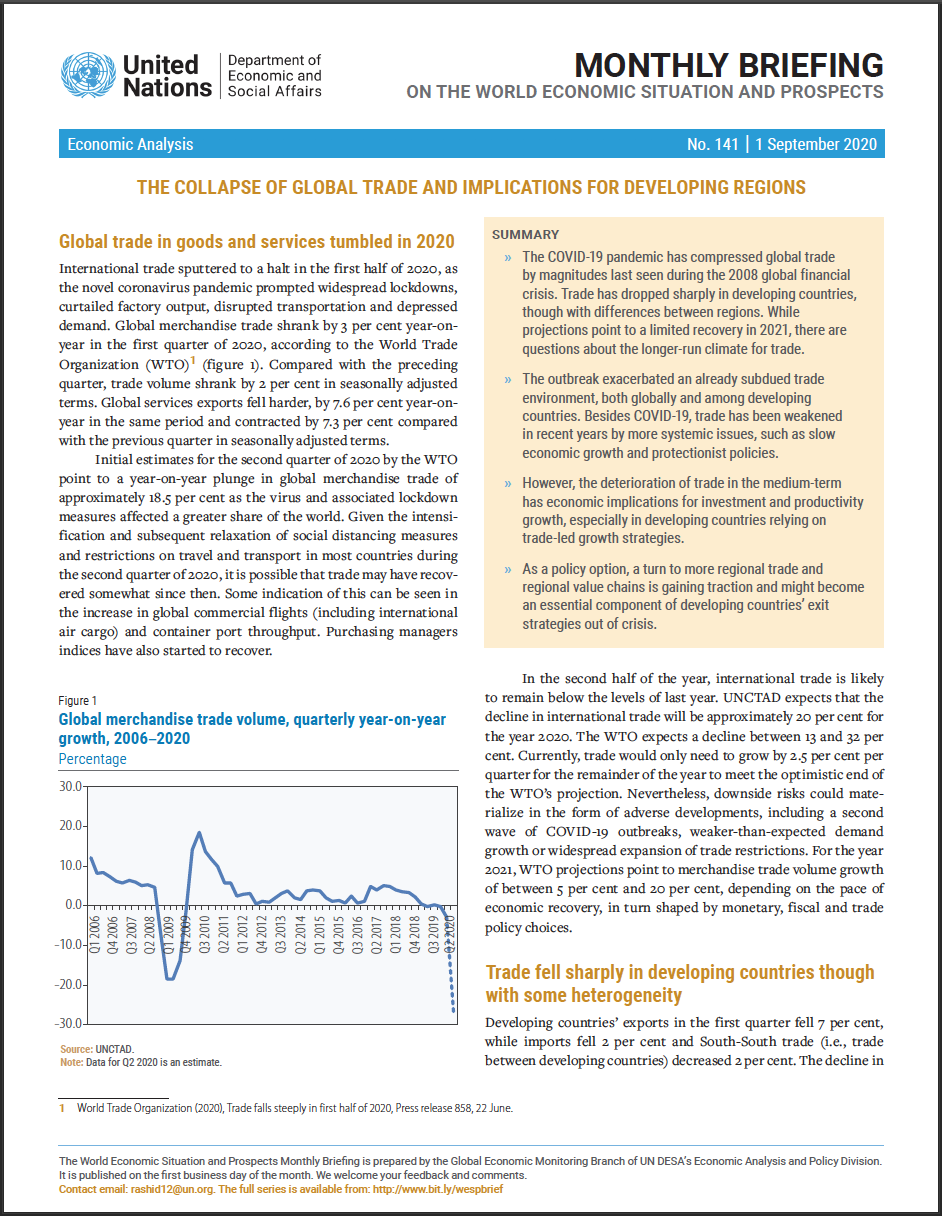
The COVID-19 pandemic has compressed global trade by magnitudes last seen during the 2008 global financial crisis. Trade has dropped sharply in developing countries, though with differences between regions.

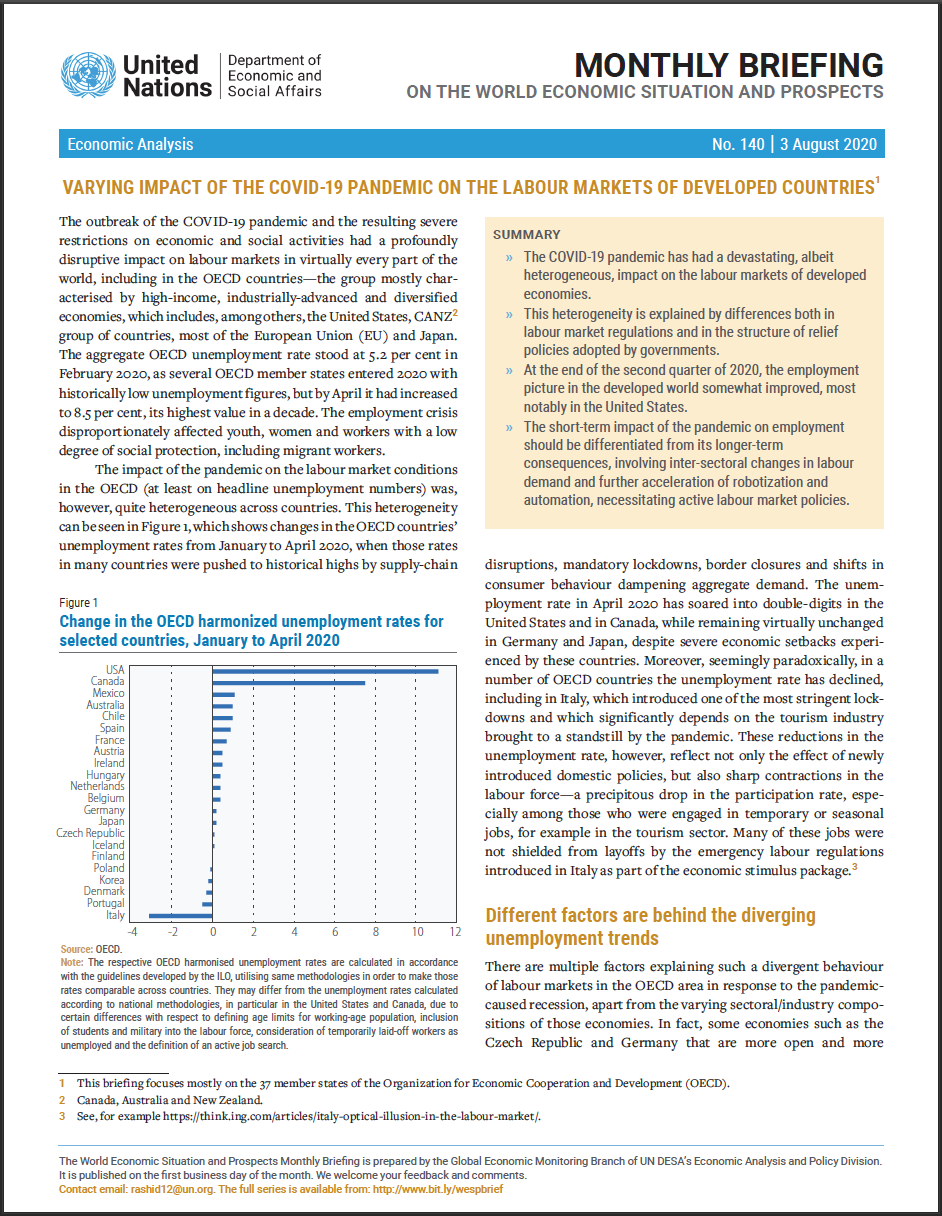
3 August 2020
The short-term impact of the pandemic on employment should be differentiated from its longer-term consequences, involving inter-sectoral changes in labour demand and further acceleration of robotization and automation, necessitating active labour market policies.


1 July 2020
On average, weighted by the size of economies, the world economy points to a steep disinflation. However, inflation rates are diverging among countries. In the majority of countries, the price level has increased since the onset of the COVID-19 pandemic.

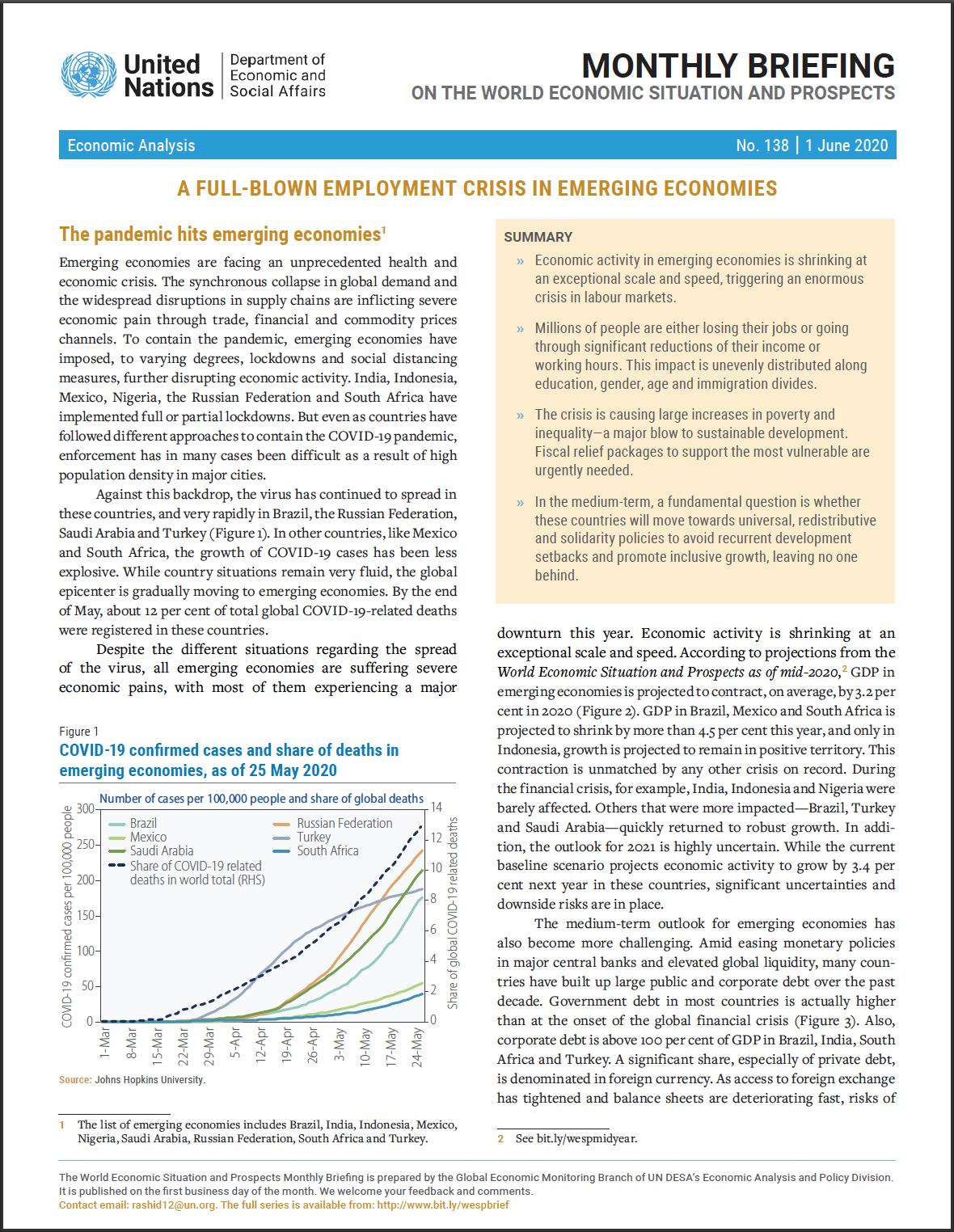
1 June 2020
Millions of people are either losing their jobs or going through significant reductions of their income or working hours. This impact is unevenly distributed along education, gender, age and immigration divides.


13 May 2020
GDP growth in developed countries will plunge to –5.0 per cent in 2020, while output of developing countries will shrink by 0.7 per cent. The projected cumulative output losses during 2020 and 2021—nearly $8.5 trillion—will wipe out nearly all output gains of the previous four years. The pandemic has unleashed a health and economic crisis unprecedented in scope and magnitude.
Follow Us