
10 November 2023
The UN Security Council met again on Friday to discuss the ongoing Israel-Palestine crisis as negotiations continue behind the scenes to reach some consensus position over the war raging in Gaza, within the 15 member body. Ambassadors heard searing testimony from the UN health agency chief who said the entire health system of the enclave was now “on its knees”.
Israel: Hamas guilty of war crimes ‘of epic proportions’
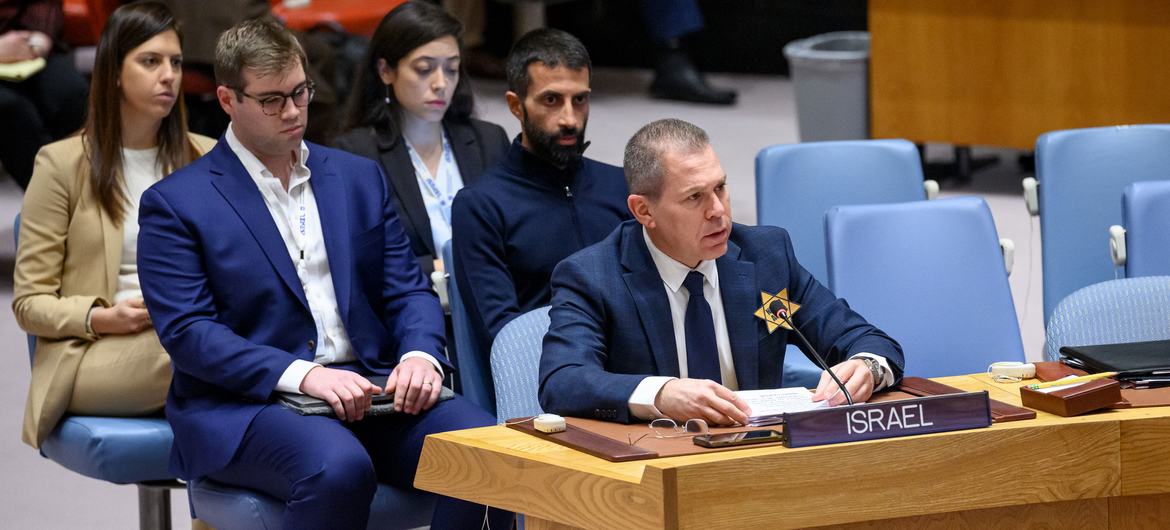
Gilad Erdan, Ambassador and Permanent Representative of Israel, said Israelis had endured a pogrom five weeks ago, on a par with the Kristallnacht massacres of November 1938 under the Nazis.
He said the focus of the briefing was on Gaza’s hospitals, but made no mention of a direct attack on an Israeli hospital just a few days ago, by Hamas rockets.
He said Hamas fighters had been shooting at ambulances to prevent them from helping the wounded, and that Israel had exposed that Hamas has its main headquarters in and underneath Al Shifa hospital, using ambulances as a means of transporting weapons.
“Every inch of Gaza has been turned into a terror trap”, he said. “Nothing is sacred” to these Hamas terrorists, he added. “It is a war crime of epic proportions.”
“How can we possibly hold a briefing on the medical situation without making this the primary issue of this meeting?”
For weeks he said, Israel has given civilians all due warning and safe passage to leave the Hamas controlled warzone, while Hamas is preventing them from doing so.
‘Above and beyond’
He said Israel had gone “above and beyond to mitigate civilian casualties”. For Israelis, life is sacred, but for Hamas, it is death.
Mr. Erdan attacked senior UN officials for not reflecting the truth of the situation on the ground. “Sadly, they are relaying falsehoods that are completely detached from reality”, he claimed.
He said WHO’s briefing was based on information from Hamas, not the UN’s own employees.
He claimed that the UN system was now “enabling terrorism” in relation to the war in Gaza.
Ambassador Erdan said that in welcoming Iran to speak in New York, the UN had “completely lost its moral compass”, with Hamas publicly declaring they would carry out further atrocities, given the chance.
The only way to prevent any repetition was to eliminate the group’s capabilities, he insisted.
Focusing on solutions for Gazan civilians following the destruction of Hamas, should be the focus of this meeting, and not anything else, he concluded.
3:40 PM:
Palestine: ‘Stop the massacre’
Riyad Mansour, Permanent Observer of the observer State of Palestine, appealed to the Council to “stop the massacre; stop it now”.
“The General Assembly resolution must be implemented; the Security Council must echo its calls,” he said.
“Don’t let another day pass negotiating how many dozens trucks will enter; they need to enter every day by the hundreds and the thousands,” he said. “The voice of the humanitarian agencies needs to be heard, the screams of our people need to be heard, and the bombs need to be silenced. Now not later.”
Mounting death toll
He said the shocking situation must be addressed, as the death toll mounts, recalling that the Council first meeting on the matter last month occurred when hundreds of Palestinians had been killed and today that number has reached 11,000, including 4,500 children.
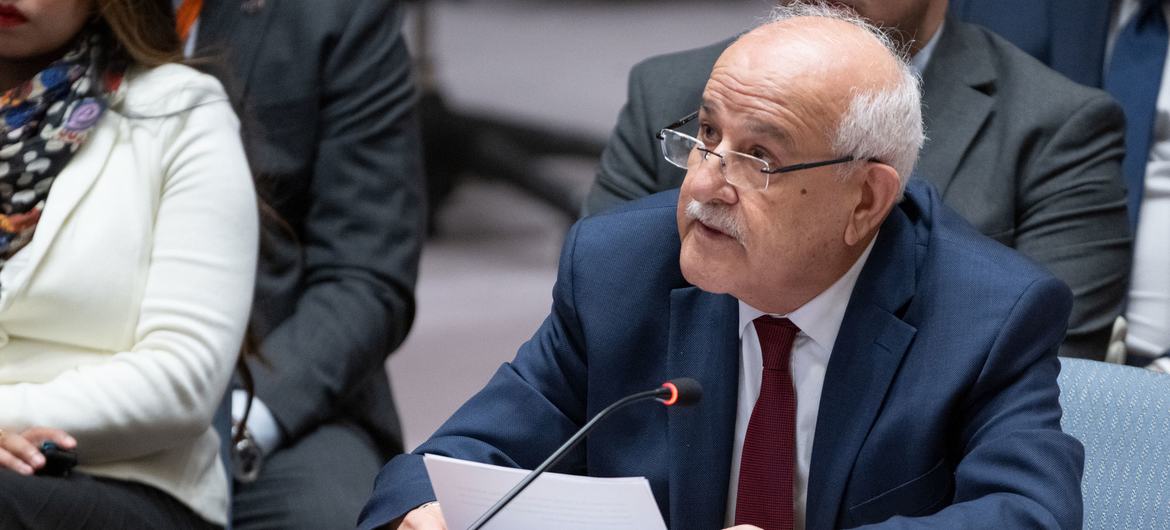
“We meet and you can hear in these halls, if you listen well, the shouts of our children under the rubble abandoned by humanity,” he said. “We meet as only a few hundred trucks have entered Gaza in 30 days, and 10 times more souls have left to the skies.”
The same suffering that his generation faced is now tormenting young Palestinians today, he said.
“The killer never hid his intentions; he spoke of might vengeance and human animals and declared he would impose a terrifying siege,” he said. “He called for the release of 200 hostages while taking over two million hostages in the process.”
Constant bombardment
Israel continues to bomb Gaza, Mr. Mansour said.
“They want us out of our country, out of our land,” he said. “Their strategic enemy is the independence of our state, the freedom of our people. The only options they have ever given us: submit, leave or die. Or in international legal terms: apartheid, ethnic cleansing or genocide.”
Today, Israel is allowing enough trucks to pretend it is not imposing the siege but not enough to save lives and is implementing imaginary humanitarian pauses whose only goal is to force people to flee not to offer them some relief that their survival is guaranteed, he said.
“I used to come here to call for international protection from the constant assault against our people; now I come to address the survival of my people,” he said. “I used to come here to say protect my people from war crimes and crimes against humanity. Now I come to call for protection from genocide.”
If there are rules, then they must apply to Israel too, and if there are rights, than the Palestinian people are entitled to them too, he said, adding that there should be “no double standards, no exception and no exceptionalism”.
3:26 PM
Palestine Red Crescent Society: ‘Health sector is under attack’
Marwan Jilani, Director General of the Palestine Red Crescent Society, provided an overview of recent events, noting that he had to rewrite his statement several times as the situation is “changing by the minute”.
People are getting shot at “as we speak”, with 20 injured due to direct fire at the Al Quds hospital in Gaza City. Thousands are under imminent threat of being killed, he warned.
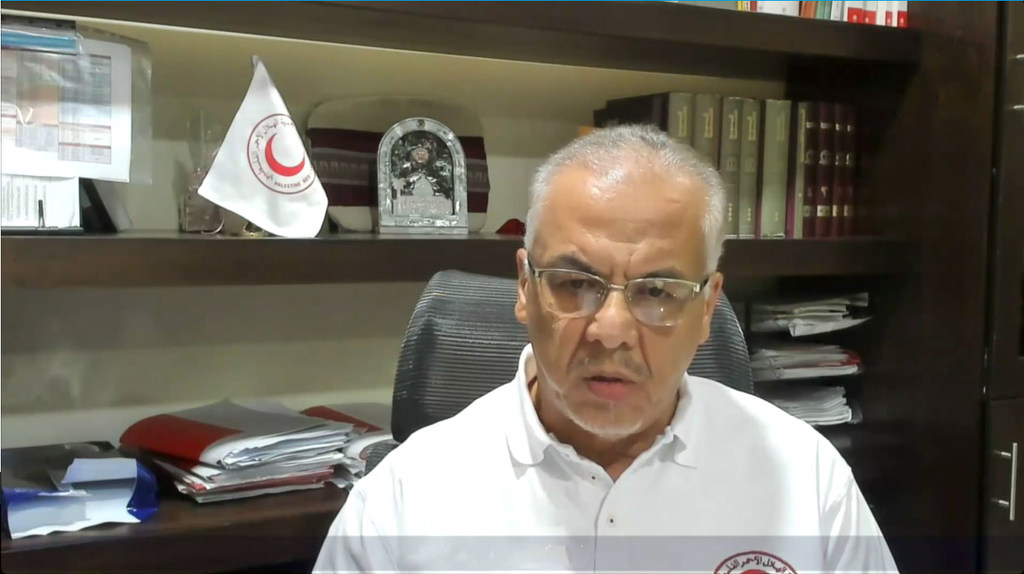
He said there were 14,000 displaced civilians at Al Quds, with the main generator shut off due to lack of fuel. Now there is “serious risk” that all intensive care patients and babies on incubators, could die.
He said diseases were beginning to spread.
He said 36 members of one senior medic’s family had been killed. The description of mass death, could not do justice to the horrors and trauma of sleeping under the “terrorizing bombardment”, he said, calling for fuel to be urgently allowed into the Gaza Strip.
He said many would starve or die of disease with fuel. He called on the Council to demand an effective and immediate ceasefire, together with emergency aid for the north of Gaza.
“Listen to the cries of children soaked in blood”, he said, who are wondering why the world is so indifferent to their lives.
3:21 PM
Tedros said having lived through war as a child and a parent, he well understood the suffering and horror being experienced in Gaza today.
Expressing a long-held view, he said the organ does not serve the purpose for which it was established and not for the 21st century, adding that “to remain credible, relevant and a force for peace in our world, Member States…must take seriously the need to reform the Security Council.”
Urgent aid, now
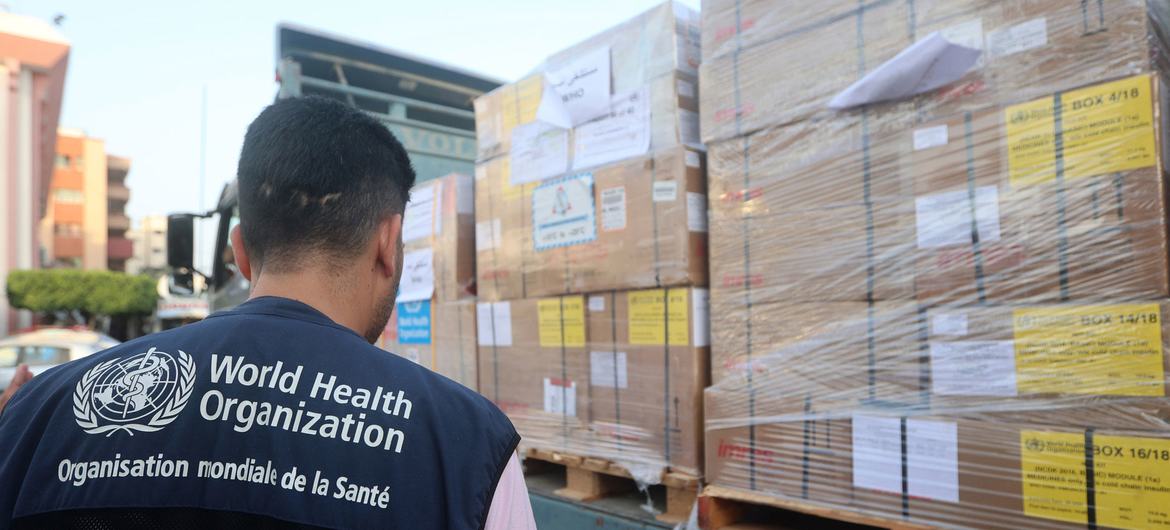
The WHO chief said the best way to support them is providing what health workers need to save lives. About 63 tonnes of such aid has been sent, but unfettered access is needed to reach the civilians, who are not responsible for the crisis.
An average of 500 trucks per day crossed into Gaza with essential supplies. Since 21 October only 650 aid trucks have entered the enclave, he said.
WHO continued to call for a ceasefire. He also called on Hamas to release the hostages and on Israel to restore supplies of water, electricity and especially fuel. He also called for both sides to respect their obligations under international humanitarian law.
“I understand what the children of Gaza must be going through because as a child, I went through the same,” he said, recalling the sounds of tracer bullets, gunfire and “the smell and images” of war. “I know what war means.”
Israeli and Palestinian children and families want peace and security.
3:16 PM
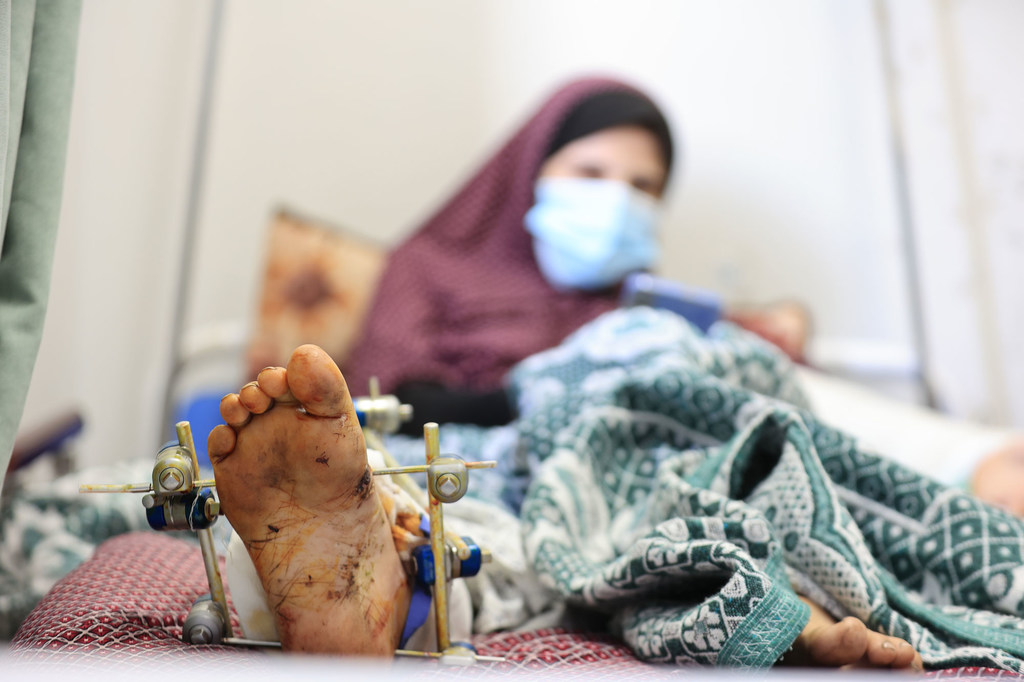
The situation on the ground in Gaza is grim said the WHO chief, from hospitals conducting operations without anaesthetics to the fact that a child is killed every ten minutes.
“Nowhere and no one is safe,” he said, adding that medical staff are grappling to try to manage the health needs of 2.3 million people.
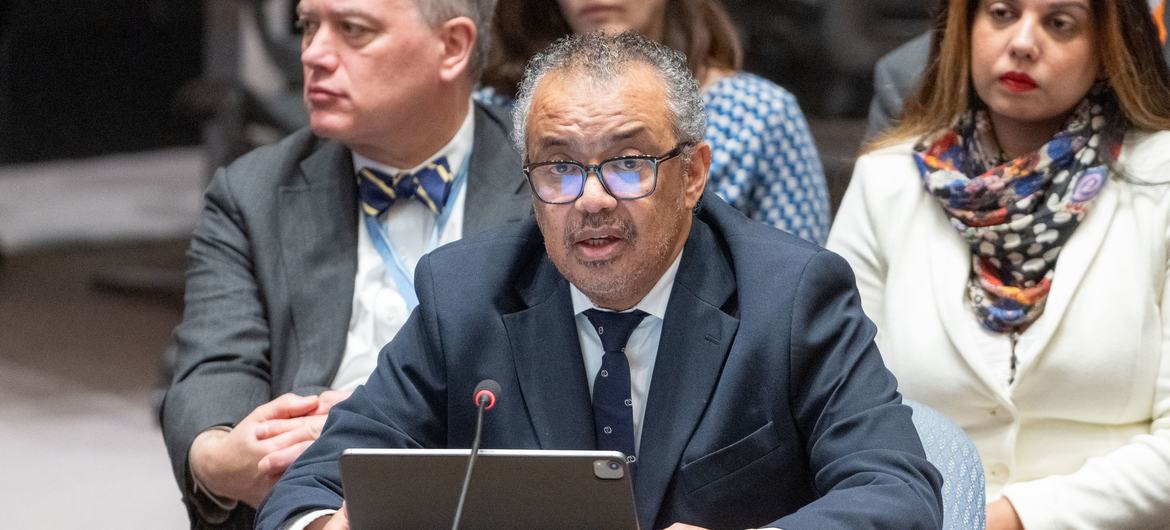
Health system is ‘on its knees’
Since the start of the conflict, there have been more than 250 attacks on health centres in Gaza and 25 in Israel. More than 100 UN colleagues have been killed. Half of Gaza’s hospitals are not functioning at all, and the remaining are operation way beyond their capacities.
“The health system is on its knees,” he said.
3:11 PM
Tedros said he fully understood the anger and grief of the Israeli people following the “barbaric” Hamas attacks. The killing of 1,400 was “incomprehensible” he added, noting the mental health consequences for survivors would continue for a long time.
He said he was gravely concerned for the hostages still being held. He said he would meet with more families next week in Geneva.
He said he also understood the anger, grief and fear of the people of Gaza, suffering “the destruction of their families, their homes, their communities and the life they knew.”
3:08 PM
Israel and Palestine have both been invited to take part in the meeting, without objection.
First to speak will be the head of the WHO, Tedros Adhanom Ghebreyesus.
3:04 PM
China’s ambassador brings the 9472nd meeting of the Council to order. They hold the chair for this month. Everybody is standing for a minute of silence for all those who lost their lives in Israel due to the 7 October attacks and all those Palestinian civilians who have died during the fighting.
3:02 PM
Ambassadors and their delegations are still making their way into the Security Council chamber, and beginning to take their seats around the iconic horseshoe table. Some are having animated conversations ahead of the start.
2:20 PM
After multiple efforts to find a unified response since the initial terror attacks by Hamas on 7 October and full-scale siege and incursion into Gaza by Israeli forces, the Security Council is meeting to hear a briefing by World Health Organization (WHO) Director General Tedros Adhanom Ghebreyesus and by the Director General of the Palestine Red Crescent Society Marwan Jilani on the current situation on the ground.
The United Arab Emirates called for the meeting, citing “the spiraling health crisis amidst continued attacks on hospitals.”
This will be the seventh time that the Council has convened on the current crisis since 7 October.
“We keep hoping and yearning for a united message from the Security Council to see an end to the conflict in Gaza; it hasn’t happened,” Stéphane Dujarric, Spokesperson for the UN Secretary-General, told reporters at UN Headquarters earlier on Friday.
This week, the Council had met privately to discuss the matter. At the same time, the General Assembly has resumed its resumed tenth emergency special session on the crisis.
Here are the highlights from the Security Council’s last open meeting on 30 October on the deteriorating situation:
- UAE and China called for the emergency meeting after Israel expanded its ground operations into Gaza
- Philippe Lazzarini, head of UNRWA, briefed ambassadors on the dire humanitarian situation in the ravaged enclave, stressing women and children cannot be “collateral damage”
- UNICEF chief Catherine Russell outlined the impact on children on both sides who are experiencing terrible trauma, “the consequences of which could last a lifetime”
- Lisa Doughten, senior UN humanitarian official from OCHA, underscored the need for a pause in the fighting to provide respite for desperate civilians “living under unimaginably traumatic conditions”
- Security Council members recalled the General Assembly’s resolution on the crisis, reiterating that international humanitarian law must be respected, adopted on 27 October at its resumed emergency special session
Visit our explainers on how the Security Council works during a crisis and negotiates resolutions or ends up in deadlock and what is a UN General Assembly emergency special session and why it matters. Check out more of our explainers here.
Document Sources: Red Cross/Red Crescent Societies, Security Council, United Nations Department of Global Communications, World Health Organization (WHO)
Subject: Armed conflict, Assistance to the Palestinian people, Casualties, Ceasefire, Children, Gaza Strip, Health, Human rights and international humanitarian law, Humanitarian relief, Occupation, Protection of civilians, Security issues, Social issues, West Bank
Publication Date: 10/11/2023
URL source: https://news.un.org/en/story/2023/11/1143462