-

Duration: February 2005 - December 2007
Budget: US$1,169,964
Implementing Agencies: UNICEF
In an effort to increase enrolment and improve the retention rates of children attending primary schools, the programme’s overall goal was to increase the quality of primary education. The programme enhanced the competency of teachers and built capacities at the village level to mobilise communities to become more involved in the educational process.MORE -
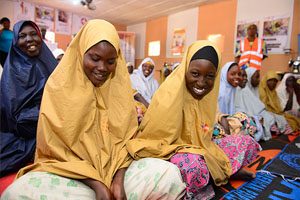
Duration: January 2005 - December 2010
Budget: US$997,052
Implementing Agencies: UNICEF
The programme was set up to complement ongoing efforts to prevent and treat obstetric fistula in three high priority countries – Nigeria, Mali and Pakistan. By capitalizing on available domestic expertise and knowledge, the programme strengthened capacities to prevent fistula from occurring while reintegrating women with fistula into their communities.MORE -
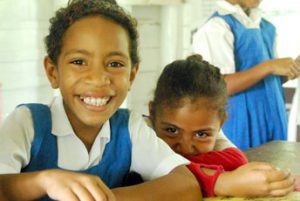
Duration: December 2004 - December 2009
Budget: US$935,768
Implementing Agencies: DESA
The programme aimed to ensure that children in earthquake prone areas have access to disaster resilient schools, and that communities enhance their capacity to cope with the impact of earthquakes by using schools as disaster mitigation and relief centres.MORE -
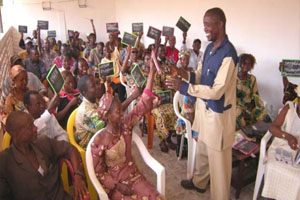
Duration: November 2004 - May 2006
Budget: US$1,030,932
Implementing Agencies: UNDP
The programme improved the living conditions of conflict-affected populations in rural Guinea by improving public infrastructure, addressing water and sanitation issues, and implementing reforestation activities.MORE -
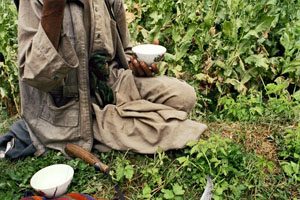
Duration: October 2004 - December 2008
Budget: US$1,027,870
Implementing Agencies: UNODC
The programme sought to combat drug addiction in Afghanistan by mainstreaming drug-demand reduction activities at the provincial, district and village levels in several provinces. The programme delivered drug abuse prevention services, vocational training, and income generation activities for recovering and at-risk addicts and their families.MORE -

Duration: October 2004 - June 2006
Budget: US$876,579
Implementing Agencies: UNIDO
The programme sought to assist rural communities in the conflict-affected Ghazni and Herat provinces by reducing their dependency on relief aid and illicit opium production. Through the provision of technical assistance and income-generating activities, the programme promoted viable opportunities towards sustainable and alternative livelihoods.MORE -
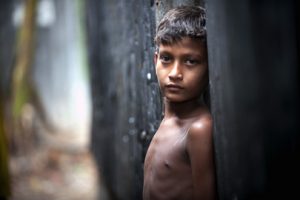
Duration: October 2004 - June 2008
Budget: US$1,282,727
Implementing Agencies: UNIDO
The programme targeted the communities of Hajiganj and Shahrasti – two districts in Bangladesh with the highest levels of arsenic intoxication – and provided appropriate technology to eliminate arsenic from drinking water, enhanced the capacities of local institutions to treat arsenicosis-affected patients, and raised awareness of arsenic-related issues to avoid further contamination.MORE -
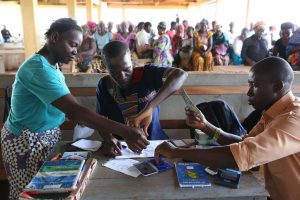
Duration: September 2004 - December 2008
Budget: US$2,670,777
Implementing Agencies: UNDP, UNOPS
Building on past and ongoing multifunctional platform (MFP) initiatives in West Africa, the programme implemented a broad range of activities to improve the capacities of rural communities to operate and manage their energy services in Burkina Faso, Ghana, Guinea and Senegal.MORE -
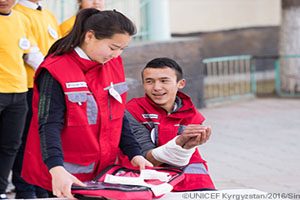
Duration: August 2004 - July 2007
Budget: US$2,160,000
Implementing Agencies: UNICEF
The programme addressed the growing challenges met by parents facing homelessness, unemployment, single parenthood, alcoholism, or drug addiction and their tendency to place their children in State-run institutions. It supported the establishment of family-centred child care and reintegrated at-risk children into full-time family care.MORE -
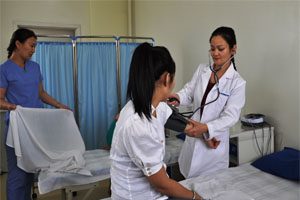
Duration: June 2004 - June 2006
Budget: US$658,800
Implementing Agencies: UNICEF
To improve access to health care for vulnerable populations, the programme increased the availability of essential drugs and improved health conditions for women and children living in rural areas by enhancing the involvement of communities in the planning, organizing and the delivery of health services at the local level.MORE -

Duration: June 2004 - December 2005
Budget: US$1,100,550
Implementing Agencies: UNHCR
By building the capacity of local organisations, the programme enabled IDP communities to engage with the relevant authorities responsible for their protection. Beneficiaries were offered direct legal, health and psychosocial counselling, as well as training in agricultural production and small business management.MORE -

Duration: April 2004 - April 2005
Budget: US$1,045,903
Implementing Agencies: FAO
To re-establish the self-sufficiency and enhance the food security of vulnerable households in the target areas (located within the provinces of Equateur, Katanga, Kasai and Kasai Oriental), the programme provided IDPs, returnees and host communities with the necessary agricultural inputsMORE -

Duration: April 2004 - December 2006
Budget: US$740,914
Implementing Agencies: UNDP
The programme sought to contribute to national reconciliation and economic recovery by providing medical rehabilitation, social and psychological counselling, as well as vocational and skills training. These efforts helped to ensure the reintegration of former detainees into their families and communities.MORE -
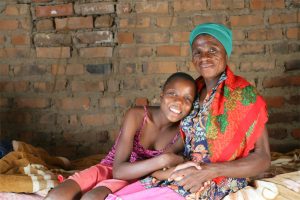
Promotion of HIV/AIDS prevention, care and support for children and adolescents affected by HIV/AIDS
Duration: March 2004 - March 2006
Budget: US$1,030,000
Implementing Agencies: UNICEF
Through the provision of comprehensive counselling and increased access to basic social services, the programme aimed to contribute to the physical, emotional and psycho-social needs of children and adolescents affected by HIV/AIDS.MORE -
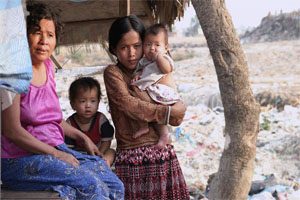
Duration: March 2004 - April 2007
Budget: US$1,114,975
Implementing Agencies: UN-HABITAT
The programme sought to build the capacities and strengthen the dignity of poor communities in Phnom Penh by reducing their poverty and improving their access to affordable basic services and better living environments. Through the creation of over 160 community organisations, the programme constructed safe drinking and water facilities, whilst improving economic security through micro-credit schemes.MORE -

Duration: March 2004 - December 2006
Budget: US$1,450,152
Implementing Agencies: FAO
Characterized by extreme poverty, high population density, and recurring natural disasters, the programme addressed the growing problem of food insecurity by providing high-quality seeds, strengthening the capacities of local farmers, and improving the availability of locally adapted crop varieties in one of the poorest regions of the country.MORE -
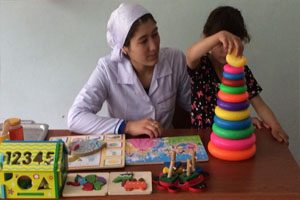
Duration: March 2004 - September 2007
Budget: US$181,259
Implementing Agencies: UNDP
The programme intended to improve the healthcare sector in Tajikistan by training physicians, nurses and midwives in their specialized fields, and by strengthening the institutional capacity of health facilities in the target areas.MORE -
Duration: March 2004 - March 2007
Budget: US$1,214,249
Implementing Agencies: UNDP
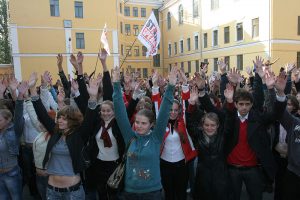
The programme built the capacities of local communities to revive the economy through community-led decision-making and improvements in infrastructure, and by supporting local radiation awareness and risk reduction initiatives for those living in contaminated zones.MORE -
Duration: March 2004 - March 2006
Budget: US$711,263
Implementing Agencies: UNICEF
The programme sought to provide marginalised and vulnerable youth outside of the educational system with access to quality basic education so that they could gain the life skills needed to protect themselves from HIV/AIDS and other health related challenges.MORE -

Duration: March 2004 - March 2006
Budget: US$1,201,020
Implementing Agencies: UNHCR
Focusing on Kaoma, Senanga and Shangombo districts, the programme sought to improve refugee-host community relations through a comprehensive approach to address economic, food, and health insecurities faced by both communities through improvements in crop production, environmental management, infrastructure, and basic services.MORE -
Promotion of HIV/AIDS prevention, care and support for children and adolescents affected by HIV/AIDS
Duration: March 2004 - March 2006
Budget: US$1,030,000
Implementing Agencies: UNICEF
Through the provision of comprehensive counselling and increased access to basic social services, the programme aimed to contribute to the physical, emotional and psycho-social needs of children and adolescents affected by HIV/AIDS.MORE -

Duration: March 2004 - September 2007
Budget: US$1,122,721
Implementing Agencies: UNICEF
The programme sought to improve the prevention of mother-to-child transmission during antenatal care by ensuring adequate supply of drugs and medical equipment. These efforts were complemented by initiatives to reduce stigma and discrimination against people living with HIV/AIDS.MORE -
Duration: March 2004 - March 2007
Budget: US$1,027,425
Implementing Agencies: UNICEF
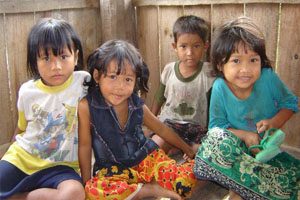
The programme sought to improve the health, nutrition and educational status of women and children through improved access to basic social services and education. This was achieved by strengthening Village Development Committees and improving access to health care and education.MORE -
Duration: November 2003 - November 2004
Budget: US$379,606
Implementing Agencies: FAO
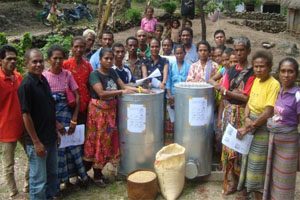
The programme sought to reduce post-harvest losses through technical training and capacity-building of farmers in vulnerable communities. The programme established seed-storage facilities in rural areas vulnerable to natural disasters.MORE -
Duration: November 2003 - May 2006
Budget: US$504,563
Implementing Agencies: UNESCO
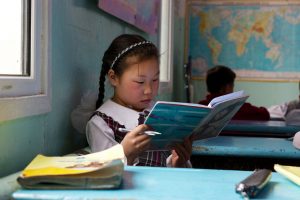
In the context of a local weather phenomenon known as dzuds, resulting in extreme weather fluctuations, the overarching goal of the programme was to restore the Government’s ability to sustain public services, including the provision of adequate education by rehabilitating school facilitates and dormitories, and improving teaching techniques.MORE -
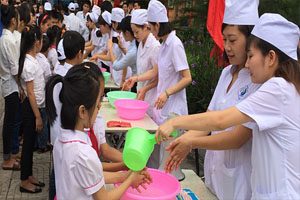
Duration: October 2003 - December 2005
Budget: US$980,309
Implementing Agencies: UNICEF
To reduce the vulnerability of at risk children and adolescents to HIV/AIDS, the programme sought to provide awareness raising education on HIV transmission to school aged children and adolescents, and build partnerships between schools, communities and families to jointly manage HIV prevention strategies.MORE -
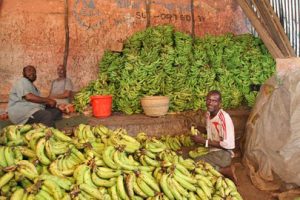
Duration: October 2003 - March 2005
Budget: US$1,104,860
Implementing Agencies: UNICEF
The objective of the programme was to address human insecurities faced by internally displaced persons, in particular, children living in conditions of enormous vulnerability. The programme supported an effective and coordinated humanitarian response by providing immunizations and anti-malarial drugs; food and nutritional supplements; potable water and sanitation; among others.MORE -
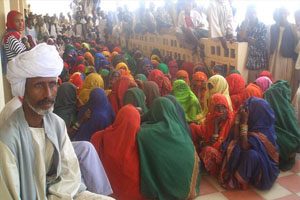
Duration: October 2003 - April 2006
Budget: US$988,097
Implementing Agencies: UNFPA
The programme strengthened the capacity of NGOs and the Ministry of Health at the community level to respond to the reproductive health needs of the population by providing technical training to birth attendants and supporting advocacy against female genital mutilation.MORE -

Duration: September 2003 - December 2005
Budget: US$506,669
Implementing Agencies: UNICEF
The programme aimed to reduce the trafficking of girls in rural areas bordering Thailand by combining education and community development programmes with anti-trafficking awareness raising and preventative measures.MORE -
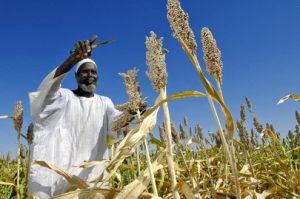
Duration: September 2003 - December 2006
Budget: US$1,258,256
Implementing Agencies: UNIDO
By collaborating with local farmers, internally displaced persons, returnees, ex-combatants and female headed households, the programme restored food security and increased agricultural productivity in the Nuba Mountains through the distribution of agricultural inputs, credit assistance and basic training in food processing.MORE -
Duration: August 2003 - November 2008
Budget: US$1,030,000
Implementing Agencies: UNDP
The programme sought to mitigate the overall impact of HIV/AIDS in vulnerable communities by building the capacities of local institutions, improving institutional care and support for people living with the virus, and reducing stigma and discrimination associated with HIV/AIDS.MORE -
Duration: August 2003 - July 2005
Budget: US$1,030,000
Implementing Agencies: UNDP
The programme aimed to mobilise local responses in three of the most disaster-prone States in India. By supporting community-based disaster preparedness and improving risk management in the most vulnerable communities, more than 6,200 villages formed multi-hazard preparedness, response and mitigation strategies to natural disasters.MORE -
Duration: July 2003 - December 2005
Budget: US$1,355,061
Implementing Agencies: UNFPA
The programme sought to secure emergency reproductive health services to internally displaced persons, with an emphasis on vulnerable women, in order to contribute to their psychological and physical well-being. In addition, through a comprehensive medical service package, the programme addressed gaps in the delivery of reproductive health services in five provinces.MORE -
Duration: July 2003 - March 2008
Budget: US$1,335,000
Implementing Agencies: DESA
To reduce rural poverty through integrated and decentralised management of water and energy services, the programme aimed to provide increased access to reliable, affordable and sustainable water and energy services to vulnerable communitiesMORE -
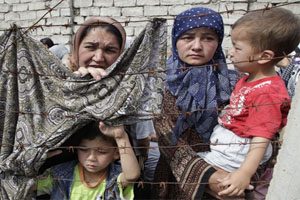
Duration: July 2003 - February 2006
Budget: US$513,339
Implementing Agencies: UNFPA
In order to improve the overall capacity of national healthcare services, the programme implemented a series of reproductive health services and family planning initiatives. The programme provided medical training for healthcare workers and supported an awareness raising campaign on the risks of contracting HIV/AIDS.MORE -
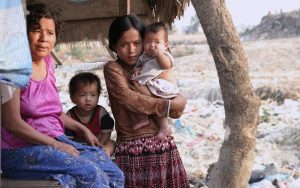
Duration: June 2003 - October 2006
Budget: US$1214464.76
Implementing Agencies: ILO
The programme sought to assist the Governments of Cambodia and Viet Nam to fight human trafficking as both countries were major source, transit and destination zones in the region. Based on an integrated strategy on both sides of the border, the programme raised awareness, mobilized communities, provided training and strengthened the social and economic capacities of people at risk.MORE -
Duration: June 2003 - December 2006
Budget: US$1,161,605
Implementing Agencies: FAO
The programme aimed to improve household food security and strengthen income generation among Cambodia’s rural poor in several provinces by building synergies between district, provincial and central level initiatives, thereby improving access to water and increasing agricultural productivity.MORE -
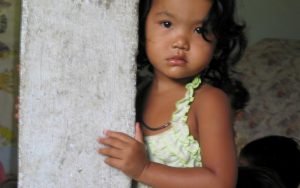
Duration: June 2003 - October 2006
Budget: US$1,214,464
Implementing Agencies: ILO
The programme sought to assist the Governments of Vietnam and Cambodia to fight human trafficking as both countries were major source, transit and destination zones in the region. Based on an integrated strategy on both sides of the border, the programme raised awareness, mobilized communities, provided training, and strengthened the social and economic capacities of people at risk.MORE -
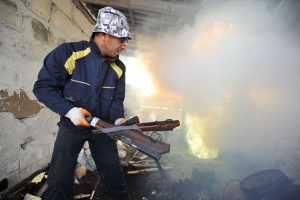
Duration: June 2003 - June 2006
Budget: US$1,030,000
Implementing Agencies: UNDP
The programme supported UNDP’s comprehensive Illicit Small Arms Control initiative and sought to reduce the possession of illicit small arms in post-conflict Kosovo.MORE -

Duration: April 2003 - September 2004
Budget: US$1,203,935
Implementing Agencies: UNODC
The programme supported the ongoing poppy eradication plan in the Wa Special Region where farmers had depended on poppy cultivation for their livelihoods for more than 100 years. By offering an alternative and viable means of survival to farmers through increased rice production, the programme improved the availability of rice for self-consumption and as a source of income.MORE -
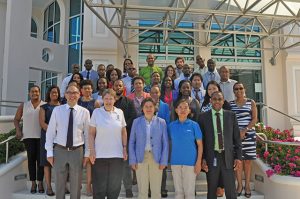
Duration: April 2003 - June 2006
Budget: US$3,039,669
Implementing Agencies: UNDP
The programme strengthened the disaster preparedness and response capacity of the Caribbean Disaster Emergency Response Agency (CDERA) to restore critical services and provide assistance during emergencies.MORE -
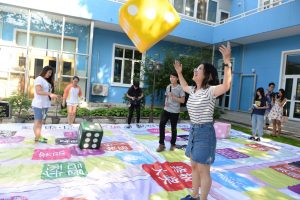
Duration: April 2003 - December 2006
Budget: US$824,000
Implementing Agencies: UNDP
The programme aimed to improve economic self-sufficiency and the quality of life in poor rural communities affected by HIV/AIDS in the Shanxi province. To reverse discriminatory practices and prevent stigmatization against HIV positive people, the programme established a community-based model for family counselling, care and support to limit the spread of HIV/AIDS.MORE -
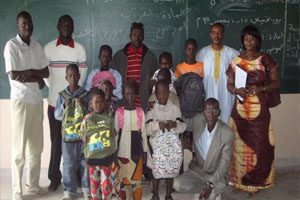
Duration: March 2003 - June 2008
Budget: US$709,779
Implementing Agencies: UNFPA
Adopting a participatory approach, the programme enhanced the reproductive health and well-being of populations in the regions of Tambacounda and Kolda through the provision of community-based reproductive healthcare services.MORE -
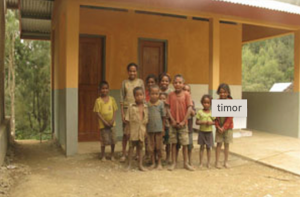
Duration: February 2003 - June 2006
Budget: US$1,030,000
Implementing Agencies: UNDP
The programme addressed the dual vulnerabilities of human trafficking and HIV/AIDS facing women and girls in South Asia. The programme, in addition to providing care and support to those who were at risk of human trafficking and HIV/AIDS, assisted in the establishment of cross-border rehabilitation and support networks by Governments, civil society groups and community members.MORE -
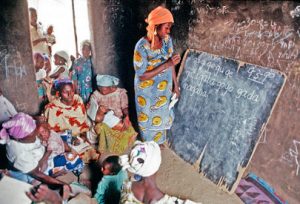
Duration: February 2003 - December 2004
Budget: US$997,052
Implementing Agencies: UNICEF
The programme aimed to prevent and control malaria in four states in Nigeria by increasing access to affordable and high-quality treatment kits; training mothers in malaria prevention; and supporting the widespread demand for insecticide treated bed-nets. ADDITIONAL MATERIAL: Programme summaryMORE -

Duration: January 2003 - December 2005
Budget: US$1,030,000
Implementing Agencies: UNDP
The overall goal of the programme was to promote the adoption of safe sexual behaviours among the sexually active population between 15 and 39 years of age in the three provinces of Cuba most severely affected by HIV/AIDS.MORE -

Duration: January 2003 - July 2004
Budget: US$1,0381,81
Implementing Agencies: UNDP
The programme sought to contribute to post-conflict reconstruction and reconciliation through a comprehensive infrastructure-construction initiative that employed disenfranchised persons, particularly ex-combatants, to conduct rehabilitation work; provided workers with the necessary tools, equipment and training; and promoted social cohesion by reintegrating ex-combatants into civilian life.MORE -
Duration: January 2003 - December 2004
Budget: US$308,227
Implementing Agencies: UNODC
The overall goal of the programme was to contribute to the ongoing drug eradication in Ky Son district by providing rural communities dependent on poppy cultivation with alternative sources of income, as well as promoting a more inclusive development framework with greater access to education, social services, infrastructure improvements, and land use rights.MORE -
Duration: January 2003 - December 2004
Budget: US$2,087,109
Implementing Agencies: OCHA
The programme supported the operation of IRIN, a multimedia news service that served as an early warning system, alerting communities as well as the outside world to the pressing needs and the emerging threats in ten countries. The programme gave voice to the voiceless and strengthened the capacities of local journalists to report on issues in a fair and impartial manner.MORE -
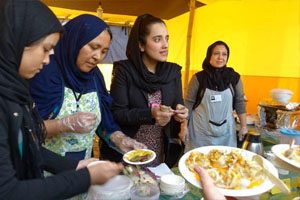
Duration: December 2002 - December 2005
Budget: US$1030000
Implementing Agencies: UNIFEM
The programme sought to improve the lives of women in Afghanistan through the establishment of women’s community centres to facilitate services to women at the local level and to provide a forum to strengthen the capacity and contribution of women’s groups at the community level.MORE