-

-

Duration: March 2025 - August 2026
Budget: US$366,000
Implementing Agencies: UNWomen (lead), UNODC, ITU
MORE -

Duration: March 2025 - February 2027
Budget: US$US$ 345,000
Implementing Agencies: UN-Habitat, UNICEF, UNWomen
MORE -

Duration: March 2025 - February 2026
Budget: US$1,776,267 (UNTFHS: US$ 1,776,267)
Implementing Agencies: WFP (lead), UNFPA
Amid evolving political conditions, climate shocks, and the aftermath of the 2023 Derna floods, Libya faces a complex set of human security challenges, particularly in its southern regions. These areas are grappling with a convergence of threats, from natural disasters and water scarcity to displacement, food insecurity, and institutional fragility, that disproportionately impact vulnerable groups, including women, youth, migrants, undocumented individuals, and marginalized ethnic communities. Often excluded from formal protection systems, these populations face barriers to essential services, leaving them highly exposed to both sudden shocks and prolonged crises. The southern region is further strained by refugee inflows and weakening local coping capacities. Addressing these vulnerabilities requires integrated, people-centered strategies that strengthen social cohesion, improve access to services, and promote sustainable development, while also building community resilience to withstand and recover from ongoing humanitarian and environmental pressures.MORE -

Duration: March 2025 - August 2026
Budget: US$601,761
Implementing Agencies: FAO, ILO, UNESCO
Jalisco has made notable progress in economic growth and business development over the years. However, the state continues to face significant challenges in reducing inequalities and addressing the digital divide.MORE -

Duration: February 2025 - January 2026
Budget: US$399,610
Implementing Agencies: WFP (lead), FAO
Mauritania, one of the driest countries in the Sahel, faces recurring droughts and desertification that undermines ecosystems, livelihoods, and food security. Environmental degradation, population growth, and limited access to land and water are straining agricultural productivity and rural employment, with women and youth bearing the brunt of these challenges. High youth unemployment and growing instability add to the pressures, driving people to leave their homes and communities. Breaking this cycle requires people-centered climate adaptation and targeted support for vulnerable communities. Strengthening resilience through sustainable land management, improved resource access, and economic opportunities will be key to protecting livelihoods and fostering long-term stability.MORE -

Duration: February 2025 - January 2027
Budget: US$690,996
Implementing Agencies: UNOPS (lead), UNRCO
Niger faces a range of complex and interconnected challenges that hinder its development progress. Security concerns, including intercommunal tensions and the threat of violent extremism in the tri-border region and the Lake Chad Basin, continue to impact stability. Alongside insecurity, Niger struggles with frequent natural disasters, intensified by climate change, such as droughts, floods, and desertification, which further threaten livelihoods and food security. Chronic malnutrition remains a pressing issue, compounded by factors like population growth and limited access to essential services. These compounding and often interconnected challenges have resulted in significant displacement, disrupting agriculture, trade and livelihoods.MORE -

Duration: February 2025 - July 2026
Budget: US$341,100
Implementing Agencies: UNODC (lead), UNDP
MORE -

Duration: February 2025 - July 2026
Budget: US$300,000
Implementing Agencies: UNDP (lead), UNFPA
The digital revolution is reshaping societies and creating opportunities for sustainable development. In Vietnam, internet access now reaches over 70% of the population, and mobile coverage is at 100%. While smartphone and internet use among youth continues to rise, they face significant digital risks, including privacy violations, identity theft, and online harassment, which impact their mental health and well-being. Many, particularly vulnerable groups, lack the digital literacy needed to navigate these challenges safely. Additionally, youth participation in policy design remains low in Vietnam, limiting the effectiveness of policy responses to issues such as technology-facilitated gender-based violence, cyberbullying, and digital safety.MORE -

Duration: February 2025 - January 2027
Budget: US$452,000
Implementing Agencies: UNDP (lead), WHO
In Mali, health and social protection challenges are compounded by over a decade of conflict and instability. Insecurity, inadequate healthcare, and a shortage of qualified personnel limit access to quality care, particularly for rural populations, pregnant women, children, and the elderly. Health insurance is insufficient for informal workers and low-income groups, while gaps in digital health infrastructure hinder disease surveillance and service delivery. Access to reproductive, obstetric, and mental health care remains restricted, disproportionately affecting vulnerable populations, including women, children, and internally displaced persons. Additionally, high levels of poverty and social inequality limit access to essential services like health, education, and social benefits, compounded by the absence of comprehensive social protection programmes such as social security and cash transfers.MORE -

Duration: April 2024 - October 2025
Budget: US$345,000
Implementing Agencies: UNDP (lead), UNODC
MORE -

Duration: March 2024 - September 2025
Budget: US$344,647
Implementing Agencies: UNDP (lead), IOM, UNHCR
MORE -

Duration: March 2024 - September 2025
Budget: US$420,000
Implementing Agencies: UNDP (lead)
The Asia-Pacific region is highly exposed to natural hazards such as storms, floods, earthquakes, and droughts. These challenges are exacerbated by structural and social vulnerabilities, including in countries like Nepal and Bangladesh, where disasters disproportionately affect poor and marginalized communities.MORE -

Duration: February 2024 - August 2025
Budget: US$382,982
Implementing Agencies: UNDP (lead), WFP
MORE -

Duration: February 2024 - August 2025
Budget: US$300,000
Implementing Agencies: UNODC (lead), UN-Habitat
Cabo Verde faces socioeconomic and environmental challenges due to its dependence on imports, climate-related pressures, and persistent droughts. Urban areas are particularly affected, with ongoing issues such as poverty, youth unemployment, food insecurity and limited access to essential services. The country’s strategic location has also made it a transit point for drug trafficking, contributing to security concerns and posing risks to investment in key sectors like tourism and finance. Addressing these interconnected challenges requires a holistic, community-based and nationally-led approach focused on resilience and a forward-looking perspective that can account for long-term trends such as the changing climate.MORE -

Duration: February 2024 - January 2026
Budget: US$300,000
Implementing Agencies: IOM, ILO, OHCHR
MORE -

Duration: February 2024 - October 2025
Budget: US$1,382,983
Implementing Agencies: UNDP, UNHCR
Syria faces a complex humanitarian crisis, with over 14 million refugees and internally displaced persons (IDPs). The ongoing conflict, severe socio-economic challenges, and the February 2023 earthquake have created a cycle that prevents Syrians from living free from fear, want, and with dignity. Over 6.7 million people are IDPs, many seeking to return to their homes to reclaim land, property, and livelihoods. To address these challenges, the Returns and Reintegration Working Group (RRWG) launched the Area-based Return Support (ABRS) initiative. This effort tackles return and reintegration patterns, addressing immediate needs while promoting resilience and recovery.MORE -

Duration: February 2024 - December 2025
Budget: US$1,057,320
Implementing Agencies: UNESCO (lead), UNHCR
MORE -

Duration: February 2024 - August 2025
Budget: US$387,400
Implementing Agencies: IOM (lead), United Nations Office for Disaster Risk Reduction (UNDRR)
MORE -

Duration: May 2023 - April 2026
Budget: US$2,451,354
Implementing Agencies: UNESCWA(lead), League of Arab States
The past decade has witnessed a rise in conflicts across the Arab region. These conflicts have proven more fluid, protracted, and complex, damaging the region’s rich cultural landscape, while undermining human security and opportunities for sustainable development. Against this backdrop, the League of Arab States (LAS), in partnership with the United Nations, prepared a regional report on the attainment of the SDGs in conflict-affected countries in the region, published in 2022, which called for an integrated framework anchored in the human security approach and bridging humanitarian-development-peace (HDP) action.MORE -
Duration: March 2023 - September 2024
Budget: US$400,000
Implementing Agencies: UNHCR (lead), UNJHRO
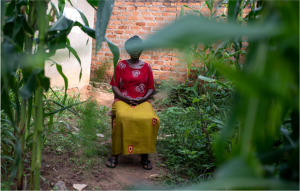
The Tanganyika region of the Democratic Republic of the Congo (DRC) has been facing significant obstacles to sustainable development, including severe economic, food, health, and personal security challenges arising from recurring tensions among non-state groups as well as inter-community violence. In a region where many of their rights are already under threat, women and girls are particularly vulnerable to increasing gender-based violence (GBV) and economic and social exclusion. In addition to the physical and psychological trauma experienced by survivors of GBV, the lack of inclusion in the social, economic and political spheres has wider implications for development prospects and the ongoing peace process in the region. MORE -

Duration: March 2023 - July 2024
Budget: US$300,000
Implementing Agencies: IOM (lead), UNHCR
Like many countries worldwide, Guinea is grappling with trafficking in persons (TiP), a complex phenomenon brought about by intersecting personal, societal and global dynamics. While personal vulnerability is a crucial factor, the multiple underlying drivers at the national, regional and global levels – political instability, ineffective judicial systems and legal frameworks, social structures that contribute to marginalization, and crises such as the recent COVID-19 pandemic that increase vulnerability – create a multifaceted challenge that is difficult to disentangle. MORE -

Duration: March 2023 - May 2025
Budget: US$299,996
Implementing Agencies: UNOPS(lead), UN-Habitat
Over the last decade, the rapid pace of urbanization in Cambodia has led to challenges in public services management and delivery, including waste and sanitation, water treatment, and transportation. The growing population contributes to new construction for housing and infrastructure, in some cases displacing vulnerable urban communities from the city centers to the outskirts where housing and employment opportunities are more limited. The COVID-19 pandemic compounded these challenges and increased inequalities, particularly those related to the expansion of digital platforms for product delivery and banking that are less accessible to vulnerable communities due to telecommunication infrastructure limitations. Building on the successful UNTFHS initiative “Sihanoukville for All”, implemented by United Nations agencies in partnership with the Royal Government of Cambodia, this programme will further expand the capacity and technical know-how of diverse stakeholders to promote a people-centered urban development that leaves no one behind.MORE -

Duration: February 2023 - July 2025
Budget: US$2,341,360
Implementing Agencies: IOM (lead), UNMAS
MORE -

Duration: February 2023 - April 2025
Budget: US$1,380,808
Implementing Agencies: IOM, WFP
Iraq faces growing pressures on its natural resources due to intensified droughts, soil degradation, and population growth, contributing to rural-to-urban migration and increasing demand for water and land. This has put strain on basic services and governance, particularly in urban areas adjusting to displaced populations.MORE -

Duration: February 2023 - March 2025
Budget: US$299,938
Implementing Agencies: UNDP(lead), FAO, UNCDF
MORE -

Duration: February 2023 - November 2024
Budget: US$331,225
Implementing Agencies: UN-Habitat (lead), ILO, UNESCO
MORE -

Strengthening Human Security and Resilience to Transnational Organized Crime in Coastal Communities
Duration: February 2023 - February 2025
Budget: US$299,951
Implementing Agencies: UNODC (lead), FAO
Many coastal communities in Latin America and the Caribbean are experiencing an increase in violence and transnational organized crime, which is undermining the rule of law and threatening multiple dimensions of the human security of local populations.MORE -

Duration: February 2023 - March 2024
Budget: US$1,691,435
Implementing Agencies: UNDP (lead), IOM
Moldova's development has been significantly impacted by overlapping crises, further intensified by the conflict in Ukraine. Since February 2022, over 700,000 Ukrainian refugees have entered the country, equivalent to more than 4% of the local population. This rapid influx has strained essential services and increased food and energy insecurity in the context of rising inflation. The refugee influx has also deepened socio-economic challenges and increased social tensions, with over 70% of Ukrainian refugee household heads unemployed due to legal barriers, language difficulties, and limited job opportunities.MORE -

Duration: February 2023 - December 2024
Budget: US$332,445
Implementing Agencies: UNDP (lead), ILO
MORE -
Duration: February 2023 - March 2025
Budget: US$458,565
Implementing Agencies: IOM (lead), UNDP
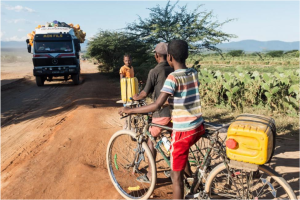
Internal migration is not a new phenomenon in Madagascar. However, in recent years, forces such as climate change, environmental degradation, and COVID-19 have induced a significant increase in the movement of internal migrants, fundamentally changing the characteristics of migration patterns.MORE -

Duration: October 2022 - March 2024
Budget: US$716,351
Implementing Agencies: World Academy of Art & Science (WAAS), Human Security Unit (HSU)
The programme’s key objective is to enhance global awareness and acceptance of human security as a universal and proven framework for effective policies, strategies and programmes in a world faced with a confluence of complex crises and accelerating megatrends that if left unmanaged will exacerbate vulnerabilities and inequalities and further undermine the solidarity and trust so urgently needed to meet the priorities of people across the world. It does this by creating a global campaign entitled ‘Human Security for All’ (HS4A). MORE -
Duration: September 2022 - December 2024
Budget: US$431,205
Implementing Agencies:
Recognizing the essential role of the private sector as an employer, supplier and investor in all societies, including those facing complex development and conflict challenges, the international community is encouraging the meaningful engagement of the private sector in realizing sustainable development. To this end, LSE IDEAS in partnership with the Human Security Unit elaborated the Human Security Business Partnership framework (HSBP) as an innovative instrument that applies the human security approach to support the engagement of the private sector in multi-stakeholder collaborations at the local level to achieve sustainable development outcomes. The HSBP is a timely contribution to help structure sustained dialogue between governments, communities and companies, meeting the growing expectations for companies to contribute to the 2030 Agenda for Sustainable Development. MORE -

Duration: July 2022 - April 2024
Budget: US$299,865 (UNTFHS: $299,865)
Implementing Agencies: PAHO/WHO (lead), IOM
The programme aims to: (i) improve national, local and inter-country multi-stakeholder coordination on health and migration through the application of the human security approach and the enhancement of capacities of stakeholders on human security in the context of health and migration; (ii) strengthen health information systems by building capacities to generate and integrate health data on migrants and support evidence-based, migrant-inclusive policies and plans; and (iii) employ knowledge obtained from improved data collection systems, as well as established Health and Migration Country Teams (HMCTs) and Health and Migration Working Groups (HMWGs) to promote and mainstream the human security approach in capacity-building activities on health and migration for the region.MORE -

Duration: May 2022 - May 2025
Budget: US$1,475,020,074
Implementing Agencies: FAO (lead), ILO, UNDP, UN Women, WFP
MORE -

Duration: April 2022 - November 2024
Budget: US$475,000
Implementing Agencies: OHCHR (lead), UNDP
The populations of small island states in the Pacific region are highly vulnerable to external shocks, impacting all aspects of their lives and livelihoods as well as prospects for sustainable development.MORE -

Duration: March 2022 - July 2025
Budget: US$912,742
Implementing Agencies: IOM (lead), UNODC
The surge in COVID-19 cases in Sierra Leone at the onset of 2021, accompanied by necessary movement restrictions to contain the spread of the virus, exacerbated existing challenges, notably food insecurity, and disrupted livelihoods for those reliant on unstable income sources. This situation disproportionately affected women, youth, and individuals already living in poverty, leading to further income reductions. Border communities, heavily reliant on cross-border trade with neighboring countries, faced significant economic downturns due to travel restrictions and border closures. This strain underscores the urgent need to prioritize interventions that ensure the safety and well-being of communities affected by crises. Therefore, it is crucial to strengthen the human security of these communities, not just for alleviating their immediate needs but also for their ability to withstand and recover from present and future challenges.MORE -
Duration: March 2022 - April 2024
Budget: US$450,000
Implementing Agencies: UN-Habitat (lead), UNODC, UNODA, World Bank, OHCHR, HSU
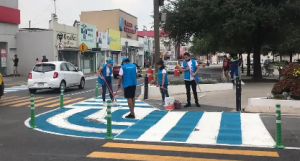
Today, half the world’s inhabitants reside in cities, a phenomenon driven by the continuous migration of people from rural to urban areas and the rapid demographic expansion of urban populations, especially in the poorest countries.MORE -

Duration: December 2021 - May 2023
Budget: US$296,790 (UNTFHS: $296,790)
Implementing Agencies: IOM (lead), UNFPA
Violent extremism in the Sahel has increased exponentially in recent years. Since 2019, violence has quickly spread southward, with countries located along the Gulf of Guinea experiencing increasing insecurity along their northern borders with Burkina Faso.MORE -

Duration: December 2021 - October 2024
Budget: US$297,223
Implementing Agencies: IOM (lead), UNICEF
The COVID-19 pandemic reversed development gains worldwide, increasing inequalities within and between countries. In Timor-Leste, remote border communities—already facing multiple, interconnected vulnerabilities—were particularly affected. Even before the pandemic, these communities struggled with limited access to essential services such as clean water, healthcare, and education. The closure of borders and severe travel restrictions disrupted daily life, cutting off cross-border trade—a key source of economic stability for many. As a result, livelihoods were strained, and access to basic necessities became even more challenging, underscoring the need for targeted, community-driven solutions to build resilience and support long-term recovery.MORE -

Duration: November 2021 - March 2024
Budget: US$456,092 (UNTFHS: $303,292; Pooled Resources: 152,800)
Implementing Agencies: IOM(lead), United Nations Framework Convention on Climate Change (UNFCCC)
Small Island Developing States (SIDS), including those in the Eastern Caribbean, face are highly vulnerable to climate change and natural disasters – experiencing damage up to six times greater compared to developed countries. These recurring shocks, compounded by other socio-economic challenges, significantly hinder development progress toward the Sustainable Development Goals (SDGs). The COVID-19 pandemic further exacerbated these vulnerabilities, making SDG attainment even more difficult. Border closures and social distancing measures implemented in response to the pandemic severely disrupted economies across the Eastern Caribbean SIDS, deepening existing challenges and threatening long-term resilience.MORE -
Duration: October 2021 - March 2025
Budget: US$1,371,278 (UNTFHS: $1,031,287; Pooled Funding: $340,000)
Implementing Agencies: UNDP (lead), UN WOMEN, UNRCO
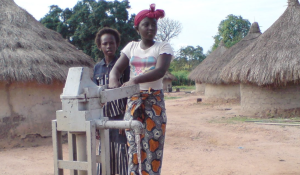
The programme builds on an initiative supported by the UNTFHS in 2019 to strengthen the application of human security towards accelerating the achievement of the SDGs at the local level in West Africa. MORE -
Duration: October 2021 - December 2025
Budget: US$US$ 400,000
Implementing Agencies: UNODC, UN-Habitat
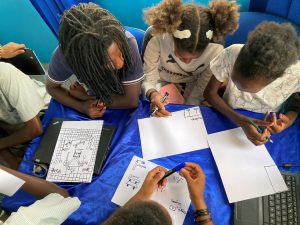
As a Small Island Developing State with an economy heavily reliant on tourism-related trade, imports and services, Cabo Verde has been deeply affected by the multidimensional consequences of COVID-19 and the exacerbating impacts of climate change and natural disasters, especially drought. This situation is further compounded by rapid urbanization that has led to a proliferation of informal settlements located in the peripheries of major urban centers and often in areas of poor accessibility and high risk and exposure.MORE -
Duration: October 2021 - May 2024
Budget: US$451,065
Implementing Agencies: WFP (lead), UNDP, UNFPA
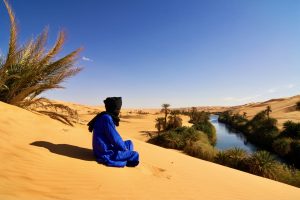
Within the context of a protracted national conflict underscored by tribal divisions, Libya is grappling with a confluence of challenges from fragmented security structures to limited access to basic services, high levels of food insecurity, growing unemployment, economic volatility, and civil unrest.MORE -
Duration: October 2021 - April 2024
Budget: US$435,542
Implementing Agencies: UNFPA (lead), UNODC, UNIDO
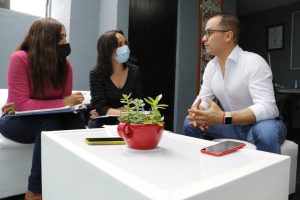
Mexico is a country with a relatively large youth population, including at-risk young people who face an interlinked set of economic, personal and health security challenges that limit them from reaching their full potential. The COVID-19 pandemic further exacerbated these challenges, exposing many of the most vulnerable adolescents and children to an increased risk of exploitation, violence, abuse, and impoverishment. While the national government has made important efforts to address these challenges, the pandemic provided an opportunity to further bolster youth engagement in processes to determine development priorities, particularly in areas where they face the greatest obstacles including employment, health care and social protection policies. MORE -

Duration: October 2021 - June 2023
Budget: US$299,664
Implementing Agencies: UNODC (lead), UNDP
MORE -

Duration: September 2021 - December 2024
Budget: US$3,071,304 (UNTFHS: $1,000,000; Pooled Funding: $2,071,304)
Implementing Agencies: UNDP (lead), UNICEF, WFP, IOM, UNRCO
Despite its enormous natural potential, a significant part of the Guinean population is suffering from multidimensional poverty and widening inequalities, especially in terms of access to basic social services, economic infrastructure, and social protection. This is reinforced by the lack of active involvement of communities in local governance, further deepening their vulnerability to external shocks such as natural disasters and economic volatility. These multifaceted challenges are particularly pronounced in the region of Labé.MORE -

Duration: September 2021 - December 2023
Budget: US$347,475 (UNTFHS: $295,855; Pooled Funding: $51,620)
Implementing Agencies: UNICEF(lead), UNODC, UNHCR, IOM
Mixed migration to Gabon, comprising of irregular migrants for labor purposes, but also criminally organized trafficking of women and children, is a recurrent, growing and an increasingly visible challenge.MORE -
Duration: August 2021 - April 2023
Budget: US$US$ 720,304
Implementing Agencies: UNFPA (lead), IOM, UNICEF, UNODC
As a landlocked country with an economy heavily dependent on oil and gas revenue, the sharp decline in global hydrocarbon prices and supply chain disruptions triggered by COVID-19 pandemic has significantly affected the national economy, as well as the daily lives of people in Turkmenistan, particularly those most vulnerable.MORE -
Duration: July 2021 - November 2024
Budget: US$2,210,926 (UNTFHS: $1,110,938; Pooled Funding: $1,099,988)
Implementing Agencies: UNFPA, ITC and UNRCO
The Senegambia bridge is a major infrastructure project that promises significant economic opportunity for The Gambia and the subregion. While it has brought some economic gain to the local communities, those in the most vulnerable situations have experienced negative consequences to their economic, health and personal security. As such, the overall purpose of the programme is to strengthen capacities of the local authorities and communities towards creating an environment to safeguard the economic and social rights of vulnerable groups whose livelihoods have been negatively impacted by climate change and the Senegambia Bridge, while activating new opportunities that emerge along the Trans Gambia corridor.MORE