
All About the NDCs
Nationally Determined Contributions, or NDCs, are national climate action plans by each country under the Paris Agreement. A country's NDC outlines how it plans to reduce greenhouse gas emissions to help meet the global goal of limiting temperature rise to 1.5C and adapt to the impacts of climate change. The Paris Agreement requires that NDCs are updated every five years with increasingly higher ambition, taking into consideration each country’s capacity.

Protecting people by protecting the planet
Climate change is putting not only the health of our planet, but the health of people everywhere at risk. Learn about two critical areas of climate action that bring immediate health benefits.
July 2023 is the hottest month ever recorded
The UN Chief spoke on the global average temperature this July, which was confirmed to be the highest on record and likely for at least 120,000 years. July also had the highest-ever ocean surface temperatures.
5 facts on the impacts of heatwaves
Parts of the Northern hemisphere are experiencing severe heatwaves – and extreme weather is on the rise globally. How does heat impact societies? Read more here.

Health and climate change
Climate change is expected to cause about 250,000 additional deaths per year from malnutrition, malaria, diarrhoea and heat stress. Reducing greenhouse gases can deliver big health benefits. Read more.

Bertrand Piccard: Profitable solutions exist
UN Environment Programme’s Goodwill Ambassador Bertrand Piccard, who was responsible for Solar Impulse, the first successful round-the-world solar-powered flight, talks about the power of solutions and innovation to advance climate action around the world.
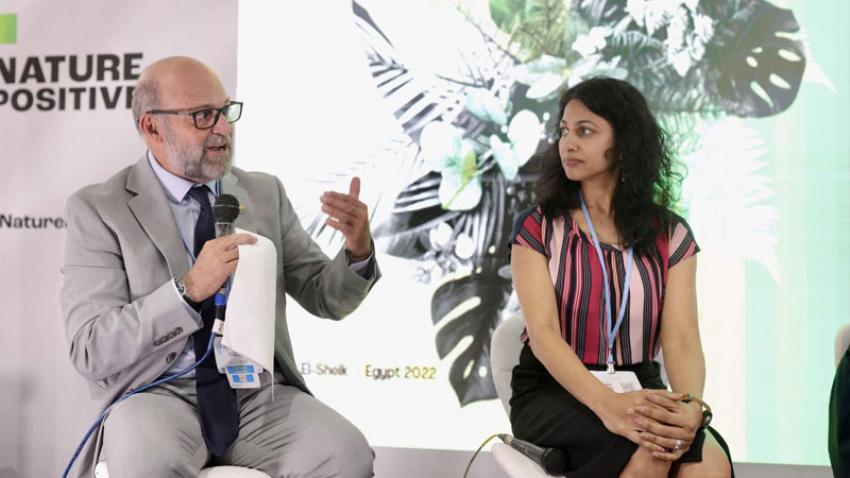
Carlos Manuel Rodriguez: It's in the self-interest of countries to protect nature
Carlos Manuel Rodriguez, the CEO of the Global Environment Facility, talks about what to expect on the road to the UN Biodiversity Conference that will present a once-in-a-decade opportunity to usher in a new global framework to protect and conserve the world’s biodiversity.
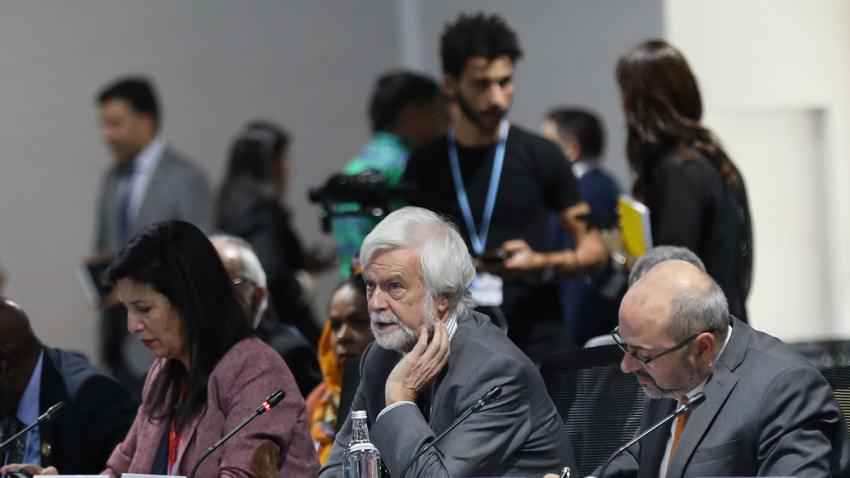
Jim Skea: Every fraction of a degree of warming matters
Jim Skea, the co-chair of the Intergovernmental Panel on Climate Change’s Working Group III on Mitigation, talks about advances in efforts to reduce emissions and remove carbon from the atmosphere as well as what happens if the climate warms more than 1.5°C.

UN Live launches inclusive global conversation on climate action
Through the “Global We for Climate Action”, the Museum for the United Nations – UN Live, supported by the IKEA Foundation, seeks to broaden the climate conversation by engaging people who are left out of the conversation and feel little agency in shaping the future of the world – especially younger generations, people disproportionately affected by climate change, and people in conflict-ridden societies.

UN Climate Envoy launches new plans to boost access to renewables
UN Secretary-General António Guterres’ Special Envoy on Climate Ambition and Solutions Michael Bloomberg announced his commitment to help accelerate the transition to renewable energy in 15 developing countries across the world - Botswana, Cambodia, the Democratic Republic of the Congo, Egypt, Ethiopia, Ghana, Madagascar, Morocco, Mexico, Philippines, Rwanda, Senegal, Tanzania, Thailand, and Uganda.

Preserving the Ozone Layer
On 16 September, the world will mark the International Day for the Preservation of the Ozone Layer. It was on this day, 35 years ago, that the Montreal Protocol was adopted. Let’s look at how this agreement was critical in protecting the health of our planet and all its species, while also reducing greenhouse gases in the atmosphere. Read more.

COP27: Delivering for people and the planet
From 6 to 18 November, Heads of State, ministers and negotiators, along with climate activists, mayors, civil society representatives and CEOs will meet in the Egyptian coastal city of Sharm el-Sheikh for the largest annual gathering on climate action. Learn more.

Facts about climate emergencies
The impacts of climate change can be seen everywhere with increasing and worsening extreme weather events such heatwaves, droughts, flooding, winter storms, hurricanes and wildfires. Learn more about climate emergencies

The right to a healthy environment
As the UN General Assembly recognizes people’s right to a healthy environment, the head of the UN Environment Programme looks at the importance of this historic resolution. Read more

Climate emergency: Heatwaves
“These heatwaves are happening worldwide as a consequence of climate change,” warned the head of the World Metrological Organization, Petteri Taalas, looking at the impact of the current exceptional heat in Europe on people’s health and wellbeing. Watch the press conference