Event Videos
Since the United Nations General Assembly designated 2 April as World Autism Awareness Day (WAAD) in 2007, the UN has worked to promote the full realization of human rights and fundamental freedoms for autistic individuals, ensuring their equal participation in society. Over the years, significant progress has been made, driven in large part by autistic advocates who have worked tirelessly to bring the lived experiences of autistic individuals to the forefront of global discussions.
The 2007 General Assembly resolution (A/RES/62/139) highlighted the need to raise public awareness of autism. Today, the global movement has expanded beyond awareness to actively promote acceptance, appreciation, and inclusion, recognizing the contributions autistic people make to their communities and the world at large.
The 2026 World Autism Awareness Day Observance
The 2026 observance of World Autism Awareness Day (WAAD), held under the theme “Autism and Humanity – Every Life Has Value,” highlights and affirms the dignity and worth of all autistic people as part of our shared human future. At a time when misinformation and regressive rhetoric about the lives of autistic people is resurfacing, this year’s virtual event is a call to action to move beyond limiting narratives and to recognise the inherent dignity, equal rights, and unconditional worth of every autistic person.
Grounded in the principles of human rights and aligned with the UN Sustainable Development Goals (SDGs), this vision sees the inclusion of neurodiversity as crucial to sustainable development. When societies embrace neurodiversity, they strengthen creativity, resilience, and innovation, laying the foundation for more just, inclusive, and sustainable communities. This year’s discussion explores the role of neurodiversity in shaping policies that advance health and well-being, quality education, gender equality, economic opportunity, reduced inequalities, sustainable communities, and strong institutions.
By affirming that autistic lives are integral to our collective progress and the achievement of the SDGs, the observance calls for a future where difference is respected, dignity is protected, and every autistic person can thrive.
The 2026 WAAD event is organized by the Institute of Neurodiversity (ION), with the support of the United Nations Department of Global Communications. The ION is a global, neurominority-founded and led organisation advancing systemic change for neurodiversity across education, employment, health, justice, and society. Headquartered in Switzerland and active in over 100 countries, ION brings together more than 40,000 members, professionals, advocates, and institutions worldwide.
As a UN-associated organization, ION works at the intersection of lived experience, policy, governance, and innovation to shift systems from deficit-based models to inclusive, human-centred design. Through global advocacy, research, training, youth leadership, and cross-sector partnerships, ION empowers minority neurotypes, promotes equity and human rights, and supports institutions to build environments where all neurotypes can thrive.
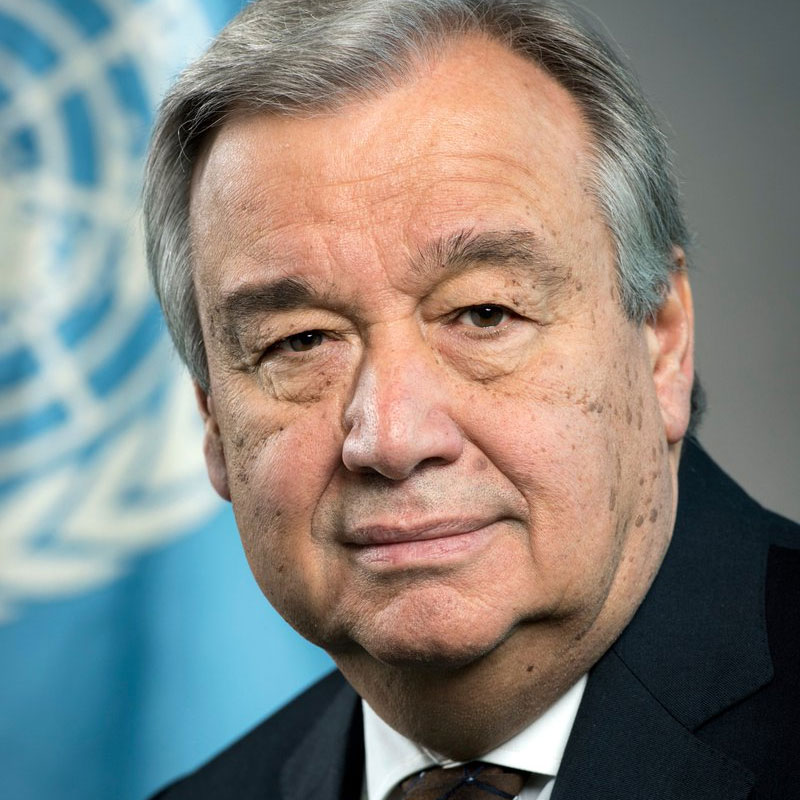
Secretary-General's Message
Like anyone else, autistic people should be able to shape their own lives — and help to shape our shared future.”
António Guterres - Message
Resources
UN System
- Secretariat for the Convention on the Rights of Persons with Disabilities
- Committee on the Rights of Persons with Disabilities
- UN Disability Inclusion Strategy
Key Documents
- General Assembly resolution proclaiming World Autism Awareness Day (A/RES/62/139)
- Convention on the Rights of People with Disabilities
- Secretary-General’s report on the implementation of the UN Disability Inclusion Strategy
YouTube Playlist
Playlist "Autism Awareness" by the United Nations on our YouTube channel