

Resources
OCHA/ReliefWeb
Reports on the situation in DRC
You will find all reports on the Democratic Republic of the Congo (DRC) on Relief Web, including situation reports from various entities, key facts and figures, humanitarian response, etc.
Infographics
Relief Web also provides the latest infographics and maps on population movements, vulnerability of individuals and families, etc.

©WFP/Moses Sawasawa
Other official documents

©FAO/Alessandra Benedetti
2026 Humanitarian Needs and Response Plan
 The humanitarian community will request $1.4 billion to assist 7.3 million people living in areas with intersectoral severity 3 and 4. A prioritized caseload of 4.7 million people in zones with severity 4 will require $937 million. These boundaries reflect the Humanitarian Reset and a tighter alignment between needs, partner footprint, and the funding and access realities observed in 2025.
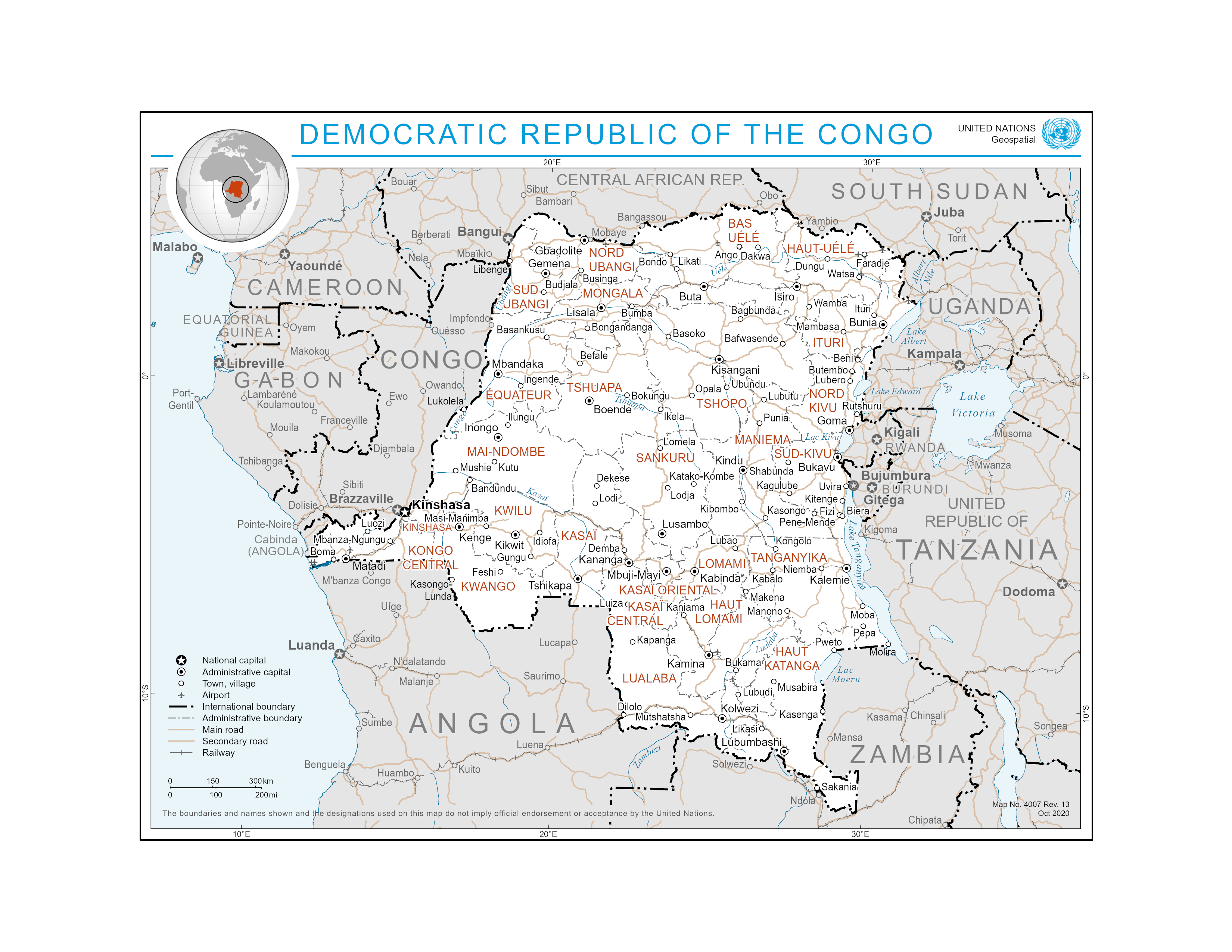
Targeting in 2026 will concentrate on the eastern provinces and selected hotspots elsewhere where violence, displacement, and service disruption converge, and where communities have identified life-saving support as their top priority. Outside the priority areas, the Response Plan provides only limited preparedness and light-touch support. Where development frameworks, such as the United Nations Sustainable Development Cooperation Framework, are active, partners will align with those programmes to cover broader needs. If available resources increase, scalable components will expand coverage to additional areas with lesser severity.
The response will deliver integrated life-saving packages that combine food assistance, treatment and prevention of acute malnutrition, emergency health care including outbreak control, safe water, hygiene and sanitation, essential shelter and NFIs, and protection services with a focus on GBV risk mitigation, child protection and mine action.
Assistance provided will include a mix of cash and in-kind modalities, based on market functionality and individuals' preferences, with community feedback systematically informing design and course corrections. Local actors will be engaged across assessment, delivery and monitoring to strengthen access, accountability and continuity.
Compared to 2025, the number of people targeted, and the financial ask are more conservative. This is due to a reduction on the scope of shocks, refined severity thresholds, reduced operating space in several conflict-affected areas, the closure and dismantlement of many displacement sites and evaluation of previous responses. Needs that are better addressed under development or stabilization approaches will be excluded from the Response Plan. Area-based responses will be strengthened in displacement and return zones to preserve basic services and restore livelihoods where conditions allow.
Significant barriers include insecurity and movement restrictions, administrative constraints, contamination by the presence of unexploded ordnance, seasonal flooding, and poor road conditions. These factors continue to delay the movement of humanitarian staff and supply chains, constraining the efficient delivery of essential materials to affected populations. In addition, disease outbreaks further strain the already fragile health system.