illustration
Photo:AI-assisted illustration by Sadek Ahmed

More than a cup

A daily ritual. A global livelihood. A shared responsibility.

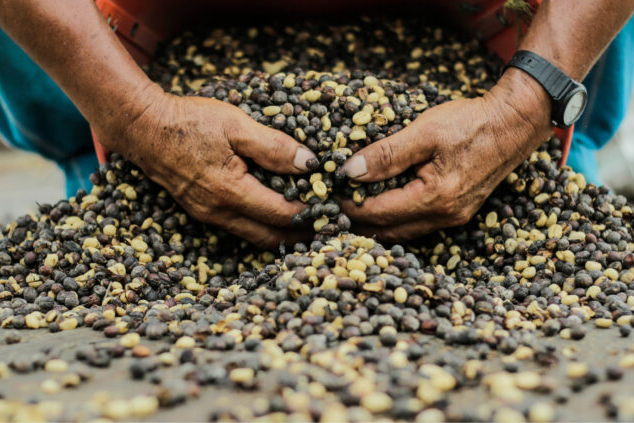
Coffee beans being sorted
© ILO
 

Every cup of coffee begins far from the table—in the soil, knowledge and labour of farming communities. From fields and forests to ports, cafés and homes, coffee connects people across borders and generations. It is at once a daily ritual, a living tradition and a source of livelihood.

Coffee is the world’s most widely traded tropical product and one of its most widely consumed beverages. Up to 25 million farming households, largely in developing countries, produce around 80 per cent of the world’s coffee. Brazil, Viet Nam and Colombia lead global production, while the European Union and the United States of America are the largest importing and consuming markets.

Demand continues to grow, but prosperity is not shared equally. Market instability, rising costs and the uneven distribution of income across the value chain can leave millions of smallholder producers carrying the greatest risks while receiving only a limited share of the value their work creates.

Recognizing both coffee’s global importance and the people behind it, the United Nations General Assembly designated 1 October as International Coffee Day through resolution 80/248. The observance calls on governments, international organizations, civil society, Indigenous Peoples, local communities, businesses, academia and others to share knowledge and advance a fairer, more resilient and sustainable coffee sector. The Coffee Cultural Landscape of Colombia, inscribed on UNESCO’s World Heritage List, offers one vivid example of how coffee can shape landscapes, livelihoods and living cultural traditions.

The journey behind every cup

Meet the people, knowledge and landscapes behind every cup

The story of coffee unfolds across many hands and many places—from seed and soil to cultivation, harvest, processing, trade, roasting and consumption. At every stage, choices determine where value is created, who carries the risks and how production affects people, climate and nature. Governments, businesses, producers, workers and consumers all have a role in shaping a sector that is more sustainable, resilient and equitable.

Seed, soil and knowledge

1. Seed, soil and knowledge

The journey begins with seed, soil and water—and with farmers whose knowledge has been shaped by generations of experience.

Coffee productivity and quality depend on local growing conditions, healthy ecosystems and sound farming practices. Producers must navigate changing rainfall and temperatures, pests and plant diseases, soil degradation and rising production costs.

Sustainable production begins by placing farmers’ knowledge and livelihoods—and the health of local ecosystems—at the centre of decision-making.

Processing and preparation

3. Processing and preparation

After harvest, coffee cherries are processed, dried, sorted and prepared for market.

Choices made at this stage shape quality, water use, waste, production costs and the price producers may receive. Access to appropriate infrastructure, finance, technical expertise and strong producer organizations can determine whether farmers are able to improve quality, reduce losses and reach higher-value markets.

Trade and value creation

4. Trade and value creation

Before reaching the consumer, coffee may pass through several enterprises and cross multiple borders.

FAO notes that much of the world’s coffee is exported at an early stage of the value chain. As a result, a substantial share of roasting, branding and other value-adding activities takes place outside producing countries.

Recurring imbalances between supply and demand, together with the unequal distribution of income along the value chain, can leave small-scale producers especially exposed to market volatility and economic insecurity.

Roasting, retail and consumption

5. Roasting, retail and consumption

Roasters, traders, retailers, cafés and consumers all share responsibility within one interconnected system.

Greater transparency and collaboration can help people understand where coffee comes from, how it was produced and which communities contributed to its journey. Claims about sustainability or benefits to producers, however, should be grounded in credible evidence—not in marketing language alone.

From residue to resource

6. From residue to resource

The coffee journey need not end with the final sip.

When poorly managed, coffee husks, pulp, wastewater, grounds and other by-products can place a burden on communities and ecosystems. Circular approaches seek to prevent waste and transform suitable by-products into materials, agricultural inputs, energy and other sources of value.

The International Coffee Organization’s Coffee Development Report examines how circular approaches can reduce waste, diversify income and strengthen the environmental and economic sustainability of the sector.

People, livelihoods and a fairer value chain

a young woman tasting coffee
© UNDP
 

Coffee sustains millions of households, but its rewards and risks are not shared equally. FAO describes coffee as a vital source of livelihood in developing countries, while warning that market imbalances and unequal income distribution can place small-scale producers at risk.

Who carries the risks?

Small-scale producers often carry the greatest risks while receiving a limited share of coffee’s value. Volatile prices, rising costs, limited bargaining power and restricted access to finance can make it difficult to invest in stronger farms and more secure livelihoods.

Women contribute throughout the sector, yet meaningful empowerment requires equitable access to land, finance, knowledge, leadership and income. Young people also need skills, resources and viable opportunities to build a future in farming and rural enterprise.

Indigenous Peoples and local communities must be able to shape decisions affecting their lands, livelihoods and cultural traditions, with full respect for their rights, participation and consent.

What makes a value chain fairer?

Fairness is not measured by sales alone. It depends on whether the people who grow and process coffee can:

  • earn a viable income through transparent and balanced commercial relationships;
  • access finance, infrastructure, information, markets and strong producer organizations; and
  • benefit from decent work, local value addition and inclusive investment.

An IFAD assessment in Rwanda found that coffee sales doubled among participating farmers, while income rose by 32 per cent as higher costs absorbed part of the gains. Selling more does not always mean earning proportionately more.

Coffee, food security and nutrition

Coffee supports food security mainly through income, employment and resilient rural economies. When farming households earn stable and adequate returns, they are better able to obtain nutritious food, invest in their farms and withstand economic or climate shocks.

Coffee is not, by itself, a nutrition intervention. Its contribution to ending hunger depends on whether the sector strengthens livelihoods, reduces inequality and improves access to diverse and nutritious food.

This reflects FAO’s account of coffee’s role in rural livelihoods, employment and poverty reduction. A fairer coffee economy should leave households better able to meet their needs and plan for the future.

Coffee, climate and nature

A woman drying coffee cherries on a rooftop in Yemen.
Saeeda’s family dry coffee cherries the traditional way, on a rooftop, near her farm in Sabr Al-Mawadem, Taiz Governorate, Yemen. © UNDP
 

A climate-sensitive crop

Coffee is highly sensitive to its environment. Extreme temperatures, irregular rainfall, drought, excessive rain, pests and plant diseases can affect yields, quality, labour requirements and prices. FAO reports that global beverage markets remain exposed to weather shocks, supply constraints, pest outbreaks and disruptions in logistics, with consequences felt unevenly across value chains.

The ICO Coffee Market Report for June 2026 illustrates this sensitivity: changing expectations surrounding El Niño and unusually heavy rainfall in Brazilian production areas were rapidly reflected in prices and harvest expectations.

Building resilience with nature

Climate-resilient agroforestry, soil and water conservation, crop diversification, forest protection, improved planting material and timely climate information can help farms adapt and become more resilient.

Such approaches must be tailored to local landscapes and to the needs of farming communities. Coffee production can support ecosystem functions when integrated with responsible land management; poorly planned expansion or intensive production, however, can contribute to forest loss, erosion, water pollution and biodiversity decline.

From waste to new value

Coffee processing and consumption generate husks, pulp, wastewater, grounds and other by-products that can burden communities and ecosystems when they are poorly managed.

The ICO’s Coffee Development Report on the circular economy explores how circular practices can prevent waste, create new sources of income and support a more sustainable coffee sector.

Coffee and the Sustainable Development Goals

Four women holding SDG banners at a coffee factory.
UNDP has teamed up with Lavazza to produce the world’s first certified ‘deforestation-free’ coffee in Ecuador. ©UNDP


The coffee sector touches many dimensions of sustainable development—from livelihoods and food security to equality, decent work, responsible production, climate action and the protection of terrestrial ecosystems. General Assembly resolution 80/248 draws particular attention to four closely connected Goals:

Goal 1: No Poverty

Coffee can generate income, employment and enterprise in rural communities. Progress towards ending poverty depends on whether producers can cover their costs, manage risk and earn viable and lasting returns.

Goal 2: Zero Hunger

Stable livelihoods, diversified production and resilient rural economies can strengthen households’ access to nutritious food and their ability to withstand shocks.

Goal 5: Gender Equality

Gender equality requires more than recognition of women’s labour. It calls for equitable access to productive resources, finance, knowledge, markets, leadership, decision-making and income.

Goal 8: Decent Work and Economic Growth

The coffee sector can support employment and enterprise at every stage of the value chain. For growth to be sustainable, it must also advance safe and healthy workplaces, fair opportunities, decent work and respect for workers’ rights.

Frequently asked questions