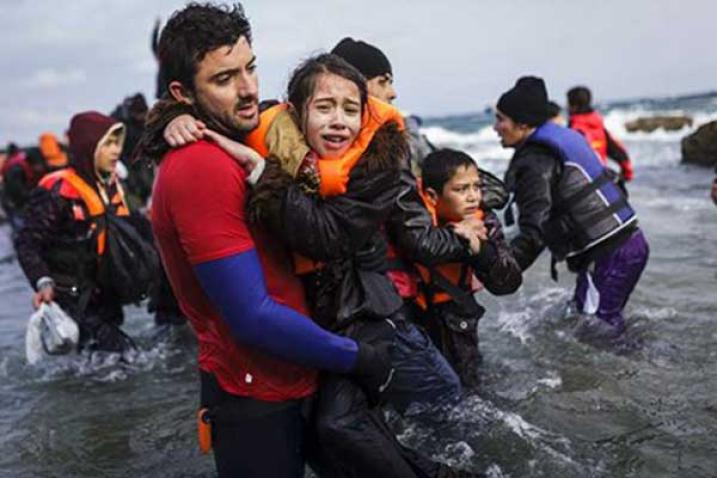
[…] we call for stronger support for all those forced to flee, as well as the countries and communities hosting them.
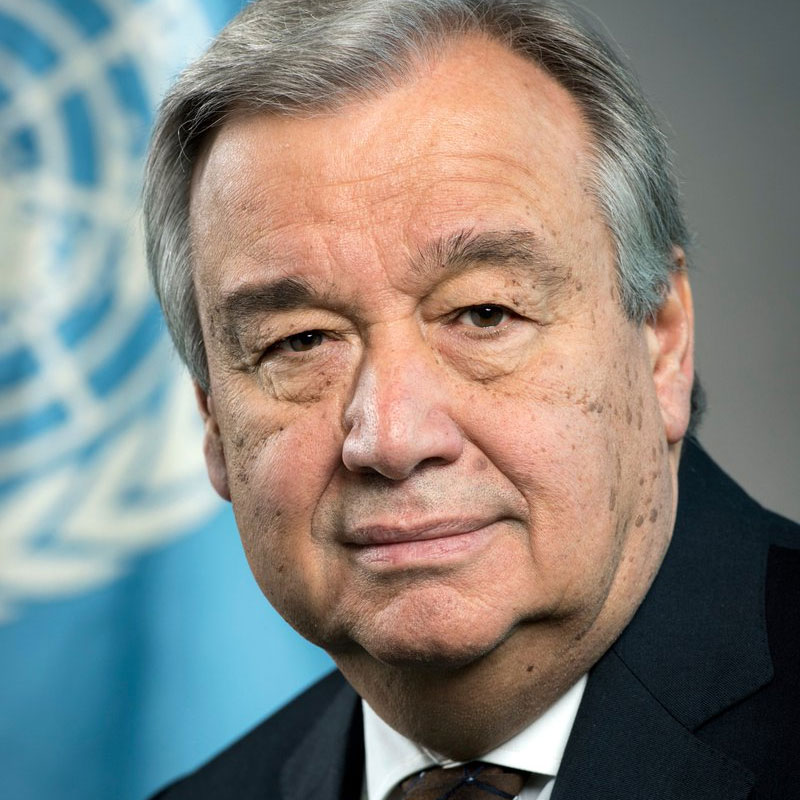
UN Secretary-General António Guterres
Until Everyone Is Safe
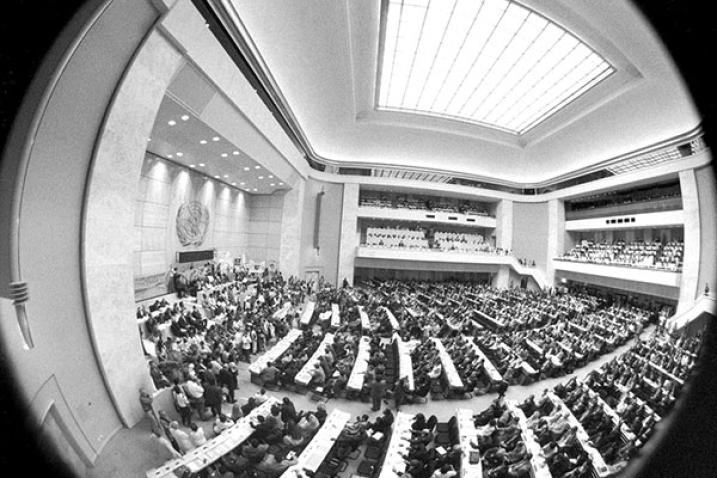
World Refugee Day 2026 comes at a time when the promise of safety is being tested in every region of the world. Seventy-five years after the adoption of the 1951 Convention relating to the Status of Refugees, that promise remains one of the clearest undertakings of the international community: that people forced to flee should not be returned to danger, and should be able to live in dignity while displaced. Born from the ruins of war, it was never meant for one region, one generation or one people, but for humanity as a whole.
That safeguard is urgently needed today. More than 117 million people are forcibly displaced worldwide, including families uprooted by war in the Sudan, violence in the Democratic Republic of the Congo and prolonged crises in Ukraine, Afghanistan, the Syrian Arab Republic, Myanmar and beyond. When people fleeing danger are denied protection, insecurity deepens: families are driven on to perilous routes, children lose years of learning, women and girls face greater risks, and host communities are left without the support they need. Protecting refugees is therefore not only an act of compassion; it is a condition of stability and peace.
“Until Everyone Is Safe” is a call to keep that promise alive. It calls on Governments to uphold fair and accessible asylum systems, donors to sustain life-saving support, communities to welcome those forced to flee and each of us to defend the principle that safety must never depend on nationality, wealth, race, religion, gender, political opinion or migration status. Protection is fulfilled only when people forced to flee can live without fear, rebuild their lives, contribute to their communities and, when conditions allow, return home voluntarily, safely and with dignity.
Background
World Refugee Day is an international day designated by the United Nations to honour refugees around the globe. It falls each year on June 20 and celebrates the strength and courage of people who have been forced to flee their home country to escape conflict or persecution. World Refugee Day is an occasion to build empathy and understanding for their plight and to recognize their resilience in rebuilding their lives.
Every minute 20 people leave everything behind to escape war, persecution or terror. There are several types of forcibly displaced persons:
Refugees
A refugee is someone who fled his or her home and country owing to “a well-founded fear of persecution because of his/her race, religion, nationality, membership in a particular social group, or political opinion”, according to the United Nations 1951 Refugee Convention. Many refugees are in exile to escape the effects of natural or human-made disasters.
Asylum Seekers
Asylum seekers say they are refugees and have fled their homes as refugees do, but their claim to refugee status is not yet definitively evaluated in the country to which they fled.
Internally Displaced Persons
Internally Displaced Persons (IDPs) are people who have not crossed an international border but have moved to a different region than the one they call home within their own country.
Stateless Persons
Stateless persons do not have a recognized nationality and do not belong to any country.
Statelessness situations are usually caused by discrimination against certain groups. Their lack of identification — a citizenship certificate — can exclude them from access to important government services, including health care, education or employment.
Returnees
Returnees are former refugees who return to their own countries or regions of origin after time in exile. Returnees need continuous support and reintegration assistance to ensure that they can rebuild their lives at home.
UN Action
1951 Refugee Convention and its 1967 Protocol
Refugees are among the most vulnerable people in the world. The 1951 Refugee Convention and its 1967 Protocol help protect them. They are the only global legal instruments explicitly covering the most important aspects of a refugee’s life. According to their provisions, refugees deserve, as a minimum, the same standards of treatment enjoyed by other foreign nationals in a given country and, in many cases, the same treatment as nationals.
The 1951 Convention contains a number of rights and also highlights the obligations of refugees towards their host country. The cornerstone of the 1951 Convention is the principle of non-refoulement. According to this principle, a refugee should not be returned to a country where he or she faces serious threats to his or her life or freedom. This protection may not be claimed by refugees who are reasonably regarded as a danger to the security of the country, or having been convicted of a particularly serious crime, are considered a danger to the community.
The rights contained in the 1951 Convention include:
- The right not to be expelled, except under certain, strictly defined conditions;
- The right not to be punished for illegal entry into the territory of a contracting State;
- The right to work;
- The right to housing;
- The right to education;
- The right to public relief and assistance;
- The right to freedom of religion;
- The right to access the courts;
- The right to freedom of movement within the territory;
- The right to be issued identity and travel documents.
Some basic rights, including the right to be protected from refoulement, apply to all refugees. A refugee becomes entitled to other rights the longer they remain in the host country, which is based on the recognition that the longer they remain as refugees, the more rights they need.
Facts and figures
- By mid-2025, 117.3 million people worldwide remained forcibly displaced by persecution, conflict, violence, human rights violations or events seriously disturbing public order.
- Low- and middle-income countries host 71 per cent of the world’s refugees and other people in need of international protection, while Least Developed Countries provide asylum to 25 per cent of the total.
- At mid-2025, Sudan was the world’s largest displacement situation, with 13.4 million Sudanese refugees, asylum-seekers and internally displaced people.
- Three in every four refugees or people displaced by conflict live in countries facing high-to-extreme exposure to climate-related hazards, compounding the risks faced by people already forced to flee.
Source: UNHCR
Resources
Documents
- General Assembly Resolution 55/76 on World Refugee Day
- Convention and Protocol Relating to the Status of Refugees
UN System Websites
- Office of the UN High Commissioner for Refugees (UNHCR)
- Office for the Coordination of Humanitarian Affairs (OCHA)
- Relief Web
- Office of the High Commissioner for Human Rights
- Inter-Agency Standing Committee (IASC)
- World Food Programme (WFP)
- UN Relief and Works Agency for Palestine Refugees in the Near East (UNRWA)