
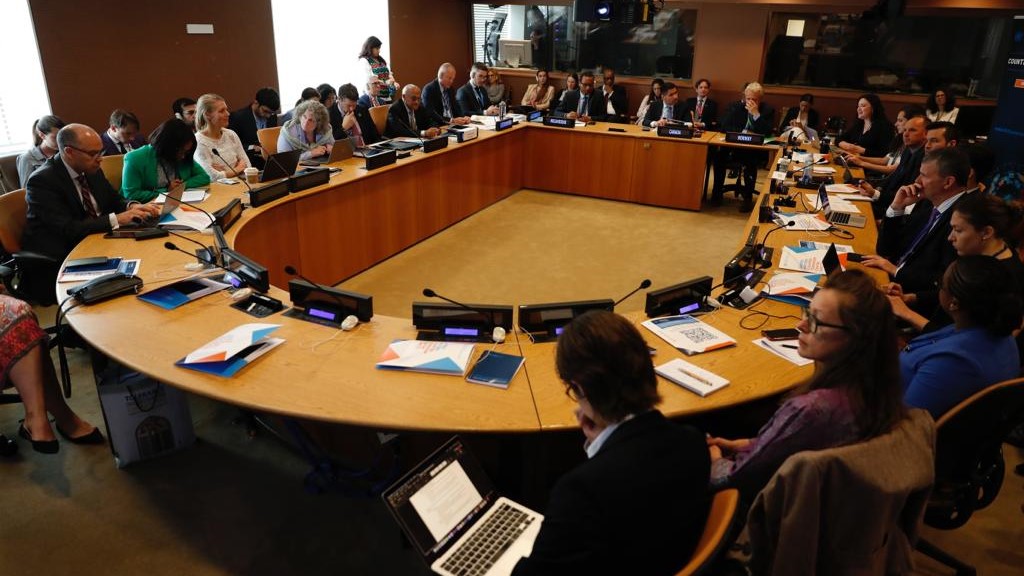
A side event on “Climate Security and Violent Extremism: From Research to Climate-based Risk Assessments and Programming” was held as part of Counter-Terrorism Week. The event was co-organized by the United Nations Office of Counter-Terrorism (UNOCT), the United Nations Interregional Crime and Justice Research Institute (UNICRI), and the Institute for Economics and Peace (IEP) and was co-sponsored by the Permanent Mission of Canada, the Permanent Mission of Mozambique, and the Permanent Mission of Norway.
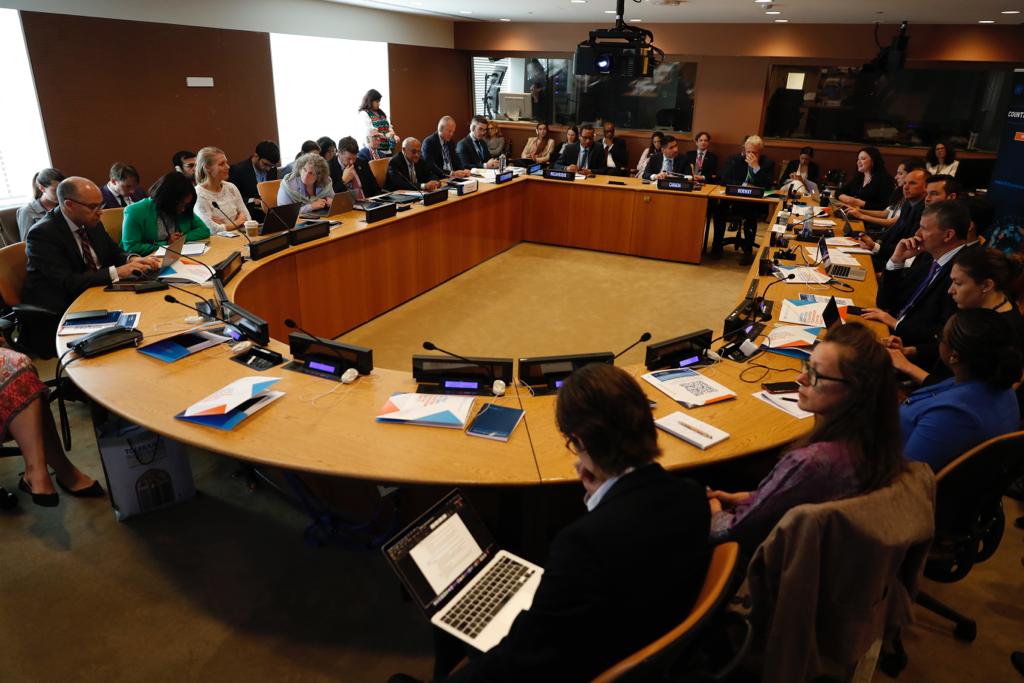
The hybrid event was held in New York and was attended by over 150 representatives from Member States, international and regional organizations, United Nations Global Counter-Terrorism Compact entities and youth and climate-focused networks.
The event raised awareness of the ongoing discourse around climate and security, in particular the impact of climate change and the degradation of natural resources and how this can exacerbate local conflicts and highlight the linkages between climate insecurity and radicalization and recruitment by armed groups and terrorist groups.

On inter-linkages between climate and violent extremism narratives, Antonia Marie De Meo, Director of UNICRI, shared, “Our research underscores the devastating impacts of climate change on local livelihood activities, as well as increased competition for resources leading to heightened tensions between communities. Fragile and vulnerable communities experience growing pressure for economic survival that erodes social cohesion. This is then instrumentalized by violent extremist groups in recruitment narratives and destabilization, triggering a vicious cycle of conflict.”
In the lead up to the event, Steve Killelea, Founder and Executive Chairman of the Institute for Economics & Peace, stated that, “Climate change, resource degradation, violence, and terrorism are interconnected challenges requiring interconnected solutions. The latest Global Terrorism Index highlights climate insecurity and resource degradation as fuelling conflicts and radicalisation, especially in the Sahel. This event aims to raise awareness of these interconnections and foster a better understanding of conflict patterns, socio-economic conditions, and ecological impact.”
During the event, IEP presented their research linking the levels of global ecological degradation with social challenges including malnutrition, forced migration and illness—emphasizing that current conflicts will escalate and multiply as a result.
The Managing Exits from Armed Conflict (MEAC) Project implemented by the United Nations Institute for Disarmament Research (UNIDIR) presented research from Iraq, the Lake Chad Basin, and Colombia on the connection between recruitment to armed groups and livelihood challenges exacerbated by climate change and environmental degradation. Recommendations were also offered on ways to address climate-related recruitment into armed groups.
The event also included a panel discussion with voices from groups already impacted by the intersection of climate and violent extremism, which included insights from farmers, herders, and fishers in Chad, as presented by UNICRI, as well as Youth Leaders from UNOCT’s Global Programme on Preventing and Countering Violent Extremism, who offered recommendations on youth-lead solutions.
Turning to potential future interventions, Northwestern University Security and AI Lab presented their Pastoral Conflict Reasoning Engine (PCORE), a system that allows policymakers at the national, state, and province levels to assess the risk of low-level conflicts in fine-grained regions within their country.
Thanking partners and Member States for their valuable contributions and insights, Raffi Gregorian, Director, and Deputy to the Under-Secretary-General, UNOCT stated, “There is an opportunity and need for enhanced coordination and cooperation between the different actors tackling the issue, to leverage existing knowledge and further understand how climate change might impact violent extremism. This includes engaging and enabling young people to drive solutions in this space, alongside policymakers, academics, community leaders, and UN system actors.”
UNOCT and The United Nations Counter Terrorism Centre (UNCCT) through its Global Programme on Preventing and Countering Violent Extremism, will continue to work with partners to apply insights from evidence-based research on the impact of climate change on security as a foundation for programme interventions.