
Homepage
Expert Group Meeting Charts the Path Toward Operationalizing the Food Stockholding Mechanism for LDCs

New York, 6 February 2026 - The United Nations Office of the High Representative for the Least Developed Countries, Landlocked Developing Countries and Small Island Developing States (UNOHRLLS) concluded a highly successful two-day Expert Group Meeting (EGM) on the Operationalization of the Food Stockholding Mechanism (FSM) for Least Developed Countries. The meeting brought together LDC governments, development partners, UN agencies, international financial institutions, regional organizations, technical experts, and representatives of the private sector to advance the practical design of one of the flagship deliverables of the Doha Programme of Action (DPoA).
The Doha Programme of Action for LDCs for the Decade 2022-2031 (DPoA) mandated the Secretary General of the United Nations to explore the feasibility, effectiveness, and administrative modalities of a system of food stockholding for the LDCs. The subsequent Secretary-General’s reports (A/77/291 and A/79/540) reaffirmed the mechanism as a vital part of the solution to food insecurity in the LDCs. The operationalization of the mechanism was also called for in the July 2023 “Call to Action for Accelerated Food Systems Transformation” by the Secretary-General and it is part of the system-wide Food System Transformation agenda.
Over the course of two days, participants engaged in in depth discussions that moved the FSM concept decisively toward operational clarity, as highlighted by Under-Secretary-General, Rabab Fatima in her closing remarks. She praised the meeting’s “rich, rigorous, and forward-looking exchange,” which sharpened the collective understanding of food insecurity in LDCs and the requirements for an actionable mechanism.
Read the full article here.
Programmes of Action for LDCs, LLDCs and SIDS


Serving 92 vulnerable member states.
The United Nations Office of the High Representative for the Least Developed Countries, Landlocked Developing Countries and Small Island Developing States (UN-OHRLLS) supports groups of vulnerable countries in the United Nations system. The 44 Least Developed Countries, 32 Landlocked Developing Countries and 39 Small Island Developing States have their own special challenges.
Third United Nations Conference on Landlocked Developing Countries
5 - 8 August 2025, Awaza, Turkmenistan
4th International Conference on Small Island Developing States
27-30 May 2024, Antigua and Barbuda
Fifth United Nations Conference on the Least Developed Countries
5-9 March 2023, Doha, Qatar
Events


Reflection on Youth Entrepreneurship and the Implementation of the APoA
By Bokim Beni Nihoze, Youth Entrepreneur at LLDC3
The Awaza Programme of Action emphasizes that landlocked developing countries can only move forward when national commitments are matched by local solutions. As a youth entrepreneur working directly with farmers in Burundi, I have seen how young people are becoming an essential bridge between policy and practice, especially in rural communities that often feel far removed from national strategies.
View more
Least Developed
Countries
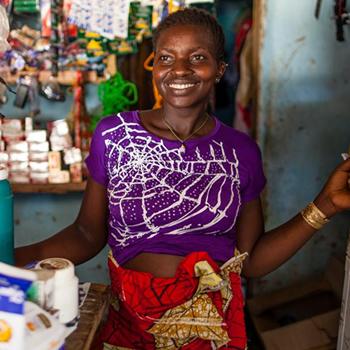
Least Developed Countries (LDCs) represent the poorest and most vulnerable segment of the international community.
2025 LDC Graduation Guide

Landlocked Developing
Countries

Landlocked Developing Countries (LLDCs) face challenges due to their remoteness, lack of territorial access to the sea and significant distance from world markets.

Small Island
Developing States
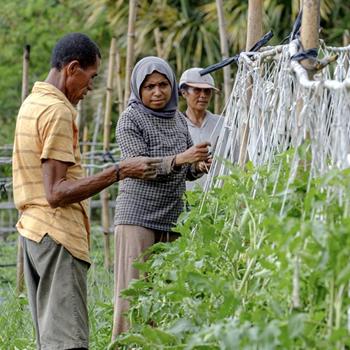
Small Island Developing States (SIDS) are remote from world markets and suffer from climate change and fragile natural environments.