- عربي
- 中文
- English
- Français
- Русский
- Español


- Home
- Trade-related support for LDCs
- Preferential market access for goods
Preferential market access for goods
Please note: Links, citations or other references to external websites or documents should not be seen as an endorsement on the part of the United Nations of external organizations not part of the United Nations system, including non-governmental organizations, or of commercial products or services.
Most major trading partners provide duty-free, quota-free (DFQF) market access or preferential tariffs, as well as preferential rules of origin, for products imported from LDCs. Specific provisions have been put in place to enable trade preferences to developing countries, with special treatment for LDCs, in the context of WTO rules and principles.
The WTO Database on Preferential Trade Arrangements contains information for each WTO member providing or benefiting from non-reciprocal preferential trade arrangements. The WTO Regional Trade Agreements Database has information on reciprocal preferential trade agreements between two or more parties, including duty-free tariff line coverage and preferential rules of origin. The table below draws from the databases and the WTO Secretariat Note on Market Access for Products and Services of Export Interest to Least Developed Countries, 22 October 2025 (document WT/COMTD/LDC/W/74). Every effort has been made to ensure accuracy. The information contained herein does not replace legal texts or official policy documents.
Major multilateral non-reciprocal preference schemes for LDCs undertaken by WTO members, 2025 (or latest available year)
| Preference-granting member | Duty-free tariff line coverage |
|---|---|
| Armenia (2023) | 38.1% (excludes electrical machinery, chemicals, iron and steel products, alcoholic beverages) |
| Australia | 100% |
| Canada | 98.5% (excludes dairy and other animal products, meat, meat preparations, cereal products) |
| Chile | 99.5% (excludes cereals, sugar, milling products) |
| China* | 99.5% (excludes chemicals, transport vehicles, machinery and mechanical appliances, electrical machinery, paper) |
| European Union** | 99.8% (excludes arms and ammunition) |
| Iceland | 96.7% (excludes meat, food preparations, vegetables, dairy and other animal products, plants and trees) |
| India (2023) | 94.1% (excludes plastics, coffee and tea, alcoholic beverages, tobacco, food residues) |
| Japan | 97.9% (excludes fish and crustaceans, footwear, milling products, cereal products, sugar) |
| Kazakhstan (2024) | 64.6% (excludes vehicles, machinery, beverages, articles of iron and steel) |
| Kyrgyz Republic (2020) | 57.6% (excludes meat, fruits, chemicals, wood and paper, machinery) |
| Montenegro | 93.5% (excludes fish and crustaceans, alcoholic beverages, meat and dairy products) |
| New Zealand | 100% |
| Norway (2024) | 100% |
| Republic of Korea | 89.4% (excludes fish and crustaceans, mineral fuels, oil seeds and oleaginous fruits, wood products, vegetables) |
| Russian Federation (2021) | 61.2% (excludes transport vehicles, machinery and mechanical appliances, beverages, iron and steel products, electrical machinery, meat product, articles of wood) |
| Switzerland | 100% |
| Taiwan Province of China | 32.3% (excludes machinery and mechanical appliances, chemicals, electrical machinery, fish and crustaceans, plastics) |
| Tajikistan (2019) | 11.7% (includes duty-free access for machinery, glass products, petroleum products) |
| Thailand (2024) | 68.0% (excludes transport vehicles, electrical machinery, machinery and mechanical appliances, iron and steel products, apparel and clothing) |
| Türkiye (2024) | 78.0% (excludes iron and steel products, fish and crustaceans, food preparations, meat, oil seeds and oleaginous fruits) |
| United Kingdom | 99.8% (excludes some arms and ammunition) |
| United States*** | 82.7% (excludes apparel and clothing, cotton, fibers, footwear, dairy and other animal products) |
*Since December 2024, LDCs that have established diplomatic relations with China are eligible to zero-tariff treatment for 100% of tariff lines. See the WTO preferential trade arrangements database.
** The European Union's Generalized System of Preferences (GSP) regulation, which includes the LDC-specific Everything but Arms scheme, expires at the end of 2027 and is under review. Should negotiations on the review be concluded successfully before 2027, the regulation would be substituted with the new one.
***Refers to the United States' Generalized System of Preferences (GSP) for least developed beneficiary countries. Legal authorization for duty-free treatment under the GSP programme lapsed on 1 January 2021. The renewal of the GSP program requires a legislative act by the Congress of the United States. The United States also offered 97.4 per cent DFQF coverage to eligible Sub-Saharan countries under the African Growth and Opportunity Act (AGOA), which was not LDC-specific. AGOA expired on 30 September 2025 and as of mid-November 2025 had not been renewed. The renewal of AGOA requires a legislative act by the Congress of the United States.
The practical significance of preferential market access schemes depends on the country’s productive capacities, type of export products and the existence of other preferential trading arrangements. There are several reasons why not all imports from LDCs enter under LDC-specific preferential schemes. Some export products of LDCs are already subject to zero MFN tariffs in the most significant markets, or the exporting country may have access to other, non-LDC specific, preference regimes such as the United States of America’s African Growth and Opportunity Act, Economic Partnership Agreements with the European Union or the United Kingdom, or regional trading arrangements such as the Association of Southeast Asian Nations (ASEAN) Free Trade Area. Exporters in LDCs may also have difficulties in fulfilling the requirements to determine compliance with the preferential rules of origin.
Rules of origin are used to determine the extent to which a product needs to be produced in a certain country in order to be eligible for preferential treatment. Whereas for some products the determination of origin is straightforward, for others, particularly those produced through global value chains, determining where the product was made is not as simple. WTO members adopted two sets of rules of origin guidelines at the WTO Ministerial Conferences held in Bali and Nairobi in 2013 and 2015, respectively, with a view to making rules of origin simple and transparent. Some countries have special rules of origin for LDCs. For example, In the European Union, since 2011, the general threshold for non-originating materials is 70 per cent for LDCs and 50 per cent for other Generalized System of Preferences (GSP) beneficiaries; and product-specific origin requirements are more lenient. In textile and apparel products, the rules of origin permit single-stage processing for LDCs while for developing countries they require double transformation.
There are also LDC-specific rules of origin under regional agreements. For example, under the South Asian Free Trade Area, the general criteria are change of tariff heading plus 30 per cent for LDCs as opposed to 40 per cent for non-LDCs. Under the Asia-Pacific Trade Agreement, the value-addition threshold for LDCs is 35 per cent as opposed to 45 per cent for non-LDCs, and regional cumulation is allowed where the regional value addition is 50 per cent for LDCs as opposed to 60 per cent for non-LDCs.
What happens after graduation?
Some LDC-specific preferential schemes contain provisions that extend eligibility beyond the date of graduation. For example, under current regulations, countries graduating from the LDC category automatically retain eligibility to the LDC-specific DFQF schemes in the European Union, Türkiye, the United Kingdom, China and Japan. Canada intends to apply a new, standard transition policy that will allow beneficiaries of its LDC-specific scheme a three-year transition. In other markets, some graduated countries have retained preferential treatment for a period after the date of graduation as a matter of customary practice in observance of calls for a smooth transition, or because there are no automatic procedures for their removal from the respective lists of beneficiaries, or because there is an administrative lag between graduation and procedures necessary for their removal from the list of beneficiaries, or a combination of reasons.
The General Assembly, in its resolution 67/221, invited trading partners that have not established procedures for extending or phasing out preferential market access, inter alia, DFQF treatment, to clarify in a predictable manner, as a general measure or at the consultative mechanism, their position with regard to the extension of the LDC-specific preferences, the number of years of the extension or the details concerning the gradual phasing out of the measures. In October 2023, WTO members adopted a decision encouraging preference-granting members to provide a smooth and sustainable transition before withdrawing DFQF market access after graduation. Once countries have graduated and no longer benefit from the LDC-specific arrangements, they may, depending on eligibility criteria, continue to have access to preferential market access schemes under the standard GSP schemes where applicable, other applicable non-reciprocal arrangements, regional agreements or bilateral agreements, including Economic Partnership Agreements.
The European Union, the United Kingdom and Norway have non-reciprocal preferential market access schemes that lie, in terms of coverage, in between the LDC-specific ones and the standard GSP. The Special Arrangement for Sustainable Development and Good Governance (GSP+) in the European Union, under current regulations, grants duty-free access to most of the products covered by the standard GSP. Eligibility for GSP+ requires the ratification and implementation of 27 conventions on human rights, labour rights, environmental protection and good governance, and meeting certain vulnerability criteria. In the United Kingdom, low-income and lower-middle income countries meeting certain vulnerability criteria are eligible for Enhanced Preferences under the Developing Country Trading Scheme, which grants duty-free market access for 85 per cent of tariff lines.5 Under Norway’s GSP+ scheme, beneficiaries are granted duty-free access for clothes and textile products and certain agricultural goods, and lower tariffs for others in comparison with standard GSP beneficiaries. All lower-middle-income countries with populations of less than 75 million and low-income countries are eligible for GSP+.
In 2023, Canada amended its Customs Tariff legislation, extending the mandate for the General Preferential Tariff (GPT) and Least Developed Country Tariff programmes until the end of 2034 and creating the authority for a new General Preferential Tariff Plus (GPT+) programme which, once operationalized, is intended to provide tariff benefits beyond those of the GPT programme to countries that conform to international norms relating to sustainable development and labour and human rights.
26/11/25
Categories:
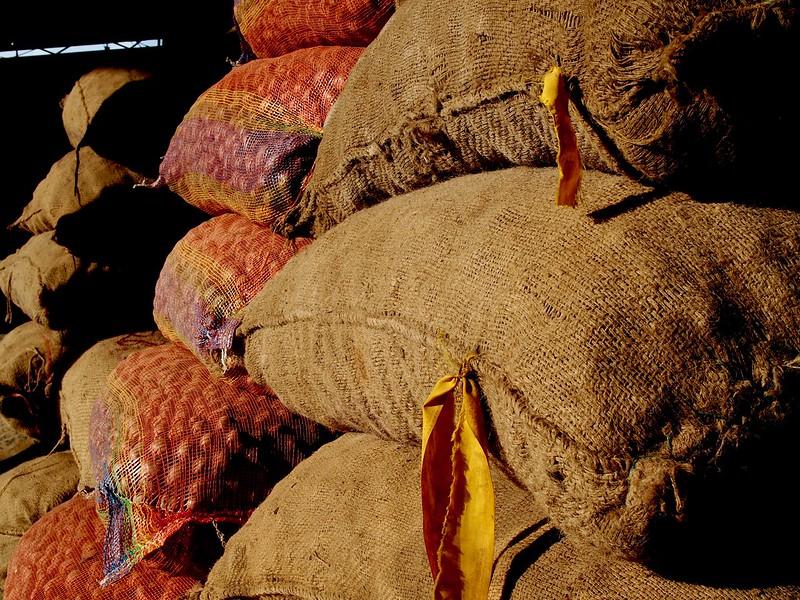
Photo EIF/Simon Hess.
Trade-related support for LDCs
- Preferential market access for goods
- Preferential treatment for services and service suppliers
- Special treatment regarding obligations and flexibilities under WTO rules
- Special treatment regarding obligations and flexibilities under regional agreements
- Trade-related technical assistance and capacity-building
For more information
- WTO Preferential Trade Arrangements Database
- WTO: Sub-Committee on LDCs
- Note by the WTO Secretariat on market access for products and services of export interest to least developed countries (October 2025)
- Report (2024) of the Committee on Rules of Origin to the General Council on Preferential Rules of Origin for Least Developed Countries (submitted by the WTO Committee on Rules of Origin to the General Council)
- UNCTAD page on rules of origin for LDCs
- UNCTAD series of GSP Handbooks and series of Handbooks Market Access and Rules of Origin for LDCs