We must ensure that every girl can imagine a future in STEM, and that every woman can thrive in her scientific career.
UN Secretary-General António Guterres

Science for Inclusive Futures for Women and Girls
The theme of International Day of Women and Girls in Science (IDWGIS) 2026 is “Synergizing AI, Social Science, STEM and Finance: Building Inclusive Futures for Women and Girls.” As societies grapple with widening inequalities, the integration of artificial intelligence (AI), social science, Science, Technology, Engineering and Mathematics (STEM) and finance emerges as a four-pillar approach to accelerate inclusive and sustainable development.
AI offers powerful tools for data analytics, health diagnostics, climate modelling and more; however, without targeted interventions, its benefits risk bypassing women and girls. Social science insights guide the design of equitable policies, community engagement and behaviour-change strategies, ensuring that STEM and AI innovations reach marginalized groups. STEM disciplines provide the technical skills required to develop, implement and maintain AI solutions, while fostering gender-balanced research teams. Financial mechanisms—including impact investing, blended finance and gender-smart funds—unlock capital to scale women-led innovations and sustainably fund STEM education and research and development (R&D).
Synergizing these four domains can help dismantle persistent barriers by closing gender gaps in digital skills, catalysing women-driven start-ups, advancing gender-responsive AI governance, and mobilising finance that embeds social inclusion as a performance metric.
From vision to impact: Redefining STEM by closing the gender gap

Date: 11 February 2026
Location: UNESCO Headquarters, Paris, France
Event type: Hybrid
Today, women make up less than one third of the world’s researchers, according to UNESCO. Closing this gender gap is not only a matter of fairness—it is essential to the quality, relevance and impact of science, technology and innovation. The one-day event will focus on new and emerging technologies and their implications for gender equality.
The Impact of Women in Science

Explore the untold stories of women who transformed science. This online exhibition reveals their discoveries, challenges, and triumphs, bringing to life the remarkable achievements of pioneering scientists across the globe.
Background
A significant gender gap has persisted throughout the years at all levels of science, technology, engineering and mathematics (STEM) disciplines all over the world. Even though women have made tremendous progress towards increasing their participation in higher education, they are still under-represented in these fields.
Gender equality has always been a core issue for the United Nations. Gender equality and the empowerment of women and girls will make a crucial contribution not only to economic development of the world, but to progress across all the goals and targets of the 2030 Agenda for Sustainable Development, as well.
On 14 March 2011, the Commission on the Status of Women adopted a report at its fifty-fifth session, with agreed conclusions on access and participation of women and girls in education, training and science and technology, and for the promotion of women’s equal access to full employment and decent work. On 20 December 2013, the General Assembly adopted a resolution on science, technology and innovation for development, in which it recognized that full and equal access to and participation in science, technology and innovation for women and girls of all ages is imperative for achieving gender equality and the empowerment of women and girls.
Did you know?
- Globally, young women are more likely than young men to pursue higher education—46% enroll within five years of completing secondary school, compared with 40% of men—yet women make up only 35% of science graduates.
- Women continue to be underrepresented in scientific research worldwide. In 2022, just 31.1% of researchers were women, highlighting persistent gender gaps in the field.
- Fewer than 2% of applicants for jobs in the quantum sector are women—just one in 54. Moreover, 80% of quantum companies reportedly have no senior female leaders.
- Out of thousands of scientific articles in water-related disciplines, fewer than 100 addressed both gender or women and hydrology. In 2022, nine of the top 21 hydrology journals published no articles referencing gender, while the rest published only one to 14.
- In cutting edge fields such as artificial intelligence, only one in five professionals (22%) is a woman.
Stories
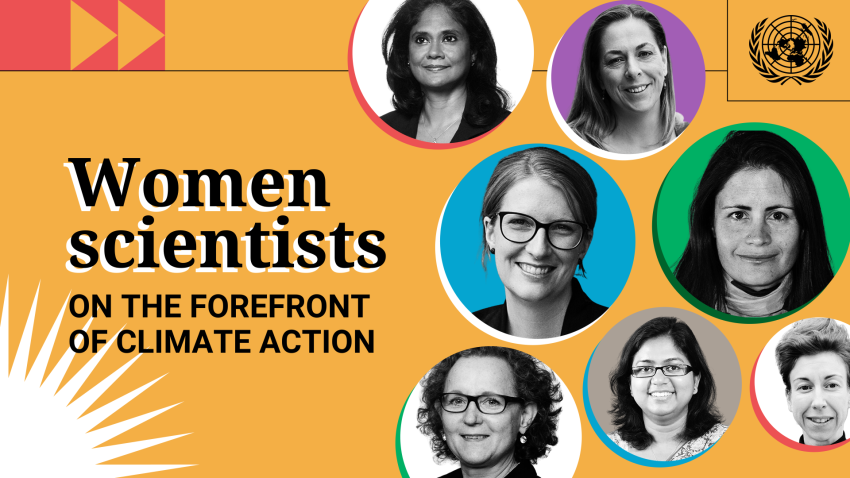
Women scientists on the forefront of climate action
Over the last few decades, the world’s understanding of climate change has improved exponentially thanks to science, technology and the dedication of some of the world’s top climate scientists. We pay tribute to the women who champion the science behind climate change.
Related observances
- International Women's Day (8 March)
- Girls in ICT Day (22 April)
- International Day of the Girl Child (11 October)
- International Day of Rural Women (15 October)
- World Science Day for Peace and Development (10 November)
- International Day for the Elimination of Violence against Women (25 November)