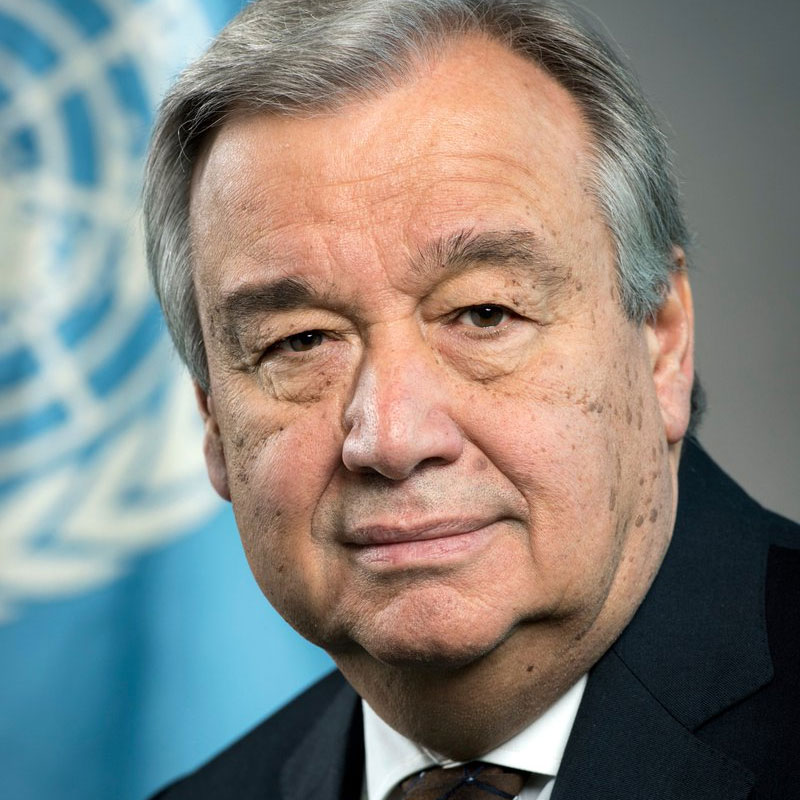
International police cooperation is vital. By working together across borders, law enforcement agencies can better support survivors, apprehend perpetrators, disrupt criminal networks and advance safety for all."
UN Secretary-General Antonio Guterres
2026 theme: Protecting against Vulnerability – Building Trust and Legitimacy in Policing
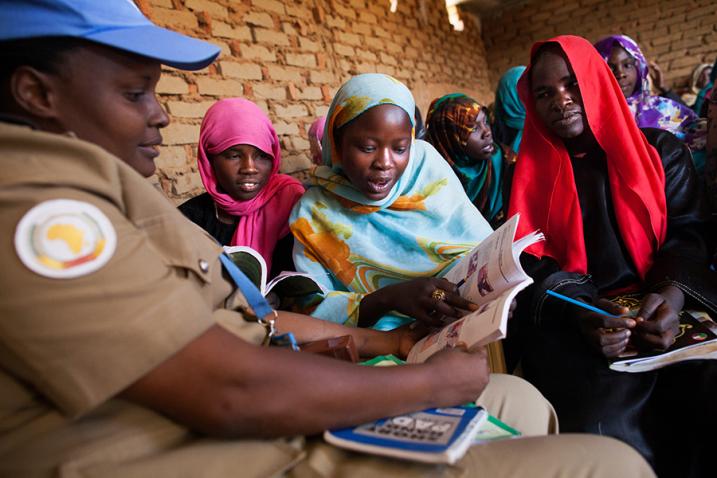
The theme of the 2026 International Day of Police Cooperation, “Protecting against Vulnerability – Building Trust and Legitimacy in Policing,” highlights the need to protect those most vulnerable to crime while strengthening the trust and legitimacy that underpin effective policing.
The theme is especially relevant amid rising conflict, displacement and other global challenges that heighten vulnerability and fuel transnational crime. Those most at risk are often disproportionately affected by cross-border threats, reinforcing the need for stronger international police cooperation to protect victims and combat criminal networks.
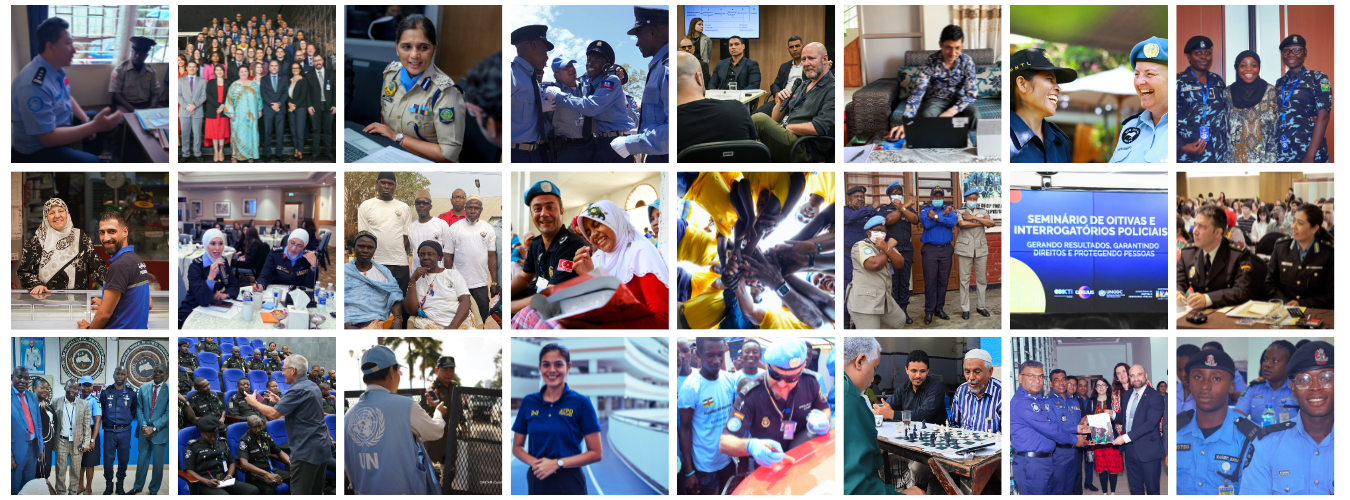
Addressing these challenges requires effective international police cooperation. Partnerships among the United Nations, INTERPOL and regional policing organizations are essential to protecting victims, disrupting criminal networks, sharing critical information and strengthening policing capacities across borders.
Effective policing depends not only on operational capacity, but also on public trust. In a rapidly evolving security environment, sustaining legitimacy and trust is essential. Building and maintaining trust with vulnerable groups is therefore not only a normative imperative, but also a practical necessity for effective policing.

Strategic Guidance Framework
To meet today’s complex peacekeeping demands, UN Police rely on the Strategic Guidance Framework. This essential architecture unifies diverse officers from over 80 countries, providing standardized policies on administration, command, and operations to ensure consistent, effective, and gender-responsive support to host-state police services worldwide.
Background
The International Day of Police Cooperation, observed annually on 7 September, was established by the United Nations General Assembly through resolution 77/241 (2022), to underscore the importance of international cooperation in supporting national police and law enforcement agencies.
The observance highlights the vital role of cross-border police collaboration in advancing peace, security, and justice, reflecting the shared commitment of the United Nations, INTERPOL, Member States, and regional organizations to strengthening international police cooperation.
The Day is closely linked to the work of the United Nations Inter-Agency Task Force on Policing (IATF-P), established by Executive Committee of the Secretary-General’s decision 2021/33 as the primary strategic mechanism for ensuring policy coherence and coordination of policing-related assistance across the United Nations system.
The Day also serves as a platform to promote continued efforts to strengthen international cooperation in support of national policing and law enforcement, including through a more coherent and coordinated “One UN” approach to policing.
Key Documents
- General Assembly Resolution to proclaim the International Day (A/RES/77/241)
- Security Council resolution 1325 (2000) on Women, Peace and Security
Resources
About the IATF-P
Established in 2021 by the Executive Committee of the Secretary-General and co-chaired by the Department of Peace Operations and the United Nations Office on Drugs and Crime, the Inter-Agency Task Force on Policing includes 16 entities.
Its purpose is to enhance coherence among United Nations entities at a strategic level and its endeavors encompass strengthening policy standardization, planning, and coordination, mobilizing resources, and fostering dialogue with pertinent United Nations entities and other stakeholders.
The IATF-P promotes the protection of the fundamental rights of individuals sustaining and strengthening the social contract with communities where UN policing professionals are deployed as well as in our home countries. Together, the United Nations bodies working in policing serve as a valuable resource to strengthen international cooperation in the fight against crime and corruption and reestablish and preserve the principles of justice.