
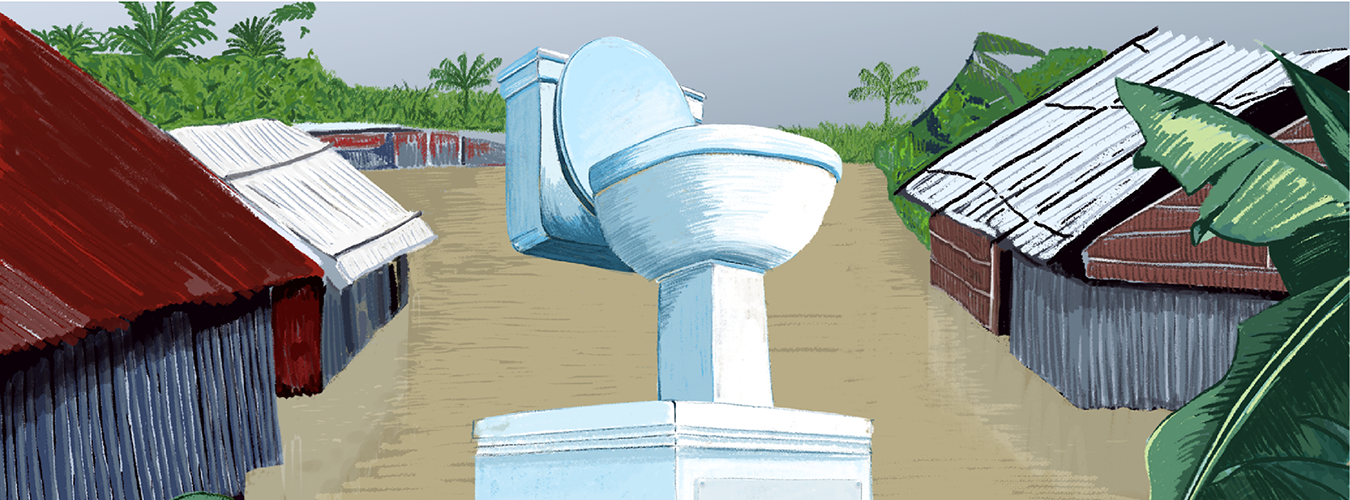
2025年致辞
秘书长致辞
在一个因气候压力不断上升、城市增长和不平等而被重塑的世界里,安全的卫生设施仍然是公共卫生和人的尊严的基石。
不起眼的厕所是进步的象征——预防疾病、保护环境、维护尊严和保留机会。
没有安全的卫生设施,可持续发展就会步履艰难。
受污染的水会传播腹泻类疾病,每天有超过1 000名儿童因此丧生。
未经处理的人类排泄物污染生态系统,加剧温室气体排放。
对于数以百万计的妇女和女童而言,没有安全的厕所就意味着耽误工作或上学。
过去十年,12亿人获得了安全的卫生设施。但仍有34亿人面临风险——因地理、收入或残疾因素而被边缘化。与此同时,气候变化和老化的基础设施正在给废物处理系统带来巨大压力。
今年的世界厕所日,是时候加快普及适应未来的无障碍、具有气候适应能力、低排放和供资充足的厕所了。
厕所是一个平凡的奇迹。有可供使用的厕所是一个权利和生存问题。
让我们努力使所有人都享有安全的卫生设施。
安东尼奥·古特雷斯
今年的世界厕所日,是时候加快普及适应未来的无障碍、具有气候适应能力、低排放和供资充足的厕所了。厕所是一个平凡的奇迹。有可供使用的厕所是一个权利和生存问题。
安东尼奥·古特雷斯
联合国水机制主席致辞
Sanitation systems save lives. That’s a fact.
But rising demand, climate change, and insufficient investment are pushing these fragile systems to breaking point.
Globally, 3.4 billion people still lack safely managed sanitation, and 354 million go to the toilet in the open.
Untreated human waste spreads diseases and pollutes the environment, undermining health, dignity and opportunity, especially for women and girls.
As the times become more turbulent, we need safe sanitation to build vital resilience, because no matter how much the world changes, our need for toilets never will.
Sanitation is essential for people, prosperity and the planet – making it a central priority in the United Nations’ work.
In recent decades, we have supported governments to ensure billions of people gained access to safe toilets – 1.2 billion people in the past ten years alone.
This shows what is possible when governments and the international community act together.
This World Toilet Day, we need to commit to much faster and greater progress.
We urgently need to invest in ‘future-ready’ sanitation that is accessible, climate-proof, low-emission, and fully-financed.
Let’s work together to make toilets fit for the future — now.
Alvaro Lario
As the times become more turbulent, we need safe sanitation to build vital resilience, because no matter how much the world changes, our need for toilets never will."
Alvaro Lario
Message from the Secretary-General's Special Envoy on Water
Happy World Toilet Day.
Toilet and sanitation are essential to human life. It is a basic need to all of us. It is a vital space that sustains and fulfill human rights, dignity, and health.
However, it is concerning to note that around the world 3,5 billion people are still living without access to safe toilets. Everyday 1,000 children under five died because of preventable causes of unsafe water, sanitation, and hygiene. Women and girls, among others are often vulnerable to violence in toilets due to the lack of access to safe sanitation facilities.
We can no longer undermine the importance of toilet to human’s lives and the challenges faced to ensure access to safe toilets. Let’s make our toilet clean, accessible and safe.
Once again, Happy World Toilet Day.
Retno L.P. Marsudi
Toilet and sanitation are essential to human life. It is a vital space that sustains and fulfill human rights, dignity, and health."
Retno L.P. Marsudi

UN High Commissioner for Human Rights' message
Adequate sanitation has a profound impact on people’s sense of dignity.
It is a human right in itself, as well as being indispensable for the enjoyment of numerous other human rights, such as the rights to health, life, education, work, adequate housing and safe water.
And yet, nearly half of the world’s population still lacks access to adequate sanitation. Women, girls and other people who menstruate are disproportionately affected, in part due to stigma and harmful stereotypes regarding menstruation.
Globally, 427 million children lack a basic sanitation service at their school, a fact that again particularly impacts girls’ access and attendance once they reach puberty.
Women, girls and LGBTIQ+ people face greater risks of gender-based violence, including sexual violence, when they have to walk long distances, especially after dark, or use inadequate sanitation facilities.
It is thus essential that sanitation facilities are located within, or in the immediate proximity, of each household, workplace, health and educational institution, and other public places.
We must do more, and better.
Universal access to sanitation for all means that the needs of those furthest behind must be prioritized, including persons with disabilities, slum dwellers, persons living rural areas, homeless people, among others.
The voice of marginalized and disadvantaged individuals and groups should be heard in decision-making processes related to management of sanitation infrastructure and services.
On this World Toilet Day, I urge accelerated action towards the elimination of inequalities in access to toilets and hygiene facilities and ensuring the enjoyment of the right to sanitation without discrimination.
The human rights framework applies at all times. The protection of civilian water and sanitation infrastructure is essential also in emergency or conflict situations.
Volker Türk
On this World Toilet Day, I urge accelerated action towards the elimination of inequalities in access to toilets and hygiene facilities and ensuring the enjoyment of the right to sanitation without discrimination. "
Volker Türk

Message from the Executive Director United Nations Children's Fund (UNICEF)
Around the world, climate change, conflict, poverty, and other crises are undermining the basic human right to safe sanitation for millions of children – putting their health and wellbeing at grave risk.
This year’s World Toilet Day theme, “Sanitation for Peace,” underscores the devastating impact that war and emergencies are having on access to proper sanitation – especially for the 460 million children currently living in or fleeing from conflict zones.
After more than a year of war in Gaza, for example, nearly 90 per cent of the population has been displaced – with many families forced to relocate multiple times – and sanitation services have all but collapsed. Almost all of Gaza’s wastewater treatment plants have either been destroyed or made inaccessible. This has caused massive contamination of the environment with untreated sewage, leading to disease outbreaks to which children are especially vulnerable.
Meanwhile in Sudan, home to the largest humanitarian crisis in the world, we have seen a rise in cholera cases linked to the destruction of waste management systems amidst the ongoing civil war. Over the last year, more than 6,000 cases of cholera have been reported among children, with over 200 deaths.
In these and other conflicts across the globe, from the Democratic Republic of the Congo to Myanmar, violence is destroying the essential systems that children rely on for their health and survival – including safe sanitation.
This is unacceptable.
Access to safe sanitation is essential for children’s survival and wellbeing. And it is critical to economic development, and for lifting communities out of poverty.
When children have access to safe water and sanitation services, they are more likely to be healthy and attend school, and less likely to contract water-borne diseases or experience displacement.
On this World Toilet Day, UNICEF is urging parties to conflict to uphold their legal obligations to protect children and the systems they rely on – which includes safe sanitation.
UNICEF is also urging governments, communities, and partners to reaffirm our shared commitment to ensuring that every child and family has access to safe sanitation facilities. This includes increasing investment in resilient sanitation systems that can withstand the challenges posed by conflict and climate change. This commitment is both a moral imperative, and a prerequisite for achieving the Sustainable Development Goals.
Every child has the right to basic sanitation. Let us work together to build a world where access to safe sanitation is guaranteed, ensuring that no child is left behind.
Catherine Russell
UNICEF is urging governments, communities, and partners to reaffirm our shared commitment to ensuring that every child and family has access to safe sanitation facilities."
Catherine Russell
