
A Chronicle Conversation with Gaynel Curry


In additon to addressing longstanding issues, the Second International Decade for People of African Descent (2025-2034) should examine new and emerging concerns of people of African descent, including climate and digital justice, and artificial intelligence, among other matters.
Dignity Requires Truth


Predating its formal legal codification by decades, the right to truth has consistently been recognized across international lawmaking, court decisions and the lived experience of survivors.
Progress Towards Dismantling Racial Discrimination Globally: How International Human Rights Law Supports Justice at All Levels


The painful legacy of racism and discrimination has scarred societies globally. Millions have lost their lives or had their dreams diminished or denied because of the false ideology that one life is superior to another.
Access to Information: A Cornerstone of Sustainable Development, Human Rights and Environmental Resilience


Access to information is the bridge that allows citizens to demand justice, journalists to expose corruption, and communities to secure basic services.
COSP18: Spotlight on disability rights ahead of Second World Summit for Social Development

10 June 2025 - Persons with disabilities continue to face persistent barriers in daily life - limited access to education and employment, discrimination, and exclusion from decision-making. While progress has been made since the adoption of the Convention on the Rights of Persons with Disabilities (CRPD), the pace of change remains far too slow.
Reflections on the Tenth Anniversary of the Ark of Return


Visitors are meant to pass through the Ark of Return—the Permanent Memorial in Honour of the Victims of Slavery and the Transatlantic Slave Trade—to intimately experience three primary elements addressing the past, present and future.
The Beijing Platform for Action at 30: Marking Progress and Addressing Challenges in Pursuit of Gender Equality and Women’s Empowerment
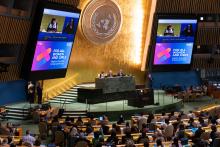


The status of women has improved significantly since the first Beijing conference in 1995, yet there is still much work to be done to achieve true equality.
Holocaust Remembrance for Dignity and Human Rights


Today, genocidal and other atrocity violence occurs in all corners of the globe, largely unabated and with near-total impunity. Even in places that do not make headlines, individuals and communities are targeted for identity-based discrimination and violence.
International Solidarity Map for Peace and Human Rights



International solidarity is a principle that recalls the responsibility of States, international organizations, corporations and civil society to strengthen the enjoyment of human rights and peace by everyone through transnational networks of communication.
Safeguarding Human Rights and Information Integrity in the Age of Generative AI


Together, we can ensure that generative AI is used appropriately, and that its benefits are achieved without endangering information integrity and human rights.