
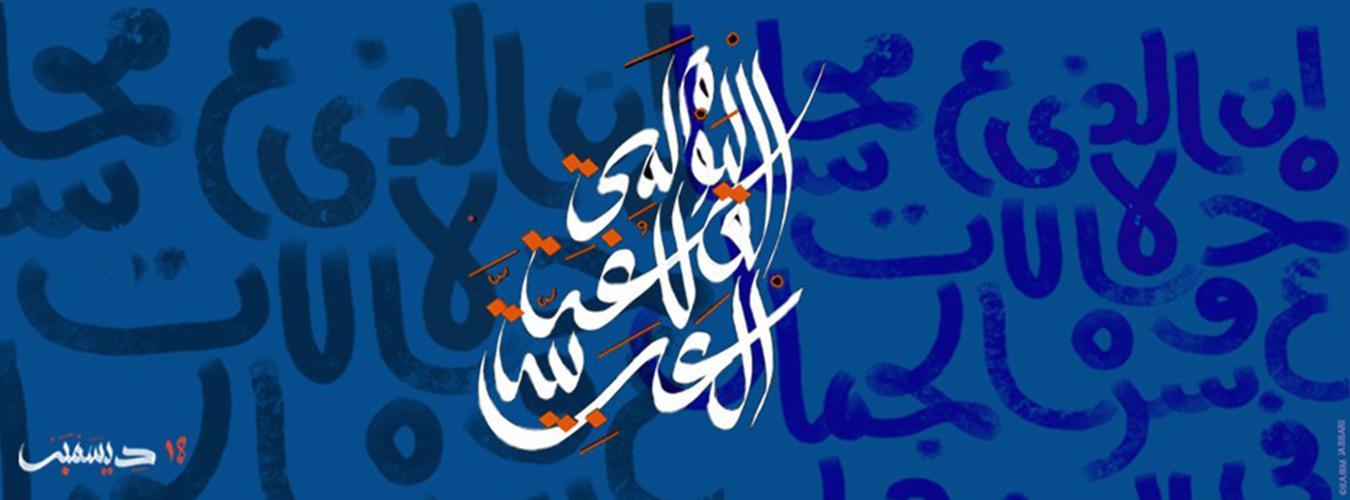

2025 Theme — Innovative Pathways for Arabic: Policies and Practices for a More Inclusive Linguistic Future
World Arabic Language Day 2025 highlights the importance of innovation and inclusivity in shaping a more dynamic future for the Arabic language under the theme “Innovative Pathways for Arabic: Policies and Practices for a More Inclusive Linguistic Future.” The event, organized by UNESCO and taking place at its headquarters in Paris on December 18, 2025, at 10:45 a.m., focuses on the role of education, technology, media, and public policy in promoting the presence and accessibility of Arabic to multilingual and resource-constrained communities, in line with UNESCO’s Management of Social Transformations (MOST) Programme. The celebration also provides a platform for cultural dialogue and reflects the organization’s commitment to linguistic diversity, supported by the Sultan Bin Abdulaziz Al Saud Foundation and its pioneering Arabic Language Support Programme, which empowers communities, expands Arabic knowledge production, and enhances the language’s global standing.
Background
The Arabic language is a pillar of the cultural diversity of humanity. It is one of the most widely spoken languages in the world, used daily by more than 400 million people. World Arabic Language Day is celebrated every year on 18 December since 2012. The date coincides with the day in 1973 that the General Assembly of the United Nations adopted Arabic as the sixth official language of the Organization.
In the diversity of its forms, classic or dialectal, from oral expression to poetic calligraphy, the Arabic language has given rise to a fascinating aesthetic, in fields as varied as architecture, poetry, philosophy and song. It gives access to an incredible variety of identities and beliefs and its history reveals the richness of its links with other languages. Arabic has played a catalytic role in knowledge, promoting the dissemination of Greek and Roman sciences and philosophies to Renaissance Europe. It has enabled a dialogue of cultures along the silk roads, from the coast of India to the Horn of Africa.
Arabic plays a major role in promoting social cohesion, knowledge production and spreading the values of peace and mutual understanding. Its contribution to humanity cannot be reduced to one people, as it is a civilization’s legacy for the entire world.
In support of and promotion of multilingualism and multiculturalism in the United Nations, the United Nations Department of Global Communications — formerly known as the Department of Public Information — adopted a decision on the eve of the observance of International Mother Language Day to celebrate each of the six official languages of the United Nations. Accordingly, it was decided to celebrate the Arabic language on 18 December, as it is the day on which General Assembly resolution 3190 (XXVIII) of 18 December 1973 included Arabic among the official and working languages of the United Nations.