
Science and data
Better observation, shared data and stronger early warning systems
How global cooperation can address rising seas and build a more resilient and sustainable future

Every coastal city.
Every small island.
Every river delta.
They are all facing a future shaped by rising seas.
As the planet warms, the ocean is expanding and glaciers and ice sheets are melting, pushing sea levels higher.
Sea level rise is now accelerating at an unprecedented level, reshaping coastlines and increasing risks for islands, coastal cities, river deltas and Arctic communities.
Nearly 900 million people live in low-lying coastal zones, and more than 1 billion could be exposed by 2050.
For small island developing States and low-lying coastal countries, rising seas threaten land, livelihoods and even statehood.
At the United Nations, Member States are asking a fundamental question:
How can the world protect people, cultures and nations from rising seas?
Secretary-General's report: Challenges related to sea level rise and ways to address it
Fourteen years after Hurricane Sandy, New York is fighting back against rising seas. Along Manhattan’s waterfront, a $2 billion project is raising a park by up to three metres and concealing flood defences built to protect 110,000 residents. See how the city is preparing for a wetter, riskier future.
Sea level rise is no longer a future threat. It is already affecting communities, ecosystems, and the future of low-lying communities and States.
The rate of global mean sea level rise in 2014–2023 was more than twice the rate recorded in the first decade of satellite measurements, 1993–2002.
By 2050, sea level rise and related climate impacts could contribute to the displacement of up to 1.2 billion people globally, placing growing pressure on communities, infrastructure and resources.
Sea level rise can push saltwater into freshwater sources, affecting drinking water, agriculture and health.
Global sea levels are expected to rise by 15 to 30 centimetres by 2050, on average, according to estimates cited from the Intergovernmental Panel on Climate Change (IPCC).
Sea level rise is raising legal questions about maritime zones, statehood and people affected by rising seas. The International Law Commission has explored these issues in international law.
Many small island developing States have limited land, high exposure to coastal hazards and scarce freshwater resources, making sea level rise one of their most serious threats.
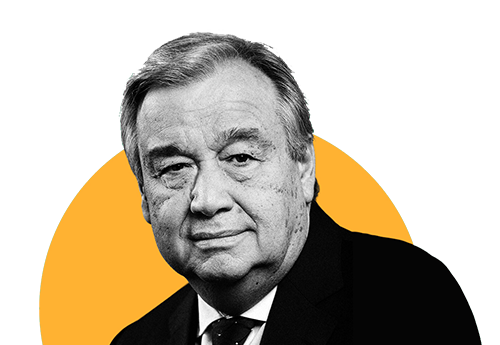
Sea level rise is measured in millimetres, but its toll is measured in millions of shattered lives.”
ANTÓNIO GUTERRES, United Nations Secretary-General
Sea level rise has been on the United Nations agenda for decades. Here are some of the key milestones in international action.
Looking for a quick overview? Start with these five key questions on sea level rise.
The UN supports countries facing sea level rise through climate action, adaptation, early warning systems and international cooperation.
It also helps mobilize financing and strengthen resilience in small island developing States and other vulnerable countries, while supporting global efforts under the Paris Agreement to limit future sea level rise.
The 24 September meeting aims to galvanize action on rising seas by bringing together leaders, experts and other stakeholders.
It is expected to strengthen cooperation, advance practical solutions and support vulnerable communities, particularly in small island developing States and low-lying coastal areas.
Small island developing States are on the frontlines of sea level rise.
Rising seas threaten homes, freshwater, food security, livelihoods and cultural heritage, while limited resources and high exposure to climate shocks make adaptation especially challenging.
As seas rise, complex legal questions are emerging around maritime boundaries, statehood and the rights of affected people.
These issues are a focus of ongoing work by the International Law Commission.
Sea level rise threatens not only homes and infrastructure, but also cultural heritage, traditional livelihoods and community identity.
For many small island developing States and coastal communities, protecting culture is a vital part of adapting to rising seas.
Key takeaways
Adopted by consensus, the UN Declaration on Sea Level Rise recognizes that rising seas threaten coastal communities, development gains and, for some small island States, their very future.
Here’s what the declaration says:
Better observation, shared data and stronger early warning systems
More predictable and accessible funding, especially for small island and least developed countries
Protecting coastal communities’ livelihoods and cultural heritage and including people in decisions that affect them
A presumption in favour of continued statehood and the ability to maintain maritime zones established under the UN Convention on the Law of the Sea – despite the physical threat presented by rising seas.
Explore expert insights, stories, and resources on one of the defining challenges of our changing climate.

Feature
In Fiji, rising seas are forcing communities to confront what it means to leave home. For Fiji’s Ambassador to the United Nations, Filipo Tarakinikini, relocation is about far more than moving houses: it means protecting culture, livelihoods and the deep bonds between people, land and identity.

Report
Rising seas are reshaping coastlines and increasing risks for communities, infrastructure, freshwater, livelihoods and cultural heritage.

Explainer
This explainer examines why rising seas are one of the defining global challenges of our time and what can still be done to address it.

UN in action
Along the coast of Tanzania, the Indian Ocean is pushing saltwater ever farther inland, driving fish away and leaving residents wondering how much longer they can stay.
Explore the latest news and updates from across the United Nations on sea level rise.