
WELCOME TO THE UN GENDER EQUALITY ACCELERATION PLAN


The UN System-Wide Gender Equality Acceleration Plan (GEAP) was launched on 8 March 2024 by the UN Secretary-General as a flagship initiative to accelerate progress on gender equality across the UN system.
It sets out our commitment to accelerate ongoing efforts to achieve much needed internal UN transformation. When fully implemented, the GEAP will enable all UN entities, no matter their mandate, to support all 193 UN Member States and other stakeholders to advance the rights of women and girls.
This ambitious plan is rooted in Our Common Agenda and commits to placing women and girls at the centre of renewed, inclusive multilateralism.
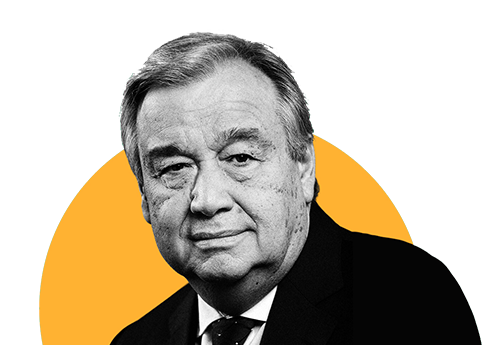
At a time of unprecedented pushback against women’s rights across the world, the United Nations mustleadby example and deliver for and with women and girls.”
ANTÓNIO GUTERRES, United Nations Secretary-General
Our pillars
The Gender Equality Acceleration Plan consists of five bold pillars each designed to work in concert together to achieve transformative results for gender equality within the United Nations System.


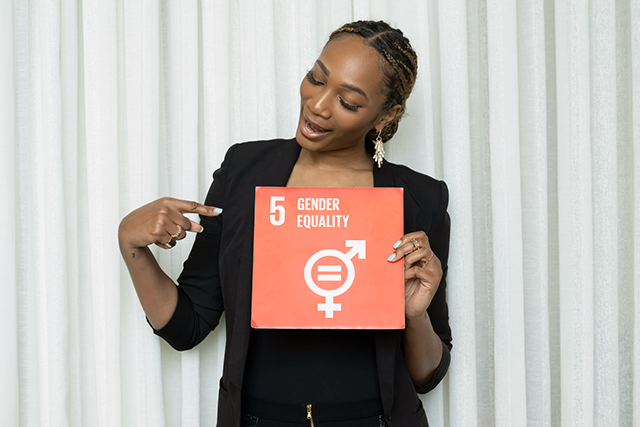

Governance
Good governance is at the heart of GEAP.
Leading the charge, the dynamic Gender Steering Group, chaired by the Secretary-General sets goals and tracks progress at the highest levels of the United Nations System.
The Deputy Secretary General leads the Advisory Group, which brings together Member States, United Nations Entity Principles and civil society.
The Task Team, led by a High-Level Advisor, focuses on problem-solving and oversees six working groups that implement GEAP initiatives.
Coordination is managed by the GEAP Secretariat, based in UN-Women, with support from the Task Team.

Spotlight

UN wide Funding Framework for Women’s Organizations and Civil Society Organizations
A new UN-wide Funding Framework is helping transform how the UN funds and partners with women’s organizations. Built around six shared principles, it promotes more flexible, inclusive and sustainable financing while strengthening women’s organizations as strategic partners in advancing gender equality. Read more here.

Accelerating gender equality through strategic partnerships and collective action
The launch of the Gender Equality Accelerator as the first gender-specific Team Europe Initiative in the region marks a major step in advancing gender equality and women’s empowerment in Bosnia and Herzegovina. Bringing together the EU, Sweden, Denmark, government institutions, civil society and the UN system, the initiative demonstrates how coordinated partnerships and national ownership can drive transformative, system-wide change for women and girls. More information can be found here.

Training of Trainers Certification for Gender Equality at Work
Advancing GEAP Pillar 2 on leadership and accountability, the ITCILO Training of Trainers Certification equips gender focal points, trainers and institutional leaders with the knowledge, skills and tools to design and deliver high-quality, gender-responsive learning. By strengthening internal training capacity, the programme supports organizations to mainstream gender equality and achieve lasting change across workplaces and institutions. Learn more about the course here.

From Commitment to Impact: Advancing Uniformed Women’s Participation and Leadership in UN Peacekeeping
Advancing the GEAP commitment to women’s leadership and gender-responsive institutions, DPPA-DPO convened Member States and UN stakeholders to accelerate progress under the Uniformed Gender Parity Strategy (UGPS). The event reaffirmed that women’s full, equal and meaningful participation in peacekeeping is essential to its effectiveness, legitimacy, and operational capability. It also highlighted the priorities for action for the UN Secretariat to achieve the goals of the UGPS by its completion date in 2028. The event showcased the Network for Uniformed Women Peacekeepers, now established across all peacekeeping missions, as a catalyst for peer learning, leadership engagement and lasting institutional change. Read more about the event here: LinkedIn & Facebook and in this article.
News
GEAP Political Strategy
OHCHR and UN Women, co-chairs of the GEAP Working Group, have issued a Political Strategy to guide implementation of the Gender Equality Clarion Call, strengthening coordinated UN leadership and action to counter backlash, safeguard progress, and advance transformative change for women and girls. Read the full strategy and the executive summary.
20 May, 2026
GEAP Guidance for Country Teams
To accelerate real impact for women and girls, GEAP’s Country-Level Working Group, co-chaired by DCO and UN Women, launched guidance for UN Resident Coordinators and Country Teams. Read here.
3 December, 2025
Transformative Leadership Options Paper[PDF]
UNDP and UNICEF spearhead GEAP’s Options Paper on Transformative Leadership Training, driving gender-responsive leadership and system-wide change. Explore the paper.
30 November, 2025
Documents

The Gender Equality Acceleration Plan regularly releases documents pertinent to the progress of the plan as well as related materials and resources.
Explore these materials to learn more about the GEAP, its goals and progress.
