

Ending female genital mutilation requires more than laws, it demands survivor-centred justice, including healing, support, accountability, and changing enabling social attitudes.
Torture and Other Cruel Treatment

Amid the brutal siege of El Fasher, displaced health workers supported by UNFPA are delivering life-saving maternal and reproductive care to women and girls in Northern State camps.

Reports of sexual violence as a weapon of terror in Sudan are rising alarmingly, with over 12 million women, girls, and increasingly men and boys at risk—an 80% surge from last year.
Female genital mutilation (FGM), a practice that involves altering or injuring the female genitalia for non-medical reasons, is internationally recognized as a violation of human rights. Unfortunately, a lot of myths and misinformation about FGM still exist that perpetuate the practice. So, where is it practiced? What are the consequences? And are men against it? Here are more FAQs.
Let Shudufhadzo Musida, United Nations Population Fund Global Champion for Women and Girls, tell you the facts as she reacts to real online comments about Female genital mutilation.

Aminata Soucko, a survivor of Female Genital Mutilation and abuse, founded Red Aminata to empower and support survivors.

Emma Molina Theissen, a 64-year-old Guatemalan human rights activist, survived torture during the country’s internal armed conflict. Before fleeing to Costa Rica, she faced violent interrogations, rape, and the abduction of her brother. Despite that, she continued her fight for truth and justice in Guatemala and a court sentenced the perpetrators of her torture and her brother’s disappearance. This year marks the 40th anniversary of the Convention against Torture and Other Cruel, Inhuman or Degrading Treatment or Punishment, commemorated on the International Day in Support of Victims of Torture, 26 June.
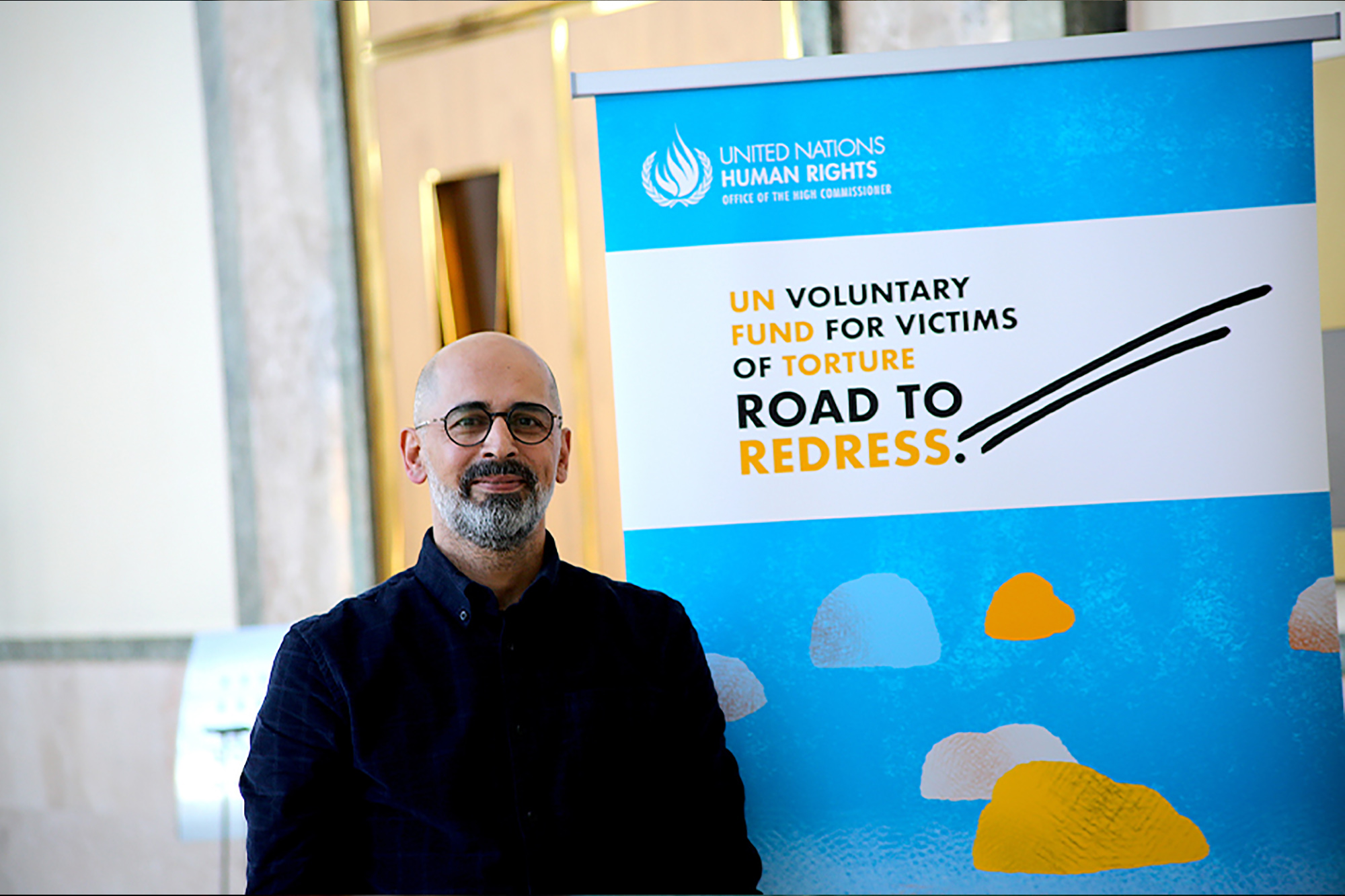
Riyad Avlar, a survivor of torture and sexual violence in Syrian detention centers, found healing through theater after his release. “I never imagined that one day I would get on a stage, but when I did I felt for the first time a big healing,” said Avlar, who heads a survivor-led organization in Türkiye for former detainees. He shared his experience at a workshop organized by the UN Voluntary Fund for Victims of Torture, which supports over 50,000 survivors annually. However, due to a funding gap, the Fund was unable to help 12,000 torture survivors last year. The Fund provides psychological, medical, social, legal, and humanitarian aid to survivors and their families.

"There is an increase in the use of torture worldwide. It's partly correlated to the fact that [...] we have more wars going on in this world since 1945. The International Committee of the Red Cross says there are 100 armed conflicts currently going on. And regrettably, with armed conflict comes an uptick in the use of torture and other forms of inhuman treatment."
Dr. Alice Jill Edwards spends many of her days listening to the testimonies of torture victims. Now the UN’s Special Rapporteur on torture and other cruel, inhuman, or degrading treatment or punishment, she works towards a world in which torture is finally a thing of the past.
"I rebuke the argument that it's a natural coalescence because I think disciplined troops do not torture."
In this episode, Dr. Alice Jill Edwards reflects on the challenge of holding states to their commitments, the visible and invisible scars torture leaves behind, and on the need to recharge without guilt.
Photo: ©United Nations
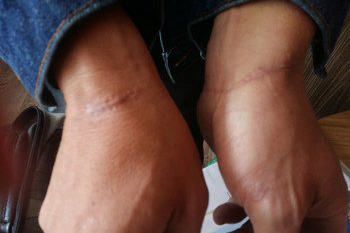
Nearly four decades on from the adoption of the UN Convention against Torture, there is evidence that it is still taking place in all regions of the world, even though it’s a recognized international crime. On this week’s episode of The Lid Is On, two independent human rights experts speak about their attempts to convince countries to end the practice. They explain that, in some countries and regions, torture is still seen thought to be a useful or acceptable part of interrogations, even though it has been shown to be ineffective.

The eradication of the practice of torture in the world was one of the major challenges taken up by the United Nations only a few years after its establishment. This culminated in the adoption of the Convention against Torture and Other Cruel, Inhuman or Degrading Treatment or Punishment. Countries that have signed the Convention have to report on a regular basis to its monitoring body on the measures they have taken to prevent torture on their territory. The Committee Against Torture meets in Geneva (11 Nov-6 Dec 2019).