

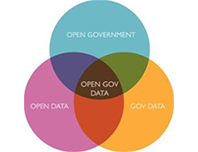
 Opening up government data is fundamentally about more efficient use of public resources and improving service delivery for citizens. The effects of open data utilization are potentially far reaching for sustainable development with a positive impact on innovation, transparency, accountability, participatory governance and economic growth. Open Government Data (OGD) can help countries improve development programmes and track progress, prevent corruption and improve aid effectiveness. The benefits of open data and improved access to public information gain greater visibility and relevance today in the context of the 2030 Agenda for Sustainable Development.
The development account project on “Strengthening of Capacities of Developing Countries to Provide Access to Information for Sustainable Development through Open Government Data (OGD)”, was approved in the summer of 2014, and is being implemented by DESA through its Division for Public Administration and Development Management (DPADM). It focuses on four developing countries: Bangladesh, Nepal, Panama and Uruguay. The project aims to support the needs for increased awareness of OGD requirements among government officials and other stakeholders while addressing capacities needed for developing action plans for implementing OGD initiatives. DPADM is working in close collaboration with relevant government agencies in host countries, as well as the UN regional commissions in Latin America and Caribbean (ECLAC), Asia and the Pacific (ESCAP), and UNDP country offices.
Through eight national and two regional level capacity building events, DPADM aims at assisting target countries with the development of policy frameworks and understanding demands of technical infrastructure required for implementing OGD initiatives, particularly in thematic areas relevant to the achievement of the sustainable development goals. It will strive to strengthen the open data community in each target country and stimulate south-south knowledge transfer on OGD by bringing together OGD-beginners with more OGD-advanced countries during regional workshops. The workshops are targeting high and mid-level government authorities, relevant public servants, as well as the broader OGD ecosystem and key stakeholders in each country. They offer opportunities for questions and answers after experts’ presentations to allow for a broader understanding on specific OGD topics.
The first national capacity development sensitization workshop on open data delivered within this project was held in Montevideo, Uruguay, on 12-14 May. It was followed by the second workshop in Panama City, Panama, on 28-30 July . The third event is scheduled for 23-25 August in Dhaka, Bangladesh, and the fourth one on 1-3 September in Kathmandu, Nepal.
After the first round of OGD sensitization workshops, DPADM will organize substantive trainings on key topics for OGD success in each of the 4 intervention countries. Dates for the workshops are confirmed for Uruguay (28 September – 2 October) and Panama (19-23 October), and will be soon discussed with the governments of Bangladesh and Nepal.
The success of this initiative is linked to partnership with UN national and regional offices as well as national partners. In particular, in Uruguay, DPADM is partnering with the Agencia para el Desarrollo del Gobierno de Gestión Electrónica y la Sociedad de la Información y del Conocimiento(AGESIC) of the Government of Uruguay.
In Panama, DPADM is partnering with the Autoridad Nacional de Transparencia y Asseso a la Información (ANTAI), in collaboration with the Autoridad Nacional para la Innovacion Gubernamental (AIG) of the Government of Panama.
In Bangladesh, DPADM is partnering with the Access to Information Programme of the Prime Minister’s office of the Government of Bangladesh
In Nepal, DPADM is partnering with the National Information Commission.
More information: Division for Public Administration and Development Management (DPADM)


