

Homepage

Counter-Terrorism Committee Executive Directorate launches a joint trends report with the Organization for Security and Cooperation in Europe on critical infrastructure
On 18 November 2025, the Counter-Terrorism Committee Executive Directorate (CTED), in partnership with the Organization for Security Cooperation in Europe (OSCE), launched the “CTED-OSCE Trends Report Update: Physical protection of critical infrastructure against terrorist attacks” The launch event was hosted at the Permanent Mission of Norway to the United Nations and was co-hosted by the Permanent Mission of the Republic of Kazakhstan. In the Trends Report, CTED and OSCE examine trends and developments in international frameworks and national efforts to protect critical infrastructure from terrorist attacks since CTED’s 2017 Report on the same topic.
News Articles


This video is a brief examination of how financial flows related to foreign terrorist fighter travel and activities have evolved over the past 10 years, reflecting the changes in their locations and circumstances.

The United Nations Summit of the Future: International peace and security and countering terrorism
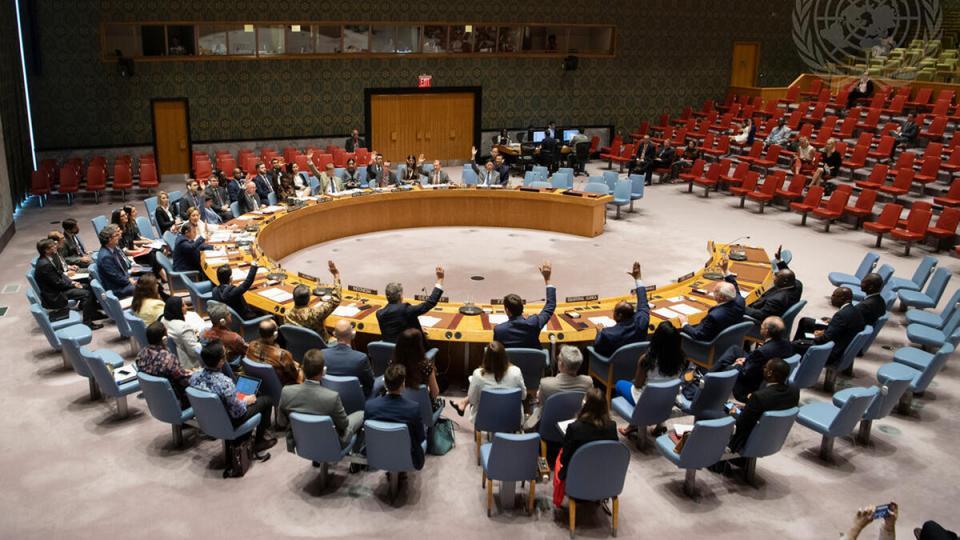
The United Nations Summit of the Future will deliver a Pact for the Future that creates a more peaceful world. The pact will include a Global Digital Compact and a Declaration on Future Generations as annexes. One of the key themes of the pact is international peace and security. Action 24 of the Pact for the Future focuses on countering terrorism. This video explores the Counter-Terrorism Committee and its Executive Directorate.


Foreign terrorist fighters
On 24 September 2014, at a meeting held at the level of Heads of State or Government the Security Council unanimously adopted its resolution 2178 (2014) to address the acute and growing threat posed by foreign terrorist fighters (FTFs).

Information and communications technologies
While the general population uses new and emerging technologies (particularly information and communications technologies (ICT) such as the Internet, social media platforms, and other communications applications) primarily for social communications, digital commer
Countering violent extremism and terrorist narratives
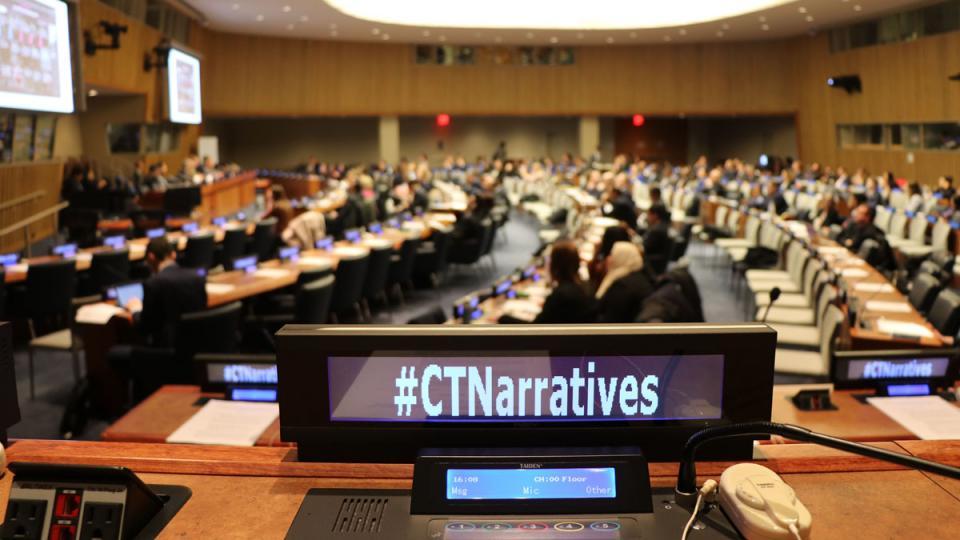
The Security Council recognizes that acts of terrorism and violent extremism cannot be prevented or countered through repressive measures alone and has consistently emphasized the need for a comprehensive, whole-of-society, human rights compliant and gender-sensitive approach.

Legal issues
The adoption of Security Council resolution 1373 (2001) introduced a significant new dimension to international counter-terrorism law by requiring all Member States to criminalize various acts associated with terrorism, as well as with the partici

Law enforcement
Member States’ law enforcement agencies must constantly adapt to a global terrorist threat that has evolved significantly over the past decades, both in scale and complexity.

Countering the financing of terrorism
Terrorists require money to operate. Without funding, they cannot purchase weapons, equipment, supplies, or services. The source of terrorist funds may be licit or illicit, and funding often takes the form of multiple small donations, rather than one large sum of money.
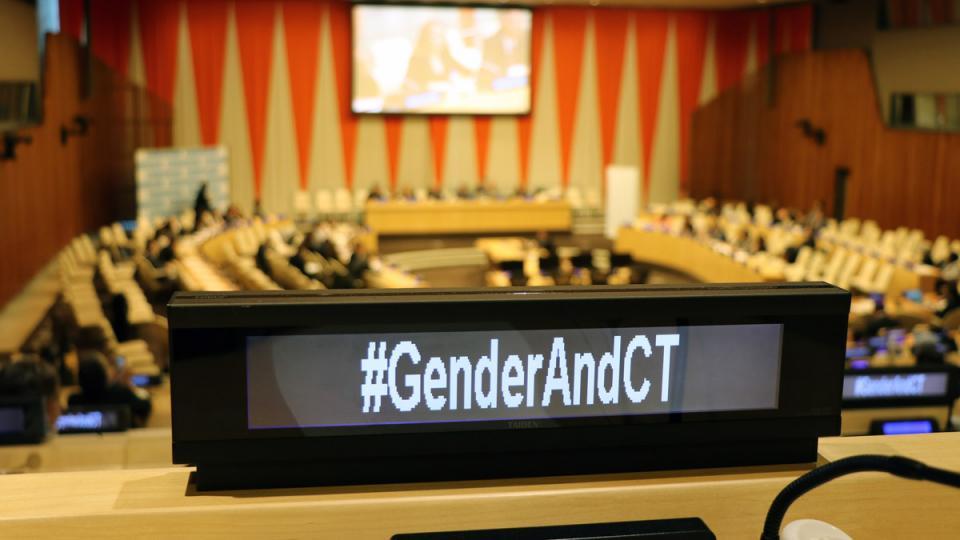
Integrating gender into counter-terrorism
The Security Council, the Counter-Terrorism Committee, and the Committee’s Executive Directorate (CTED) have actively promoted the integration of the agendas on Women, Peace and Security (WPS), counter-terrorism and countering violent extremism (CVE).

Human rights
Terrorism poses a serious threat, not only to international peace and security, but also to the enjoyment of human rights and social and economic development.

Border security and arms trafficking
Effective border security and timely information-sharing at the national, regional, and international levels are key in preventing the movement of terrorists and terrorist groups and to the effective implementation of counter-terrorism measures pursuant to Security Council resolution
 Our Mandate