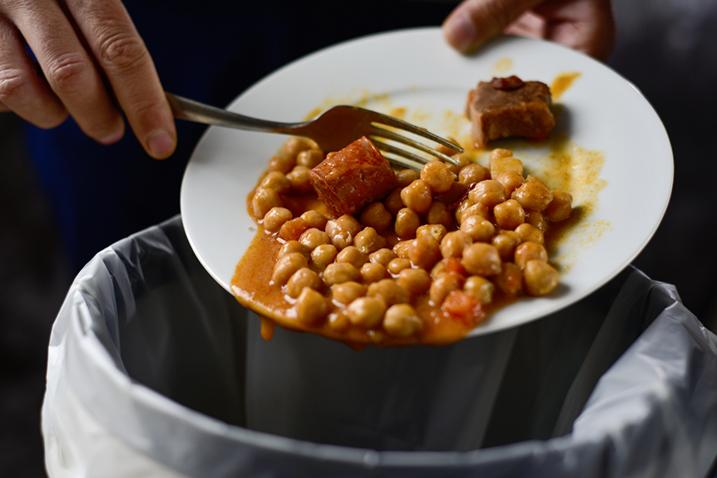
Zero Waste Starts on Your Plate
For this year’s International Day of Zero Waste, the focus is on food – what we eat, what we waste, and how we can move towards a more circular future.
The world wastes food on a staggering scale. Every year we throw away about 1 billion tonnes of edible food, nearly one-fifth of all food available to consumers. This impacts both people and the environment.
Around 60 per cent of food waste happens at the household level. The rest comes mostly from food service and retail, the result of inefficient food systems – including production, distribution and consumption. Tackling this issue requires redesigning these systems, transitioning towards a more sustainable, circular approach grounded in efficiency, resilience and sustainability.
For this transition to succeed, we all have a role to play.
Governments can:
- Advance food waste prevention through climate and biodiversity plans and national policies on circularity, waste, food systems, agriculture and urban development and promote measurement and monitoring.
- Strengthen public–private partnerships.
- Signal leadership and take action by joining the Food Waste Breakthrough.
Businesses can:
- Set measurable food waste reduction targets and integrate them into existing sustainability commitments.
- Innovate to transition to circular food systems and improve efficiency across supply chains.
- Join the Food Waste Breakthrough to scale solutions and share progress.
Consumers can:
- Plan, buy, store and prepare food mindfully to cut waste and save resources.
- Support food recovery, redistribution and composting initiatives.
- Help make food waste socially unacceptable through everyday action.
A zero-waste future is possible when we all work together – do your part by consuming thoughtfully, recovering surplus food, and working to build circular food systems. Let’s ensure our food is valued, not wasted.
Background
On 14 December 2022, the United Nations General Assembly adopted a resolution at its seventy-seventh session to proclaim 30 March as International Day of Zero Waste, to be observed annually. Türkiye, with 105 other countries, put forward the resolution, following other high-level decisions focused on pollution, such as the UN Environment Assembly resolution “End plastic pollution: towards an internationally legally binding instrument”.
The United Nations Environment Programme (UNEP) and the United Nations Human Settlements Programme (UN-Habitat) jointly facilitate the observance of International Day of Zero Waste.
As part of this campaign, Member States, organizations of the United Nations system, civil society, the private sector, academia, women, youth and other stakeholders are invited to engage in activities aimed at raising awareness of national, subnational, regional and local zero-waste initiatives and their contribution to achieving sustainable development.
Promoting zero-waste initiatives through this international day can help advance all the goals and targets in the 2030 Agenda for Sustainable Development, including Sustainable Development Goal 11 and Sustainable Development Goal 12. These goals address all forms of waste, including food loss and waste, natural resource extraction and electronic waste.
Did you know?
- If packed into standard shipping containers placed end-to-end, the total amount of municipal solid waste we generate each year would be enough to wrap around the globe 25 times.
- Our increasing use of resources is the main driver of the triple planetary crisis of climate change, nature and biodiversity loss, and pollution.
- Without urgent action, municipal solid waste generation will balloon to 3.8 billion tons annually by 2050.
- Most food waste happens within households (60%), followed by food service (28%) and retail (12%).
- Food loss and waste generate 8-10% of global greenhouse gas emissions, nearly five times the emissions from the aviation industry.
Source: UNEP and UN-Habitat
Get involved
- Learn more about Zero Waste Day
- Register your Zero Waste activities and events
- Participate in the campaign by using social media cards and videos from the Zero Waste Day Trello Board
- Join the conversation on social media using #ZeroWasteDay and #BeatWastePollution.
Documents
- International Day of Zero Waste (A/RES/77/161)
- Rescuing SDG 11 for a resilient urban planet
- Towards Zero Waste
- The Sixth Assessment Report of the UN Intergovernmental Panel on Climate Change
UN System
- United Nations Environment Programme
- United Nations Human Settlements Programme
- UN SG’s Advisory Board on Zero Waste
- Stop Food Loss and Waste Website
- Food Waste Breakthrough
- One Planet network
- International Environmental Technology Centre
- Waste Wise Cities
- African Clean Cities Platform