Changing Our Patterns of Production and Consumption to Save the Global Environment

Every time we turn on a light, use the clothes washer or listen to music on the stereo in a country that produces power by burning coal or oil, we add to the amount of carbon dioxide (CO2) that is released into the atmosphere. When we jump into the car to run an errand or visit a friend, the petrol we use also emits carbon and other wastes which cause global warming and ground-level smog. If the petrol is leaded, particles are released into the air, causing health problems for local people.

Whenever we turn on a tap to wash the car, water the lawn or irrigate farmland near a city such as Los Angeles or Mexico City which draws water from a distant aquifer, we drain an increasingly scarce resource which is freely available and perhaps often is taken for granted.

These are some of our everyday activities that affect the environment in ways we usually do not notice. As we become aware of the connections between our lifestyles and what is happening to the world around us, we start to question whether the way we produce and consume goods and services is the most economically or environmentally sensible way to behave. If we continue "business as usual", will we be able to meet the needs of a growing global population--in the immediate future and for generations to come?

Creating Wealth

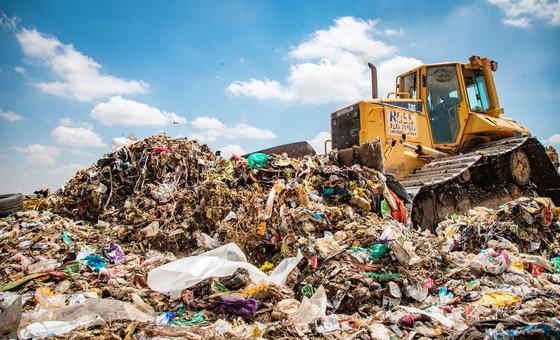
The model of economic progress used by the highly developed countries of Europe and North America is now being exported to developing countries. It is increasingly understood to be unnecessarily wasteful, too dependent on non-renewable fossil fuels such as coal and oil; too exploitative of renewable resources like fish and forests which are being used faster than nature can regenerate and too careless about discarding wastes which pollute soils, rivers, oceans and the atmosphere faster than nature can self-clean. In short, this model is not sustainable and must be changed dramatically if we are to survive in a world where the world's population is expected to grow from 6 billion to perhaps 10 billion by the year 2050.

Recent studies use the idea of "ecological footprints" to describe all the resources used by a single individual as a way of measuring whether our current lifestyles are sustainable. If the world's 6 billion people consumed and polluted in the manner that most Northern peoples do, we are told, it would take three planet Earths to accommodate us all. Right now, the ecological footprint of most peoples in the South is tiny, but it is growing.

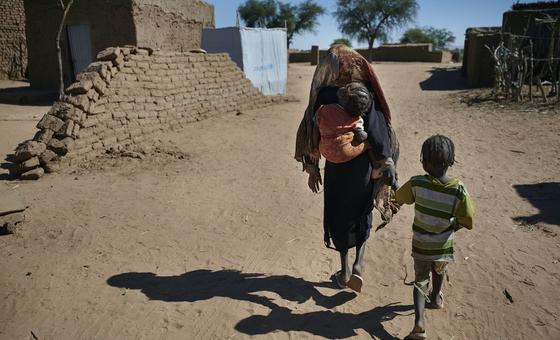
"Footprints" in developing countries are small because most people still live in extreme poverty, although they aspire to levels of comfort enjoyed by the wealthier countries. Economic growth is currently higher in developing countries than in the North. Pollution is also increasing. With signs that the global environment may not be able to absorb too much more, it is perhaps time to consider changing our behaviour.

At the Earth Summit--the UN Conference on Environment and Development held in Rio de Janeiro in June 1992--Governments found that changing patterns of production and consumption was essential if we are to achieve sustainable development. In 1993, the UN Commission on Sustainable Development, set up to implement the Earth Summit agreements, began to track global trends in production and consumption patterns, looking particularly at efforts by developing countries to meet peoples' basic needs, eradicate poverty and achieve economic growth. It also began to examine how changes made in the North will impact on developing countries and whether policies intended to change behaviour are effective. The Commission is also devising criteria and indicators to measure sustainable patterns.

The Nature of the Problem

Despite earlier conservation and anti-pollution efforts, all economies can make much greater savings by becoming "cleaner and greener". Most of the energy, water and transport services we pay for are wasted before we are able to use them. Only three per cent of the energy from a nuclear- or coal-fired power station becomes light in an incandescent lamp (about 70 per cent of the original fuel energy is wasted before it reaches the lamp, which, in turn, converts only 10 per cent of the remainder into light).

Some 80 to 85 per cent of the energy generated by burning petrol is wasted in the car's engine and drive-train before it gets to the wheels. Most water evaporates or spills away before it reaches the roots of a crop. Moving goods over vast distances where the same or similar locally made products could be used is another example of the pattern of "costs without benefits" inherent in our current economic model.

In fact, as much as 93 per cent of materials bought and "consumed" do not end up in finished products, according to a recent study by the United States National Academy of Engineers. Some 80 per cent of goods are discarded after a single use and many others do not last as long as they should. By one industry estimate, 99 per cent of the original materials used in the production of goods made in the United States are thrown away within six weeks of sale.

Doing More With Less

A new approach, dubbed "eco-efficiency", is now being promoted by the World Business Council for Sustainable Development and the UN Environment Programme's Cleaner Production Programme. "Eco-efficiency" calls for both economic efficiency --using fewer resources and producing less waste mean saving dollars and generating profits; and ecological efficiency--less waste and fewer raw materials--also protects the environment by conserving non-renewable natural resources and creating less pollution.

Savings, by at least a factor of four, could be made in the next 20 to 30 years by adopting the eco-efficiency model, experts say. Production could be doubled while the input of resources, including energy, and pollution could be cut by half. Members of the "Factor 10 Club" believe that it will be necessary to achieve factor 10 efficiencies by the year 2050 if any degree of sustainability is to be achieved. Using this model, the industrialized countries could save some $700 billion over the next 30 years by not having to build the additional power plants necessary to increase energy supply by 50 per cent. Similar initiatives in developing countries could save 40 per cent of current costs, for a total savings of $1.5 trillion dollars.

"Eco-efficiency" encourages us to think not only about preventing pollution reaching the environment once it has been produced but about creating less waste from start to finish. It calls for the redesign of the entire production process from the moment raw materials are extracted from the land to the final disposal of the finished product so that any wastes created during the life-cycle of the product--such as packaging--have minimal impact.

Making technology more efficient will play a role in sustainable production and consumption, but it is clear that our efforts need to go far beyond technological innovation. Technological changes in cars gave us more miles per gallon and lower emissions, but we have responded to these improvements by driving more miles each year and buying even more cars. In the United States, in particular, efficiency gains have also been offset by the large number of people who choose the new, highly fashionable, four-wheel drive vehicles for city driving. These vehicles are markedly less eco-efficient than sedans. The transition to sustainability will mean making different choices.

Use, Reuse and Recycle

In an eco-efficient society, rather than individually owning certain equipment, we will buy the services of a machine that is used by others and is in operation throughout the day. We will lease lawn mowers, concrete mixers, photocopiers and other business machines. We will subscribe to laundry and nappy services.

This will encourage manufacturers to design and produce longer-lasting goods and should lead to an economy that recovers used goods, reuses them on a second-hand market, recycles what cannot be reused for parts and remanufactures new goods by replacing only the worn-out parts. These activities will help to reduce the burden we now place on the environment. In a service-intensive economy, we will no longer measure the health of a society by the amount of materials used and goods produced and consumed, as the gross national product (GNP) now does. Jobs lost in production will be offset by gains in services set up to repair and maintain goods.

Eco-efficiency calls on both producers and consumers to think about what we are producing, what we are consuming and how it affects the environment, in the same way that we routinely take into account financial, legal and health concerns in our everyday decision-making. The Dutch call this using a "green filter". It leads to questions like: Shall I take the train or the car? Use a plastic bag or a string bag? Heat the house with a cleaner, renewable, energy like natural gas or use oil?

Making Changes

Most Governments have signed international legal agreements which commit them to alter patterns of production and consumption in order to protect the environment.

Under the UN Convention on Climate Change, industrialized countries have agreed to reduce their emissions of carbon dioxide (CO2) to 1990 levels by the year 2000. Although few countries are likely to meet this goal, they are aware that urgent action is necessary and are also negotiating targets and timetables for additional reductions to be met after 2000. The United States is currently the single largest producer of CO2, responsible for 22 per cent of global emissions. Countries of the Organization for Economic Cooperation and Development (OECD) together account for almost 44 per cent.

Scientists warn that CO2 and other wastes spewing from industrialy smokestacks and the exhaust pipes of an ever-growing number of motor cars are dramatically changing global climate patterns and causing the earth to become warmer. As concentrations of CO2 and other "greenhouse warming gases" accumulate in the atmosphere, rising sea levels could swamp low-lying coastal regions. Bankers and insurance brokers report that hurricanes and cyclones are more frequent and increasingly severe. Six United States insurance companies went bankrupt in the wake of Hurricane Andrew in 1992.

Under the 1987 Montreal Protocol, the industrialized countries banned the production of chlorofluorocarbons (CFCs) as of 1996. Other ozone-depleting substances, such as halon, are to be phased out on schedule. Developing countries have a ten-year grace period before they must do the same.

The link between CFCs and halons--widely used in refrigerators, air conditioners, solvents, transportation, plastics, insulation, pharmaceuticals, computers, electronics and fire-fighting equipment--and the hole in the ozone layer was first made by scientists in 1974. CFCs release chlorine into the upper levels of the atmosphere, causing a thinning of the ozone layer which shields us from lethal doses of the sun's ultraviolet radiation. "Holes" appear seasonally over Antarctica, the Himalayas and the north-eastern United States, causing cancer and immune system diseases in humans and animals, and mutations in the cellular make-up of other organisms.

The 1979 Convention on Long-Range Transboundary Air Pollution targets activities that release sulphur dioxide (SO2) and cause acid rain and soil acidification. It has led to significant environmental improvements in Europe and in North America, where pollutants from the United States have been destroying Canadian forests.

In order to implement these three agreements and to bring about the needed changes at home, most countries have adopted national legislation, such as the United States Clean Air Act Amendments (1990), which set country targets for reducing polluting substances. Many environmental problems are interlinked, so that reducing a single pollutant can often ameliorate several different problems. A CO2 tax can help prevent climate change, acid rain, acidification of soils, noise pollution and the pollution of inland and coastal waters. A tax on nitrates (NOx) will impact on climate change, acidification, local air pollution, and inland and coastal waters. A tax on SO2 will reduce acidification and affect local air quality and the quality of inland waters.

"Green" Pricing

Once they have signed international agreements, Governments have a crucial role to play in achieving sustainable levels of production and consumption at home. They set national standards, create conditions conducive for attaining those standards and monitor implementation. Governments are increasingly using economic instruments to encourage businesses to make their activities more environmentally sustainable.

One method is to charge different tax rates on environmental "goods" and "bads". In Sweden, lower taxes on unleaded petrol encouraged drivers to stop using leaded fuel. Some countries have begun to charge for natural resources. Perhaps, the best known of these "user-pays" fees are water charges. Meters are installed in each home and the occupier pays for the water. Since consumption is directly linked to cost, it is hoped that those paying will use less. Some Governments are taking special action to avoid placing an extra burden on the poor, who will spend a larger percentage of their income on user fees than wealthier people. Measures sometimes include providing an initial free allocation before the charges kick in and giving a rebate on personal income tax.

In an effort to discourage polluting behaviour, some countries charge people who pollute -- whether drivers of private motor cars or big industrialists -- the "full" environmental and social costs of their activities. Provided the "polluter-pays" charge is high enough and the polluter has alternatives available, the polluting activity is likely to be stopped.

Governments also use financial incentives to encourage businesses to adopt more eco-efficient behaviour by raising the "price of nature". Such incentives encourage behaviour that meets and betters Government-mandated environmental standards by rewarding businesses for developing new ways to meet our needs. As an example, a United States tax on CFCs helped to encourage the development of non-ozone-depleting substitutes. A tax in Sweden on sulphurous diesel fuel led to the development of new, less polluting fuels.

Pollution from coal-fired power stations causes acid rain and damages soils, vegetation, water and buildings, often belonging to people and countries who do not directly benefit from the power station. Ensuring that the cost of producing and purchasing the power fully incorporates these "external" costs, should encourage owners to clean up their production processes or switch to cleaner fuels.

Taxes on fossil fuels are likely to encourage businesses to find ways to use less fuel by becoming more efficient and wasting less. CO2 emissions will decline. Such taxes are not always popular. An attempt by the United States President in 1994 to charge a fuel tax amounting to five cents per unit (BTU) used failed, and the effort to introduce a carbon-energy tax in the European Union, first proposed in 1992, has not been successful. Energy taxes have more chance of being accepted as part of a package of "green reforms", where taxes on "bad" activities, such as pollution, replace taxes on "good" activities, such as labour. Public information campaigns can play a large role in getting these changes accepted.

Incentive taxes have worked in Denmark, Sweden and the Netherlands. The last in 1996, converted 3 per cent of its income tax to an energy tax. The carbon tax will increase over the next two years and income taxes will continue to decline. Overall taxes remain unchanged. In 1994, Denmark introduced a comprehensive package of ecological tax reforms which taxes a range of environmentally harmful activities, including SO2 and CO2 emissions, waste water and landfill wastes, and lowers social security (labour) taxes. Denmark estimates that some 2,000 new jobs will be created by the year 2000 as a result of the tax shift.

In 1991, Sweden began taxing energy use, including the energy component of domestic air traffic, as part of a reform package which lowered income taxes. The Swedes report that CO2 emissions fell by almost 4 per cent between 1991 and 1993. Norway too has imposed several taxes on energy consumption. These countries would like to see their main trading partners -- other European countries, the United States, Canada and Japan -- make similar changes in their tax codes.

A major reason to use taxes as an incentive for meeting environmental goals is to ensure that the cost -- to both the producer and the consumer of environmentally damaging goods -- is not cheaper than goods and services made in ways that are environmentally sound. Producers would thus gain nothing from producing environmental "bads" and consumers would not be subsidizing activities which degrade the environment by paying more to buy "green" products.

At the 1992 Rio Conference, some Governments also identified the need to remove subsidies which actually encourage polluting activities. For example, the cost of driving in the United States and Europe is heavily subsidized by Governments and by non-drivers, who pay the price of driving-related air pollution, including global warming, health care and noise pollution. Each year, Governments provide billions of dollars in subsidies for drivers.

The United States transport sector alone receives some $300 billion in subsidies each year. If the external costs of driving were also included, the total subsidy would be close to $700 billion. Right now, motorists in America pay less for gasoline than for bottled water; if the full cost of driving-related pollution, which is admittedly difficult to calculate, were included in the price paid at the pump, gas would cost at least six times as much as it does now. Europeans would pay twice as much.

If these subsidies were removed, motorists would be faced with paying the "full cost" of their decision to own and drive a car. This can be done if people are given an alternative mode of transportation. Money saved in subsidies could be used to build and rehabilitate public transport such as city rail, subways, buses, commuter trains and networks of long-distance railways that use clean-burning energy and are attractive and convenient to use.

Frequently, subsidies intended to encourage one type of behaviour have a different, negative, result. In Europe and the United States, agricultural subsidies given to support farming have led to an increase in the use of fertilizers, pesticides and herbicides; extended agriculture onto land unsuited for cultivation; and caused environmental degradation.

Subsidies can also be used to encourage environmentally positive behaviour. Forests enrich those who own and plant the trees, but they also provide benefits to the larger society. They absorb greenhouse gases (CO2) and prevent global warming; retain rainfall; bind and maintain the soil; and provide natural habitats for other species. They are also places of great beauty enjoyed by people who visit and by many others who simply know about them. Subsidies, such as the Netherlands Forestry Credits programme, encourage forest conservation and the planting of new trees.

Financial incentives -- taxes and revenues -- can be effective in helping to reach environmental goals if they are made part of comprehensive policy packages. Such packages should be carefully implemented following extensive consultations, after everyone involved has been fully informed.

Sustainable Consumption

Widespread concern for the environment has given rise to "green-conscious" consumers and to companies hoping to capitalize on those concerns. By changing our buying habits, consumers can pressure manufacturers to change their behaviour. After customers increasingly asked for green products, B&Q, the largest home improvement retailer in Europe, decided to take responsibility for the environmental standards of its more than 40,000 products, rather than leaving it to consumer choice. B&Q worked with an independent forest certification body to ensure that all its timber supplies are produced from sustainably managed forests. It also intends to improve the environmental impact of other products, such as paint, solvents and brass doorknobs.

Voluntary schemes, run by Governments or independent organizations in some 20 countries, award a seal of approval--an "eco-label"--to products that meet environmental criteria throughout their life cycle. Eco-labels help consumers deal with an often bewildering array of environmental claims from manufacturers. So far, most schemes are in developed countries such as Australia, Canada, Japan and the United States, but some also operate in Brazil, India, Indonesia and Malaysia. In 1989, the White Swan label was launched by Finland, Iceland, Norway and Sweden. It now includes over 1,000 products in 40 categories and is recognized by 90 per cent of consumers in those countries. Some 75 per cent of all detergents sold there now carry the White Swan labels which has led to a significant drop in the emissions of environmentally destructive chemicals.

Living the Good Life

Modern economics assumes that higher incomes mean higher standards of living. There are signs, however, that at a certain point the cost of creating more wealth begins to reduce the quality of life. Many believe that people in the North may well have reached that point.

Traditional indicators of national well-being, the gross domestic product (GDP), measure such as tangible economic activities, such as material turnover. Environmental degradation is viewed as a contribution to GDP because of the economic activities it generates. The Stockholm-based Index of Sustainable Economic Welfare (ISEW), which measures key factors like education, housing income spread, street safety, crime, health and the state of the environment, views pollution as a negative. In the United States, the United Kingdom and other OECD countries, the correlation between GDP and the ISEW broke down in the mid-1970s, which perhaps helps to explain why, at a time when statistics show the United States economy growing vigorously, most Americans feel they are running harder just to stay in place or even slipping backwards.

Earth Summit+5

In June, some 70 heads of State and Government will meet in New York to review the implementation of Agenda 21, the comprehensive plan for global action in all areas of sustainable development, adopted by the 1992 Earth Summit. The forthcoming General Assembly session will include a review of how far changes in production and consumption have come towards meeting global goals and expectations.

For more information, please contact:
Division for Sustainable Development
Department for Policy Coordination
and Sustainable Development
United Nations
New York, NY 10017
Tel.: (212) 963-0013
Fax: (212) 963-4260
E-mail:dpcsd@un.org
Web address: http:\\www.un.org\dpcsd
or

Development and Human Rights Section
Department of Public Information
United Nations
New York, NY 10017
Tel.: (212) 963-3771
Fax: (212) 963-1186
Email: vasic@un.org


Published by the United Nations Department of Public Information - DPI/1907/SD--June 1997