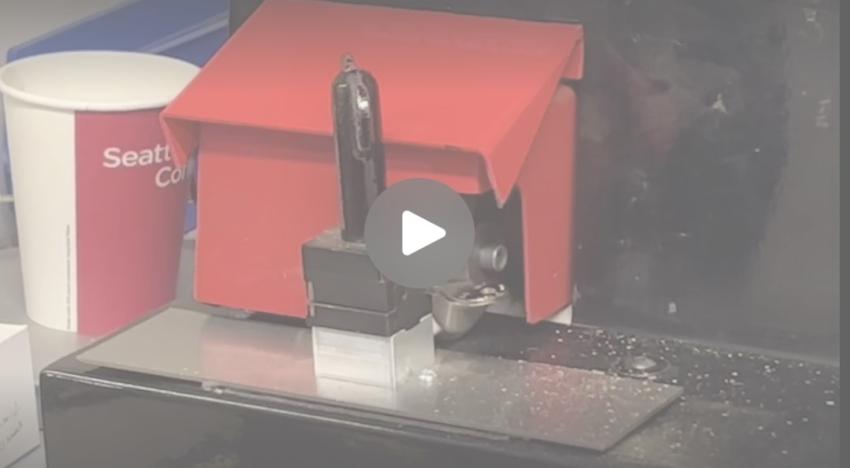
Deep in the basement of UN Headquarters in New York, behind unmarked doors and away from the diplomatic spotlight, a small team of certified locksmiths guards one of the Organization's most critical functions: access to every room, office, and secure area across the sprawling 18-acre Manhattan complex.
"This place is invisible," says Sergeant Metin Serbetci, supervisor of the Physical Security Unit's locksmith section. "It's like the under-the-hood place for access control of the whole complex."
The Art and Science of UN Security
In an age of biometric scanners and digital credentials, the UN's approach to physical security reveals a sophisticated balance between innovation and tradition.
The locksmith workshop houses both state-of-the-art computerized key-cutting machines and manual equipment. It’s a deliberate strategy that combines efficiency with economy.
When Sergeant Serbetci receives a request, he pulls up a digital database to identify the key specifications. Within minutes, a computerized machine precisely cuts a new key based on the code.
But this high-tech process requires old-school expertise. Every technician in the workshop is a certified locksmith, trained annually in Kentucky by master craftspeople.
"Doing this job requires a certificate," Sergeant Serbetci emphasizes. "It doesn't mean you just know how to use the machine and computer. You have to be a certified locksmith."
The Economics of Access Control
The genius lies in knowing when to use which technology. A single electronic door system, complete with card readers, controllers, cabling, and programming, costs approximately $5,000.
For the UN's main entrance, serving thousands daily, electronic access is essential. But for a private office used by two people? A traditional lock and two physical keys make far more economic sense.
"You have to assess it," Sergeant Serbetci explains. "Is it beneficial for the Organization or not?"
This pragmatic approach extends to the workshop itself.
"What I love about the officers in this part—they're very, very careful about resources," Sergeant Serbetci notes. "You can spend 10 key blanks to cut just one. But they're so precise, they don't waste anything because we're all aware of how expensive these tools and supplies are."
Every door, every key, every access point represents a calculated decision balancing security, functionality, and fiscal responsibility.