
Better data saves lives

When thinking about data, our mind usually jumps to our mobile phones and the endless possibilities they open. But we rarely spare a thought for the kind of data that accompanies our entire lives – even before we are born – and that can, quite literally, save our lives.
Health data allows doctors to make the right diagnoses, decide on adequate therapies and prescribe the right medicines. When compiled, analysed and interpreted according to international standards, our health data can also help to save others.
Health data allows doctors to make the right diagnoses, decide on adequate therapies and prescribe the right medicines. When compiled, analysed and interpreted according to international standards, our health data can also help to save others.
Better data, more inclusive development

The Sustainable Development Goals (SDGs) are at the core of the most ambitious agenda in humanity's history to root out poverty and hunger, fight climate change and create a more equitable and just world for all in only 15 short years.
The geospatial way to a better world

Governments and businesses are challenged to combat hunger, poverty, water scarcity, climate change, disasters and other perils, and to provide peace and prosperity for its people, leaving no one behind. Addressing these challenges requires evidence-based policy making, which is achievable with the use of geospatial data, statistical data and applicable technologies. Everything – all our challenges – happens somewhere and can be located, mapped, viewed, measured, analyzed, modelled and monitored.
Gender statistics – for good measure

Over 150 statistics experts from around 40 countries will assemble in Tokyo from 14 to 16 November to discuss ways of improving data for evidenced-based gender policies.
World Data Forum wraps up with a declaration to boost financing for data and statistics

The second United Nations World Data Forum is concluding today with the launch of the Dubai Declaration to increase financing for better data and statistics for sustainable development.
“While it is clear that the data revolution is having an enormous impact, it has not benefited everyone equally,” said United Nations Deputy Secretary-General Amina J. Mohammed at the Forum. “Our task is to make sure data is available to all people.
“While it is clear that the data revolution is having an enormous impact, it has not benefited everyone equally,” said United Nations Deputy Secretary-General Amina J. Mohammed at the Forum. “Our task is to make sure data is available to all people.
Many deaths can be avoided with better data: UN deputy chief

Speaking at the opening session of the UN World Data Forum on Monday, Deputy Secretary-General Amina Mohammed highlighted the life-saving impact that data can have, noting that better data and forecasting could have averted many deaths from natural disasters.
“While it is clear that the data revolution is having an enormous impact, it has not benefited everyone equally,”
“While it is clear that the data revolution is having an enormous impact, it has not benefited everyone equally,”
UN World Data Forum 2018 to mark a new milestone in the journey toward making better sustainable development data for all a reality
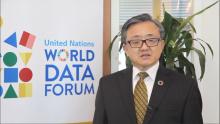
The United Nations World Data Forum 2018 is set to kick off on 22 October in Dubai, United Arab Emirates, bringing together nearly 2,000 data leaders from more than 100 countries.
The data experts -- from national statistical offices, the private sector, NGOs, academia and international and regional organizations -- will gather 22-24 October to collaborate and tackle data gaps and challenges, launch new initiatives and identify mechanisms to increase financing and support for better data for sustainable development.
With over 80 sessions and parallel events, the Fo
The data experts -- from national statistical offices, the private sector, NGOs, academia and international and regional organizations -- will gather 22-24 October to collaborate and tackle data gaps and challenges, launch new initiatives and identify mechanisms to increase financing and support for better data for sustainable development.
With over 80 sessions and parallel events, the Fo
What happens where: A new integrated geospatial information framework

Everything that happens, happens somewhere, but how do we know what is happening where? when? and why? The answers lie in geospatial information. That means information that pinpoints the location of geographic features, such as settlements, mountains or lakes, on the Earth and describes their relation to other features. It allows us to create a digital image of our world, in which all social, economic and environmental activity takes place.
Geospatial information is a blueprint of what happens where.
Geospatial information is a blueprint of what happens where.
Experts launch roadmap to help countries develop, manage, and use vital geospatial data to address development challenges

The United Nations Statistics Division and the World Bank today launched a strategic guide to help governments, especially in low and middle-income countries, develop, access, and use geospatial information to make effective policies and more accurately direct aid and development resources, ensuring no one is left behind.
The Integrated Geospatial Information Framework, a first of its kind guide approved today by the United Nations Committee of Experts on Global Geospatial Information Management (UN-GGIM), makes concrete recommendations on establishing national geospatial information
The Integrated Geospatial Information Framework, a first of its kind guide approved today by the United Nations Committee of Experts on Global Geospatial Information Management (UN-GGIM), makes concrete recommendations on establishing national geospatial information
Countries embrace efforts to achieve SDGs amid mounting global challenges: UN Report

A fast-changing climate, conflict, inequality, persistent pockets of poverty and hunger and rapid urbanization are challenging countries’ efforts to achieve the Sustainable Development Goals (SDGs), according to a UN report launched in New York today.
The Sustainable Development Goals Report 2018 found that conflict and climate change were major contributing factors leading to growing numbers of people facing hunger and forced displacement, as well as curtailing progress towards universal access to basic water and sanitation services.
For the first time in
The Sustainable Development Goals Report 2018 found that conflict and climate change were major contributing factors leading to growing numbers of people facing hunger and forced displacement, as well as curtailing progress towards universal access to basic water and sanitation services.
For the first time in